College of Animal Science and Veterinary Medicine, Henan Agricultural University, Zhengzhou, Henan, China.
College of Animal Science and Technology, Henan University of Animal Husbandry and Economy, Zhengzhou, Henan, China.
PLoS One. 2019 Nov 6;14(11):e0210850. doi: 10.1371/journal.pone.0210850. eCollection 2019.
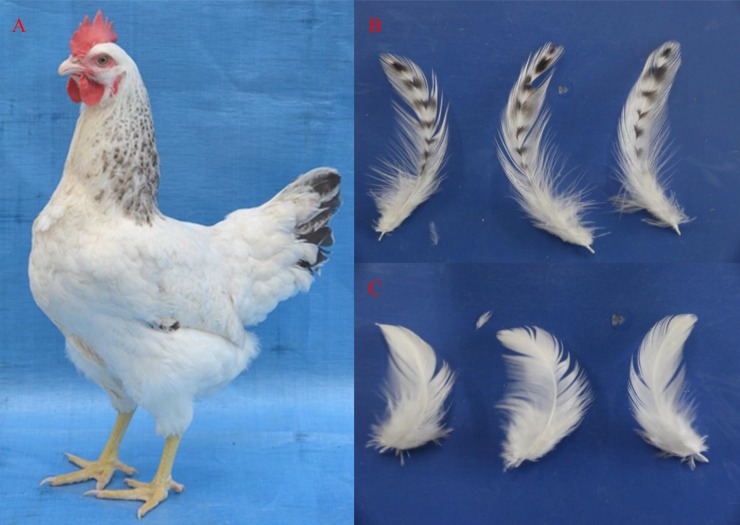
Coloration is one of the most recognizable characteristics in chickens, and clarifying the coloration mechanisms will help us understand feather color formation. "Yufen I" is a commercial egg-laying chicken breed in China that was developed by a three-line cross using lines H, N and D. Columbian plumage is a typical feather character of the "Yufen I" H line. To elucidate the molecular mechanism underlying the pigmentation of Columbian plumage, this study utilizes high-throughput sequencing technology to compare the transcriptome and proteome differences in the follicular tissue of different feathers, including the dorsal neck with black and white striped feather follicles (Group A) and the ventral neck with white feather follicles (Group B) in the "Yufen I" H line.
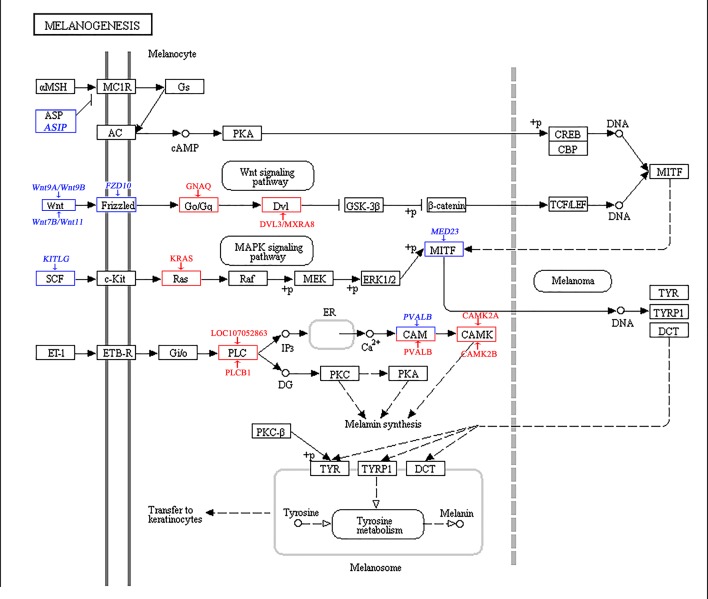
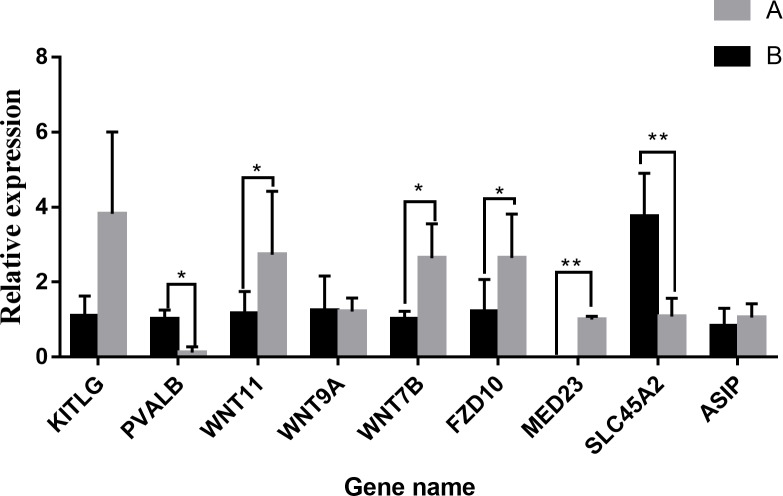
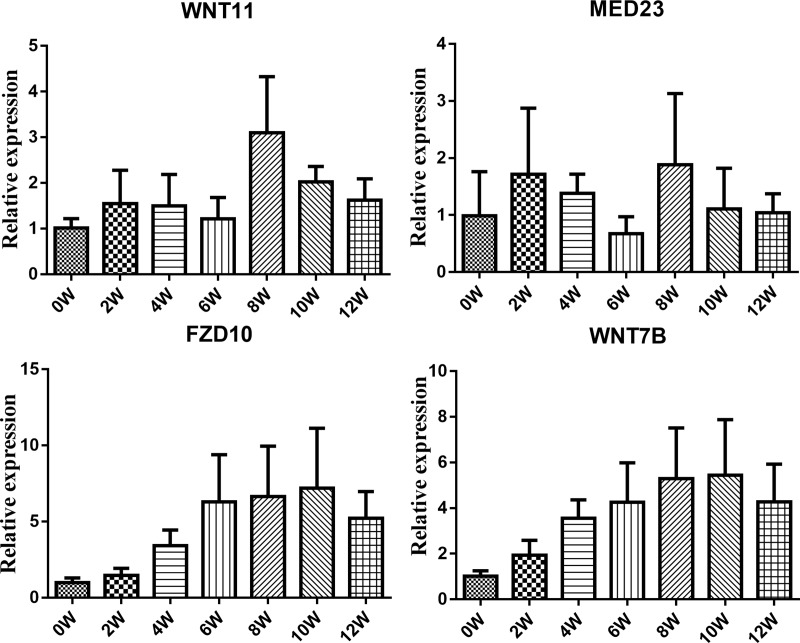
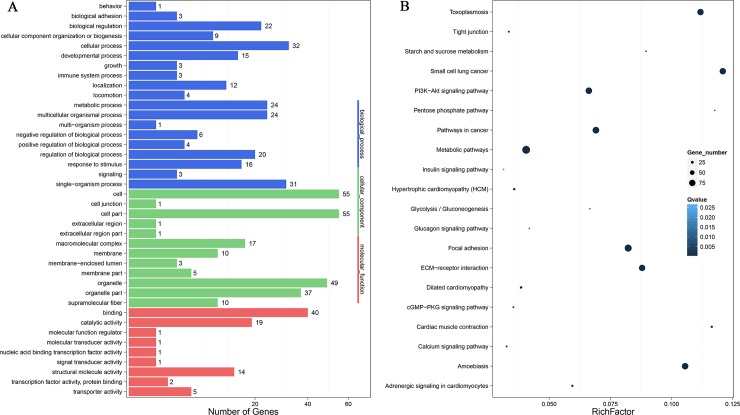
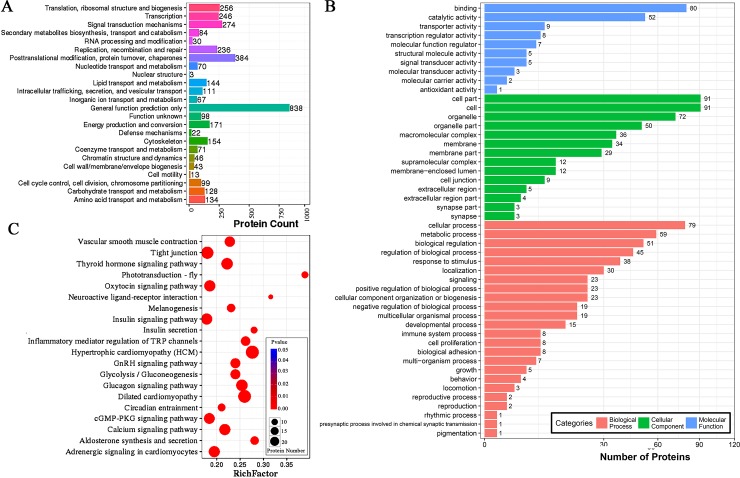
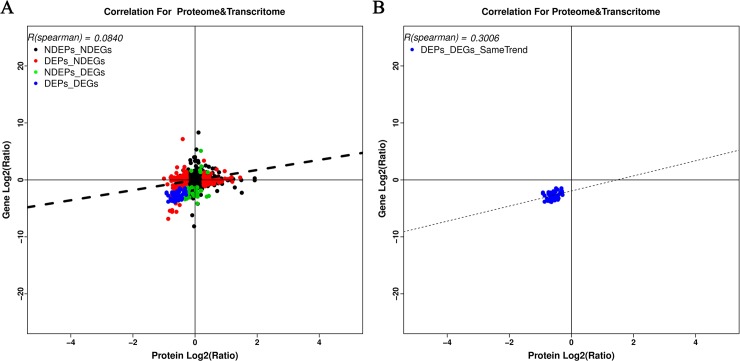
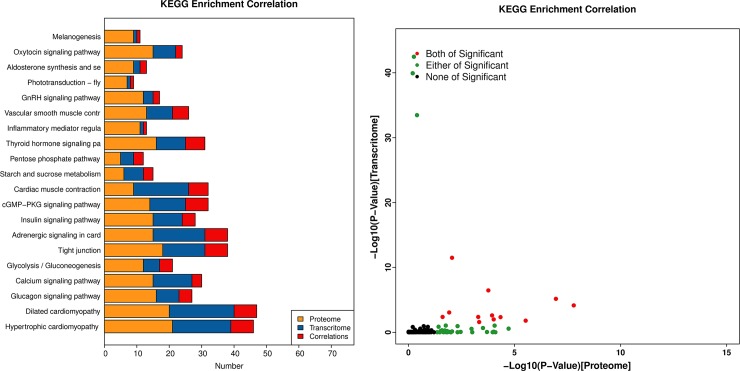
In this study, we identified a total of 21,306 genes and 5,203 proteins in chicken feather follicles. Among these, 209 genes and 382 proteins were differentially expressed in two locations, Group A and Group B, respectively. A total of 8 differentially expressed genes (DEGs) and 9 differentially expressed proteins (DEPs) were found to be involved in the melanogenesis pathway. Additionally, a specifically expressed MED23 gene and a differentially expressed GNAQ protein were involved in melanin synthesis. Kyoto Encyclopedia of Genes and Genomes (KEGG) analysis mapped 190 DEGs and 322 DEPs to 175 and 242 pathways, respectively, and there were 166 pathways correlated with both DEGs and DEPs. 49 DEPs/DEGs overlapped and were enriched for 12 pathways. Transcriptomic and proteomic analyses revealed that the following pathways were activated: melanogenesis, cardiomyocyte adrenergic, calcium and cGMP-PKG. The expression of DEGs was validated by real-time quantitative polymerase chain reaction (qRT-PCR) that produced results similar to those from RNA-seq. In addition, we found that the expression of the MED23, FZD10, WNT7B and WNT11 genes peaked at approximately 8 weeks in the "Yufen I" H line, which is consistent with the molting cycle. As both groups showed significant differences in terms of the expression of the studied genes, this work opens up avenues for research in the future to assess their exact function in determining plumage color.
Common DEGs and DEPs were enriched in the melanogenesis pathway. MED23 and GNAQ were also reported to play a crucial role in melanin synthesis. In addition, this study is the first to reveal gene and protein variations in in the "Yufen I" H line during Columbian feather color development and to discover principal genes and proteins that will aid in functional genomics studies in the future. The results of the present study provide a significant conceptual basis for the future breeding schemes with the "Yufen I" H line and provide a basis for research on the mechanisms of feather pigmentation.
颜色是鸡最具辨识度的特征之一,阐明其着色机制有助于我们理解羽毛颜色的形成。“育芬 1 号”是中国自主培育的蛋鸡品种,采用 H、N 和 D 三个品系三系配套杂交而成。哥伦比亚羽色是“育芬 1 号”H 系的典型羽色特征。为了阐明哥伦比亚羽色的色素沉着分子机制,本研究利用高通量测序技术比较了不同羽毛(包括 H 系背部黑白条纹羽囊的颈部和白色羽囊的颈部)的滤泡组织的转录组和蛋白质组差异。
本研究共鉴定出鸡羽毛滤泡中的 21306 个基因和 5203 个蛋白质。其中,A 组和 B 组(分别为黑色和白色条纹羽囊的颈部和白色羽囊的颈部)的两个位置分别有 209 个基因和 382 个蛋白质差异表达。总共发现 8 个差异表达基因(DEGs)和 9 个差异表达蛋白(DEPs)参与了黑色素生成途径。此外,一个特异性表达的 MED23 基因和一个差异表达的 GNAQ 蛋白参与了黑色素合成。京都基因与基因组百科全书(KEGG)分析将 190 个 DEGs 和 322 个 DEPs 映射到 175 个和 242 个途径上,分别有 166 个途径与 DEGs 和 DEPs 相关。49 个 DEPs/DEGs 重叠并富集到 12 个途径中。转录组和蛋白质组分析表明,以下途径被激活:黑色素生成、心肌肾上腺素能、钙和 cGMP-PKG。通过实时定量聚合酶链反应(qRT-PCR)验证了 DEGs 的表达,结果与 RNA-seq 相似。此外,我们发现“育芬 1 号”H 系的 MED23、FZD10、WNT7B 和 WNT11 基因的表达在大约 8 周时达到峰值,这与换羽周期一致。由于两组在研究基因的表达方面均存在显著差异,因此这项工作为未来评估它们在确定羽色中的确切功能开辟了研究途径。
黑色素生成途径中富集了常见的 DEGs 和 DEPs。MED23 和 GNAQ 也被报道在黑色素合成中起关键作用。此外,本研究首次揭示了“育芬 1 号”H 系哥伦比亚羽色发育过程中基因和蛋白质的变化,并发现了主要基因和蛋白质,这将有助于未来的功能基因组学研究。本研究的结果为“育芬 1 号”H 系的未来育种计划提供了重要的概念基础,并为羽毛色素沉着机制的研究提供了基础。