Rody Hugo V S, Bombardelli Renato G H, Creste Silvana, Camargo Luís E A, Van Sluys Marie-Anne, Monteiro-Vitorello Claudia B
Escola Superior de Agricultura "Luiz de Queiroz", Departamento de Genética, Universidade de São Paulo, Piracicaba, São Paulo, Brazil.
Centro de Cana, IAC-Apta, Ribeirão Preto, Av. Pádua Dias n11, CEP 13418-900, Piracicaba, São Paulo, Brazil.
BMC Genomics. 2019 Nov 6;20(1):809. doi: 10.1186/s12864-019-6207-y.
Resistance genes composing the two-layer immune system of plants are thought as important markers for breeding pathogen-resistant crops. Many have been the attempts to establish relationships between the genomic content of Resistance Gene Analogs (RGAs) of modern sugarcane cultivars to its degrees of resistance to diseases such as smut. However, due to the highly polyploid and heterozygous nature of sugarcane genome, large scale RGA predictions is challenging.
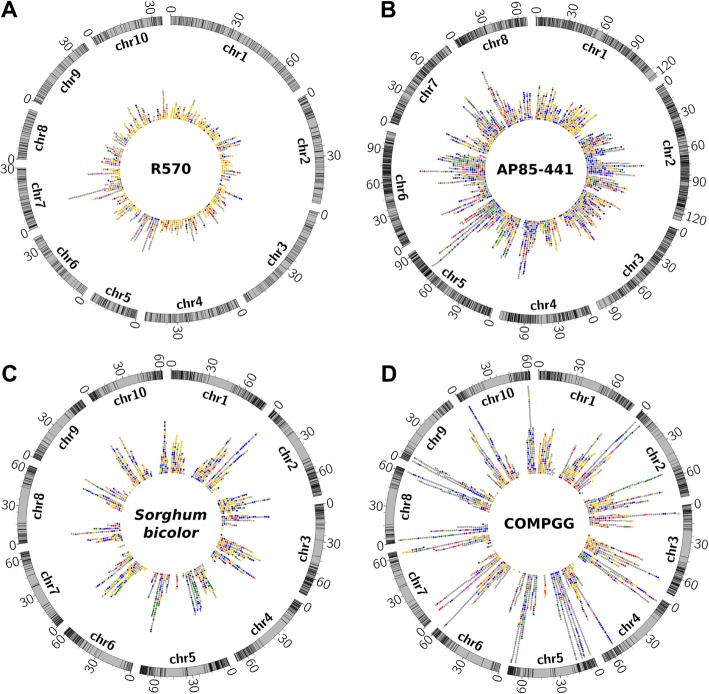
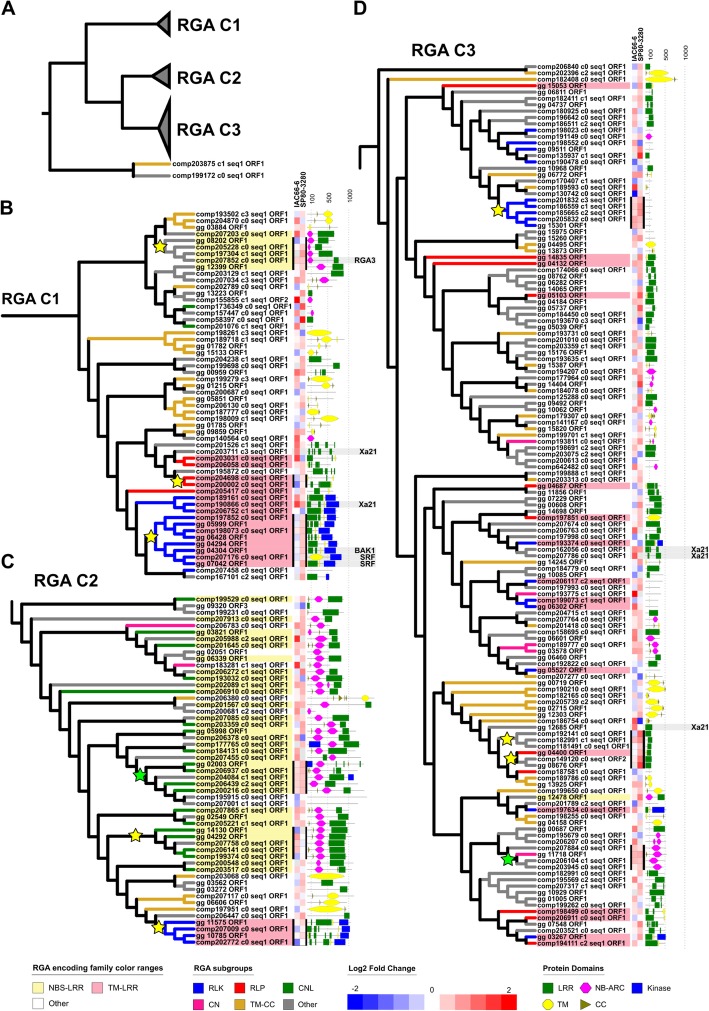
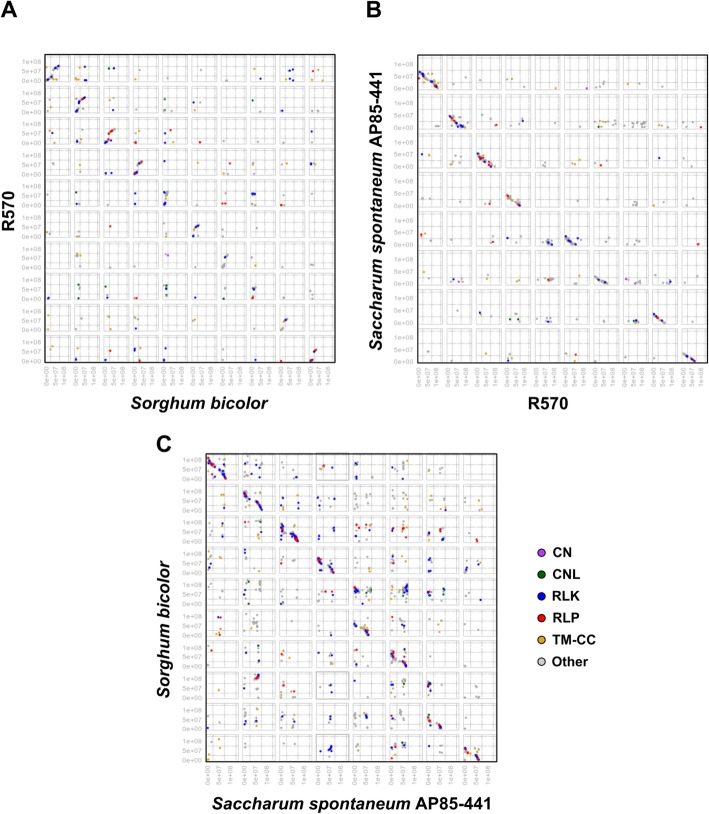
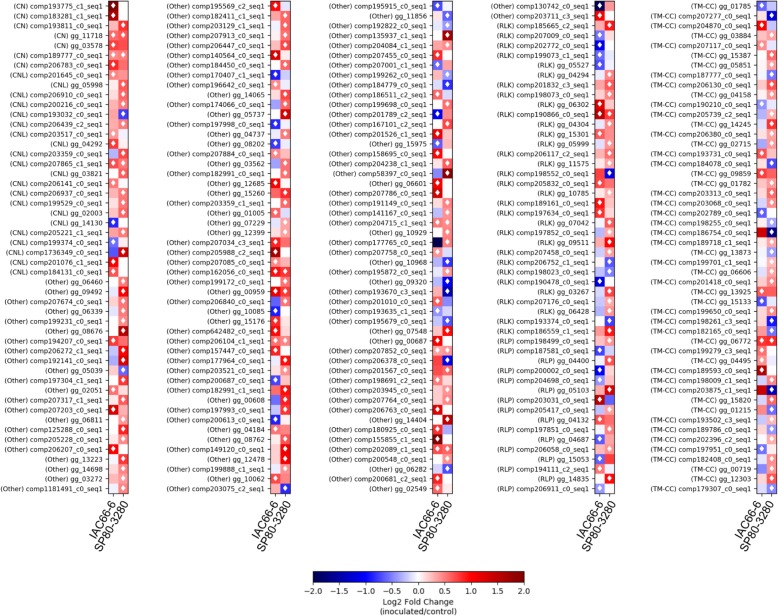
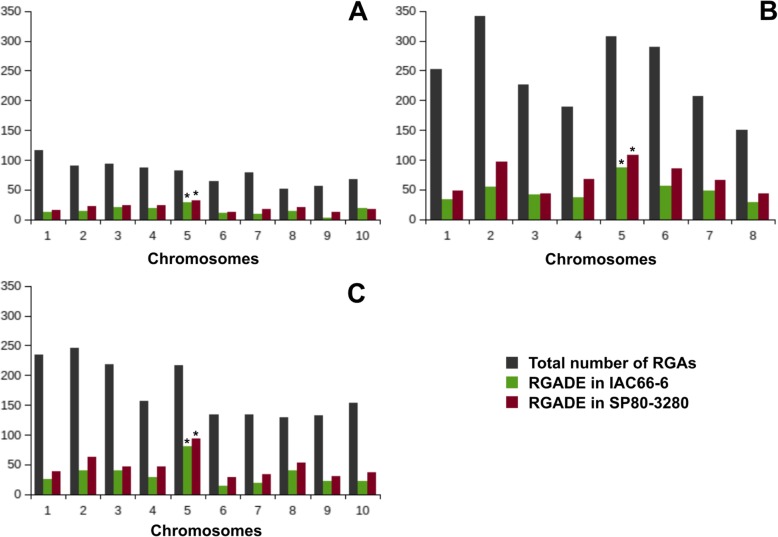
We predicted, searched for orthologs, and investigated the genomic features of RGAs within a recently released sugarcane elite cultivar genome, alongside the genomes of sorghum, one sugarcane ancestor (Saccharum spontaneum), and a collection of de novo transcripts generated for six modern cultivars. In addition, transcriptomes from two sugarcane genotypes were obtained to investigate the roles of RGAs differentially expressed (RGADE) in their distinct degrees of resistance to smut. Sugarcane references lack RGAs from the TNL class (Toll-Interleukin receptor (TIR) domain associated to nucleotide-binding site (NBS) and leucine-rich repeat (LRR) domains) and harbor elevated content of membrane-associated RGAs. Up to 39% of RGAs were organized in clusters, and 40% of those clusters shared synteny. Basically, 79% of predicted NBS-encoding genes are located in a few chromosomes. S. spontaneum chromosome 5 harbors most RGADE orthologs responsive to smut in modern sugarcane. Resistant sugarcane had an increased number of RGAs differentially expressed from both classes of RLK (receptor-like kinase) and RLP (receptor-like protein) as compared to the smut-susceptible. Tandem duplications have largely contributed to the expansion of both RGA clusters and the predicted clades of RGADEs.
Most of smut-responsive RGAs in modern sugarcane were potentially originated in chromosome 5 of the ancestral S. spontaneum genotype. Smut resistant and susceptible genotypes of sugarcane have a distinct pattern of RGADE. TM-LRR (transmembrane domains followed by LRR) family was the most responsive to the early moment of pathogen infection in the resistant genotype, suggesting the relevance of an innate immune system. This work can help to outline strategies for further understanding of allele and paralog expression of RGAs in sugarcane, and the results should help to develop a more applied procedure for the selection of resistant plants in sugarcane.
构成植物双层免疫系统的抗性基因被认为是培育抗病作物的重要标记。人们多次尝试建立现代甘蔗品种的抗性基因类似物(RGA)基因组含量与其对黑粉病等病害的抗性程度之间的关系。然而,由于甘蔗基因组高度多倍体和杂合的性质,大规模的RGA预测具有挑战性。
我们在最近发布的甘蔗优良品种基因组以及高粱、甘蔗的一个祖先(野生甘蔗)的基因组和为六个现代品种生成的从头转录本集合中,预测、搜索直系同源物并研究了RGA的基因组特征。此外,获得了两种甘蔗基因型的转录组,以研究差异表达的RGA(RGADE)在其对黑粉病不同抗性程度中的作用。甘蔗参考基因组缺乏TNL类(与核苷酸结合位点(NBS)和富含亮氨酸重复序列(LRR)结构域相关的Toll-白细胞介素受体(TIR)结构域)的RGA,且膜相关RGA含量较高。高达39%的RGA成簇排列,其中40%的簇具有共线性。基本上,79%的预测NBS编码基因位于少数几条染色体上。野生甘蔗5号染色体含有现代甘蔗中对黑粉病反应的大多数RGADE直系同源物。与易感黑粉病的甘蔗相比,抗性甘蔗中从受体样激酶(RLK)和受体样蛋白(RLP)两类中差异表达的RGA数量增加。串联重复在很大程度上促进了RGA簇和预测的RGADE进化枝的扩展。
现代甘蔗中大多数对黑粉病有反应的RGA可能起源于祖先野生甘蔗基因型的5号染色体。甘蔗的抗黑粉病和感病基因型具有不同的RGADE模式。TM-LRR(跨膜结构域后接LRR)家族在抗性基因型中对病原体感染的早期阶段反应最为强烈,表明先天免疫系统的相关性。这项工作有助于勾勒出进一步了解甘蔗中RGA等位基因和平行基因表达的策略,研究结果应有助于开发一种更实用的甘蔗抗性植株选择程序。