Institute of Plant Nutritional Physiology and Molecular Biology, College of Resources and Environment, Fujian Agriculture and Forestry University, Fuzhou, 350002, China.
Institute of Materia Medica, Fujian Academy of Medical Sciences, Fuzhou, 350001, China.
BMC Plant Biol. 2019 Nov 6;19(1):477. doi: 10.1186/s12870-019-2103-5.
Limited data are available on the responses of reactive oxygen species (ROS) and methylglyoxal (MG) metabolisms to low pH in roots and leaves. In China, quite a few of Citrus are cultivated in acidic soils (pH < 5.0). 'Xuegan' (Citrus sinensis) and 'Sour pummelo' (Citrus grandis) (C. sinensis were more tolerant to low pH than C. grandis) seedlings were irrigated daily with nutrient solution at a pH of 2.5, 3 or 5 for nine months. Thereafter, we examined low pH effects on growth, and superoxide anion production rate (SAP), malondialdehyde (MDA), MG, antioxidants, and enzymes related to ROS and MG detoxification in roots and leaves in order to (a) test the hypothesis that low pH affected ROS and MG metabolisms more in roots than those of leaves, and (b) understand the roles of ROS and MG metabolisms in Citrus low pH-tolerance and -toxicity.
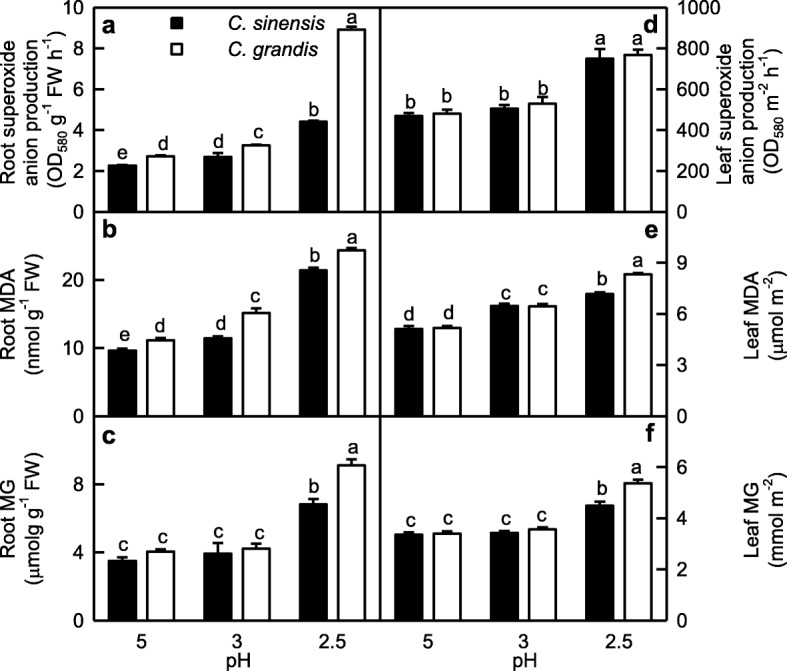
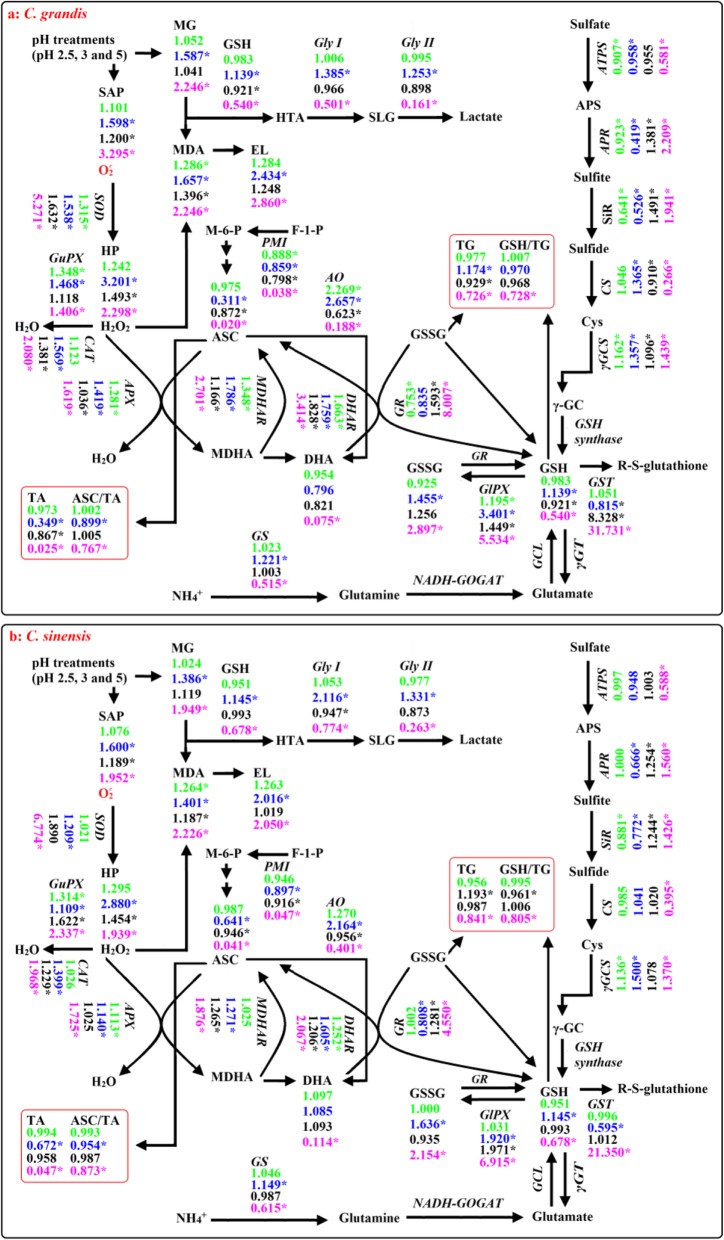
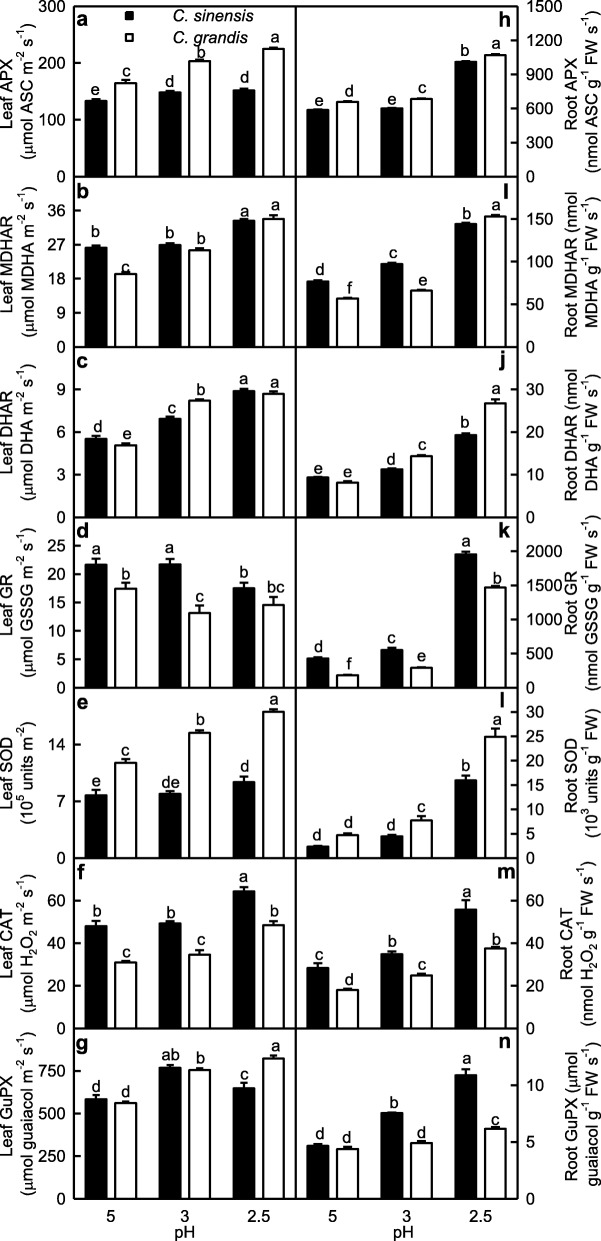
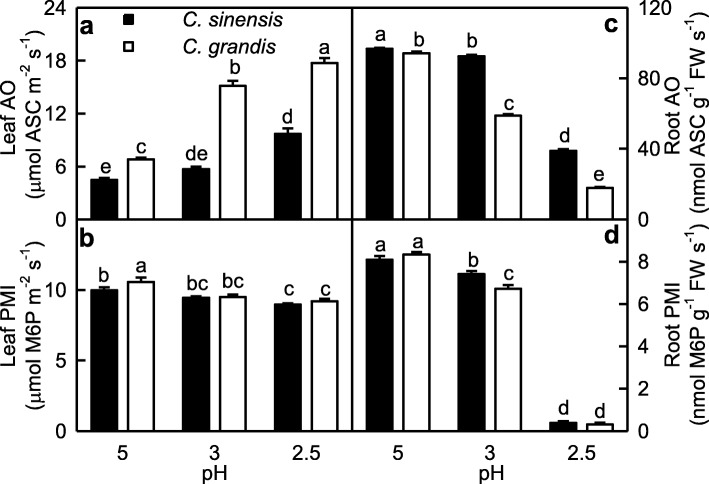
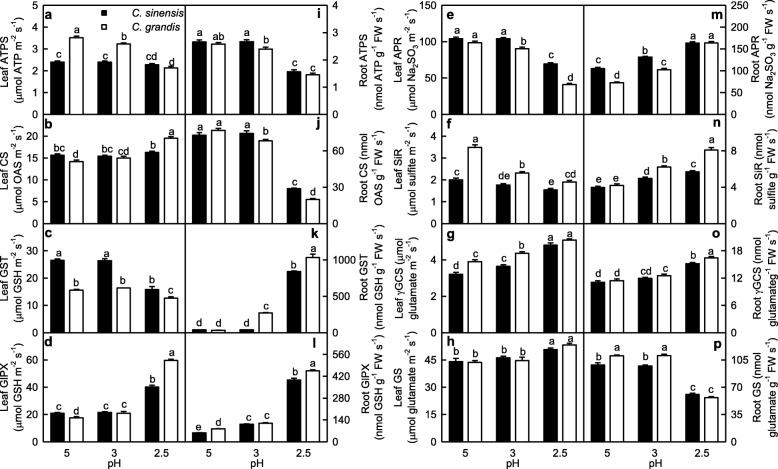
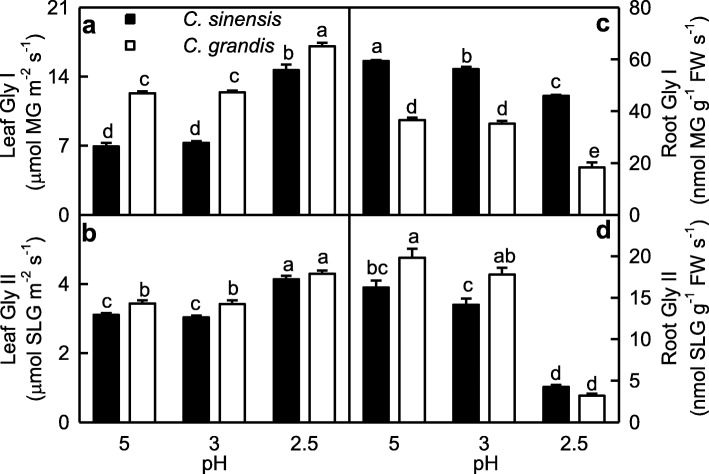
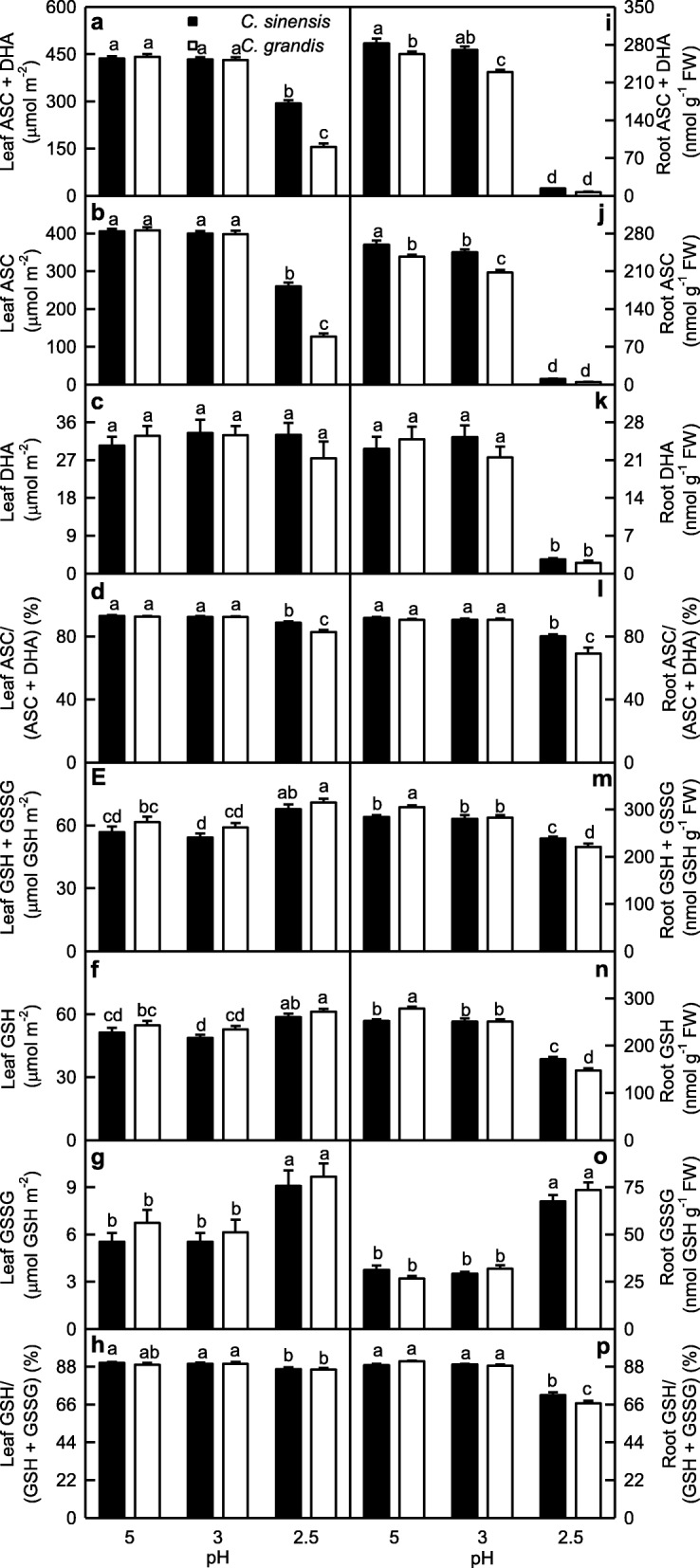
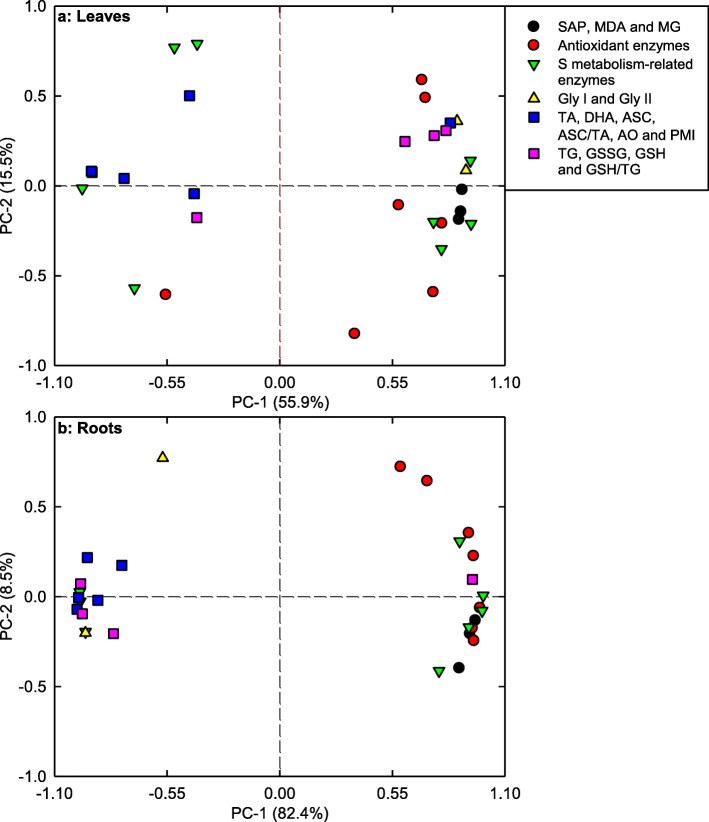
Compared with control, most of the physiological parameters related to ROS and MG metabolisms were greatly altered at pH 2.5, but almost unaffected at pH 3. In addition to decreased root growth, many fibrous roots became rotten and died at pH 2.5. pH 2.5-induced changes in SAP, the levels of MDA, MG and antioxidants, and the activities of most enzymes related to ROS and MG metabolisms were greater in roots than those of leaves. Impairment of root ascorbate metabolism was the most serious, especially in C. grandis roots. pH 2.5-induced increases in MDA and MG levels in roots and leaves, decreases in the ratios of ascorbate/(ascorbate+dehydroascorbate) in roots and leaves and of reduced glutathione/(reduced+oxidized glutathione) in roots were greater in C. grandis than those in C. sinensis.
Low pH affected MG and ROS metabolisms more in roots than those in leaves. The most seriously impaired ascorbate metabolism in roots was suggested to play a role in low pH-induced root death and growth inhibition. Low pH-treated C. sinensis roots and leaves had higher capacity to maintain a balance between ROS and MG production and their removal via detoxification systems than low pH-treated C. grandis ones, thus contribute to the higher acid-tolerance of C. sinensis.
关于活性氧(ROS)和甲基乙二醛(MG)代谢物对根和叶低 pH 的响应,目前数据有限。在中国,有相当数量的柑橘类植物生长在酸性土壤中(pH<5.0)。“血橙”(Citrus sinensis)和“酸柚”(Citrus grandis)(C. sinensis 比 C. grandis 更能耐受低 pH)幼苗每天用 pH 值为 2.5、3 或 5 的营养液灌溉 9 个月。此后,我们研究了低 pH 对生长的影响,以及超氧阴离子产生率(SAP)、丙二醛(MDA)、MG、抗氧化剂以及与 ROS 和 MG 解毒相关的酶在根和叶中的作用,目的是:(a)验证低 pH 对 ROS 和 MG 代谢的影响在根中比在叶中更显著的假设;(b)了解 ROS 和 MG 代谢在柑橘类植物耐低 pH 和耐低 pH 毒性中的作用。
与对照相比,大多数与 ROS 和 MG 代谢相关的生理参数在 pH 2.5 时发生了很大变化,但在 pH 3 时几乎没有变化。除了根生长减少外,许多须根在 pH 2.5 时腐烂和死亡。与 SAP、MDA、MG 和抗氧化剂水平以及与 ROS 和 MG 代谢相关的大多数酶的活性相关的 pH 2.5 诱导的变化在根中大于叶中。根中抗坏血酸代谢的损伤最严重,尤其是在 C. grandis 根中。根和叶中 MDA 和 MG 水平的增加、根和叶中抗坏血酸/(抗坏血酸+脱氢抗坏血酸)的比值以及根中还原型谷胱甘肽/(还原型+氧化型谷胱甘肽)的降低在 C. grandis 中大于 C. sinensis。
低 pH 对根中 MG 和 ROS 代谢的影响大于叶中。根中抗坏血酸代谢的损伤最严重,这可能与低 pH 诱导的根死亡和生长抑制有关。与低 pH 处理的 C. grandis 相比,低 pH 处理的 C. sinensis 根和叶具有更高的能力来维持 ROS 和 MG 产生与解毒系统去除之间的平衡,从而有助于提高 C. sinensis 的耐酸性。