Division of Molecular Medicine, Boston Children's Hospital, Boston, MA, USA.
Department of Biological Chemistry and Molecular Pharmacology, Harvard Medical School, Boston, MA, USA.
Nature. 2020 Jan;577(7789):275-279. doi: 10.1038/s41586-019-1759-1. Epub 2019 Nov 7.
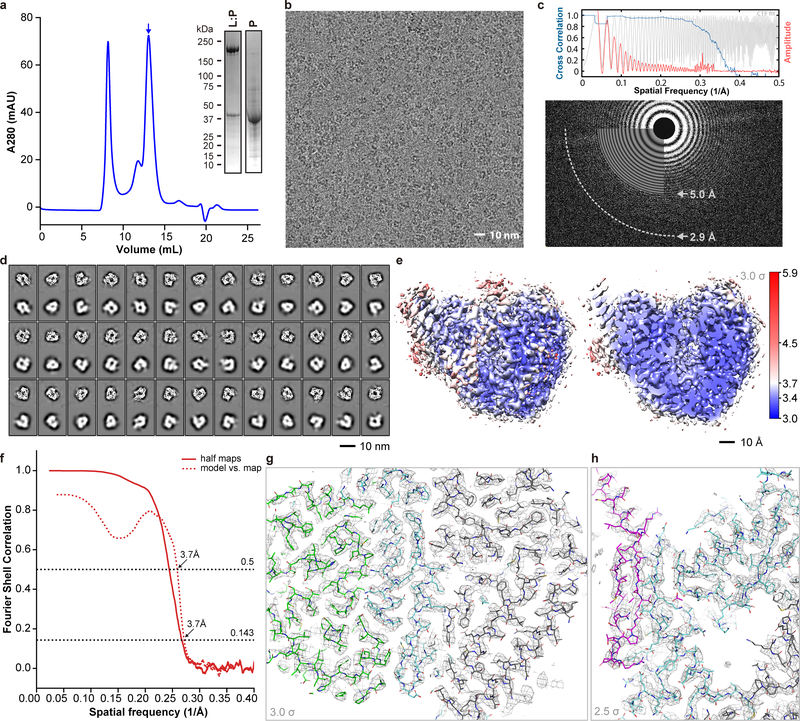
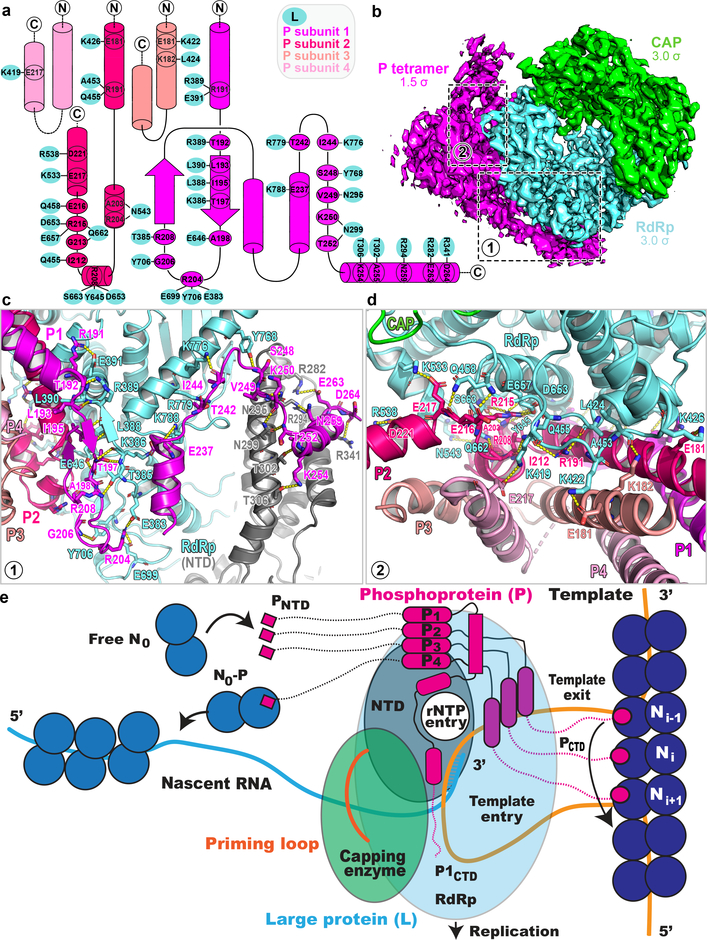
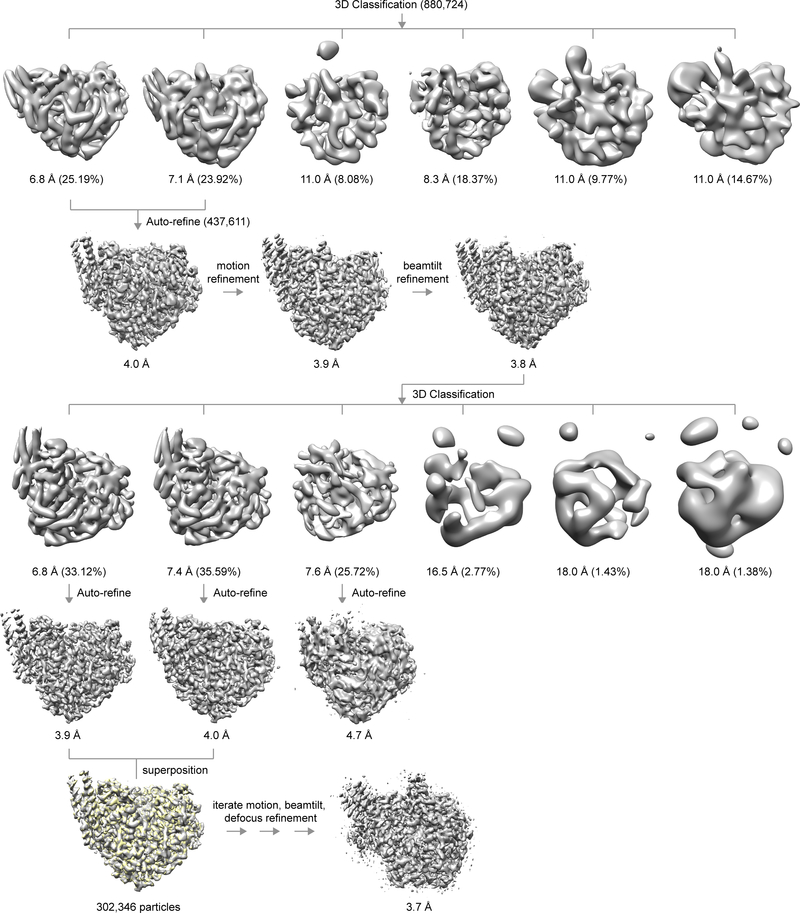
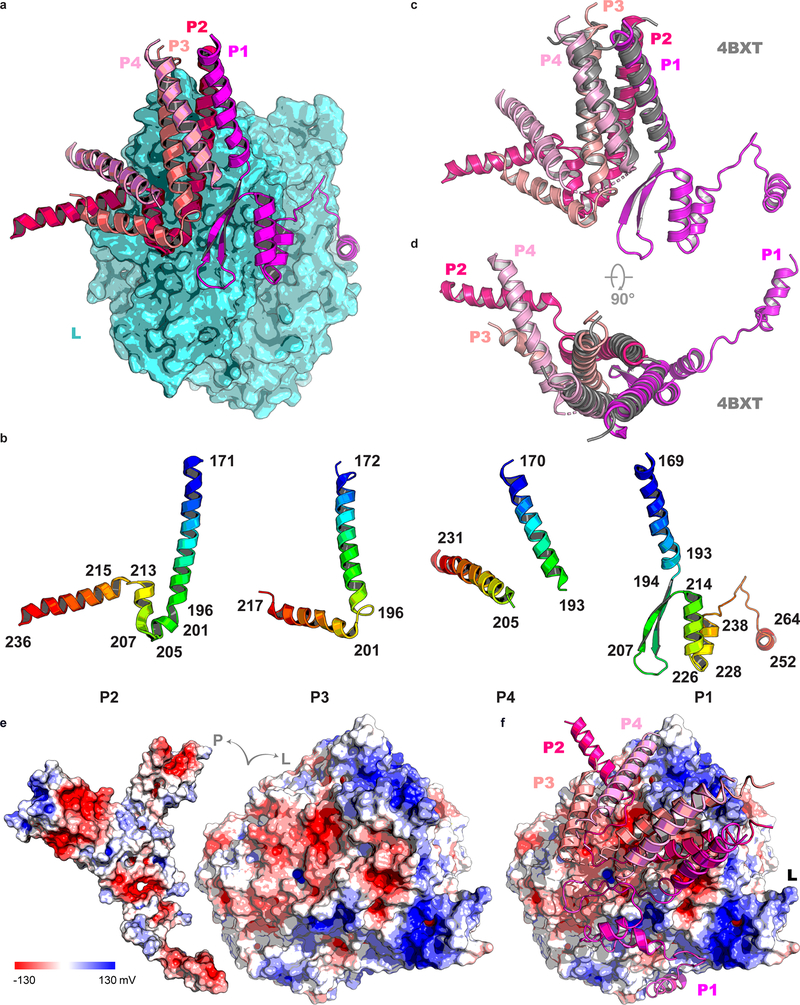
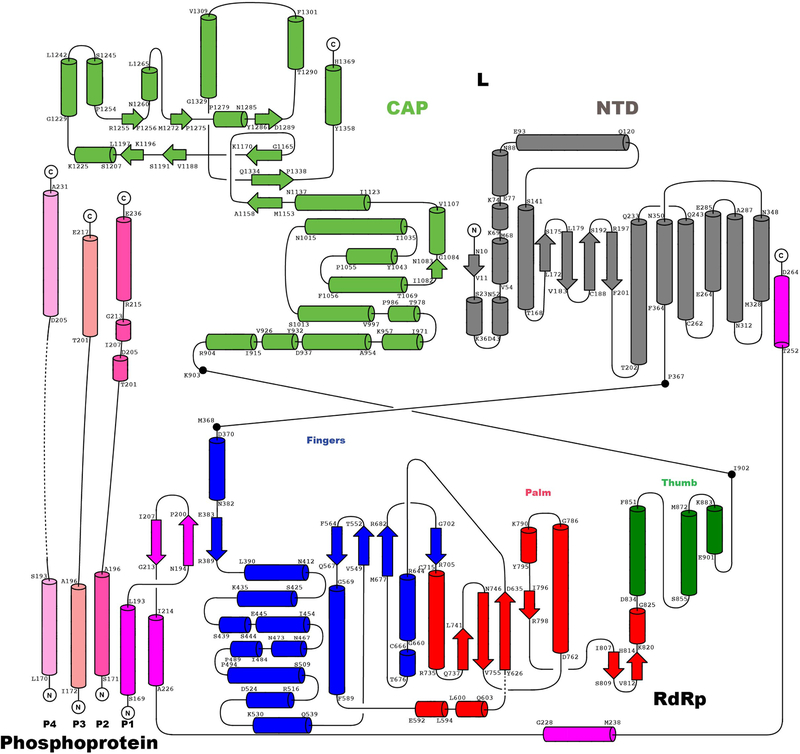
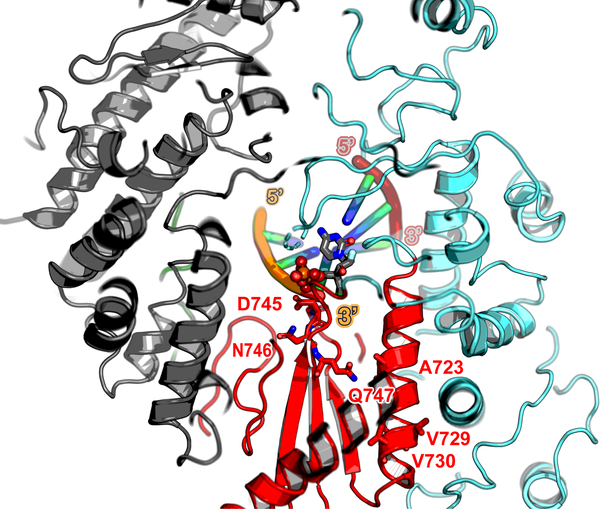
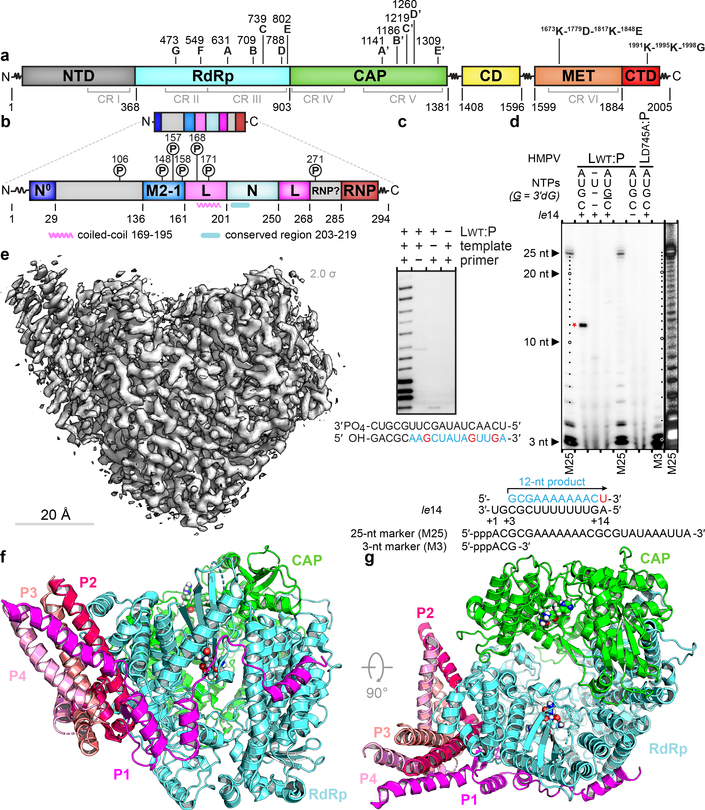
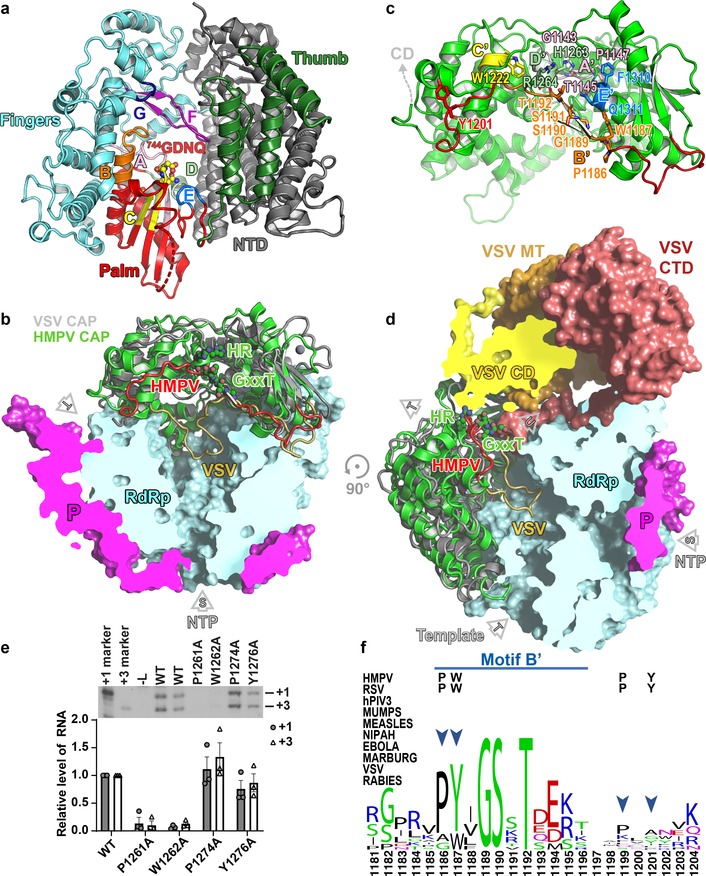
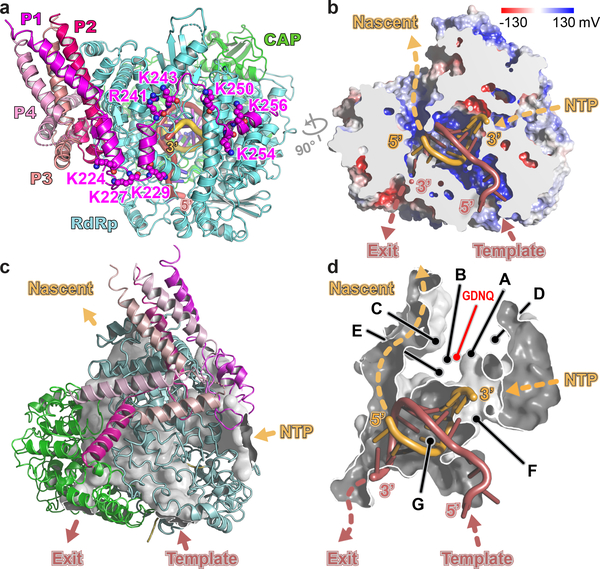
Respiratory syncytial virus (RSV) and human metapneumovirus (HMPV) cause severe respiratory diseases in infants and elderly adults. No vaccine or effective antiviral therapy currently exists to control RSV or HMPV infections. During viral genome replication and transcription, the tetrameric phosphoprotein P serves as a crucial adaptor between the ribonucleoprotein template and the L protein, which has RNA-dependent RNA polymerase (RdRp), GDP polyribonucleotidyltransferase and cap-specific methyltransferase activities. How P interacts with L and mediates the association with the free form of N and with the ribonucleoprotein is not clear for HMPV or other major human pathogens, including the viruses that cause measles, Ebola and rabies. Here we report a cryo-electron microscopy reconstruction that shows the ring-shaped structure of the polymerase and capping domains of HMPV-L bound to a tetramer of P. The connector and methyltransferase domains of L are mobile with respect to the core. The putative priming loop that is important for the initiation of RNA synthesis is fully retracted, which leaves space in the active-site cavity for RNA elongation. P interacts extensively with the N-terminal region of L, burying more than 4,016 Å of the molecular surface area in the interface. Two of the four helices that form the coiled-coil tetramerization domain of P, and long C-terminal extensions projecting from these two helices, wrap around the L protein in a manner similar to tentacles. The structural versatility of the four P protomers-which are largely disordered in their free state-demonstrates an example of a 'folding-upon-partner-binding' mechanism for carrying out P adaptor functions. The structure shows that P has the potential to modulate multiple functions of L and these results should accelerate the design of specific antiviral drugs.
呼吸道合胞病毒(RSV)和人偏肺病毒(HMPV)可导致婴儿和老年人群发生严重呼吸道疾病。目前尚无疫苗或有效的抗病毒疗法可用于控制 RSV 或 HMPV 感染。在病毒基因组复制和转录过程中,四聚体磷蛋白 P 作为核糖核蛋白模板与 L 蛋白之间的关键衔接子,L 蛋白具有 RNA 依赖性 RNA 聚合酶(RdRp)、GDP 多聚核糖核苷酸转移酶和帽特异性甲基转移酶活性。对于 HMPV 或其他主要人类病原体(包括导致麻疹、埃博拉和狂犬病的病毒),P 如何与 L 相互作用并介导与游离 N 结合以及与核糖核蛋白结合的机制尚不清楚。在这里,我们报道了一个冷冻电镜重建结构,显示了 HMPV-L 的聚合酶和加帽结构域与 P 的四聚体结合的环形结构。L 的连接器和甲基转移酶结构域相对于核心是可移动的。对于 RNA 合成起始很重要的假定引发环完全缩回,这为活性位点空腔中的 RNA 延伸留出了空间。P 与 L 的 N 端区域广泛相互作用,在界面中掩埋了超过 4016Å 的分子表面积。P 的四聚体化结构域形成的四个螺旋中的两个,以及从这两个螺旋伸出的长 C 末端延伸部分,以类似于触手的方式围绕 L 蛋白缠绕。四个 P 原聚体的结构灵活性-在其游离状态下主要处于无序状态-展示了一种“伴侣结合时折叠”机制的范例,用于执行 P 衔接子功能。该结构表明 P 有可能调节 L 的多种功能,这些结果应加速特定抗病毒药物的设计。