Lee Yong Yook, Seo Hwi Won, Kyung Jong-Su, Hyun Sun Hee, Han Byung Cheol, Park Songhee, So Seung Ho, Lee Seung Ho, Yi Eugene C
The Korean Ginseng Research Institute, Korea Ginseng Corporation, Daejeon, Republic of Korea.
Department of Molecular Medicine and Biopharmaceutical Sciences, School of Convergence Science and Technology and College of Medicine or College of Pharmacy, Seoul National University, Seoul, Republic of Korea.
J Ginseng Res. 2019 Oct;43(4):666-675. doi: 10.1016/j.jgr.2019.05.001. Epub 2019 May 11.
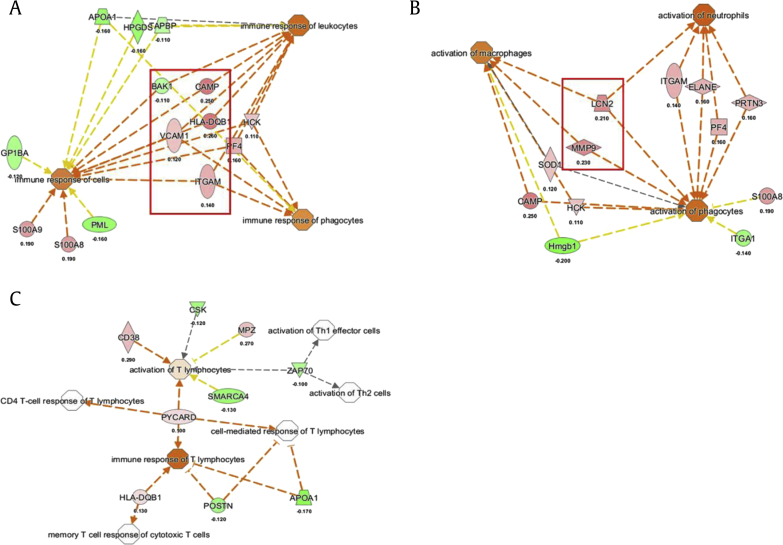
Korean Red Ginseng (KRG) has been widely used as an herbal medicine to normalize and strengthen body functions. Although many researchers have focused on the biological effects of KRG, more studies on the action mechanism of red ginseng are still needed. Previously, we investigated the proteomic changes of the rat spleen while searching for molecular signatures and the action mechanism of KRG. The proteomic analysis revealed that differentially expressed proteins (DEPs) were involved in the increased immune response and phagocytosis. The aim of this study was to evaluate the biological activities of KRG, especially the immune-enhancing response of KRG.
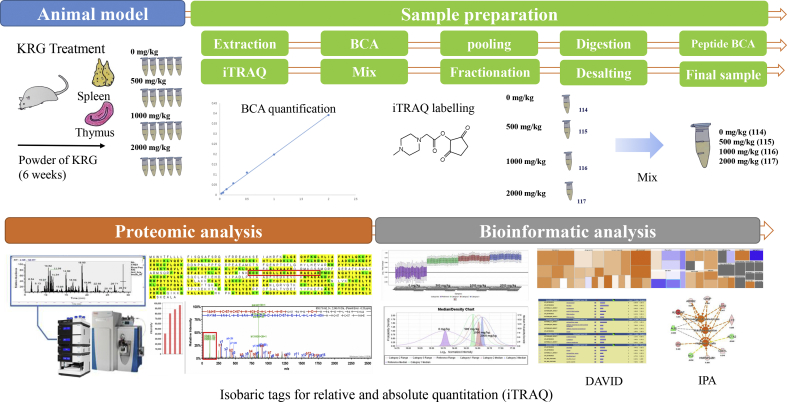
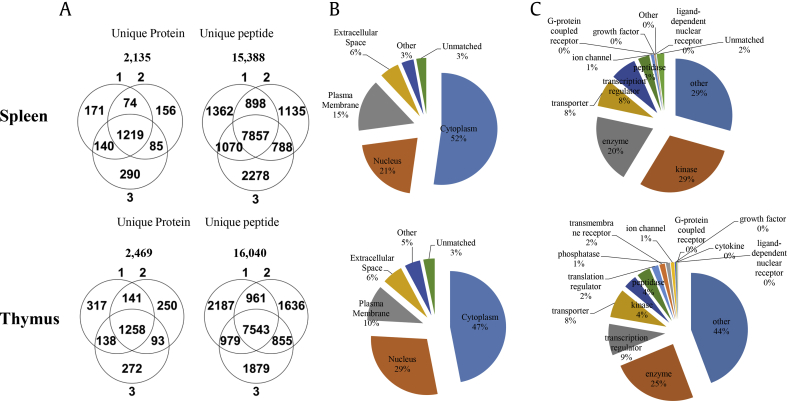
Rats were divided into 4 groups: 0 (control group), 500, 1000, and 2000 mg/kg administration of KRG powder for 6 weeks, respectively. Isobaric tags for relative and absolute quantitation was performed with Q-Exactive LC-MS/MS to compare associated proteins between the groups. The putative DEPs were identified by a current UniProt rat protein database search and by the Gene Ontology annotations.
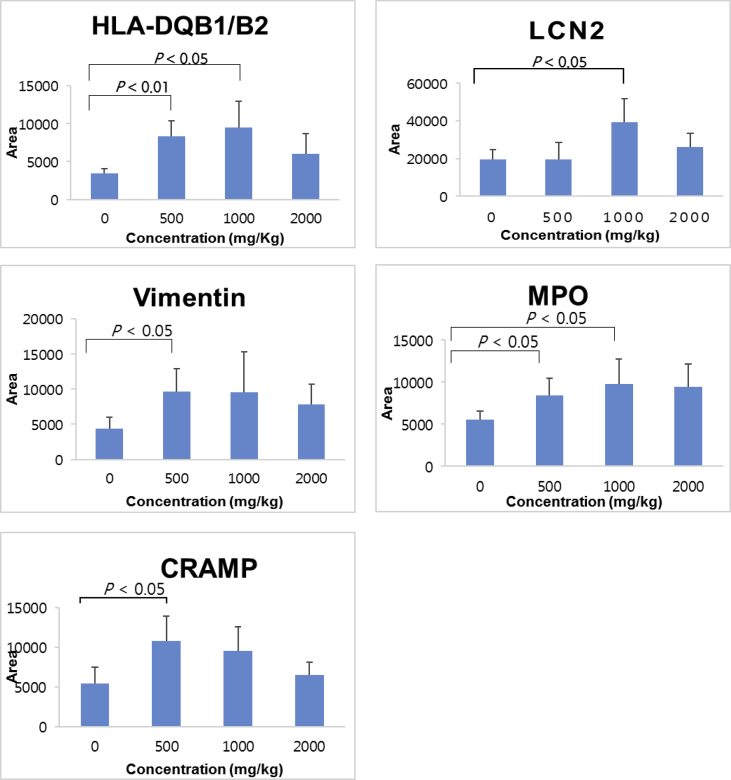
The DEPs appear to increase the innate and acquired immunity as well as immune cell movement. These results suggest that KRG can stimulate immune responses. This analysis refined our targets of interest to include the potential functions of KRG. Furthermore, we validated the potential molecular targets of the functions, representatively LCN2, CRAMP, and HLA-DQB1, by Western blotting.
These results may provide molecular signature candidates to elucidate the mechanisms of the immune response by KRG. Here, we demonstrate a strategy of tissue proteomics for the discovery of the molecular function of KRG.
韩国红参(KRG)作为一种草药,已被广泛用于调节和增强身体机能。尽管许多研究人员关注KRG的生物学效应,但仍需要对红参的作用机制进行更多研究。此前,我们在寻找KRG的分子特征和作用机制时,研究了大鼠脾脏的蛋白质组学变化。蛋白质组学分析表明,差异表达蛋白(DEPs)参与了免疫反应和吞噬作用的增强。本研究的目的是评估KRG的生物学活性,尤其是其免疫增强反应。
将大鼠分为4组:分别给予0(对照组)、500、1000和2000mg/kg的KRG粉末,持续6周。采用Q-Exactive液相色谱-串联质谱联用仪进行相对和绝对定量的等压标签标记,以比较各组之间的相关蛋白质。通过当前的UniProt大鼠蛋白质数据库搜索和基因本体注释来鉴定推定的DEPs。
DEPs似乎增强了先天免疫和后天免疫以及免疫细胞的移动。这些结果表明KRG可以刺激免疫反应。该分析细化了我们感兴趣的目标,包括KRG的潜在功能。此外,我们通过蛋白质印迹法验证了这些功能的潜在分子靶点,代表性的有LCN2、CRAMP和HLA-DQB1。
这些结果可能为阐明KRG免疫反应机制提供分子特征候选物。在此,我们展示了一种用于发现KRG分子功能的组织蛋白质组学策略。