Emergency Medicine, University of Helsinki, Department of Emergency Medicine and Services, Helsinki University Hospital, Helsinki, Finland.
Emergency Department, Hospital Clínic, University of Barcelona, Villarroel 170, Barcelona, 08036, Spain.
ESC Heart Fail. 2020 Feb;7(1):289-296. doi: 10.1002/ehf2.12524. Epub 2019 Nov 8.
To illustrate the pre-hospital management arsenals and protocols in different EMS units, and to estimate the perceived difficulty of diagnosing suspected acute heart failure (AHF) compared with other common pre-hospital conditions.
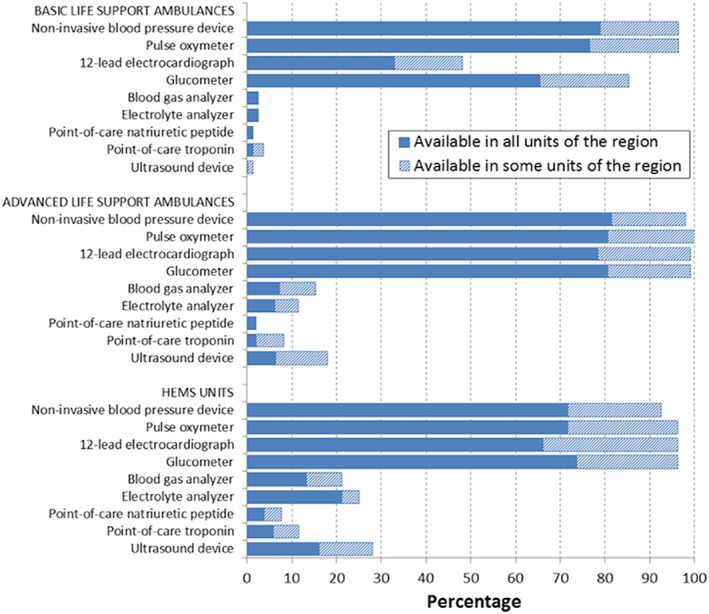
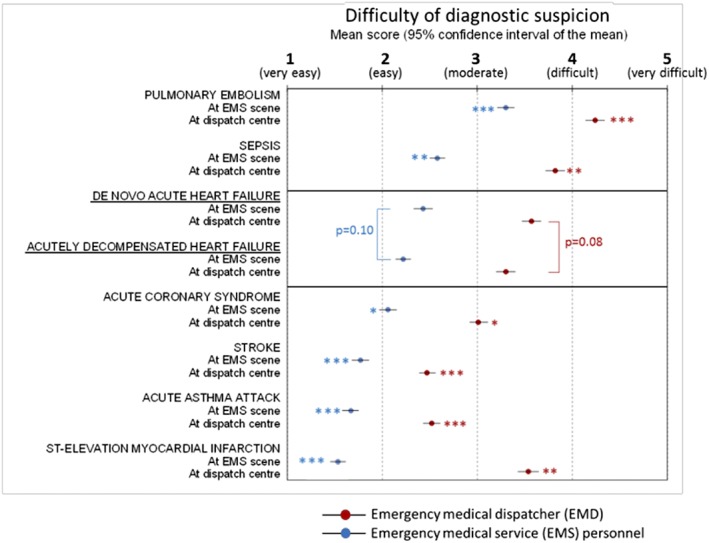
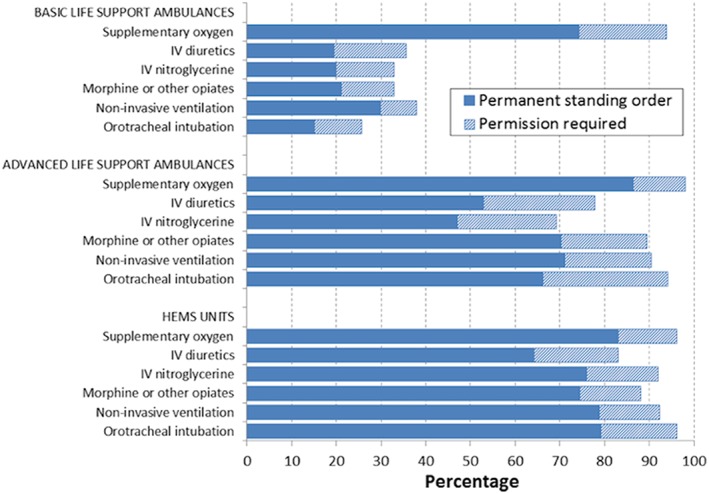
A multinational survey included 104 emergency medical service (EMS) regions from 18 countries. Diagnostic and therapeutic arsenals related to AHF management were reported for each type of EMS unit. The prevalence and contents of management protocols for common medical conditions treated pre-hospitally was collected. The perceived difficulty of diagnosing AHF and other medical conditions by emergency medical dispatchers and EMS personnel was interrogated. Ultrasound devices and point-of-care testing were available in advanced life support and helicopter EMS units in fewer than 25% of EMS regions. AHF protocols were present in 80.8% of regions. Protocols for ST-elevation myocardial infarction, chest pain, and dyspnoea were present in 95.2, 80.8, and 76.0% of EMS regions, respectively. Protocolized diagnostic actions for AHF management included 12-lead electrocardiogram (92.1% of regions), ultrasound examination (16.0%), and point-of-care testings for troponin and BNP (6.0 and 3.5%). Therapeutic actions included supplementary oxygen (93.2%), non-invasive ventilation (80.7%), intravenous furosemide, opiates, nitroglycerine (69.0, 68.6, and 57.0%), and intubation 71.5%. Diagnosing suspected AHF was considered easy to moderate by EMS personnel and moderate to difficult by emergency medical dispatchers (without significant differences between de novo and decompensated heart failure). In both settings, diagnosis of suspected AHF was considered easier than pulmonary embolism and more difficult than ST-elevation myocardial infarction, asthma, and stroke.
The prevalence of AHF protocols is rather high but the contents seem to vary. Difficulty of diagnosing suspected AHF seems to be moderate compared with other pre-hospital conditions.
阐述不同急救医疗服务(EMS)单位的院前管理方案和规程,并评估与其他常见院前情况相比,诊断疑似急性心力衰竭(AHF)的难度。
一项多中心调查纳入了来自 18 个国家的 104 个 EMS 区域。报告了每种类型 EMS 单位与 AHF 管理相关的诊断和治疗方案。收集了院前治疗常见医疗状况的管理方案的流行情况和内容。询问了急救医疗调度员和 EMS 人员诊断 AHF 和其他医疗状况的难度。超声设备和即时检测在不到 25%的 EMS 区域的高级生命支持和直升机 EMS 单位中可用。80.8%的区域有 AHF 方案。ST 段抬高型心肌梗死、胸痛和呼吸困难的方案分别在 95.2%、80.8%和 76.0%的 EMS 区域中存在。AHF 管理方案的诊断措施包括 12 导联心电图(92.1%的区域)、超声检查(16.0%)和即时检测肌钙蛋白和 BNP(6.0%和 3.5%)。治疗措施包括补充氧气(93.2%)、无创通气(80.7%)、静脉注射呋塞米、阿片类药物、硝酸甘油(69.0%、68.6%和 57.0%)和插管(71.5%)。EMS 人员认为诊断疑似 AHF 容易到中等程度,急救医疗调度员认为诊断疑似 AHF 是中等到困难程度(新发和失代偿性心力衰竭之间无显著差异)。在这两种情况下,诊断疑似 AHF 比诊断肺栓塞容易,比 ST 段抬高型心肌梗死、哮喘和中风困难。
AHF 方案的流行率相当高,但内容似乎有所不同。与其他院前情况相比,诊断疑似 AHF 的难度似乎处于中等水平。