Department of Cardiovascular Medicine Mayo Clinic Rochester MN.
Divison of Pediatric Cardiology Mayo Clinic Rochester MN.
J Am Heart Assoc. 2019 Nov 19;8(22):e014148. doi: 10.1161/JAHA.119.014148. Epub 2019 Nov 8.
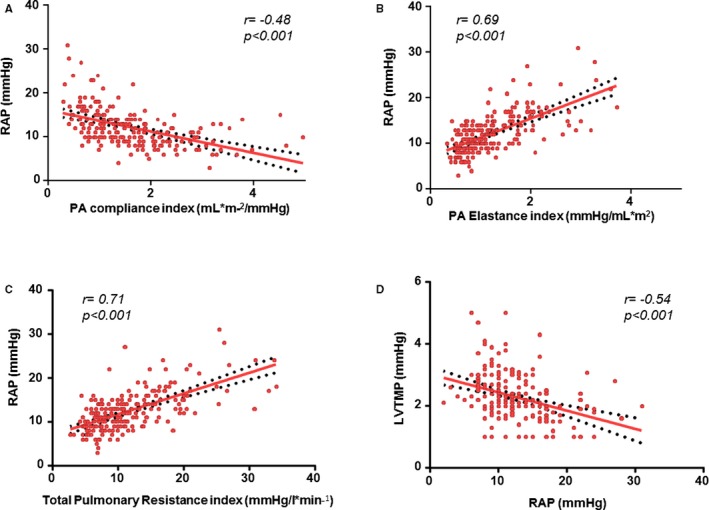
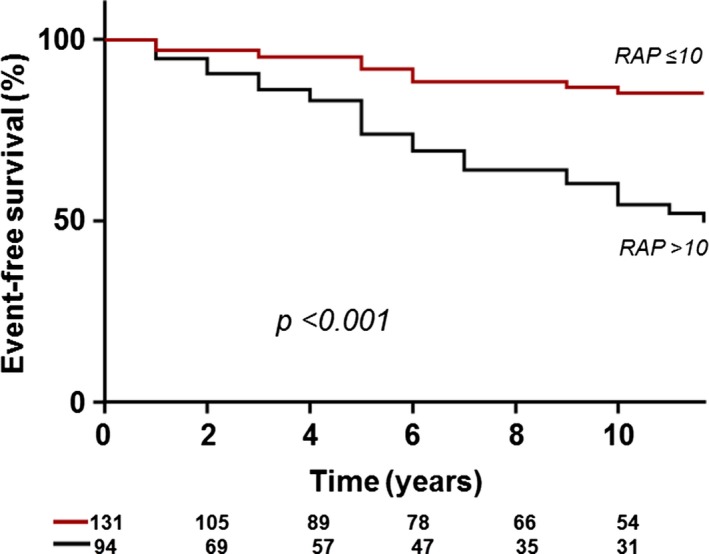
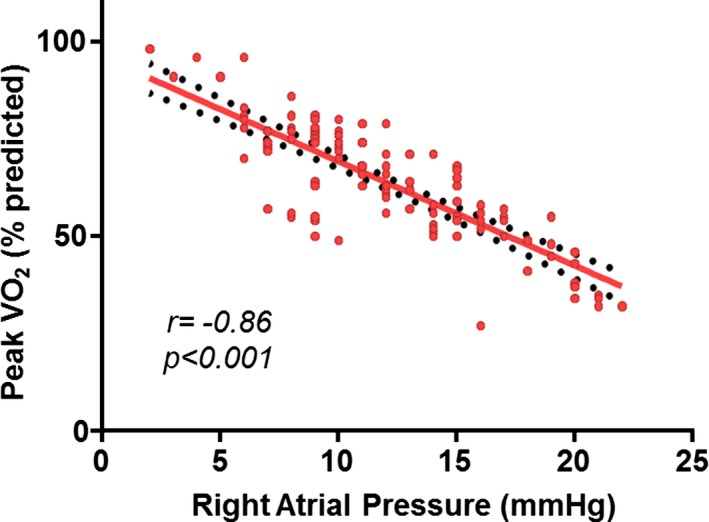
Background Right atrial pressure (RAP), a composite metric of right ventricular diastolic function, volume status, and right heart compliance, is a predictor of mortality in patients with heart failure due to acquired heart disease. Because patients with tetralogy of Fallot (TOF) might have abnormal right atrial and ventricular mechanics caused by myocardial injury and remodeling, we hypothesized that RAP would be associated with disease severity and cardiovascular adverse events in this population. Methods and Results We performed a cohort study of adults with TOF who underwent right heart catheterization at the Mayo Clinic Rochester between 1990 and 2017. The objective was to determine the association between RAP and multiple domains of disease severity in TOF (percentage of predicted peak oxygen consumption, atrial or ventricular arrhythmia, and heart failure hospitalization), as well as cardiovascular adverse events, defined as sustained ventricular tachycardia, resuscitated or aborted sudden death, heart transplantation, or death. Among 225 patients (113 male; mean age: 39±14 years), mean RAP was 10.7±5.2 mm Hg and median was 10 mm Hg (interquartile range: 7-13 mm Hg). Increasing RAP was associated with atrial or ventricular arrhythmias (odds ratio: 5.01; 95% CI, 1.22-23.49; <0.001), heart failure hospitalization (odds ratio: 1.47; 95% CI, 1.10-2.39; =0.033) per 5 mm Hg, and worsening exercise capacity (peak oxygen consumption; =0.74, =-0.86, <0.001). RAP was a predictor of cardiovascular adverse events (hazard ratio: 1.28; 95% CI, 1.10-1.47; =0.028) per 5 mm Hg. Conclusions In symptomatic patients with TOF, increasing RAP correlates with multiple domains of disease severity (risk stratification) and predicts future cardiovascular events (prognostication). These data have potential clinical implications in the target population of symptomatic TOF patients.
右心房压(RAP)是右心室舒张功能、容量状态和右心顺应性的综合指标,是获得性心脏病心力衰竭患者死亡的预测指标。由于法洛四联症(TOF)患者可能因心肌损伤和重塑而导致右心房和右心室力学异常,我们假设在该人群中,RAP 与疾病严重程度和心血管不良事件相关。
我们对 1990 年至 2017 年在梅奥诊所罗切斯特分院接受右心导管检查的 TOF 成年患者进行了队列研究。目的是确定 RAP 与 TOF 中多个疾病严重程度领域(预测峰值耗氧量的百分比、心房或室性心律失常以及心力衰竭住院)以及心血管不良事件(定义为持续性室性心动过速、复苏或中止的猝死、心脏移植或死亡)之间的关联。在 225 例患者(男性 113 例;平均年龄:39±14 岁)中,平均 RAP 为 10.7±5.2mmHg,中位数为 10mmHg(四分位距:7-13mmHg)。RAP 升高与房性或室性心律失常(优势比:5.01;95%置信区间,1.22-23.49;<0.001)、心力衰竭住院(优势比:1.47;95%置信区间,1.10-2.39;=0.033)每增加 5mmHg 以及运动能力恶化(峰值耗氧量;=0.74,=-0.86,<0.001)相关。RAP 是心血管不良事件的预测指标(风险比:1.28;95%置信区间,1.10-1.47;=0.028)每增加 5mmHg。
在有症状的 TOF 患者中,RAP 的增加与疾病严重程度的多个领域(风险分层)相关,并预测未来的心血管事件(预后)。这些数据在有症状的 TOF 患者这一目标人群中具有潜在的临床意义。