Department of Pediatric Orthopaedics, Altonaer Children's Hospital, Bleickenallee 38, 22763, Hamburg, Germany.
Department of Orthopaedics, University Medical Center Hamburg-Eppendorf, Martinistraße 52, 20246, Hamburg, Germany.
J Orthop Surg Res. 2019 Nov 8;14(1):349. doi: 10.1186/s13018-019-1433-1.
In recent years, the modified Dunn osteotomy has gained popularity to treat slipped capital femoral epiphysis (SCFE) with various complication rates. Most studies included patients with different severities. This study aimed to determine (1) the radiological and clinical outcome, (2) the health-related quality of life, and (3) the incidence of avascular necrosis of the femoral head (AVN) in patients with severe chronic or acute on chronic SCFE treated by the modified Dunn procedure.
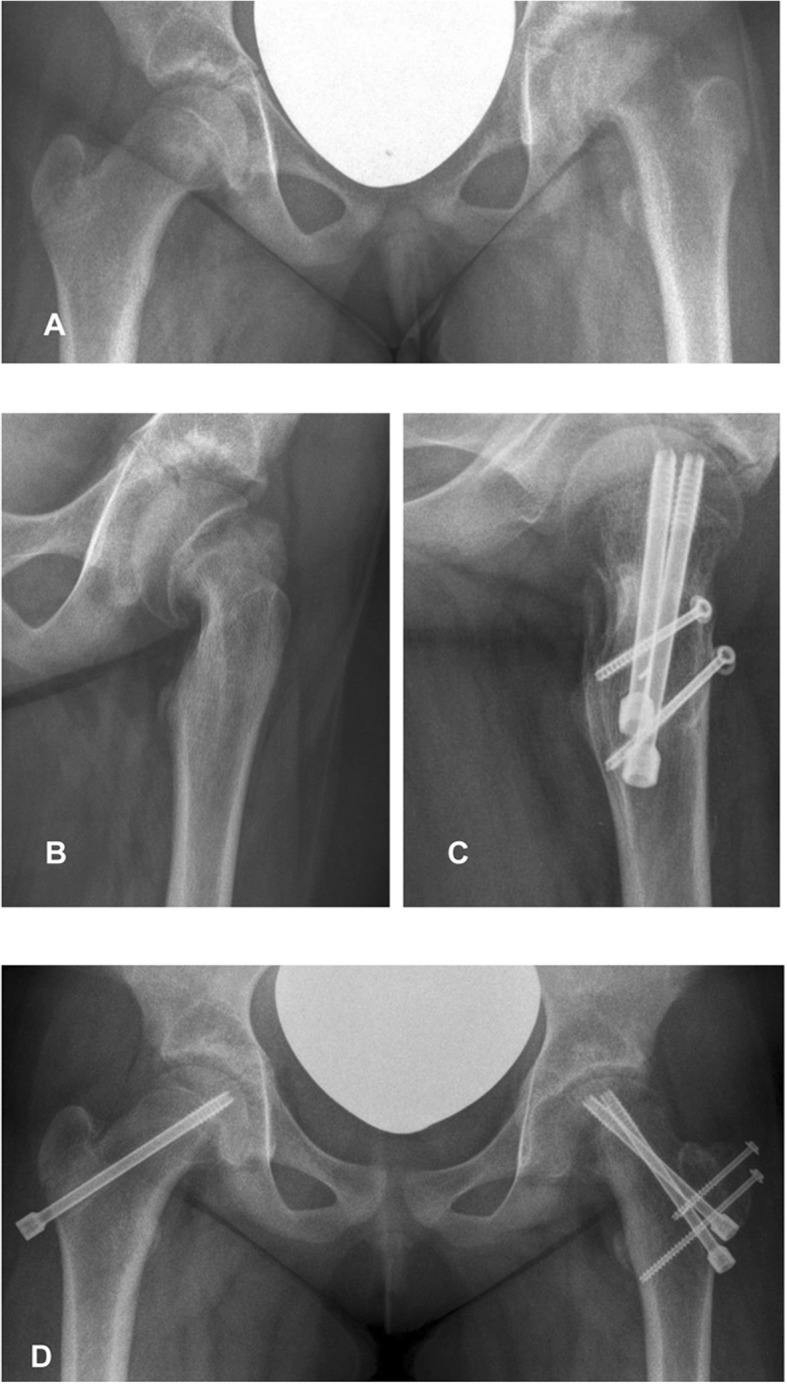
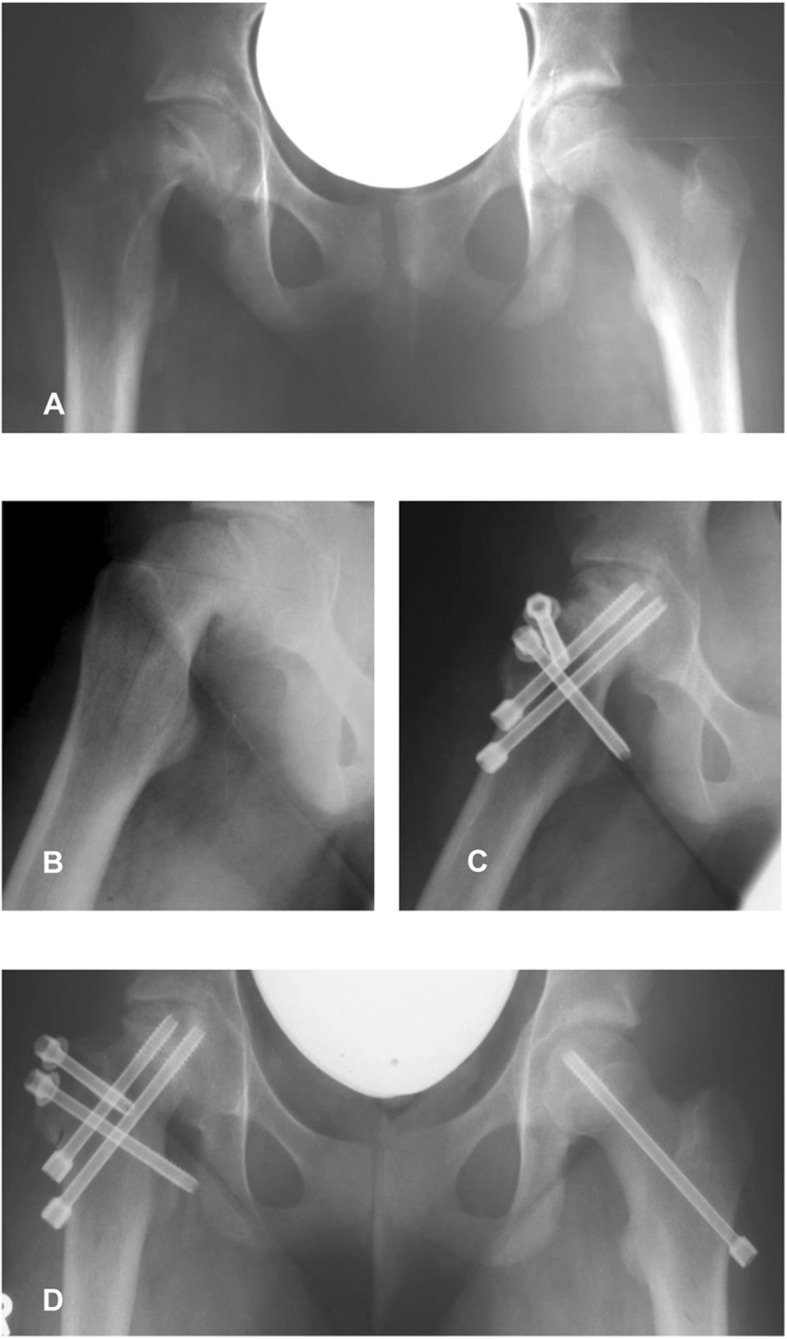
Out of 150 patients with SCFE treated at our institution between 2001 and 2014, 15 patients (mean age 12.9 years (range 11.8-15)) were treated by the modified Dunn procedure. Eight SCFE were chronic and 7 acute on chronic. All slips were severe with a mean Southwick slip angle (SSA) of 67° (range 60-80). Radiographic and clinical outcomes were measured. Mean time of follow-up was 3.8 years (range 1-10).
Anatomical reduction was achieved in all cases. Good radiological results according to the Stulberg Classification (grade 1 + 2) and the Sphericity Deviation Score (< 30) were found in 9 out of 13 patients at the last follow-up. Clinical and functional outcome analysis revealed good results in 8 out of 10 patients (Harris Hip Score > 80). The quality of life measured by the Nottingham Health Profile (NHP) was described good in 10 out of 10 patients. Four out of 15 patients developed an AVN.
The modified Dunn procedure has a great potential to restore proximal femur geometry in severe chronic or acute on chronic SCFE. It should be considered only if there is no other possibility to restore proximal femur geometry, as is the case in severe slips, due to the risk of AVN.
近年来,改良 Dunn 截骨术在治疗股骨颈骨骺滑脱(SCFE)方面越来越受欢迎,其并发症发生率也各不相同。大多数研究都纳入了不同严重程度的患者。本研究旨在确定(1)改良 Dunn 手术后严重慢性或慢性急性 SCFE 患者的影像学和临床结果,(2)健康相关生活质量,以及(3)股骨头缺血性坏死(AVN)的发生率。
在 2001 年至 2014 年期间,我们机构共治疗了 150 例 SCFE 患者,其中 15 例(平均年龄 12.9 岁(范围 11.8-15))采用改良 Dunn 手术治疗。8 例为慢性 SCFE,7 例为慢性急性 SCFE。所有滑脱均为严重滑脱,平均 Southwick 滑脱角(SSA)为 67°(范围 60-80)。测量影像学和临床结果。平均随访时间为 3.8 年(范围 1-10)。
所有病例均达到解剖复位。在最后一次随访时,根据 Stulberg 分类(1+2 级)和球形度偏差评分(<30),13 例中有 9 例获得良好的影像学结果。在 10 例中有 8 例临床和功能结果分析显示良好(Harris 髋关节评分>80)。通过诺丁汉健康调查问卷(NHP)测量的生活质量在 10 例中有 10 例描述良好。15 例中有 4 例发生 AVN。
改良 Dunn 手术在治疗严重慢性或慢性急性 SCFE 时具有很好的恢复股骨近端几何形状的潜力。只有在无法恢复股骨近端几何形状的情况下,例如在严重滑脱的情况下,才应考虑使用改良 Dunn 手术,因为存在发生 AVN 的风险。