Department of Prehistory, Ancien History and Archaeology, Complutense University, Prof. Aranguren s/n, 28040, Madrid, Spain.
C.A.I. Arqueometría, Complutense University, Prof. Aranguren s/n, 28040, Madrid, Spain.
Sci Rep. 2019 Nov 8;9(1):16301. doi: 10.1038/s41598-019-52807-0.
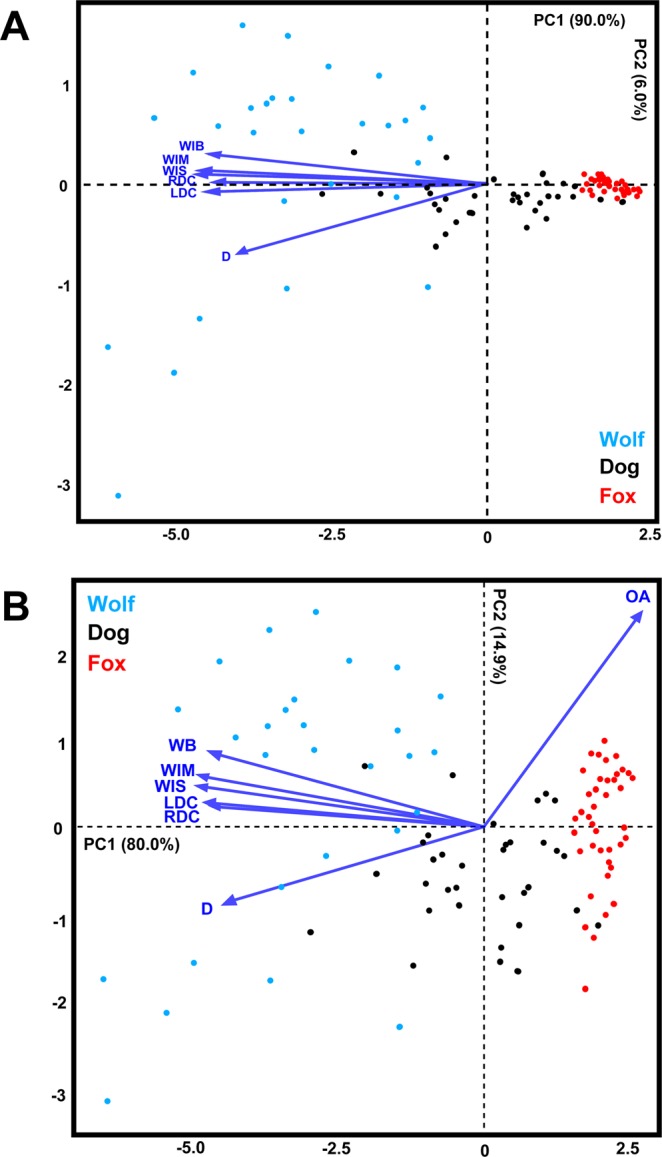
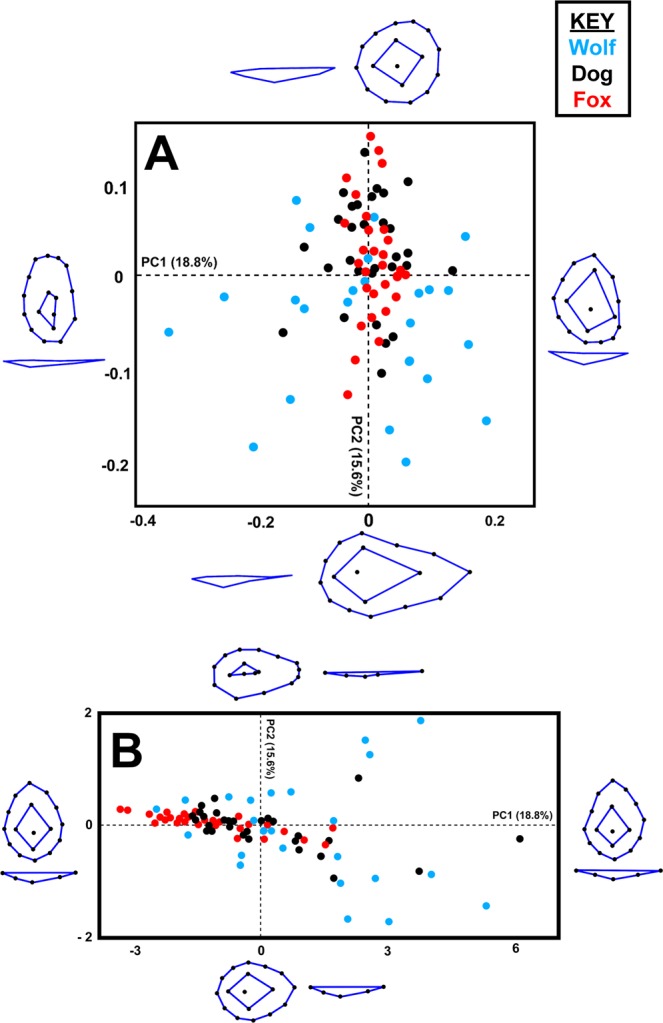
Historically wolves and humans have had a conflictive relationship which has driven the wolf to extinction in some areas across Northern America and Europe. The last decades have seen a rise of multiple government programs to protect wolf populations. Nevertheless, these programs have been controversial in rural areas, product of the predation of livestock by carnivores. As a response to such issues, governments have presented large scale economic plans to compensate the respected owners. The current issue lies in the lack of reliable techniques that can be used to detect the predator responsible for livestock predation. This has led to complications when obtaining subsidies, creating conflict between landowners and government officials. The objectives of this study therefore are to provide a new alternative approach to differentiating between tooth marks of different predators responsible for livestock predation. Here we present the use of geometric morphometrics and Machine Learning algorithms to discern between different carnivores through in depth analysis of the tooth marks they leave on bone. These results present high classification rates with up to 100% accuracy in some cases, successfully differentiating between wolves, dogs and fox tooth marks.
从历史上看,狼和人类之间一直存在着冲突关系,这种关系导致狼在北美的一些地区和欧洲灭绝。过去几十年,出现了多个政府项目来保护狼群。然而,这些项目在农村地区引起了争议,这是因为肉食动物捕食家畜。作为对这些问题的回应,政府提出了大规模的经济计划来补偿受尊敬的所有者。目前的问题在于缺乏可靠的技术,无法检测到负责家畜捕食的捕食者。这在获得补贴时带来了复杂性,导致了土地所有者和政府官员之间的冲突。因此,本研究的目的是提供一种新的替代方法,以区分不同的捕食者对家畜捕食的齿痕。在这里,我们通过深入分析不同肉食动物在骨头上留下的齿痕,提出了使用几何形态计量学和机器学习算法来区分不同肉食动物的方法。这些结果在某些情况下表现出了很高的分类准确率,高达 100%,成功地区分了狼、狗和狐狸的齿痕。