Stanford Cardiovascular Institute, Stanford University School of Medicine, 265 Campus Drive, Room G1120B, Stanford, CA 94305, USA; Department of Bioengineering, Stanford University Schools of Medicine and Engineering, Stanford, CA 94305, USA.
Stanford Cardiovascular Institute, Stanford University School of Medicine, 265 Campus Drive, Room G1120B, Stanford, CA 94305, USA; Institute for Stem Cell Biology and Regenerative Medicine, Stanford University School of Medicine, Stanford, CA 94305, USA; Smidt Heart Institute, Cedars-Sinai Medical Center, Los Angeles, CA 90048, USA; Board of Governors Regenerative Medicine Institute, Cedars-Sinai Medical Center, Los Angeles, CA 90048, USA.
Stem Cell Reports. 2019 Dec 10;13(6):960-969. doi: 10.1016/j.stemcr.2019.10.006. Epub 2019 Nov 7.
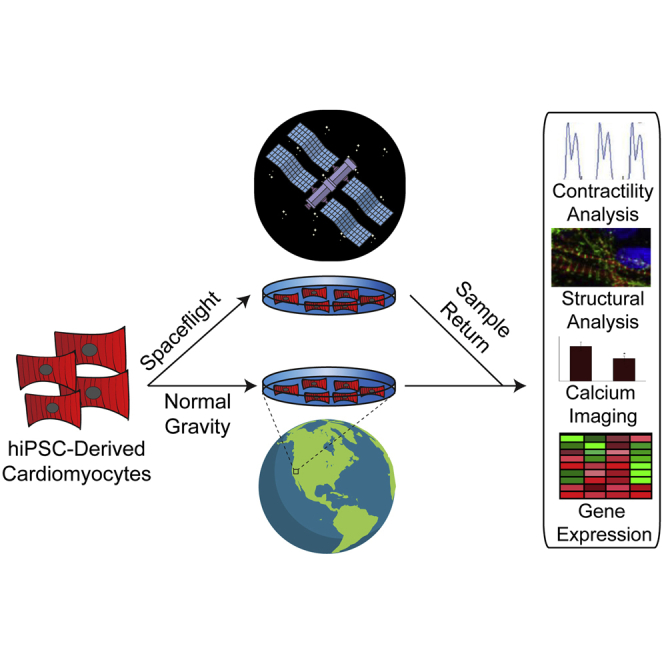
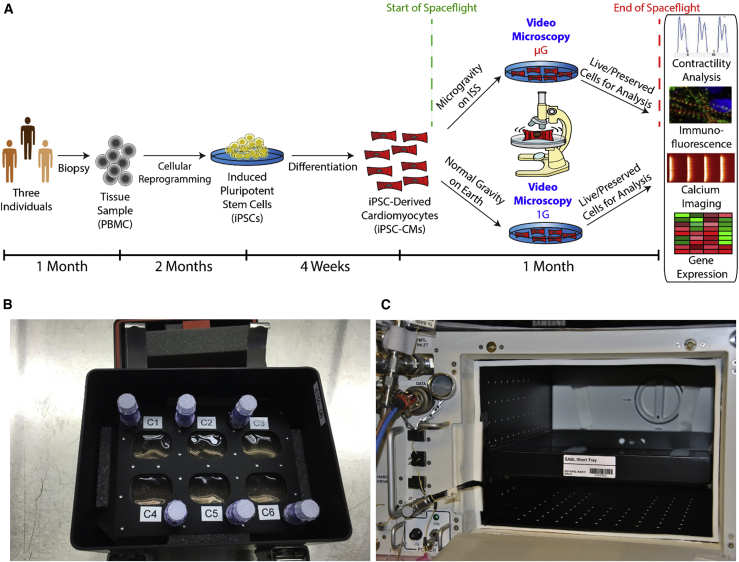
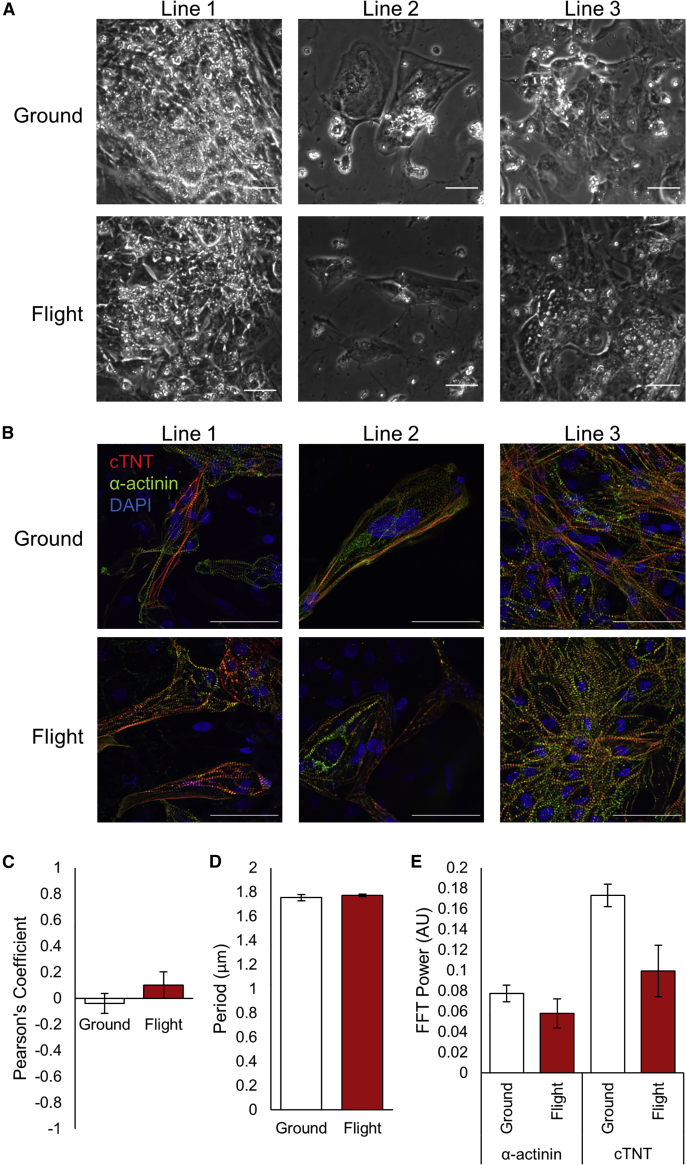
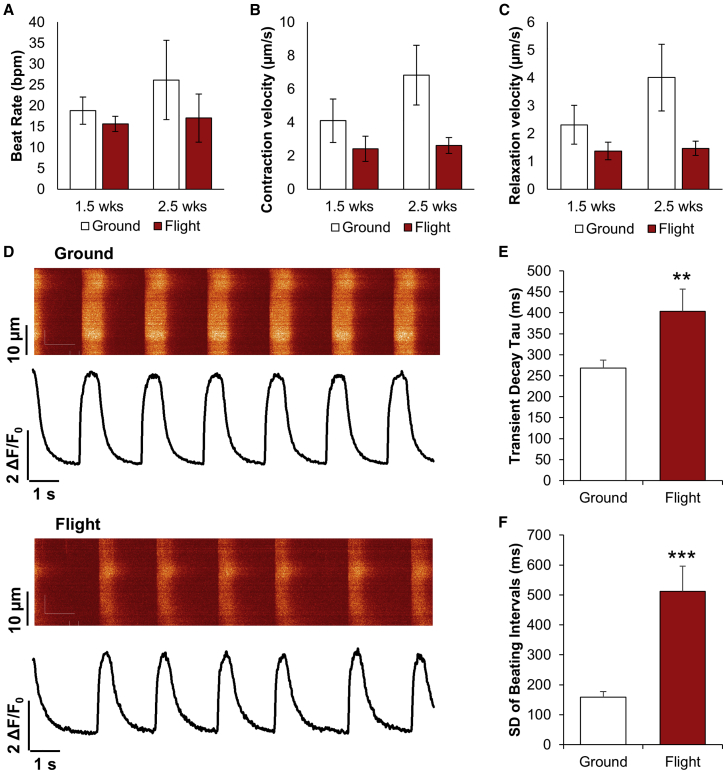
With extended stays aboard the International Space Station (ISS) becoming commonplace, there is a need to better understand the effects of microgravity on cardiac function. We utilized human induced pluripotent stem cell-derived cardiomyocytes (hiPSC-CMs) to study the effects of microgravity on cell-level cardiac function and gene expression. The hiPSC-CMs were cultured aboard the ISS for 5.5 weeks and their gene expression, structure, and functions were compared with ground control hiPSC-CMs. Exposure to microgravity on the ISS caused alterations in hiPSC-CM calcium handling. RNA-sequencing analysis demonstrated that 2,635 genes were differentially expressed among flight, post-flight, and ground control samples, including genes involved in mitochondrial metabolism. This study represents the first use of hiPSC technology to model the effects of spaceflight on human cardiomyocyte structure and function.
随着国际空间站(ISS)上的长期停留变得司空见惯,有必要更好地了解微重力对心脏功能的影响。我们利用人类诱导多能干细胞衍生的心肌细胞(hiPSC-CMs)来研究微重力对细胞水平心脏功能和基因表达的影响。hiPSC-CMs 在国际空间站上培养了 5.5 周,并将其基因表达、结构和功能与地面对照 hiPSC-CMs 进行了比较。ISS 上的微重力暴露导致 hiPSC-CM 钙处理发生改变。RNA 测序分析表明,飞行、飞行后和地面对照样品中的 2635 个基因表达存在差异,包括涉及线粒体代谢的基因。这项研究代表了首次使用 hiPSC 技术模拟太空飞行对人类心肌细胞结构和功能的影响。