Department of Neurology, Ludwig Maximilians University, 81377 Munich, Germany;
Institute for Medical Microbiology, Immunology and Hygiene, Technical University of Munich, 81675 Munich, Germany.
Proc Natl Acad Sci U S A. 2019 Nov 26;116(48):24275-24284. doi: 10.1073/pnas.1903854116. Epub 2019 Nov 11.
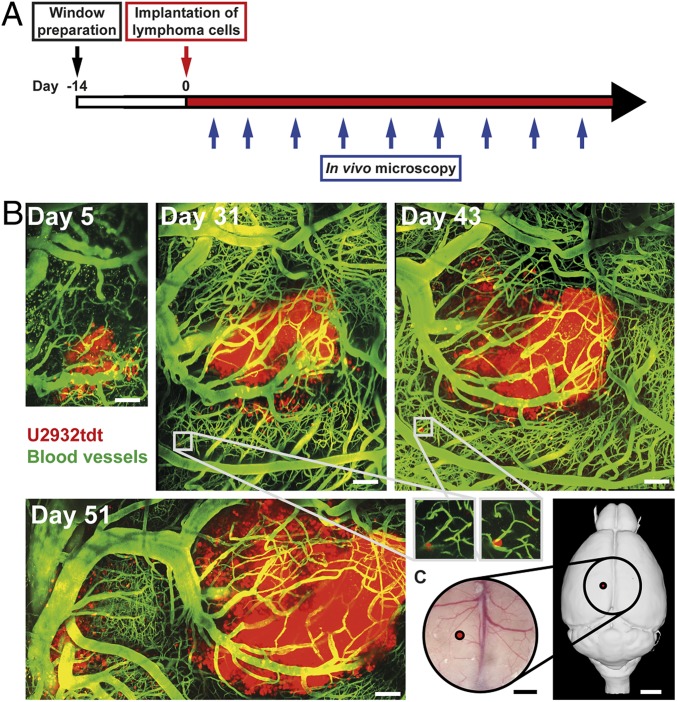
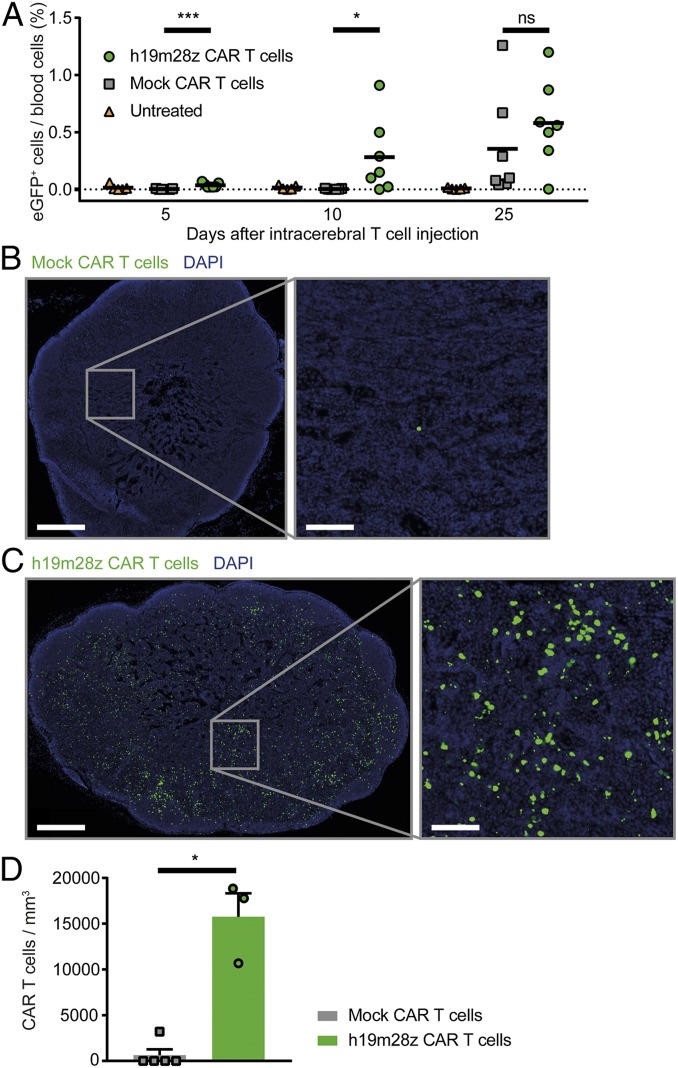
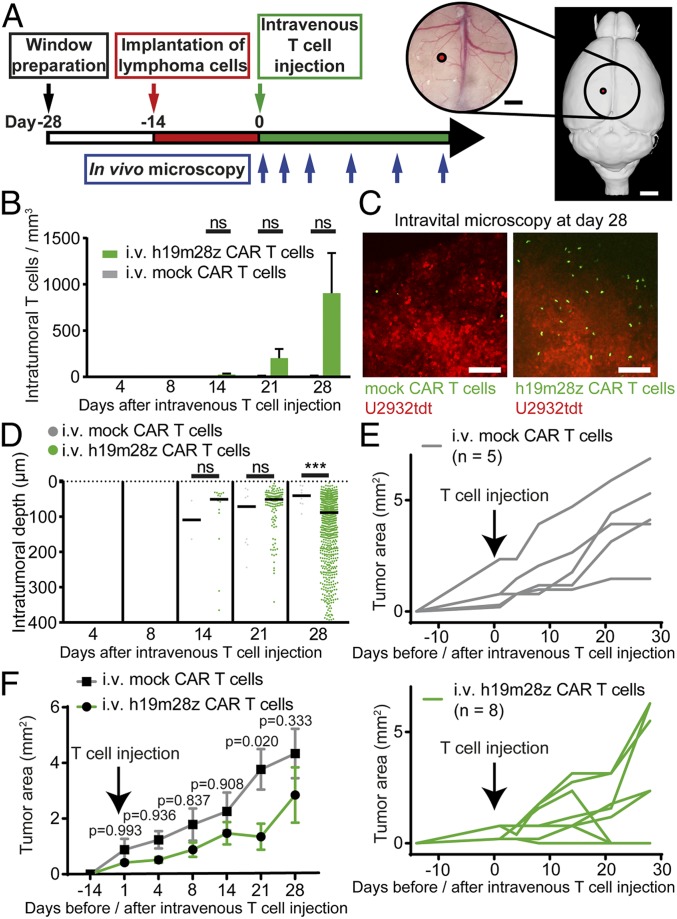
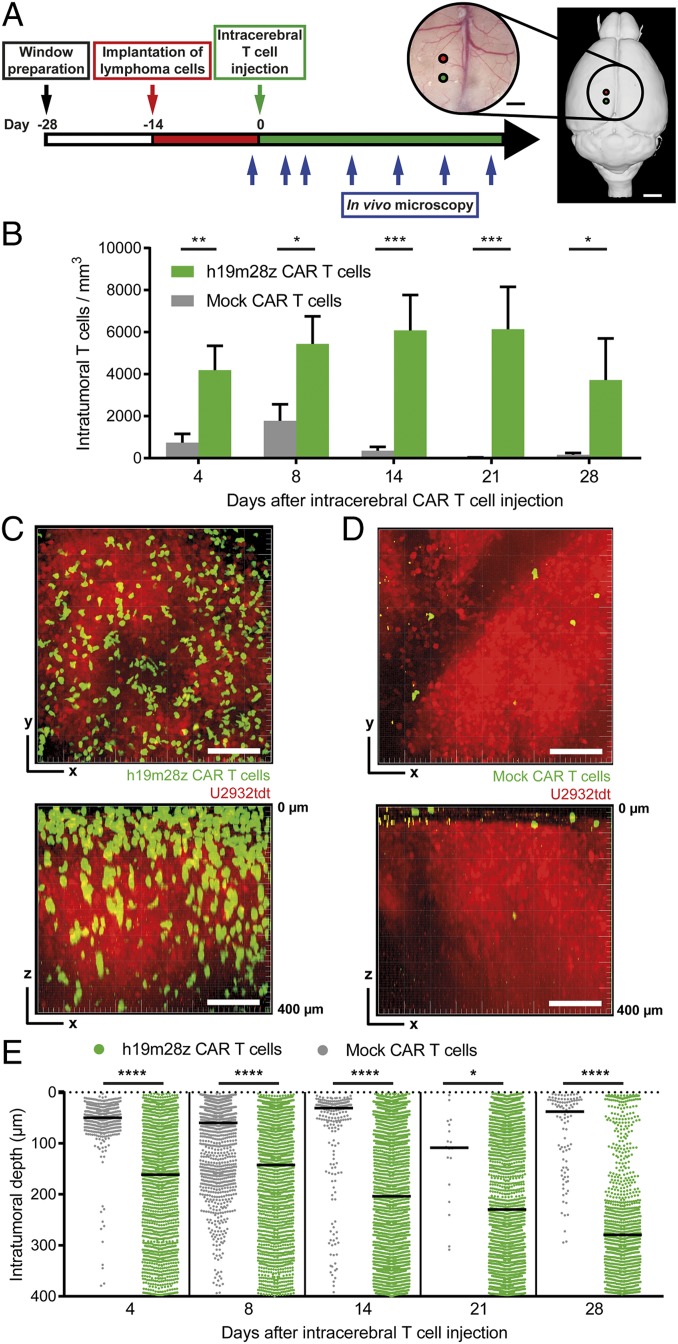
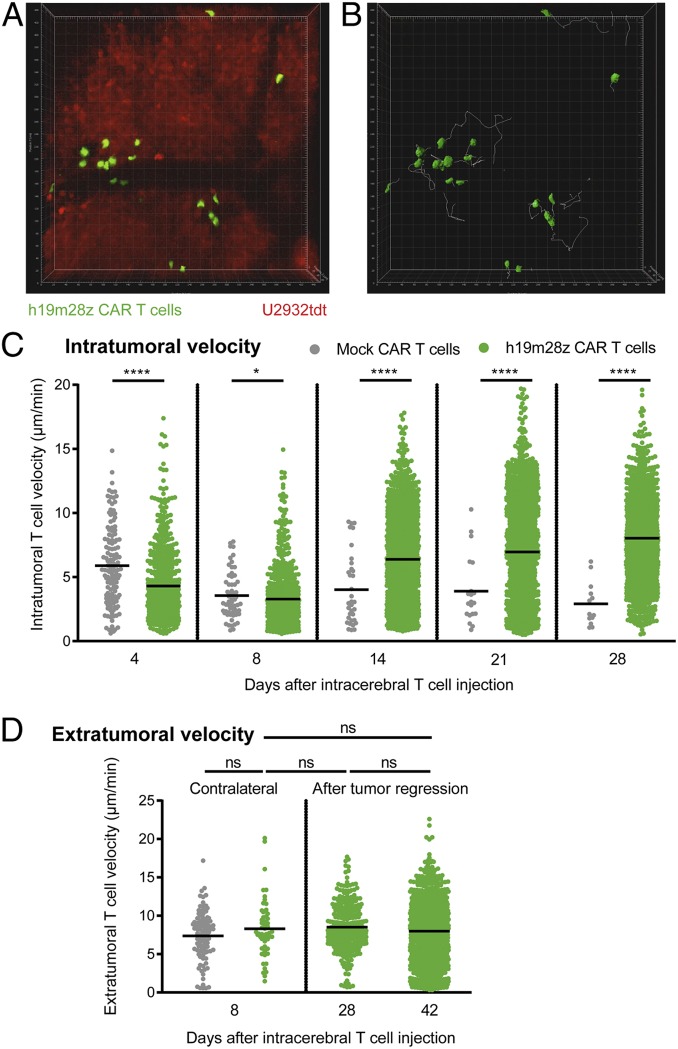
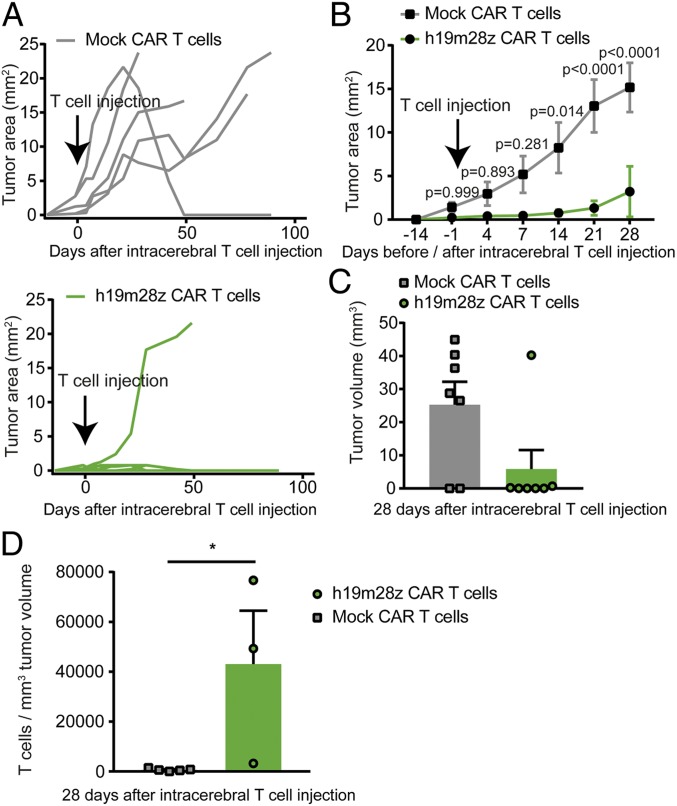
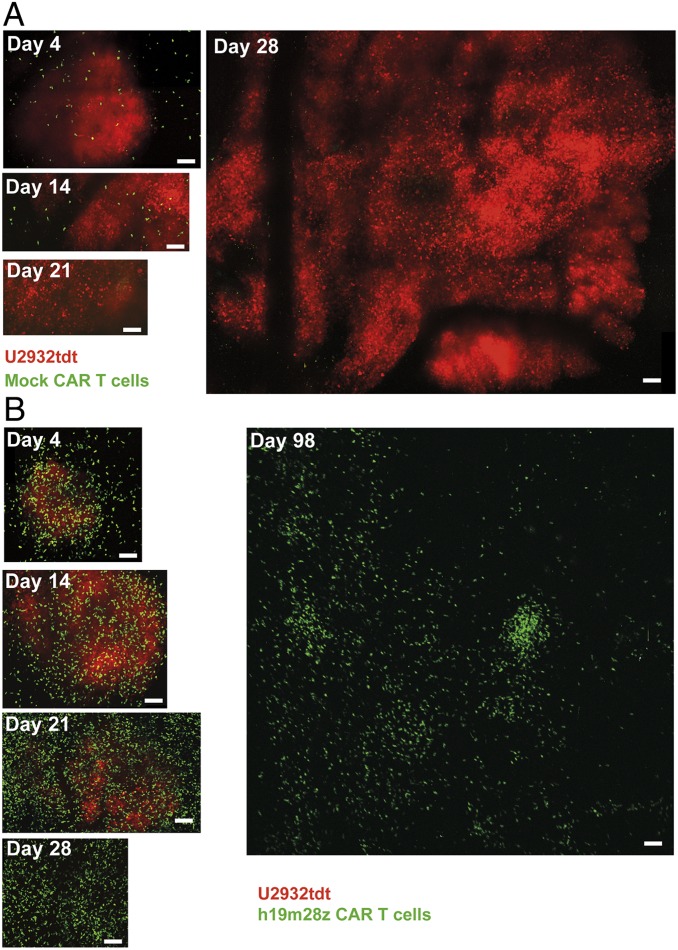
T cells expressing anti-CD19 chimeric antigen receptors (CARs) demonstrate impressive efficacy in the treatment of systemic B cell malignancies, including B cell lymphoma. However, their effect on primary central nervous system lymphoma (PCNSL) is unknown. Additionally, the detailed cellular dynamics of CAR T cells during their antitumor reaction remain unclear, including their intratumoral infiltration depth, mobility, and persistence. Studying these processes in detail requires repeated intravital imaging of precisely defined tumor regions during weeks of tumor growth and regression. Here, we have combined a model of PCNSL with in vivo intracerebral 2-photon microscopy. Thereby, we were able to visualize intracranial PCNSL growth and therapeutic effects of CAR T cells longitudinally in the same animal over several weeks. Intravenous (i.v.) injection resulted in poor tumor infiltration of anti-CD19 CAR T cells and could not sufficiently control tumor growth. After intracerebral injection, however, anti-CD19 CAR T cells invaded deeply into the solid tumor, reduced tumor growth, and induced regression of PCNSL, which was associated with long-term survival. Intracerebral anti-CD19 CAR T cells entered the circulation and infiltrated distant, nondraining lymph nodes more efficiently than mock CAR T cells. After complete regression of tumors, anti-CD19 CAR T cells remained detectable intracranially and intravascularly for up to 159 d. Collectively, these results demonstrate the great potential of anti-CD19 CAR T cells for the treatment of PCNSL.
表达抗 CD19 嵌合抗原受体 (CAR) 的 T 细胞在治疗系统性 B 细胞恶性肿瘤方面显示出令人印象深刻的疗效,包括 B 细胞淋巴瘤。然而,它们对原发性中枢神经系统淋巴瘤 (PCNSL) 的影响尚不清楚。此外,CAR T 细胞在抗肿瘤反应过程中的详细细胞动力学仍不清楚,包括其肿瘤内浸润深度、迁移性和持久性。研究这些过程需要在肿瘤生长和消退的数周内,对精确定义的肿瘤区域进行反复的活体成像。在这里,我们将 PCNSL 模型与体内脑内双光子显微镜相结合。由此,我们能够在同一动物中,在数周内对颅内 PCNSL 生长和 CAR T 细胞的治疗效果进行纵向可视化。静脉内 (i.v.) 注射导致抗 CD19 CAR T 细胞对肿瘤的浸润不良,无法充分控制肿瘤生长。然而,脑内注射后,抗 CD19 CAR T 细胞深入侵袭实体瘤,减少肿瘤生长,并诱导 PCNSL 消退,这与长期生存相关。脑内抗 CD19 CAR T 细胞比模拟 CAR T 细胞更有效地进入循环并浸润远处非引流淋巴结。在肿瘤完全消退后,抗 CD19 CAR T 细胞在颅内和血管内可检测长达 159 天。总的来说,这些结果表明抗 CD19 CAR T 细胞治疗 PCNSL 的巨大潜力。