Department of Obstetrics and Gynecology, the International Peace Maternity & Child Health Hospital of China Welfare Institute (IPMCH), Shanghai Jiaotong University, No.910, Hengshan Road, Xuhui District, Shanghai, 200030, China.
The International Peace Maternity and Child Health Hospital, School of Medicine, Shanghai Jiao Tong University, Shanghai, China.
BMC Med Genomics. 2019 Nov 12;12(1):163. doi: 10.1186/s12920-019-0601-9.
Progestin is effective to promote endometrial cancer (EC) cells apoptosis, however, continuous progestin administration causes low level of progestin receptor B (PRB), further resulting in progestin resistance. Here, we performed microarray analysis on Ishikawa cells (PRB+) treated with medroxyprogesterone acetate (MPA) to explore the molecular mechanism underlying the inhibitory influence of MPA on PRB+ EC cells.
Microarray analysis was performed by using Ishikawa cells (PRB+) treated with MPA. Differentially expressed mRNA and long noncoding RNAs (lncRNAs) were identified. Furthermore, the functions of these mRNAs and lncRNAs were predicted by functional enrichment analysis. QRT-PCR was further performed to verify the microarray data.
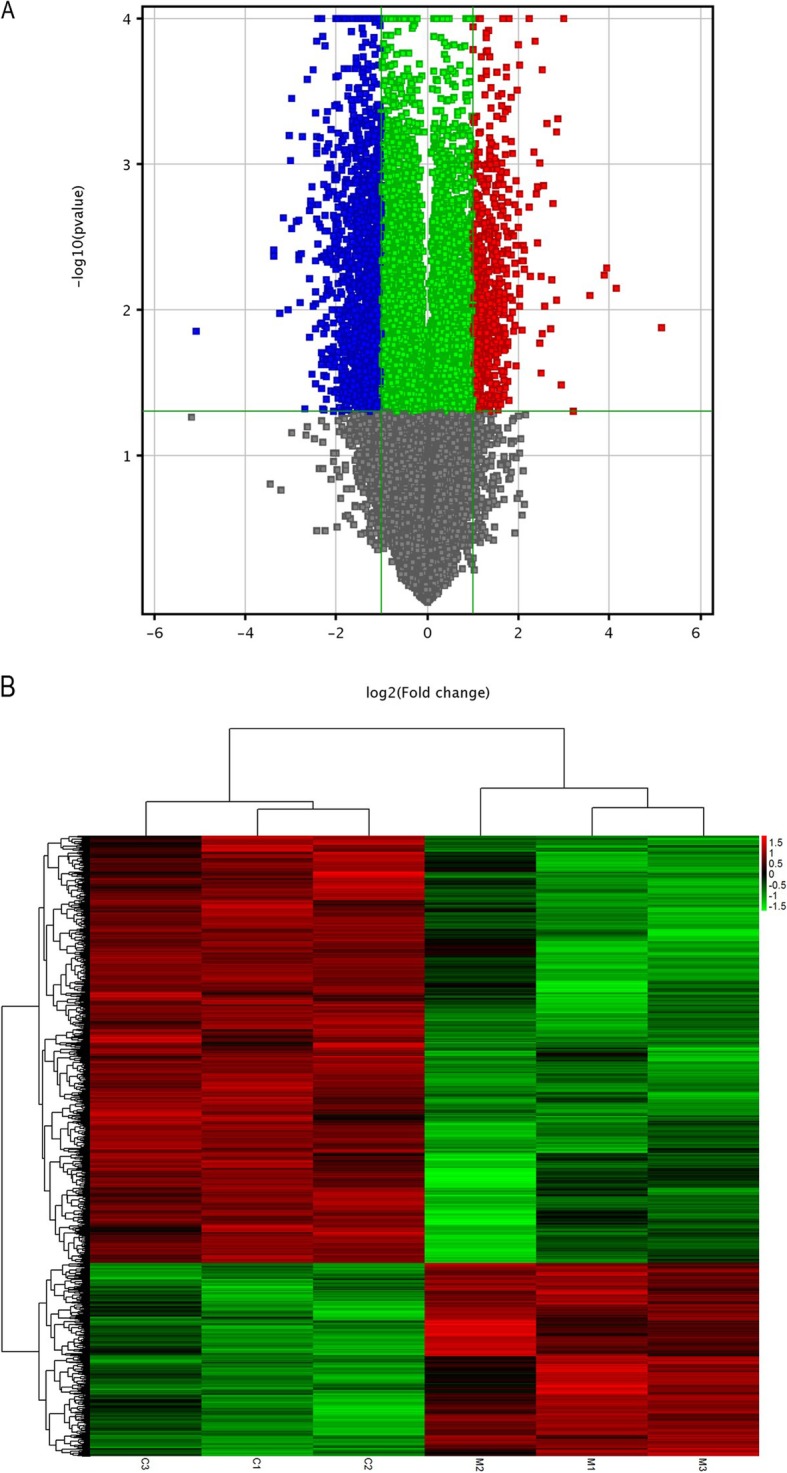
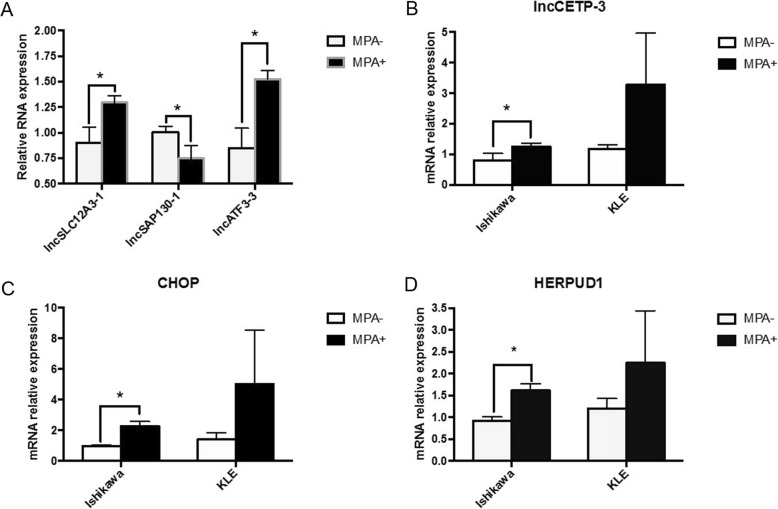
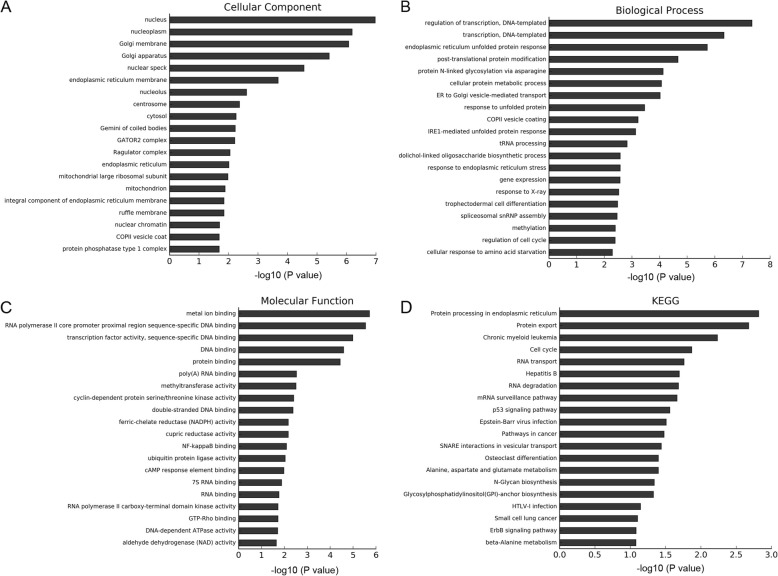
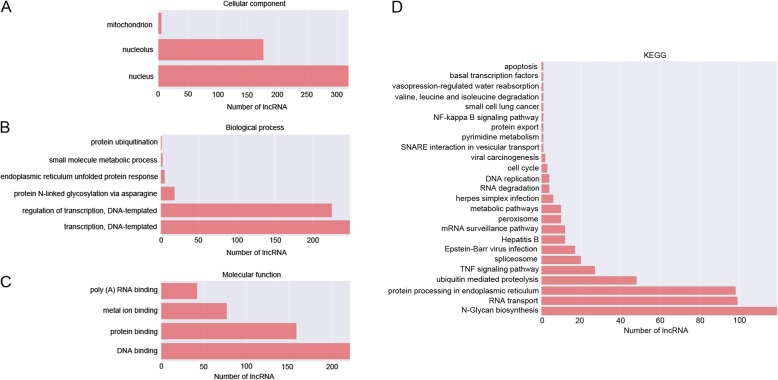
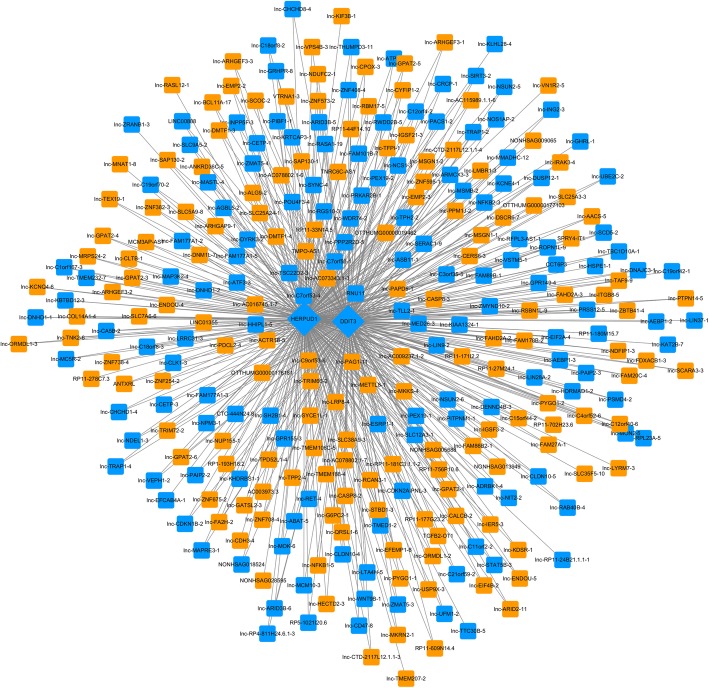
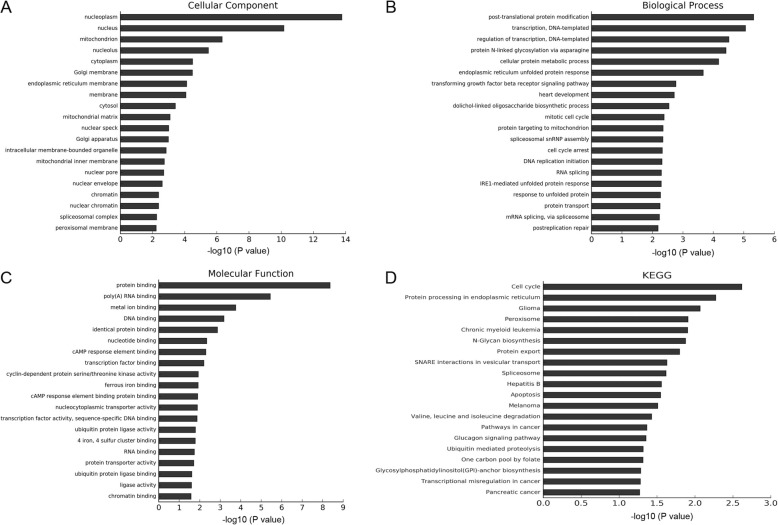
A total of 358 differentially expressed genes and 292 lncRNAs were identified in Ishikawa cells (PRB+) treated with MPA. QRT-PCR verified these data. Functional enrichment analysis identified endoplasmic reticulum (ER) stress as the key pathway involved in the inhibitory effect of MPA on EC cells. And the ER stress apoptotic molecule CHOP and ER stress related molecule HERPUD1 were both highly expressed in Ishikawa cells (PRB+) treated with MPA. Co-expression analysis showed lnc-CETP-3 was highly correlated with CHOP and HERPUD1, suggesting it might participate in ER stress pathway-related EC cell apoptosis caused by MPA. In addition, compared with untreated cells, lnc-CETP-3, CHOP and HERPUD1 were significantly up-regulated in Ishikawa cells (PRB+) treated with MPA, whereas they have no statistical significance in KLE cells (PRB-).
MPA may activate ER stress by progesterone-PRB pathway to up-regulate CHOP expression, which may be one of the molecular mechanisms underlying the inhibitory effect of MPA on EC cells with PRB+. Lnc-CETP-3 might be involved in this process. These findings may provide therapeutic targets for EC patients with PRB-, and resistance-related targets to increase the sensitivity of MPA on EC cells.
孕激素能有效促进子宫内膜癌细胞(EC)凋亡,但持续孕激素给药会导致孕激素受体 B(PRB)水平降低,进而导致孕激素耐药。本研究采用醋酸甲羟孕酮(MPA)处理 Ishikawa 细胞(PRB+),通过微阵列分析探讨 MPA 抑制 PRB+EC 细胞的分子机制。
采用 MPA 处理 Ishikawa 细胞(PRB+)进行微阵列分析。鉴定差异表达的 mRNA 和长链非编码 RNA(lncRNA)。进一步通过功能富集分析预测这些 mRNA 和 lncRNA 的功能。采用 QRT-PCR 进一步验证微阵列数据。
MPA 处理的 Ishikawa 细胞(PRB+)中鉴定出 358 个差异表达基因和 292 个 lncRNA。QRT-PCR 验证了这些数据。功能富集分析发现内质网(ER)应激是 MPA 抑制 EC 细胞的关键途径。CHOP 和 HERPUD1 这两种 ER 应激凋亡分子在 MPA 处理的 Ishikawa 细胞(PRB+)中均高表达。共表达分析显示 lnc-CETP-3 与 CHOP 和 HERPUD1 高度相关,提示其可能参与 MPA 诱导的 ER 应激相关 EC 细胞凋亡。此外,与未处理的细胞相比,MPA 处理的 Ishikawa 细胞(PRB+)中 lnc-CETP-3、CHOP 和 HERPUD1 明显上调,而在 PRB-的 KLE 细胞中则无统计学意义。
MPA 可能通过孕激素-PRB 通路激活 ER 应激,上调 CHOP 表达,这可能是 MPA 抑制 PRB+EC 细胞的分子机制之一。lnc-CETP-3 可能参与这一过程。这些发现可为 PRB-的 EC 患者提供治疗靶点,并为增加 MPA 对 PRB+EC 细胞的敏感性提供耐药相关靶点。