Radiology & Biomedical Imaging, Yale School of Medicine, New Haven, CT, 06510, USA.
Department of Psychiatry, Yale School of Medicine, New Haven, CT, 06510, USA.
Mol Psychiatry. 2021 Aug;26(8):4383-4393. doi: 10.1038/s41380-019-0586-y. Epub 2019 Nov 12.
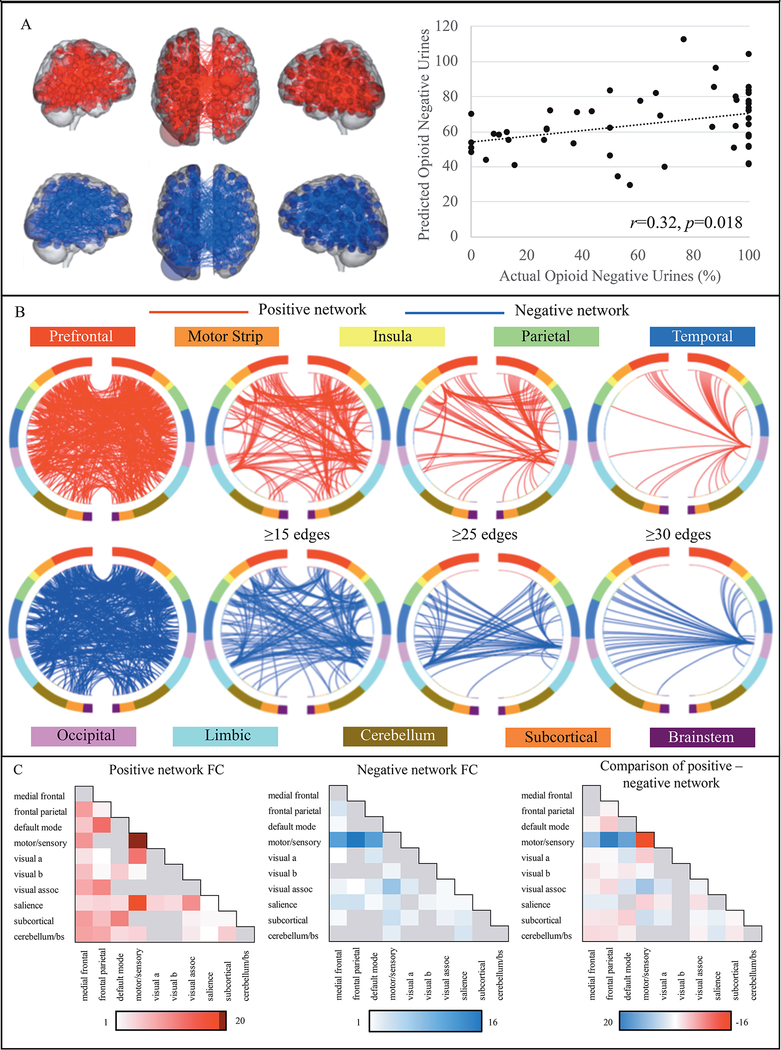
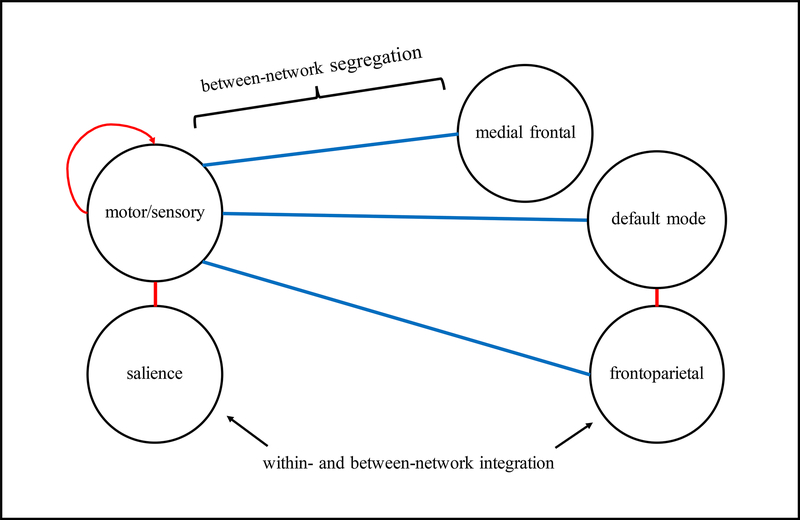
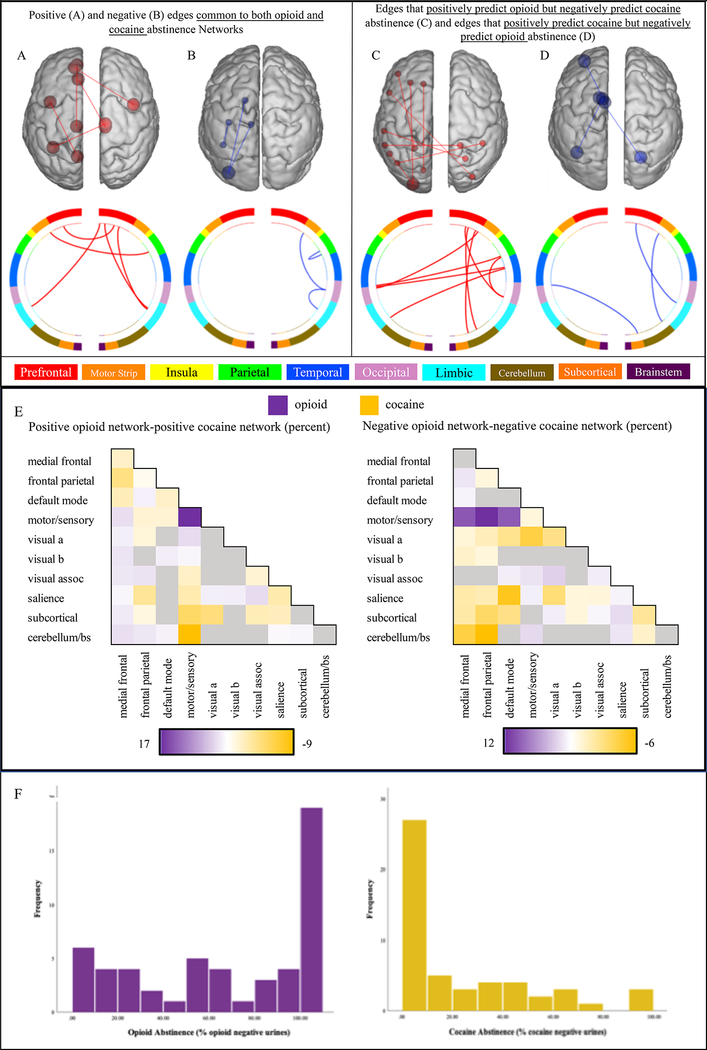
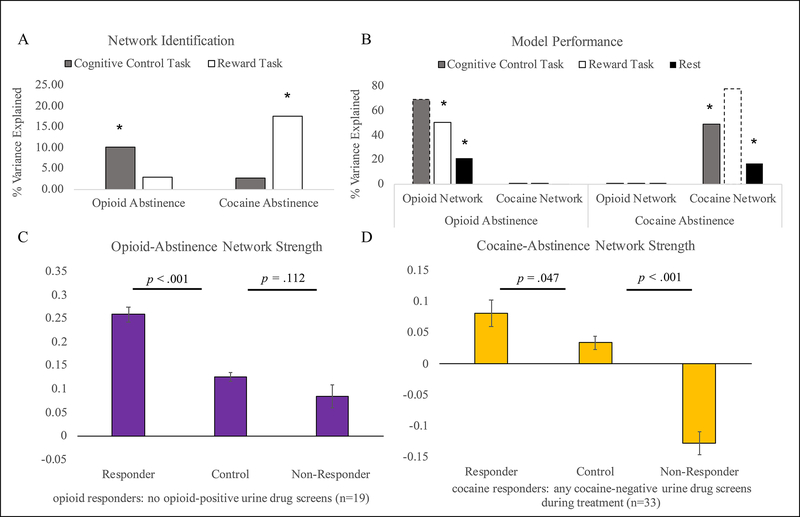
Opioid use disorder is a major public health crisis. While effective treatments are available, outcomes vary widely across individuals and relapse rates remain high. Understanding neural mechanisms of treatment response may facilitate the development of personalized and/or novel treatment approaches. Methadone-maintained, polysubstance-using individuals (n = 53) participated in fMRI scanning before and after substance-use treatment. Connectome-based predictive modeling (CPM)-a recently developed, whole-brain approach-was used to identify pretreatment connections associated with abstinence during the 3-month treatment. Follow-up analyses were conducted to determine the specificity of the identified opioid abstinence network across different brain states (cognitive vs. reward task vs. resting-state) and different substance use outcomes (opioid vs. cocaine abstinence). Posttreatment fMRI data were used to assess network changes over time and within-subject replication. To determine further clinical relevance, opioid abstinence network strength was compared with healthy subjects (n = 38). CPM identified an opioid abstinence network (p = 0.018), characterized by stronger within-network motor/sensory connectivity, and reduced connectivity between the motor/sensory network and medial frontal, default mode, and frontoparietal networks. This opioid abstinence network was anatomically distinct from a previously identified cocaine abstinence network. Relationships between abstinence and opioid and cocaine abstinence networks replicated across multiple brain states but did not generalize across substances. Network connectivity measured at posttreatment related to abstinence at 6-month follow-up (p < 0.009). Healthy comparison subjects displayed intermediate network strengths relative to treatment responders and nonresponders. These data indicate dissociable anatomical substrates of opioid vs. cocaine abstinence. Results may inform the development of novel opioid-specific treatment approaches to combat the opioid epidemic.
阿片类药物使用障碍是一个主要的公共卫生危机。虽然有有效的治疗方法,但个体之间的治疗效果差异很大,复发率仍然很高。了解治疗反应的神经机制可能有助于开发个性化和/或新的治疗方法。接受美沙酮维持治疗、多种物质使用的个体(n=53)在物质使用治疗前后接受 fMRI 扫描。基于连接组的预测建模(CPM)——一种最近开发的全脑方法——用于识别与 3 个月治疗期间戒断相关的预处理连接。进行了随访分析,以确定所确定的阿片类药物戒断网络在不同大脑状态(认知与奖励任务与静息状态)和不同物质使用结果(阿片类药物与可卡因戒断)中的特异性。使用治疗后的 fMRI 数据评估随时间和个体内复制的网络变化。为了确定进一步的临床相关性,将阿片类药物戒断网络的强度与健康受试者(n=38)进行了比较。CPM 确定了一个阿片类药物戒断网络(p=0.018),其特征是网络内运动/感觉连接更强,运动/感觉网络与内侧额叶、默认模式和额顶叶网络之间的连接减少。这个阿片类药物戒断网络在解剖学上与之前确定的可卡因戒断网络不同。在多个大脑状态下,戒断与阿片类药物和可卡因戒断网络之间的关系得到了复制,但不能推广到不同的物质。治疗后测量的网络连接与 6 个月随访时的戒断有关(p<0.009)。健康对照组的网络强度介于治疗反应者和无反应者之间。这些数据表明阿片类药物与可卡因戒断的解剖学基础不同。结果可能为开发新的针对阿片类药物的治疗方法提供信息,以对抗阿片类药物流行。