State Key Laboratory of Cardiovascular Disease, Fuwai Hospital, National Center for Cardiovascular Diseases, Chinese Academy of Medical Sciences and Peking Union Medical College, 167 North Lishi Road, Beijing, 100037, People's Republic of China.
Department of Biochemistry and Molecular Biology, The University of Texas Health Science Center at Houston McGovern Medical School, 6431 Fannin St, MSB6.166, Houston, TX, 77030, USA.
BMC Biol. 2019 Nov 13;17(1):89. doi: 10.1186/s12915-019-0709-6.
Cardiac differentiation from human pluripotent stem cells provides a unique opportunity to study human heart development in vitro and offers a potential cell source for cardiac regeneration. Compared to the large body of studies investigating cardiac maturation and cardiomyocyte subtype-specific induction, molecular events underlying cardiac lineage commitment from pluripotent stem cells at early stage remain poorly characterized.
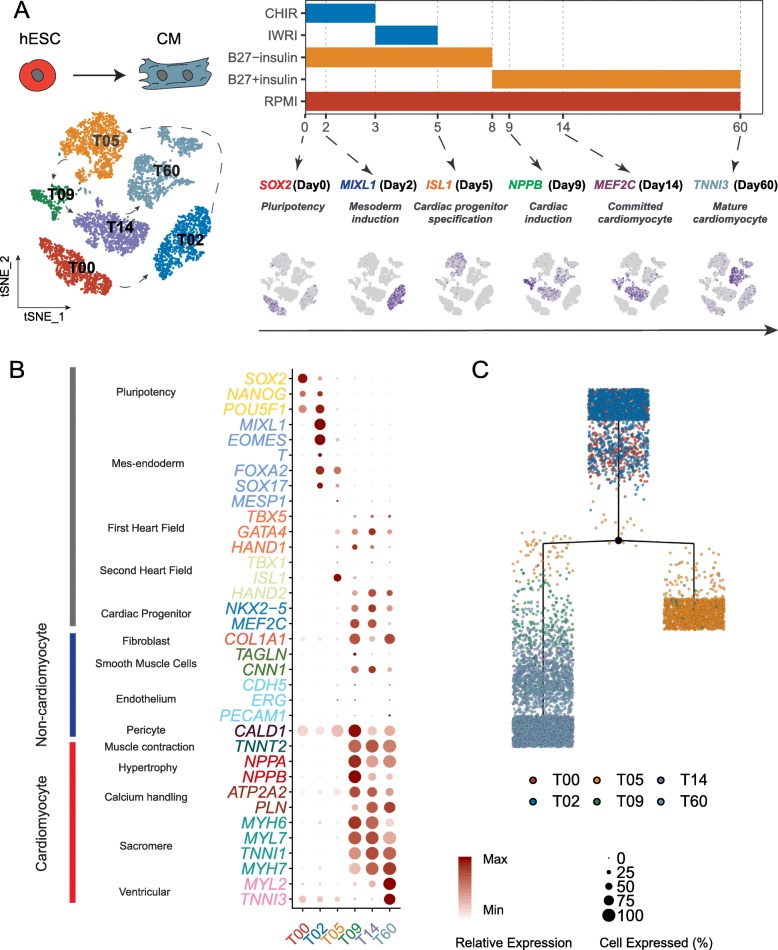
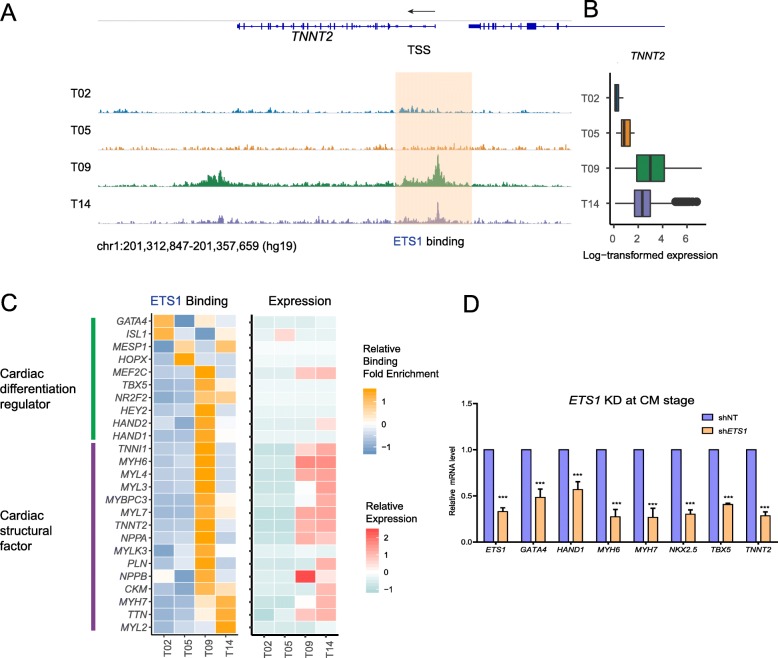
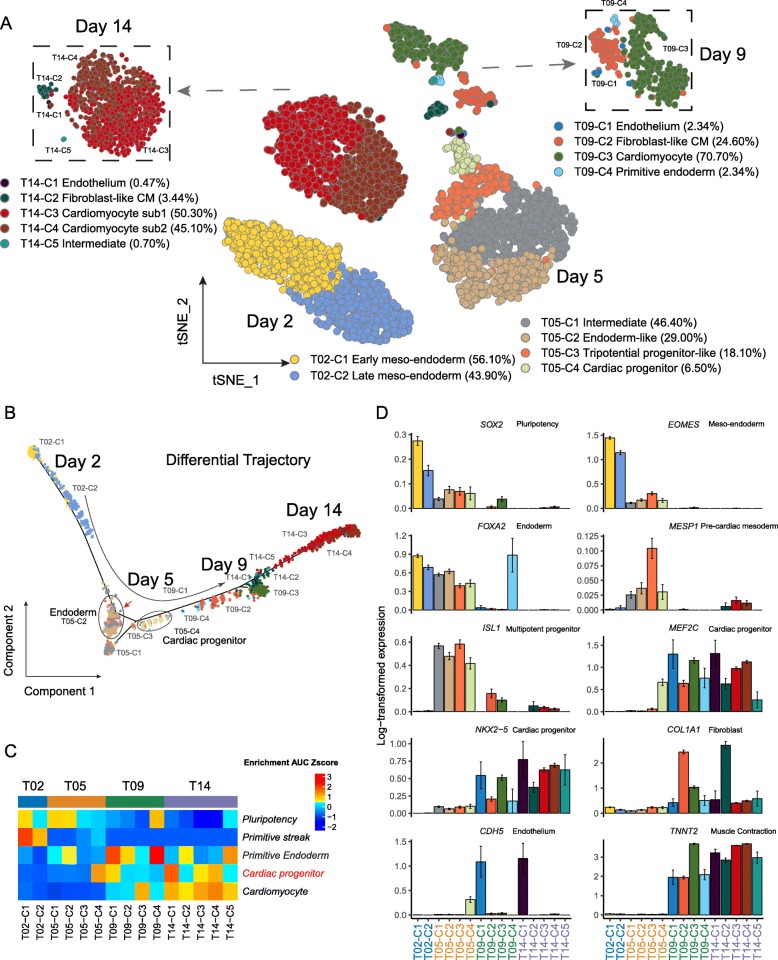
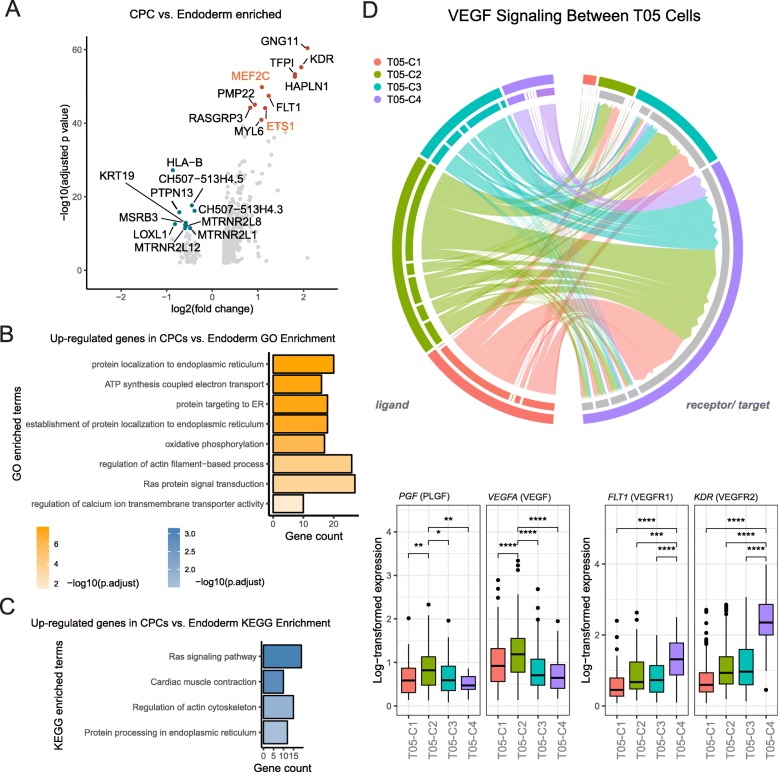
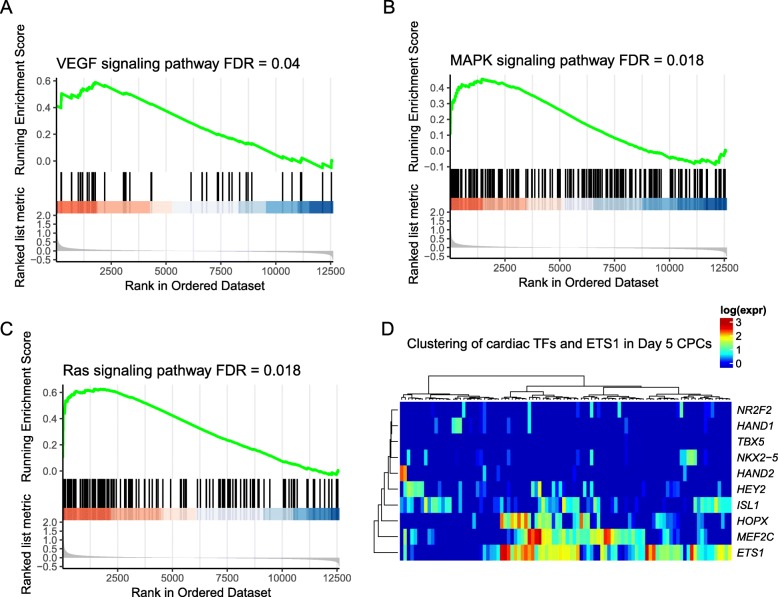
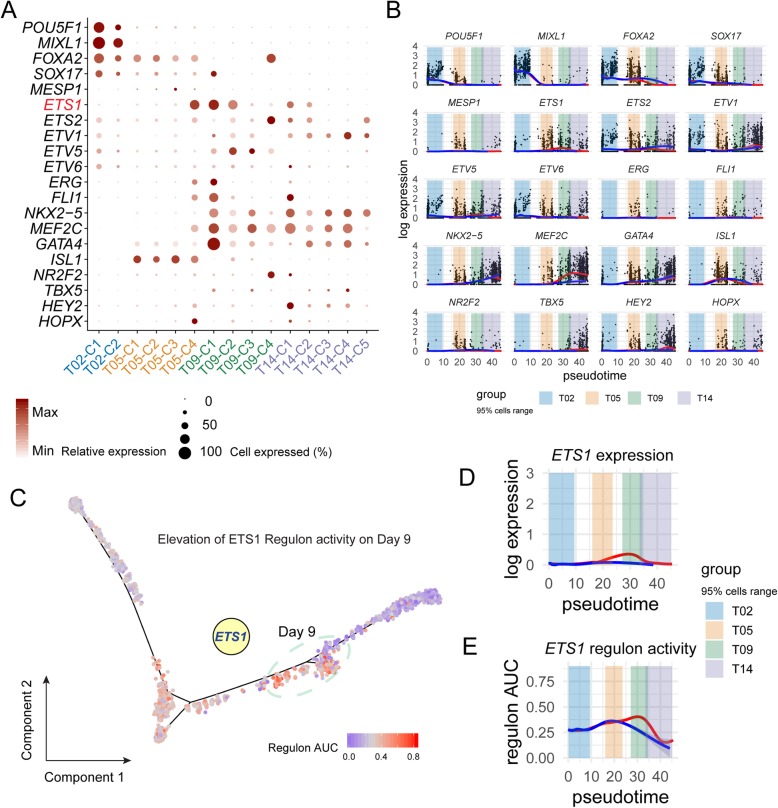
In order to uncover key molecular events and regulators controlling cardiac lineage commitment from a pluripotent state during differentiation, we performed single-cell RNA-Seq sequencing and obtained high-quality data for 6879 cells collected from 6 stages during cardiac differentiation from human embryonic stem cells and identified multiple cell subpopulations with distinct molecular features. Through constructing developmental trajectory of cardiac differentiation and putative ligand-receptor interactions, we revealed crosstalk between cardiac progenitor cells and endoderm cells, which could potentially provide a cellular microenvironment supporting cardiac lineage commitment at day 5. In addition, computational analyses of single-cell RNA-Seq data unveiled ETS1 (ETS Proto-Oncogene 1) activation as an important downstream event induced by crosstalk between cardiac progenitor cells and endoderm cells. Consistent with the findings from single-cell analysis, chromatin immunoprecipitation followed by high-throughput sequencing (ChIP-Seq) against ETS1 revealed genomic occupancy of ETS1 at cardiac structural genes at day 9 and day 14, whereas ETS1 depletion dramatically compromised cardiac differentiation.
Together, our study not only characterized the molecular features of different cell types and identified ETS1 as a crucial factor induced by cell-cell crosstalk contributing to cardiac lineage commitment from a pluripotent state, but may also have important implications for understanding human heart development at early embryonic stage, as well as directed manipulation of cardiac differentiation in regenerative medicine.
从人类多能干细胞诱导分化为心脏细胞为在体外研究人类心脏发育提供了独特的机会,并为心脏再生提供了潜在的细胞来源。与大量研究心脏成熟和心肌细胞亚型特异性诱导的研究相比,多能干细胞向早期心脏谱系分化的分子事件仍知之甚少。
为了揭示多能干细胞向心脏谱系分化早期阶段的关键分子事件和调控因子,我们对人胚胎干细胞分化为心脏的 6 个阶段的 6879 个细胞进行了单细胞 RNA-Seq 测序,获得了高质量的数据,并鉴定出具有不同分子特征的多个细胞亚群。通过构建心脏分化的发育轨迹和假定的配体-受体相互作用,我们揭示了心脏祖细胞和内胚层细胞之间的串扰,这可能为第 5 天心脏谱系分化提供支持细胞微环境。此外,单细胞 RNA-Seq 数据的计算分析揭示了 ETS1(ETS 原癌基因 1)的激活是心脏祖细胞和内胚层细胞之间串扰诱导的一个重要下游事件。单细胞分析的结果一致表明,针对 ETS1 的染色质免疫沉淀测序(ChIP-Seq)显示 ETS1 在第 9 天和第 14 天在心脏结构基因上的基因组占有率,而 ETS1 的耗竭则显著损害了心脏分化。
总之,我们的研究不仅描述了不同细胞类型的分子特征,并确定了 ETS1 作为一个关键因素,由细胞-细胞串扰诱导,有助于多能状态向心脏谱系的分化,这可能对理解早期胚胎阶段的人类心脏发育以及在再生医学中对心脏分化的定向操作具有重要意义。