Coutre Steven E, Flinn Ian W, de Vos Sven, Barrientos Jacqueline C, Schreeder Marshall T, Wagner-Johnson Nina D, Sharman Jeff P, Boyd Thomas E, Fowler Nathan, Dreiling Lyndah, Kim Yeonhee, Mitra Siddhartha, Rai Kanti, Leonard John P, Furman Richard R
Stanford Cancer Institute, Stanford University School of Medicine, Stanford, CA, USA.
Sarah Cannon Research Institute and Tennessee Oncology, PLLC, Nashville, TN, USA.
Hemasphere. 2018 Apr 25;2(3):e39. doi: 10.1097/HS9.0000000000000039. eCollection 2018 Jun.
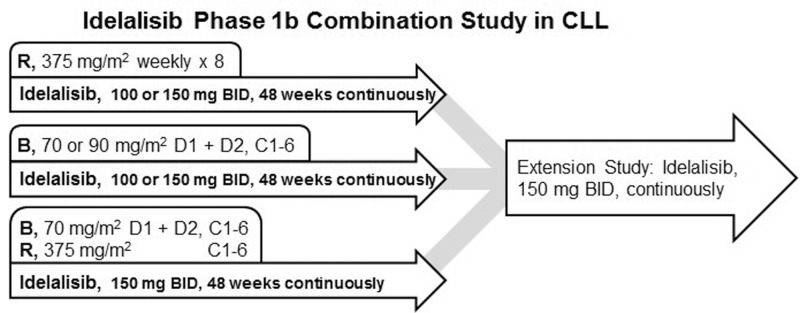
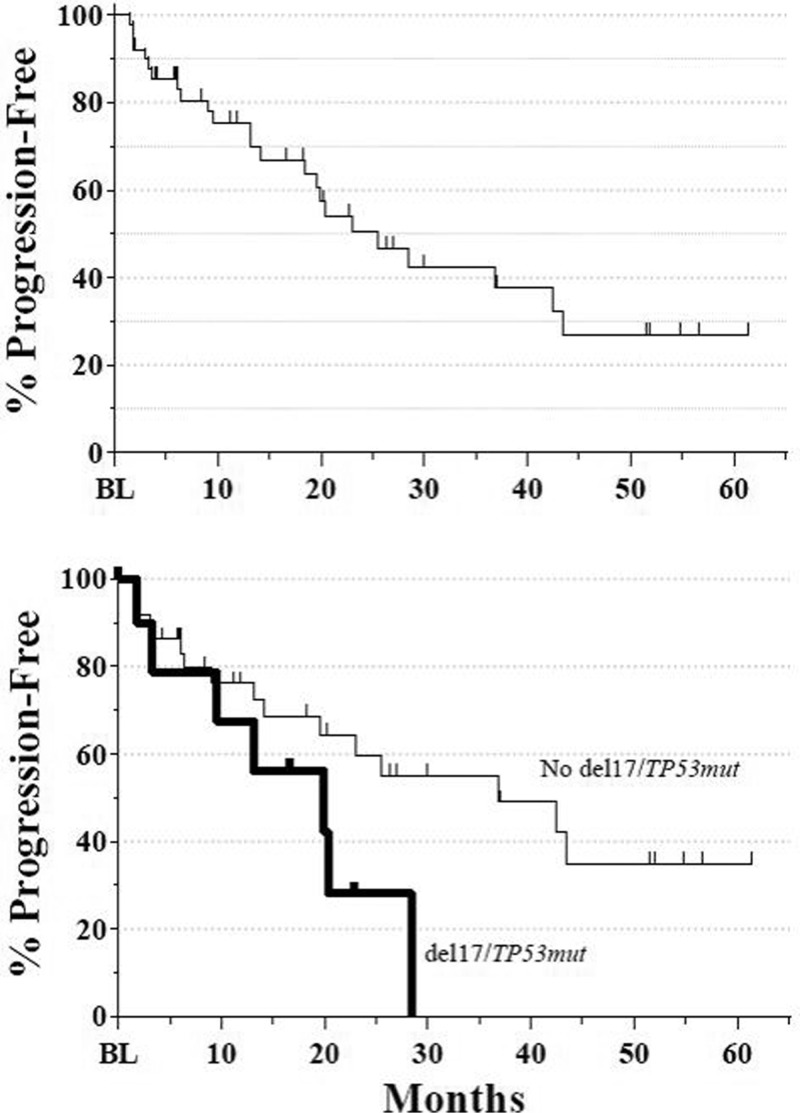
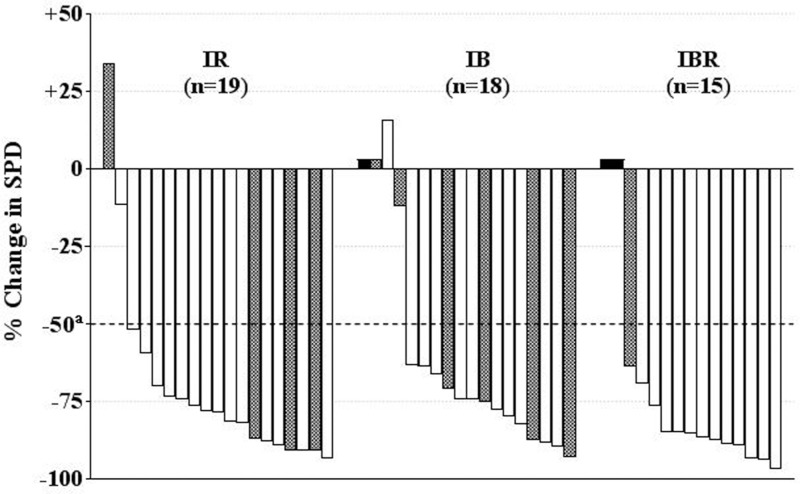
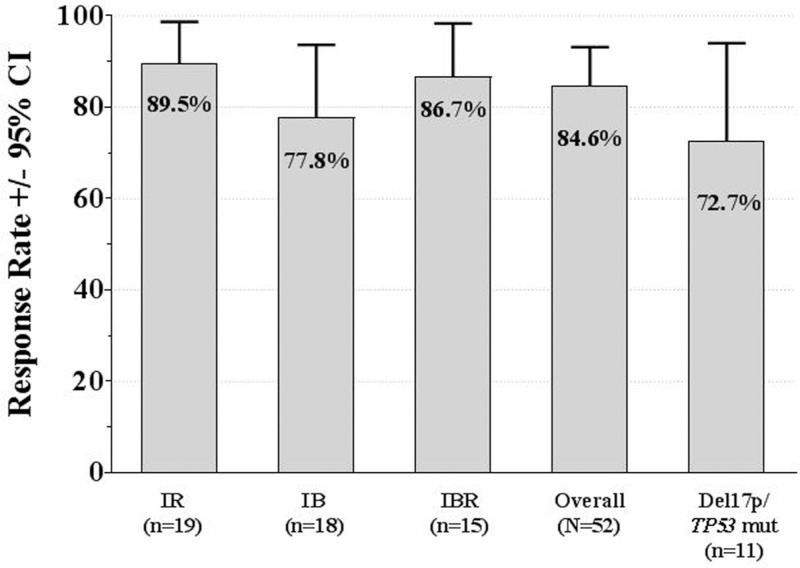
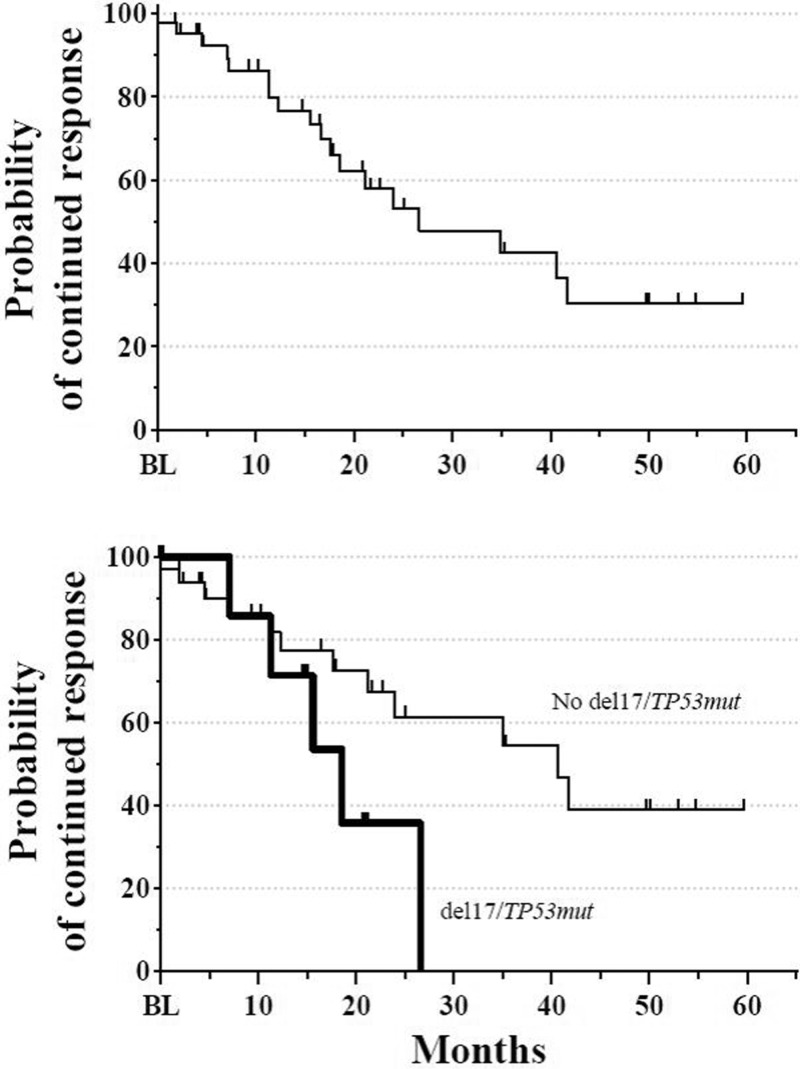
Phosphatidylinositol 3-kinase-delta (PI3Kδ) signaling is critical for proliferation, survival, homing, and tissue retention of malignant B cells. Idelalisib, a selective oral inhibitor of PI3Kδ, has shown considerable single-agent activity in patients with heavily pretreated chronic lymphocytic leukemia (CLL). This study evaluated the safety and clinical activity of idelalisib in combination with bendamustine (IB) or rituximab (IR) or both (IBR) in patients with relapsed or refractory (R/R) CLL. Idelalisib was given continuously at 100 or 150 mg twice daily in combination with rituximab (375 mg/m weekly × 8 doses), bendamustine (70 or 90 mg/m, days 1 and 2 every 4 weeks × 6 cycles) or BR (rituximab, 375 mg/m every 4 weeks and bendamustine, 70 mg/m, days 1 and 2 every 4 weeks × 6 cycles). The primary endpoint was safety; secondary endpoints included overall response rate (ORR), duration of response (DOR), and progression-free survival (PFS). Fifty-two patients (median age 64 years) with a median of 3 prior therapies were enrolled. ORR was 84.6% (89.5% IR group, 77.8% IB group, and 86.7% IBR group). The overall median PFS was 25.6 months, and median DOR was 26.6 months. The most common grade ≥3 adverse events (≥10% of patients) were pneumonia (19.2%), diarrhea (13.5%), and febrile neutropenia (17.3%). Idelalisib-based combination therapy with bendamustine and/or rituximab was highly active, resulting in durable tumor control in patients with heavily pretreated R/R CLL. However, its tolerability profile suggests that these regimens should be used cautiously in this patient population. ClinicalTrials.gov ID: NCT01088048.
磷脂酰肌醇3 -激酶δ(PI3Kδ)信号传导对于恶性B细胞的增殖、存活、归巢和组织留存至关重要。idelalisib是一种PI3Kδ的选择性口服抑制剂,在经过大量预处理的慢性淋巴细胞白血病(CLL)患者中已显示出可观的单药活性。本研究评估了idelalisib联合苯达莫司汀(IB)或利妥昔单抗(IR)或两者(IBR)用于复发或难治性(R/R)CLL患者的安全性和临床活性。Idelalisib以每日两次100或150mg的剂量持续给药,联合利妥昔单抗(375mg/m²每周×8剂)、苯达莫司汀(70或90mg/m²,第1天和第2天,每4周一次×6个周期)或BR方案(利妥昔单抗,每4周375mg/m²,苯达莫司汀,70mg/m²,第1天和第2天,每4周一次×6个周期)。主要终点是安全性;次要终点包括总缓解率(ORR)、缓解持续时间(DOR)和无进展生存期(PFS)。纳入了52例患者(中位年龄64岁),中位接受过3次既往治疗。ORR为84.6%(IR组89.5%,IB组77.8%,IBR组86.7%)。总体中位PFS为25.6个月,中位DOR为26.6个月。最常见的≥3级不良事件(≥10%的患者)为肺炎(19.2%)、腹泻(13.5%)和发热性中性粒细胞减少(17.3%)。基于idelalisib联合苯达莫司汀和/或利妥昔单抗的治疗具有高度活性,在经过大量预处理的R/R CLL患者中实现了持久的肿瘤控制。然而,其耐受性表明这些方案在该患者群体中应谨慎使用。ClinicalTrials.gov标识符:NCT01088048。