Department of Chemistry, University of Waterloo, Waterloo, Ontario, Canada.
Protein Sci. 2020 Jan;29(1):306-314. doi: 10.1002/pro.3785. Epub 2019 Nov 26.
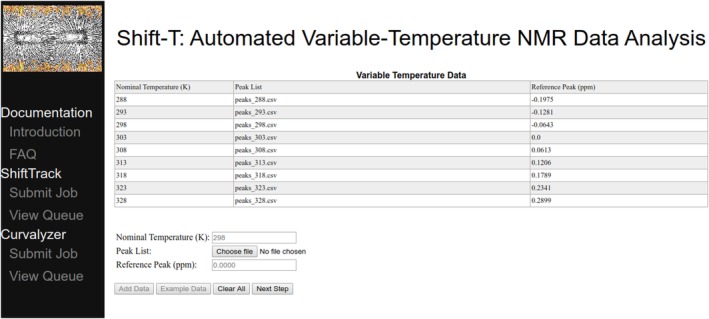
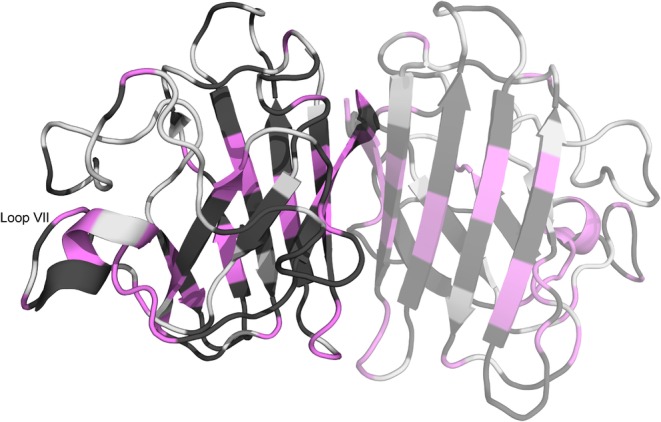
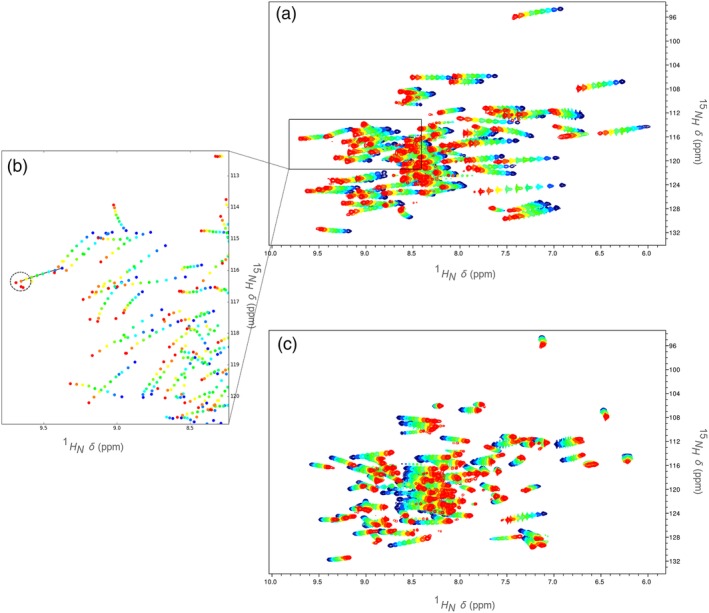
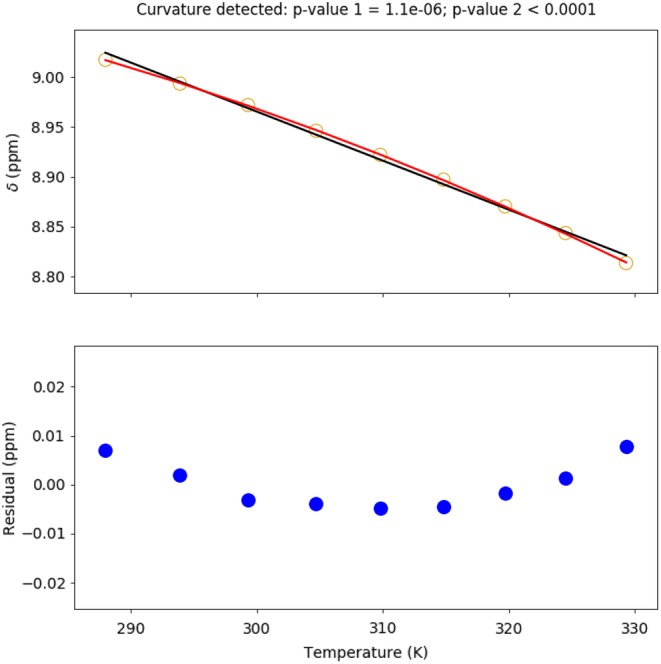
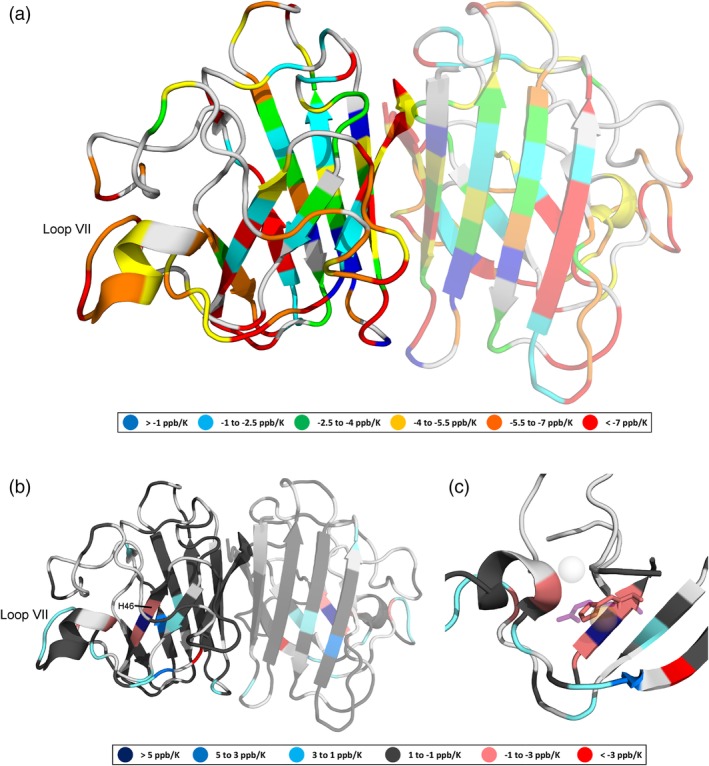
Isotropic chemical shifts measured by solution nuclear magnetic resonance (NMR) spectroscopy offer extensive insights into protein structure and dynamics. Temperature dependences add a valuable dimension; notably, the temperature dependences of amide proton chemical shifts are valuable probes of hydrogen bonding, temperature-dependent loss of structure, and exchange between distinct protein conformations. Accordingly, their uses include structural analysis of both folded and disordered proteins, and determination of the effects of mutations, binding, or solution conditions on protein energetics. Fundamentally, these temperature dependences result from changes in the local magnetic environments of nuclei, but correlations with global thermodynamic parameters measured via calorimetric methods have been observed. Although the temperature dependences of amide proton and nitrogen chemical shifts are often well approximated by a linear model, deviations from linearity are also observed and may be interpreted as evidence of fast exchange between distinct conformational states. Here, we describe computational methods, accessible via the Shift-T web server, including an automated tracking algorithm that propagates initial (single temperature) H N cross peak assignments to spectra collected over a range of temperatures. Amide proton and nitrogen temperature coefficients (slopes determined by fitting chemical shift vs. temperature data to a linear model) are subsequently calculated. Also included are methods for the detection of systematic, statistically significant deviation from linearity (curvature) in the temperature dependences of amide proton chemical shifts. The use and utility of these methods are illustrated by example, and the Shift-T web server is freely available at http://meieringlab.uwaterloo.ca/shiftt.
通过溶液核磁共振(NMR)光谱测量的各向同性化学位移为蛋白质结构和动力学提供了广泛的深入了解。温度依赖性增加了一个有价值的维度;值得注意的是,酰胺质子化学位移的温度依赖性是氢键、结构随温度丧失和不同蛋白质构象之间交换的有价值的探针。因此,它们的用途包括折叠和无序蛋白质的结构分析,以及确定突变、结合或溶液条件对蛋白质能量学的影响。从根本上说,这些温度依赖性是由于核的局部磁环境发生变化而产生的,但也观察到与通过量热法测量的全局热力学参数的相关性。尽管酰胺质子和氮化学位移的温度依赖性通常可以很好地用线性模型来近似,但也观察到了线性偏离,并且可以将其解释为不同构象状态之间快速交换的证据。在这里,我们描述了可通过 Shift-T 网络服务器访问的计算方法,包括一种自动跟踪算法,该算法将初始(单个温度)HN 交叉峰分配传播到在一系列温度下收集的光谱。随后计算酰胺质子和氮的温度系数(通过将化学位移与温度数据拟合到线性模型来确定斜率)。还包括检测酰胺质子化学位移温度依赖性中系统的、统计学上显著偏离线性(曲率)的方法。通过示例说明了这些方法的使用和效用,并且 Shift-T 网络服务器可在 http://meieringlab.uwaterloo.ca/shiftt 上免费获得。