Department of Biomedical Engineering, The Chinese University of Hong Kong, Hong Kong, China.
School of Biomedical Sciences, and The Gerald Choa Neuroscience Centre, The Chinese University of Hong Kong, Hong Kong, China.
J Neuroeng Rehabil. 2019 Nov 19;16(1):143. doi: 10.1186/s12984-019-0614-9.
Neuromuscular electrical stimulation (NMES) is extensively used in stroke motor rehabilitation. How it promotes motor recovery remains only partially understood. NMES could change muscular properties, produce altered sensory inputs, and modulate fluctuations of cortical activities; but the potential contribution from cortico-muscular couplings during NMES synchronized with dynamic movement has rarely been discussed.
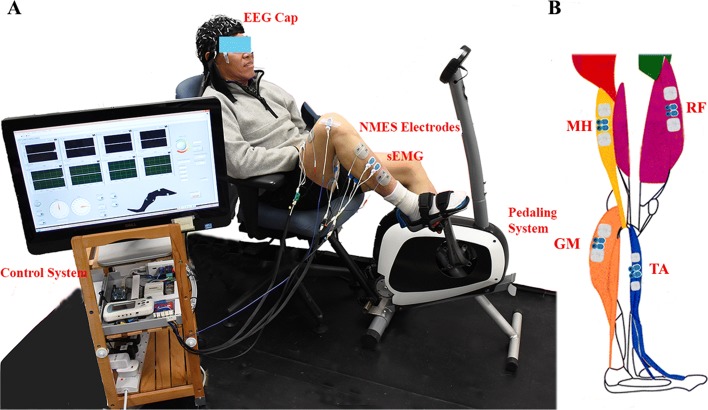
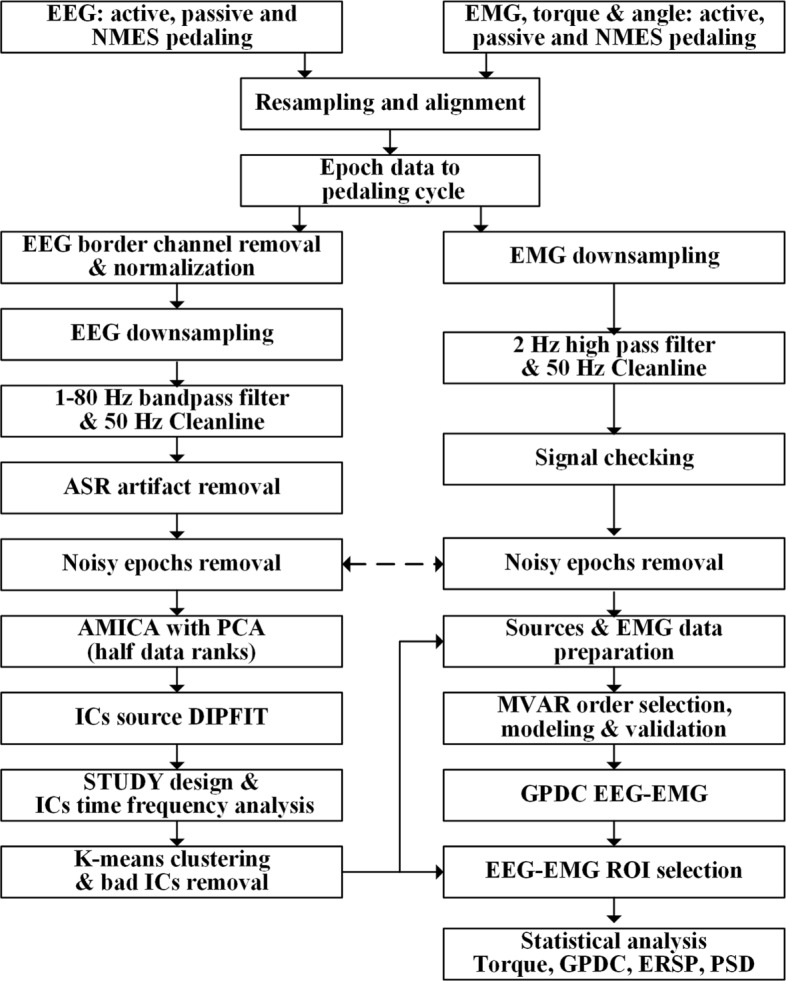
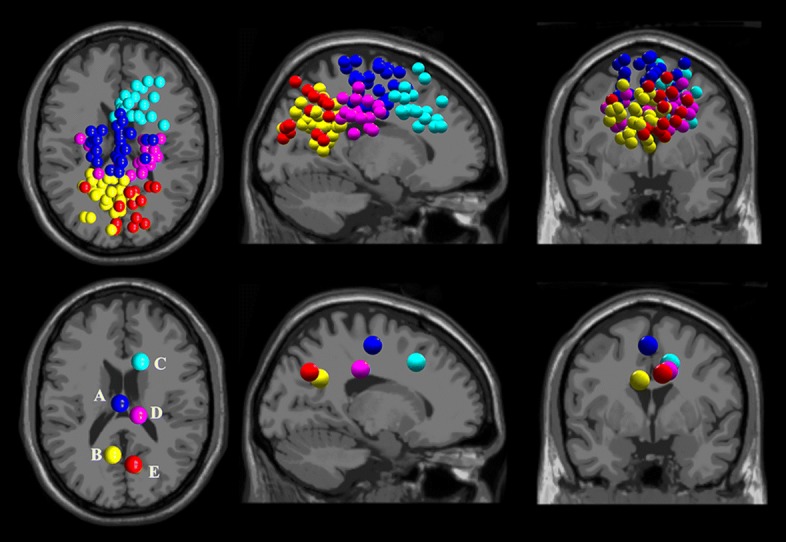
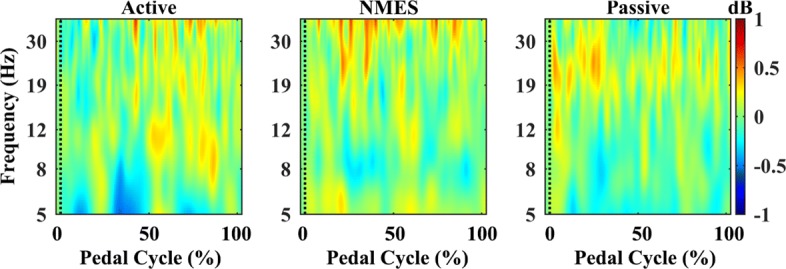
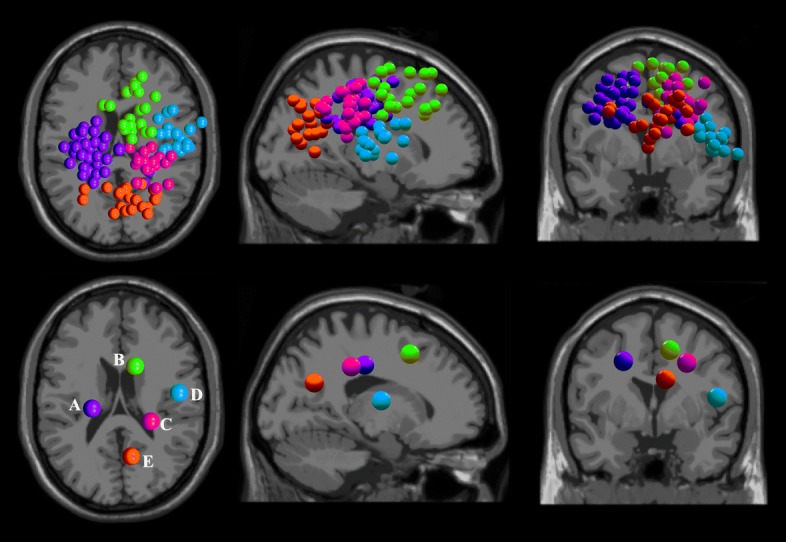
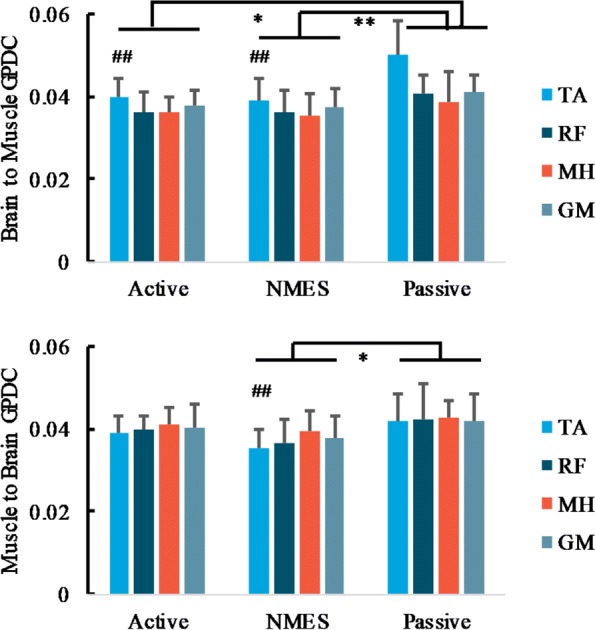
We investigated cortico-muscular interactions during passive, active, and NMES rhythmic pedaling in healthy subjects and chronic stroke survivors. EEG (128 channels), EMG (4 unilateral lower limb muscles) and movement parameters were measured during 3 sessions of constant-speed pedaling. Sensory-level NMES (20 mA) was applied to the muscles, and cyclic stimulation patterns were synchronized with the EMG during pedaling cycles. Adaptive mixture independent component analysis was utilized to determine the movement-related electro-cortical sources and the source dipole clusters. A directed cortico-muscular coupling analysis was conducted between representative source clusters and the EMGs using generalized partial directed coherence (GPDC). The bidirectional GPDC was compared across muscles and pedaling sessions for post-stroke and healthy subjects.
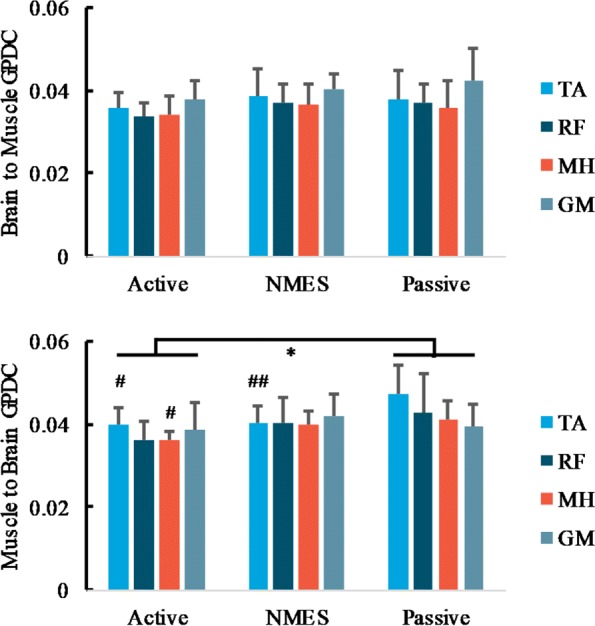
Directed cortico-muscular coupling of NMES cycling was more similar to that of active pedaling than to that of passive pedaling for the tested muscles. For healthy subjects, sensory-level NMES could modulate GPDC of both ascending and descending pathways. Whereas for stroke survivors, NMES could modulate GPDC of only the ascending pathways.
By clarifying how NMES influences neuromuscular control during pedaling in healthy and post-stroke subjects, our results indicate the potential limitation of sensory-level NMES in promoting sensorimotor recovery in chronic stroke survivors.
神经肌肉电刺激(NMES)在脑卒中运动康复中得到广泛应用。但 NMES 促进运动恢复的机制仍不完全清楚。NMES 可能改变肌肉特性、产生不同的感觉输入,并调节皮质活动的波动;但 NMES 与动态运动同步产生的皮质-肌肉耦合在其中的潜在贡献很少被讨论。
我们在健康受试者和慢性脑卒中幸存者中研究了被动、主动和 NMES 节律性踏车运动时的皮质-肌肉相互作用。在 3 次等速踏车运动中测量了 EEG(128 通道)、EMG(4 个单侧下肢肌肉)和运动参数。在踏车运动过程中,用感觉水平 NMES(20 mA)刺激肌肉,并将循环刺激模式与 EMG 同步。采用自适应混合独立成分分析确定与运动相关的皮质电源和源偶极子簇。使用广义部分定向相干性(GPDC)在代表源簇和 EMG 之间进行有向皮质-肌肉耦合分析。对脑卒中患者和健康受试者的肌肉和踏车运动进行双向 GPDC 比较。
与被动踏车相比,NMES 循环的有向皮质-肌肉耦合更类似于主动踏车。对于健康受试者,感觉水平 NMES 可以调节上行和下行通路的 GPDC。而对于脑卒中幸存者,NMES 只能调节上行通路的 GPDC。
通过阐明 NMES 如何影响健康和脑卒中受试者踏车运动时的神经肌肉控制,我们的结果表明,感觉水平 NMES 在促进慢性脑卒中幸存者的感觉运动恢复方面可能存在局限性。