McArdle Laboratory for Cancer Research, University of Wisconsin-Madison, Madison, WI 53705.
Division of Endocrinology, Diabetes, and Metabolism, Department of Medicine, Beth Israel Deaconess Medical Center, Harvard Medical School, Boston, MA 02215.
Proc Natl Acad Sci U S A. 2019 Dec 3;116(49):24630-24638. doi: 10.1073/pnas.1913992116. Epub 2019 Nov 19.
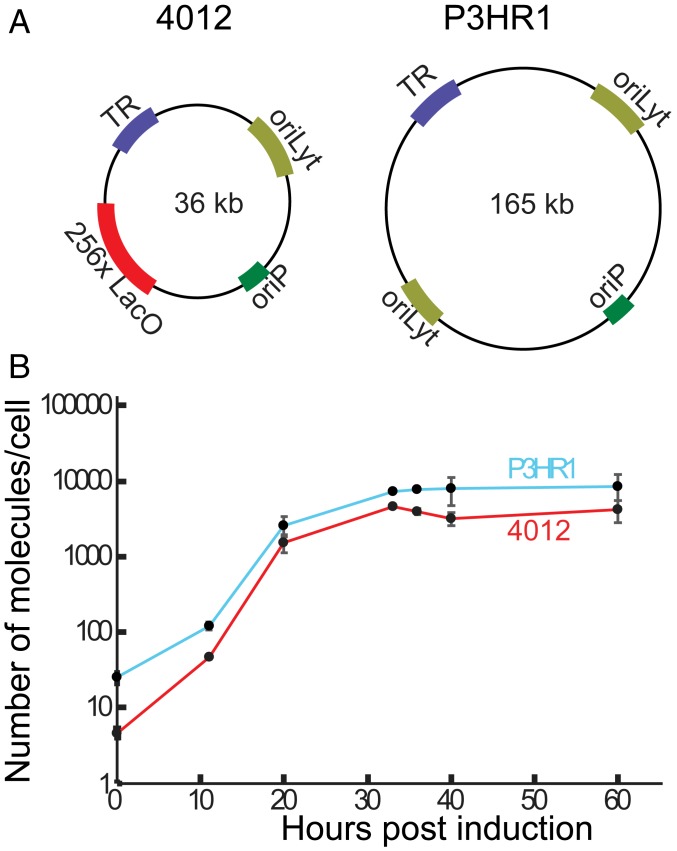
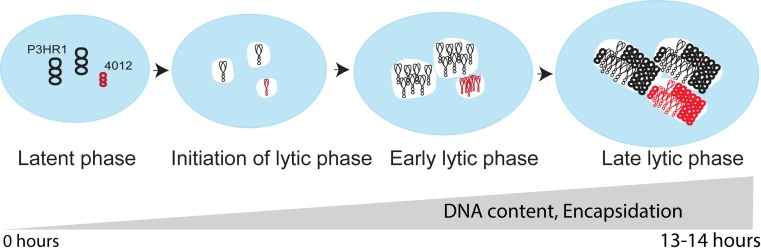
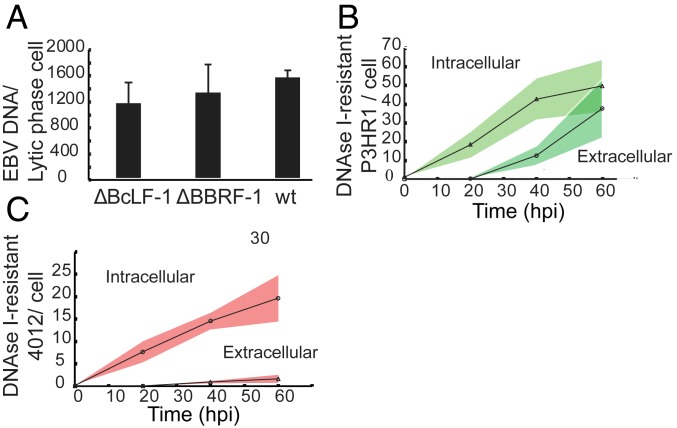
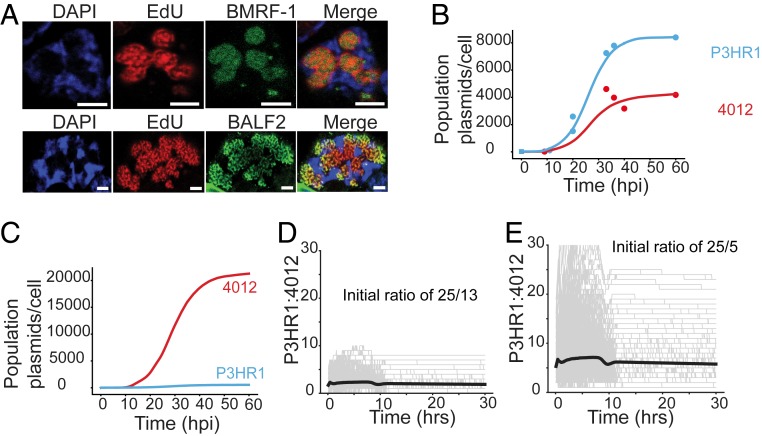
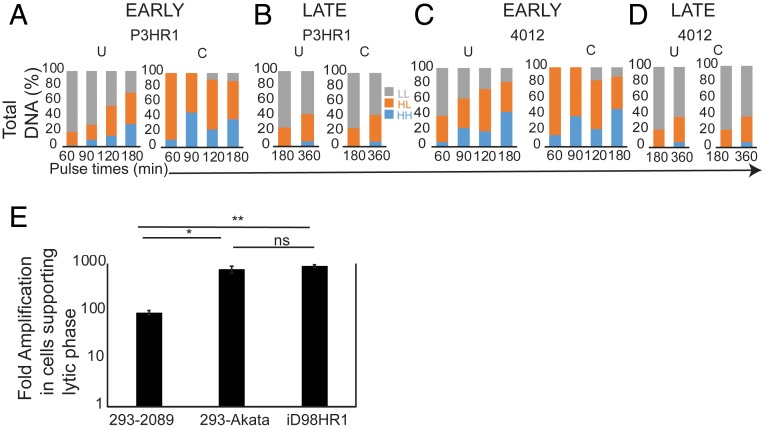
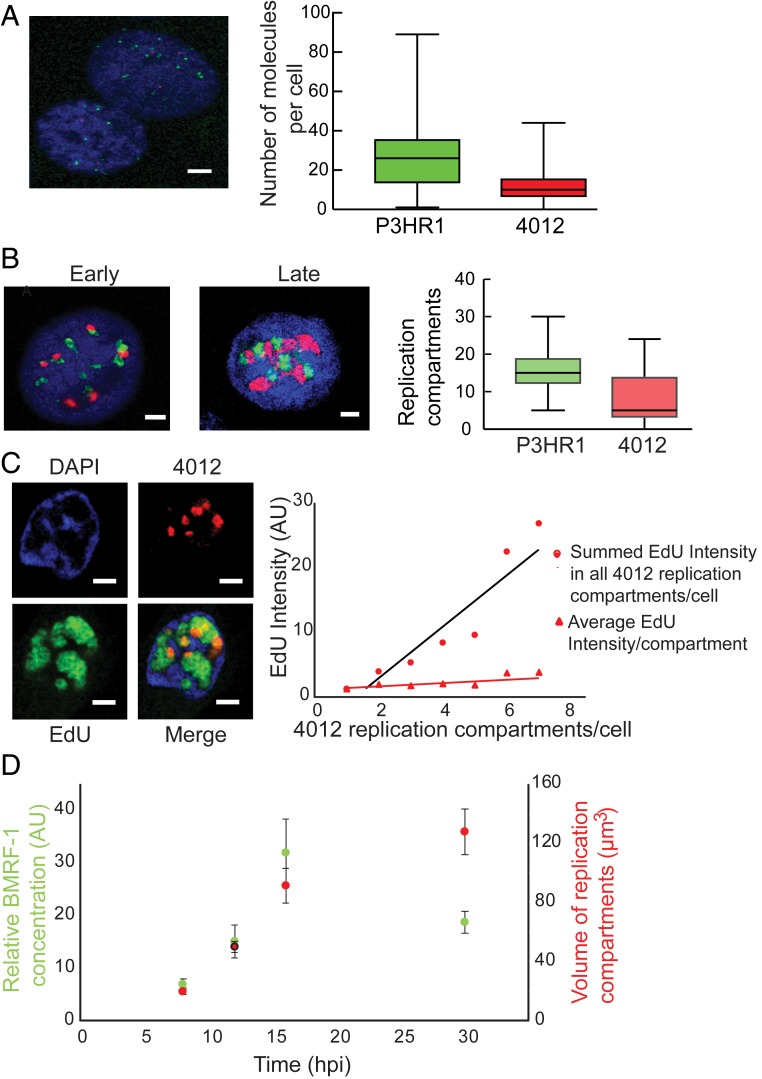
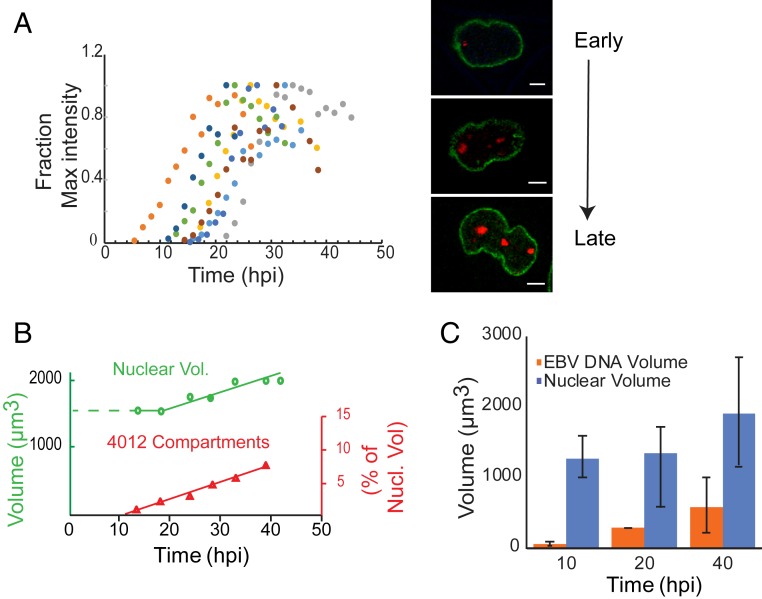
Herpesviruses must amplify their DNA to load viral particles and they do so in replication compartments. The development and functions of replication compartments during DNA amplification are poorly understood, though. Here we examine 2 functionally distinct replicons in the same cells to dissect DNA amplification within replication compartments. Using a combination of single-cell assays, computational modeling, and population approaches, we show that compartments initially were seeded by single genomes of Epstein-Barr virus (EBV). Their amplification subsequently took 13 to 14 h in individual cells during which their compartments occupied up to 30% of the nucleus and the nuclear volume grew by 50%. The compartmental volumes increased in proportion to the amount of DNA and viral replication proteins they contained. Each compartment synthesized similar levels of DNA, indicating that the total number of compartments determined the total levels of DNA amplification. Further, the amplification, which depended on the number of origins, was regulated differently early and late during the lytic phase; early during the lytic phase, the templates limited DNA synthesis, while later the templates were in excess, coinciding with a decline in levels of the viral replication protein, BMRF1, in the replication compartments. These findings show that replication compartments are factories in which EBV DNA amplification is both clonal and coordinated.
疱疹病毒必须扩增其 DNA 以装载病毒颗粒,它们在复制隔室中完成这一过程。然而,对于 DNA 扩增过程中复制隔室的发展和功能,我们仍知之甚少。在这里,我们在同一细胞中检查了 2 个具有不同功能的复制子,以剖析复制隔室中的 DNA 扩增。我们使用单细胞分析、计算建模和群体方法的组合,表明隔室最初是由单个 EBV(Epstein-Barr virus)基因组播种的。随后,在单个细胞中,它们的扩增需要 13 到 14 小时,在此期间,它们的隔室占据了多达 30%的核,并使核体积增长了 50%。隔室的体积与它们所含的 DNA 和病毒复制蛋白的数量成正比增加。每个隔室合成的 DNA 量相似,表明隔室的总数决定了 DNA 扩增的总水平。此外,依赖于起始点数量的扩增在裂解期的早期和晚期受到不同的调控;在裂解期的早期,模板限制了 DNA 的合成,而后来模板过剩,这与复制隔室中病毒复制蛋白 BMRF1 的水平下降相吻合。这些发现表明,复制隔室是 EBV DNA 扩增具有克隆性和协调性的工厂。