Department of Chemical Engineering, University of Washington, Seattle, WA 98195, USA.
Nanoscale. 2019 Nov 28;11(46):22515-22530. doi: 10.1039/c9nr06327g.
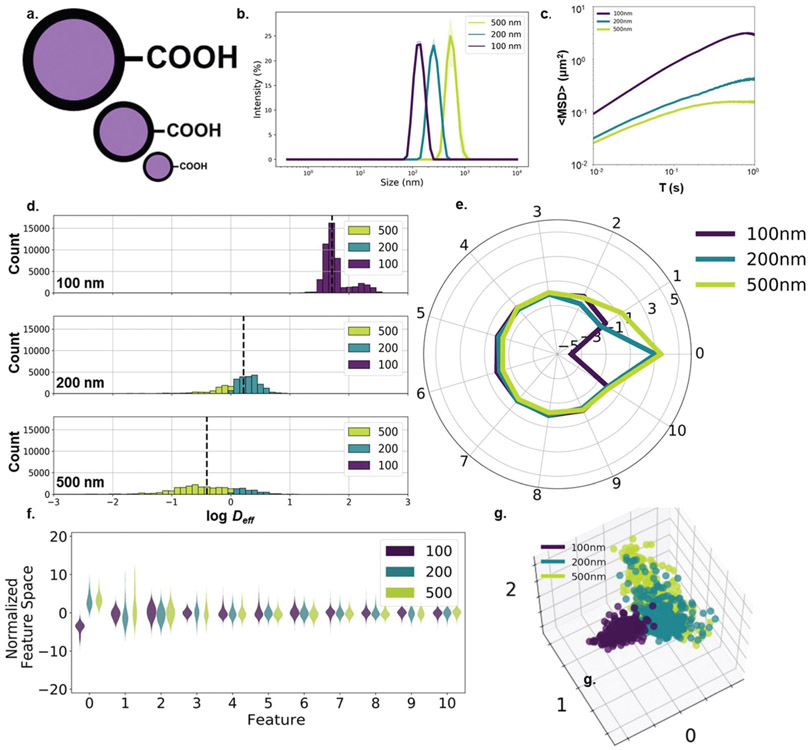
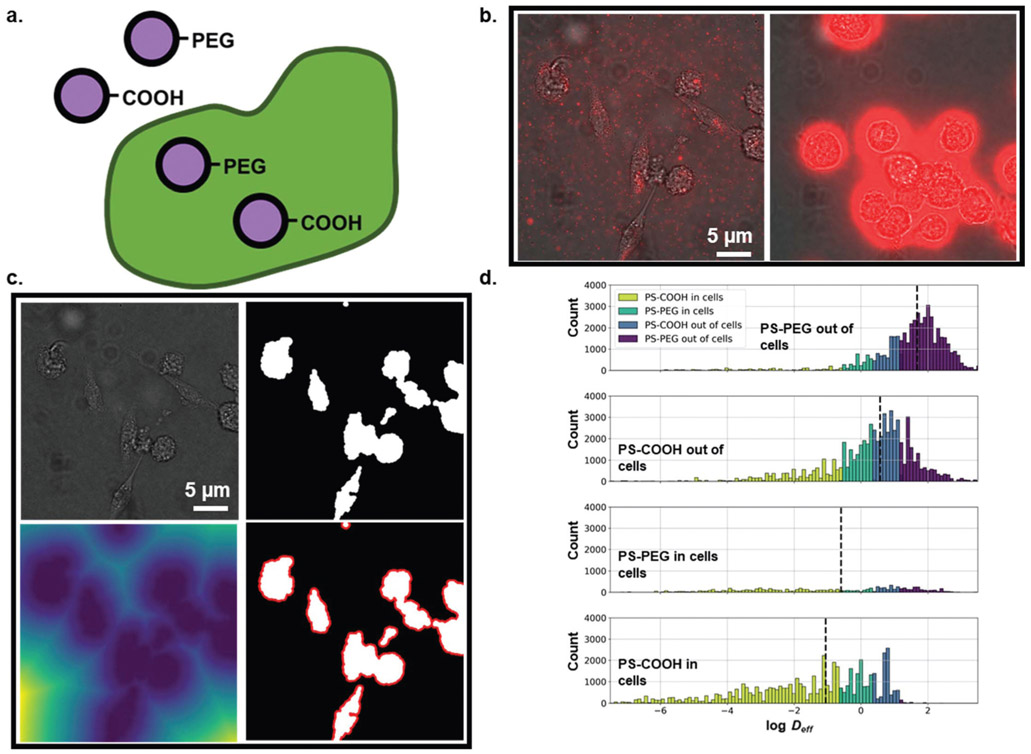
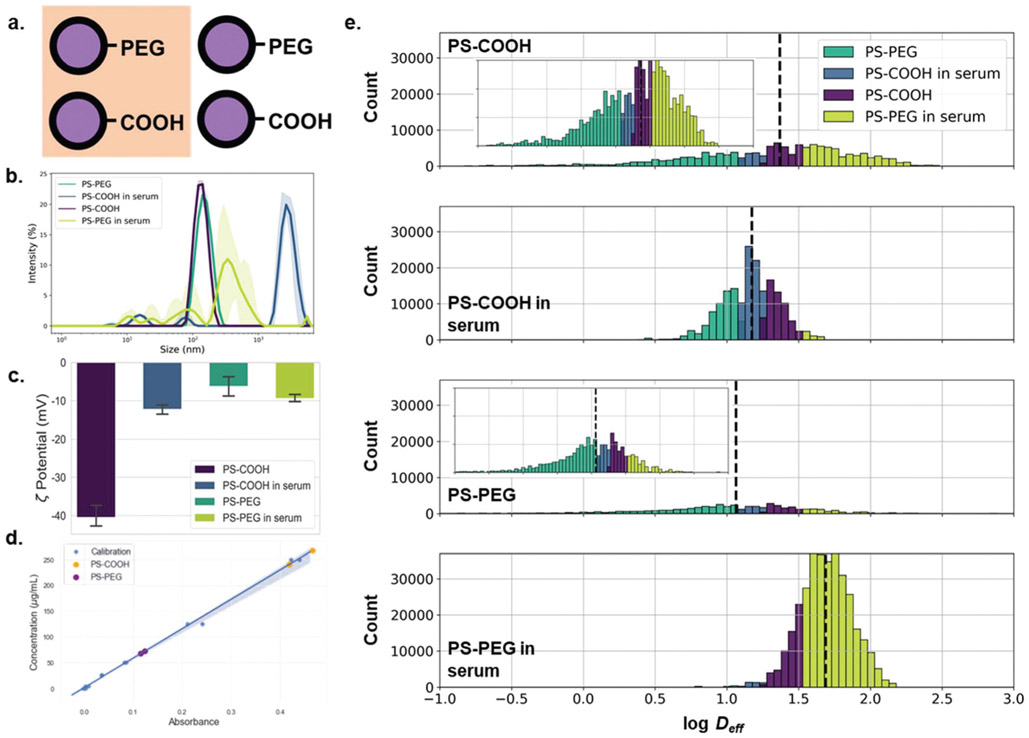
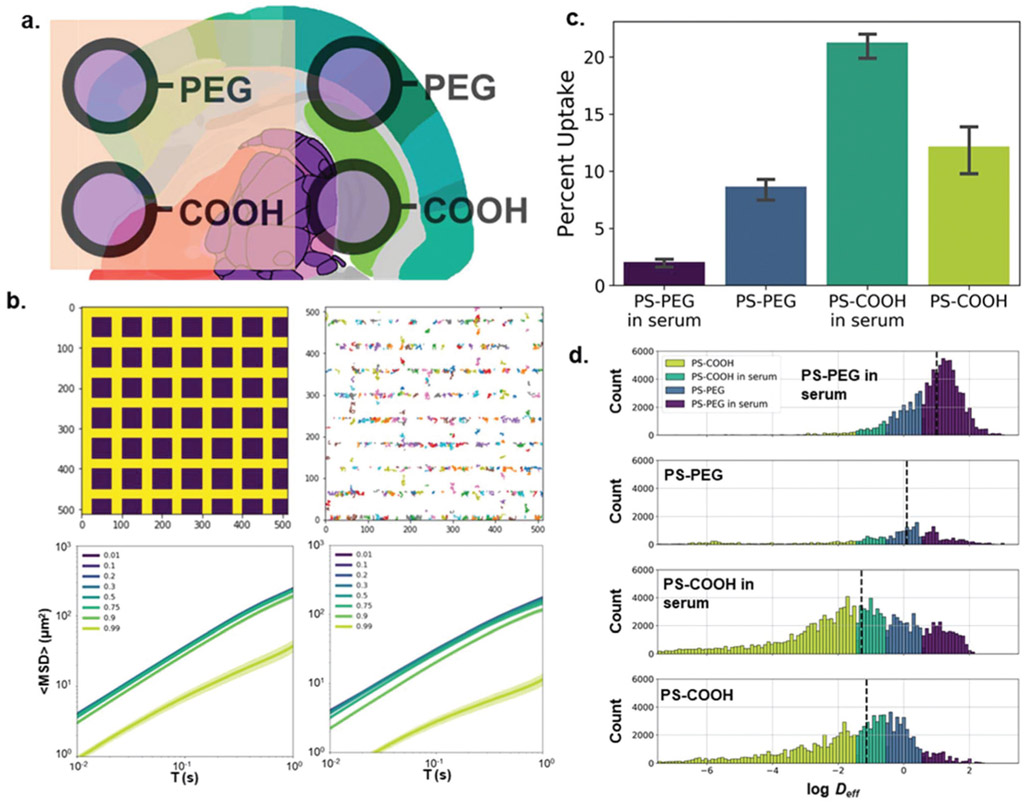
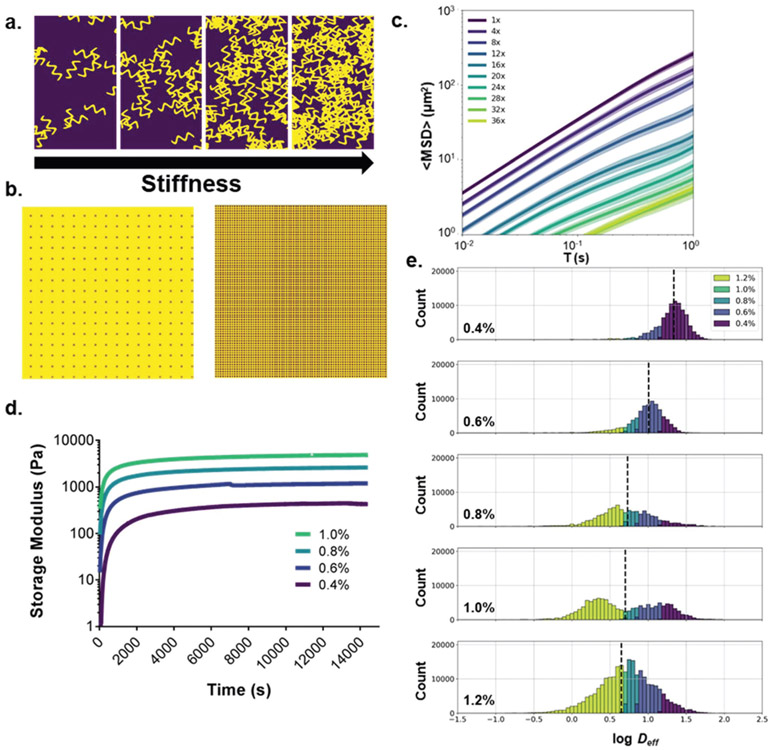
Predictive models of nanoparticle transport can drive design of nanotherapeutic platforms to overcome biological barriers and achieve localized delivery. In this paper, we demonstrate the ability of artificial neural networks to predict both nanoparticle properties, such as size and protein adsorption, and aspects of the brain microenvironment, such as cell internalization, viscosity, and brain region by using large (>100 000) trajectory datasets collected via multiple particle tracking in in vitro gel models of the brain and cultured organotypic brain slices. Our neural network achieved a 0.75 recall score when predicting gel viscosity based on trajectory datasets, compared to 0.49 using an obstruction scaling model. When predicting in situ nanoparticle size based on trajectory datasets, neural networks achieved a 0.90 recall score compared to 0.83 using an optimized Stokes-Einstein predictor. To distinguish between nanoparticles of different sizes in more complex nanoparticle mixtures, our neural network achieved up to a recall score of 0.85. Even in cases of more nuanced output variables where mathematical models are not available, such as protein adhesion, neural networks retained the ability to distinguish between particle populations (recall score of 0.89). These findings demonstrate how trajectory datasets in combination with machine learning techniques can be used to characterize the particle-microenvironment interaction space.
预测纳米粒子输运的模型可以推动纳米治疗平台的设计,以克服生物屏障并实现局部递送。在本文中,我们展示了人工神经网络的能力,该网络可以通过在体外脑凝胶模型和培养的器官型脑片中使用多个粒子追踪收集的大型(>100000)轨迹数据集来预测纳米粒子的特性(如大小和蛋白质吸附)和脑微环境的各个方面(如细胞内化、粘度和脑区)。与使用阻塞缩放模型相比,我们的神经网络在基于轨迹数据集预测凝胶粘度时达到了 0.75 的召回分数。当基于轨迹数据集预测原位纳米粒子大小时,神经网络的召回分数为 0.90,而使用优化的 Stokes-Einstein 预测器则为 0.83。为了在更复杂的纳米粒子混合物中区分不同大小的纳米粒子,我们的神经网络的召回分数高达 0.85。即使在没有数学模型的情况下,如蛋白质粘附等更细微的输出变量,神经网络仍能够区分粒子群体(召回分数为 0.89)。这些发现表明,如何将轨迹数据集与机器学习技术相结合,用于表征粒子-微环境相互作用空间。