Department of Orthopedic Surgery, Kaohsiung Chang Gung Memorial Hospital, Kaohsiung 83301, Taiwan.
Department of Medicine; Graduate Institute of Clinical Medical Sciences, Chang Gung University College of Medicine, Kaohsiung 83301, Taiwan.
Int J Mol Sci. 2019 Nov 18;20(22):5786. doi: 10.3390/ijms20225786.
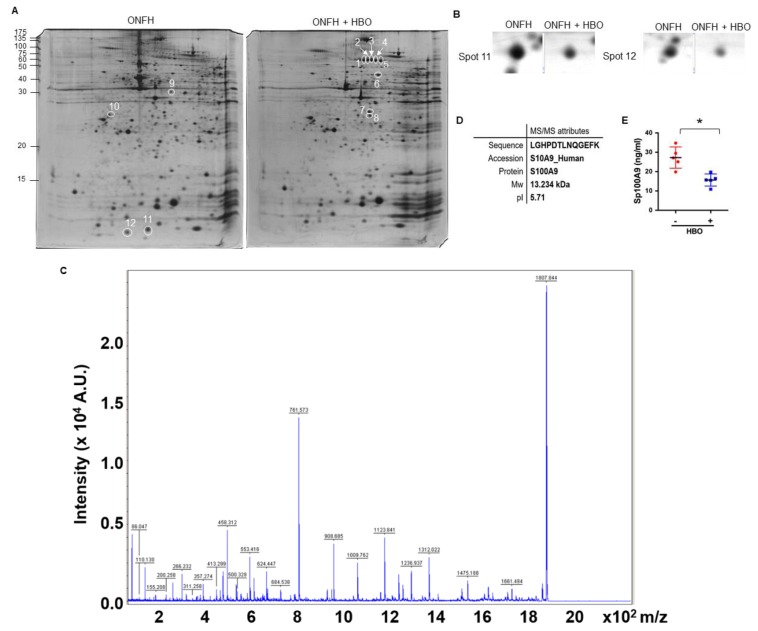
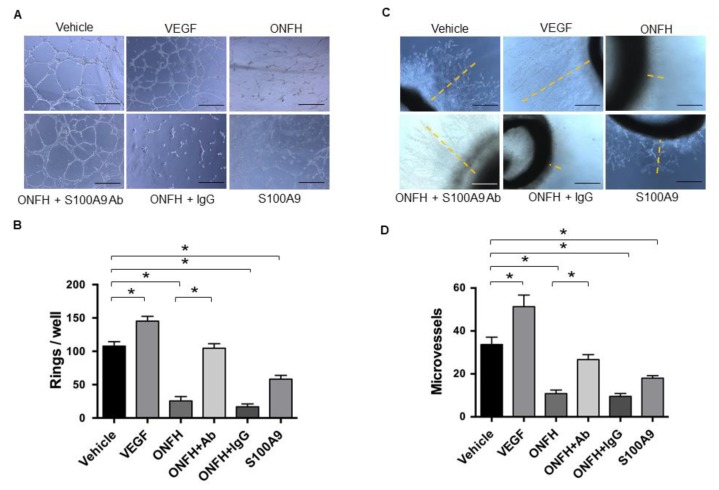
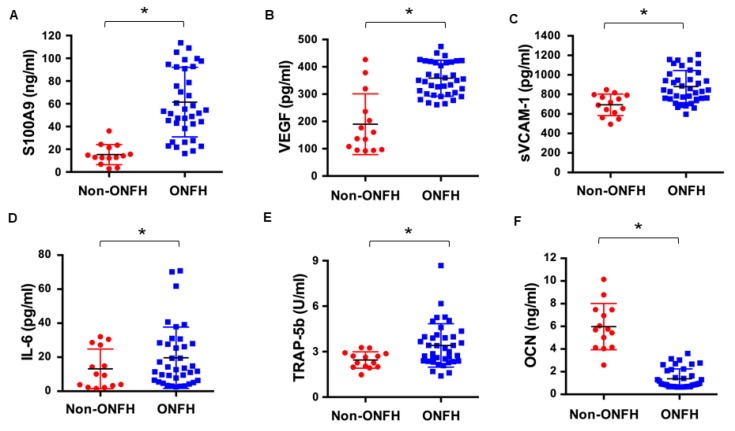
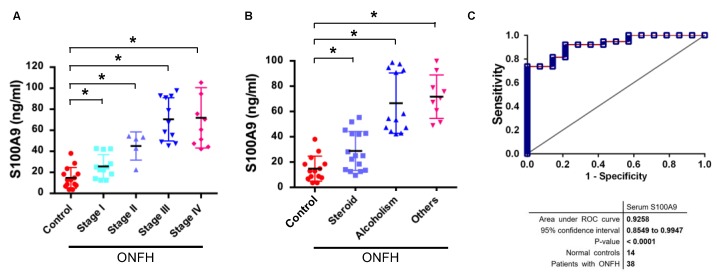
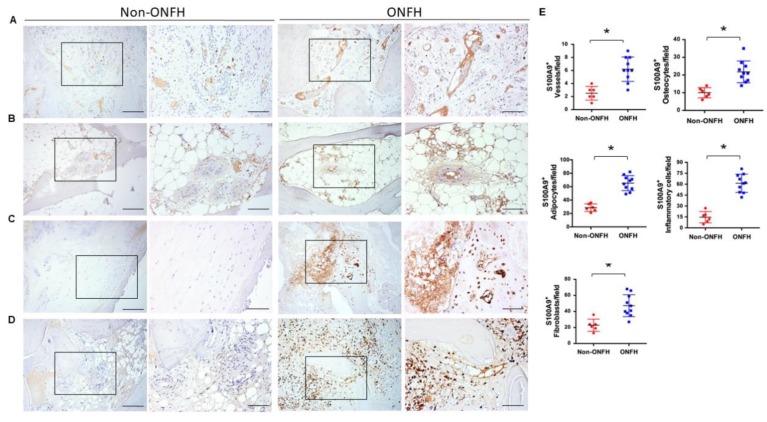
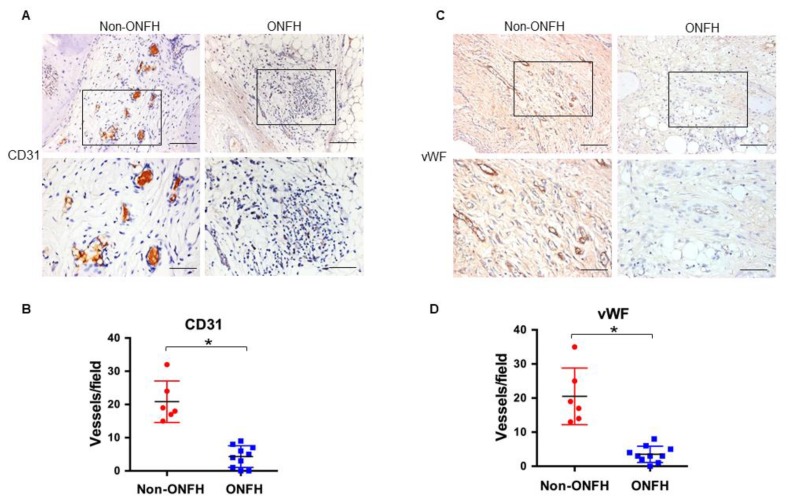
Ischemic damage aggravation of femoral head collapse is a prominent pathologic feature of osteonecrosis of the femoral head (ONFH). In this regard, S100 calcium binding protein A9 (S100A9) is known to deteriorate joint integrity, however, little is understood about which role S100A9 may play in ONFH. In this study, a proteomics analysis has revealed a decrease in the serum S100A9 level in patients with ONFH upon hyperbaric oxygen therapy. Serum S100A9 levels, along with serum vascular endothelial growth factor (VEGF), soluble vascular cell adhesion molecule-1 (sVCAM-1), interleukin-6 (IL-6), and tartrate-resistant acid phosphatase 5b levels were increased in patients with ONFH, whereas serum osteocalcin levels were decreased as compared to healthy controls. Serum S100A9 levels were increased with the Ficat and Arlet stages of ONFH and correlated with the patients with a history of being on glucocorticoid medication and alcohol consumption. Osteonecrotic tissue showed hypovasculature histopathology together with weak immunostaining for vessel marker CD31 and von Willrbrand factor (vWF) as compared to femoral head fracture specimens. Thrombosed vessels, fibrotic tissue, osteocytes, and inflammatory cells displayed strong S100A9 immunoreactivity in osteonecrotic lesion. , ONFH serum and S100A9 inhibited the tube formation of vessel endothelial cells and vessel outgrowth of rat aortic rings, whereas the antibody blockade of S100A9 improved angiogenic activities. Taken together, increased S100A9 levels are relevant to the development of ONFH. S100A9 appears to provoke avascular damage, ultimately accelerating femoral head deterioration through reducing angiogenesis. This study provides insight into the molecular mechanism underlying the development of ONFH. Here, analysis also highlights that serum S100A9 is a sensitive biochemical indicator of ONFH.
股骨头塌陷的缺血性损伤加重是股骨头坏死(ONFH)的一个突出病理特征。在这方面,S100 钙结合蛋白 A9(S100A9)已知会损害关节完整性,但对于 S100A9 在 ONFH 中的作用知之甚少。在这项研究中,蛋白质组学分析显示高压氧治疗后 ONFH 患者血清 S100A9 水平下降。ONFH 患者的血清 S100A9 水平以及血清血管内皮生长因子(VEGF)、可溶性血管细胞黏附分子-1(sVCAM-1)、白细胞介素-6(IL-6)和抗酒石酸酸性磷酸酶 5b 水平升高,而与健康对照组相比,血清骨钙素水平降低。与健康对照组相比,血清 S100A9 水平随着 ONFH 的 Ficat 和 Arlet 分期而升高,与接受糖皮质激素药物和饮酒史的患者相关。与股骨头骨折标本相比,骨坏死组织表现出低血管生成组织病理学特征,并且血管标志物 CD31 和血管性血友病因子(vWF)的免疫染色较弱。在骨坏死病变中,血栓形成的血管、纤维组织、骨细胞和炎症细胞显示出强烈的 S100A9 免疫反应性。ONFH 血清和 S100A9 抑制血管内皮细胞的管形成和大鼠主动脉环的血管外生,而 S100A9 的抗体阻断改善了血管生成活性。总之,S100A9 水平升高与 ONFH 的发生有关。S100A9 似乎会引发无血管损伤,通过减少血管生成,最终加速股骨头恶化。本研究深入了解了 ONFH 发生发展的分子机制。分析还强调,血清 S100A9 是 ONFH 的敏感生化指标。