Orthopedic Laboratory of Chongqing Medical University, China.
Department of Orthopedics, The First Affiliated Hospital of Chongqing Medical University, China.
Biomed Res Int. 2022 Jul 6;2022:4006184. doi: 10.1155/2022/4006184. eCollection 2022.
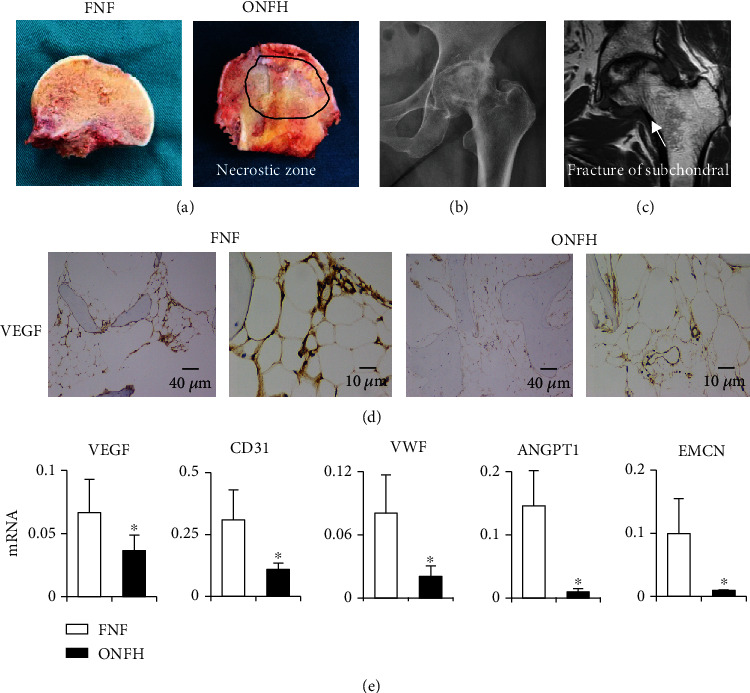
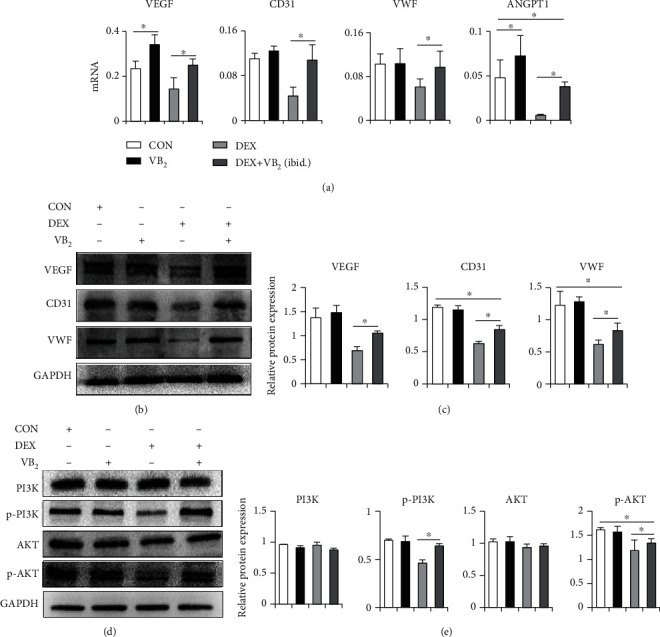
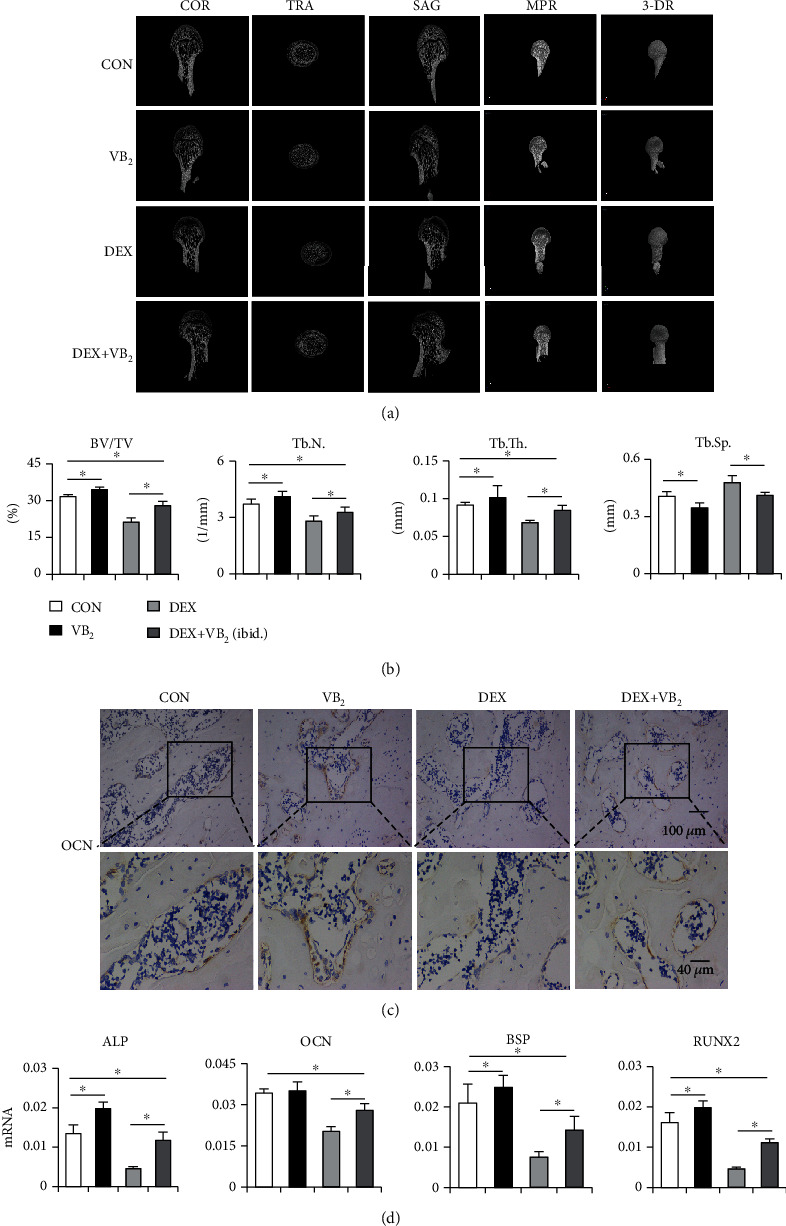
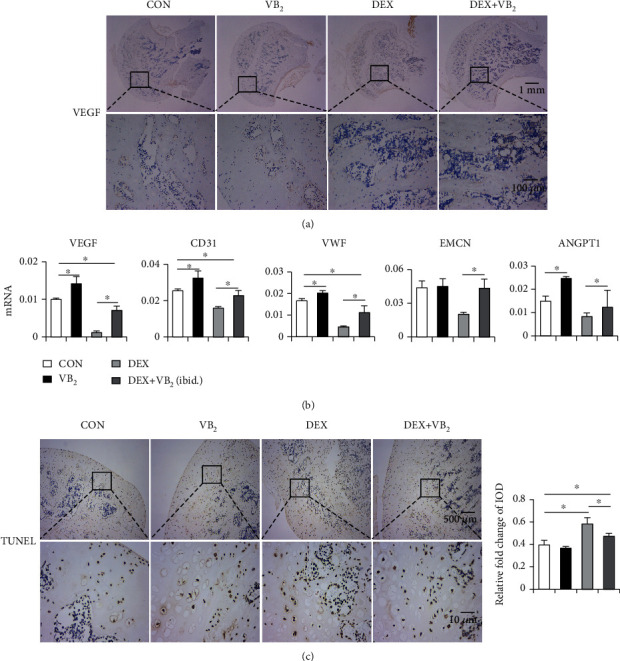
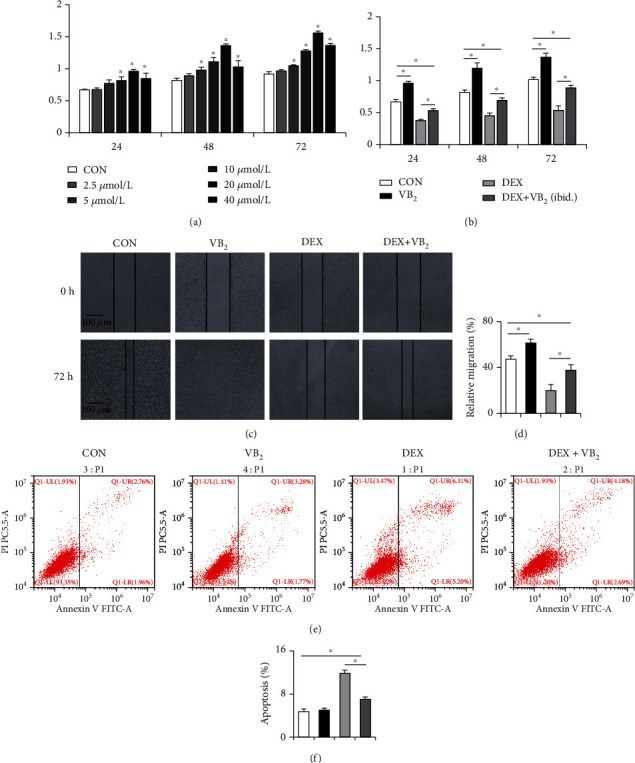
Osteonecrosis of the femoral head (ONFH) is a disorder that can cause collapse of the femoral head. The damage and dysfunction of femoral head microvascular endothelial cells are related to the pathogenesis of glucocorticoid-induced ONFH. Reports suggest that vitamin B can promote osteoblast differentiation and prevent low bone mineral density and prevent reperfusion oxidative injury. To explore the effect and possible molecular mechanism of vitamin B on the ONFH and Human Umbilical Vein Endothelial Cells (HUVECs), we performed a rat model of ONFH by dexamethasone. The rats were randomly divided into four groups: control group, vitamin B group, dexamethasone group, and dexamethasone combined with vitamin B treatment group. HUVECs were used to further prove the role and mechanism of vitamin B in vitro. In patients, according to immunohistochemical and qRT-PCR of the femoral head, the angiogenic capacity of the ONFH femoral head is compromised. In vivo, it showed that vitamin B could inhibit glucocorticoid-induced ONFH-like changes in rats by suppressing cell apoptosis, promoting the regeneration of blood vessels, and increasing bone mass. According to in vitro results, vitamin B could induce the migration of HUVECs, enhance the expression of angiogenesis-related factors, and inhibit glucocorticoid-induced apoptosis. The underlying mechanism may be that vitamin B activates the PI3K signaling pathway. Vitamin B alleviated dexamethasone-induced ONFH, and vitamin B could promote the proliferation and migration of HUVECs and inhibit their apoptosis by activating the PI3K/Akt signaling pathway. Vitamin B may be a potentially effective treatment for ONFH.
股骨头坏死(ONFH)是一种可导致股骨头塌陷的疾病。股骨头微血管内皮细胞的损伤和功能障碍与糖皮质激素诱导的 ONFH 的发病机制有关。有报道称,维生素 B 可以促进成骨细胞分化,预防低骨密度,防止再灌注氧化损伤。为了探讨维生素 B 对激素性股骨头坏死(ONFH)及人脐静脉内皮细胞(HUVECs)的作用及可能的分子机制,我们通过地塞米松建立了大鼠 ONFH 模型。大鼠随机分为四组:对照组、维生素 B 组、地塞米松组和地塞米松联合维生素 B 治疗组。进一步使用 HUVECs 在体外证明维生素 B 的作用和机制。在患者中,根据股骨头的免疫组化和 qRT-PCR,ONFH 股骨头的血管生成能力受损。在体内,结果表明维生素 B 通过抑制细胞凋亡、促进血管再生和增加骨量来抑制糖皮质激素诱导的大鼠 ONFH 样变化。根据体外结果,维生素 B 可以诱导 HUVEC 的迁移,增强血管生成相关因子的表达,并抑制糖皮质激素诱导的凋亡。其潜在机制可能是维生素 B 激活了 PI3K 信号通路。维生素 B 减轻了地塞米松诱导的 ONFH,并且维生素 B 可能通过激活 PI3K/Akt 信号通路促进 HUVEC 的增殖和迁移并抑制其凋亡。维生素 B 可能是一种潜在有效的治疗方法。