Science and Technology Innovation Center, Guangzhou University of Chinese Medicine, Guangzhou 51000, China.
Institute of Clinical Pharmacology, Guangzhou University of Chinese Medicine, Guangzhou 51000, China.
Cells. 2019 Nov 19;8(11):1466. doi: 10.3390/cells8111466.
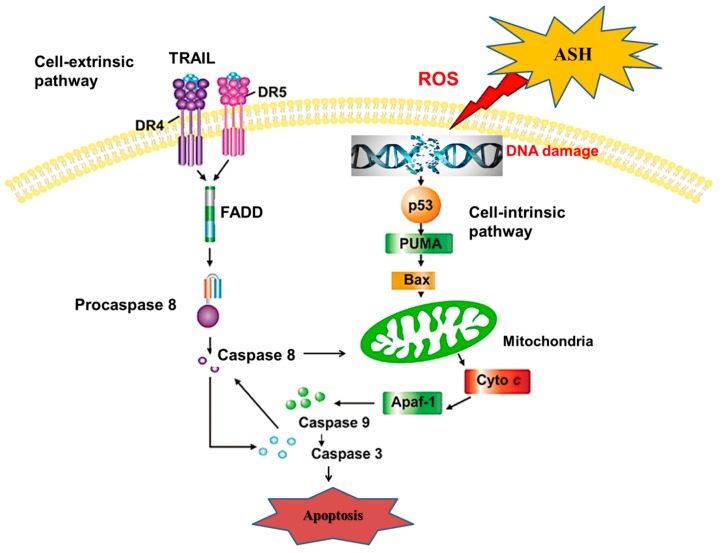
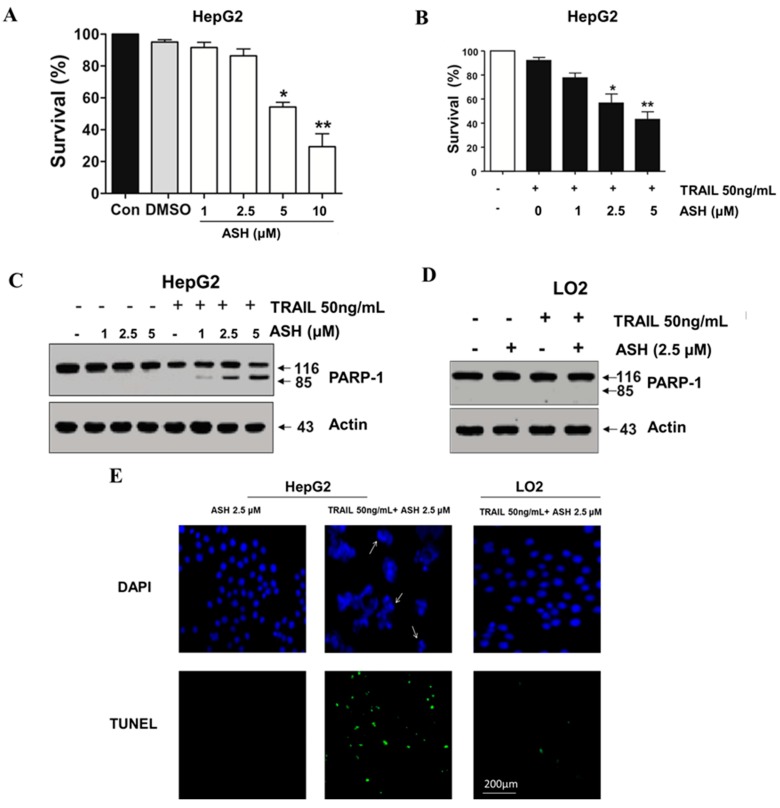
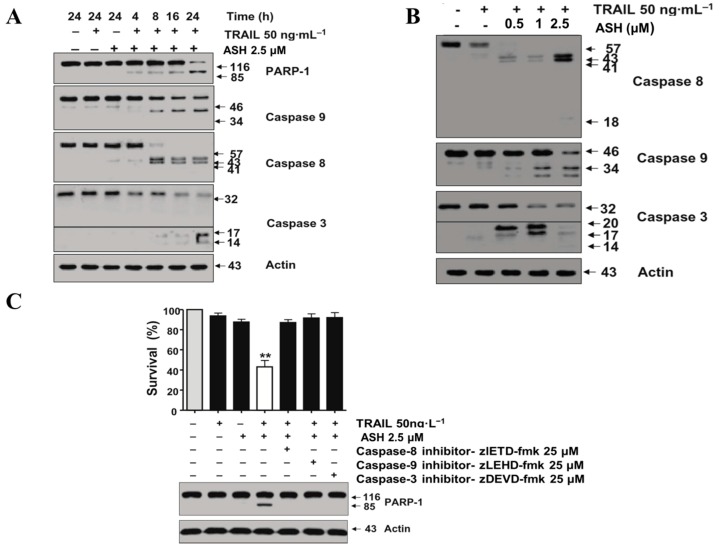
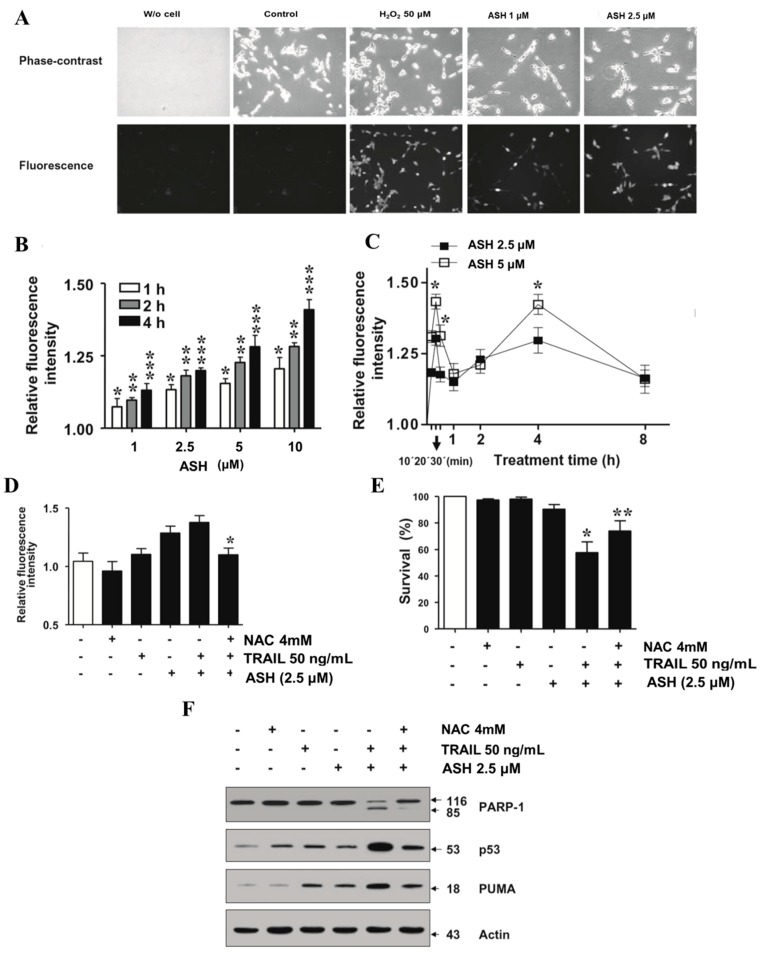
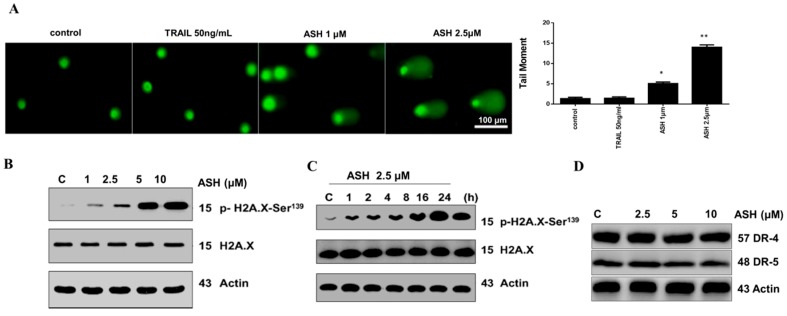
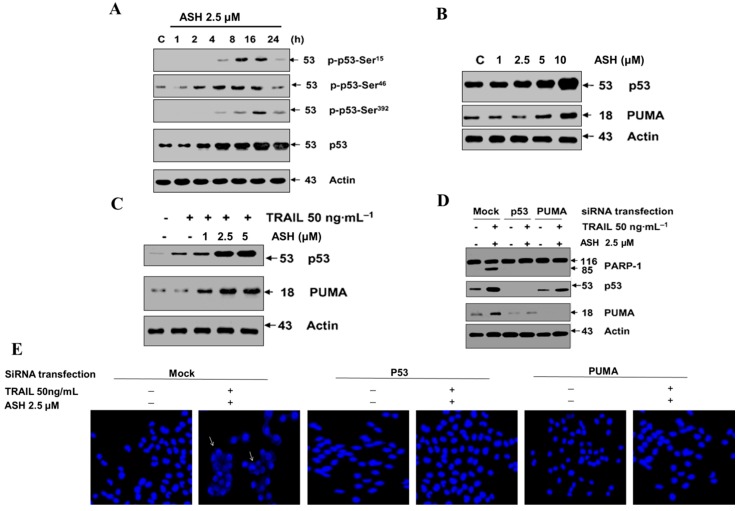
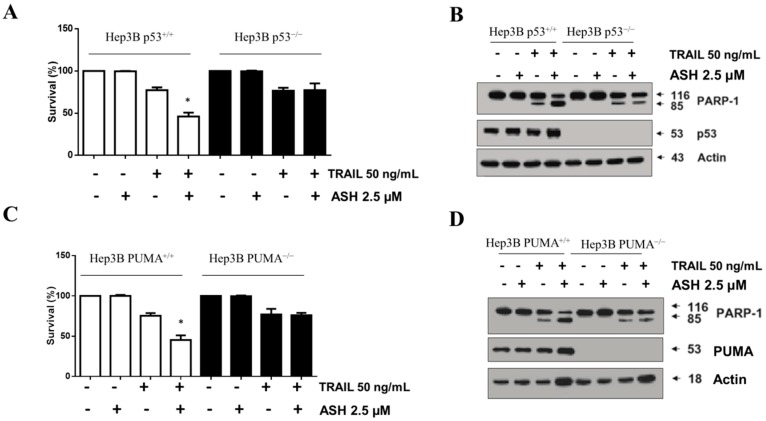
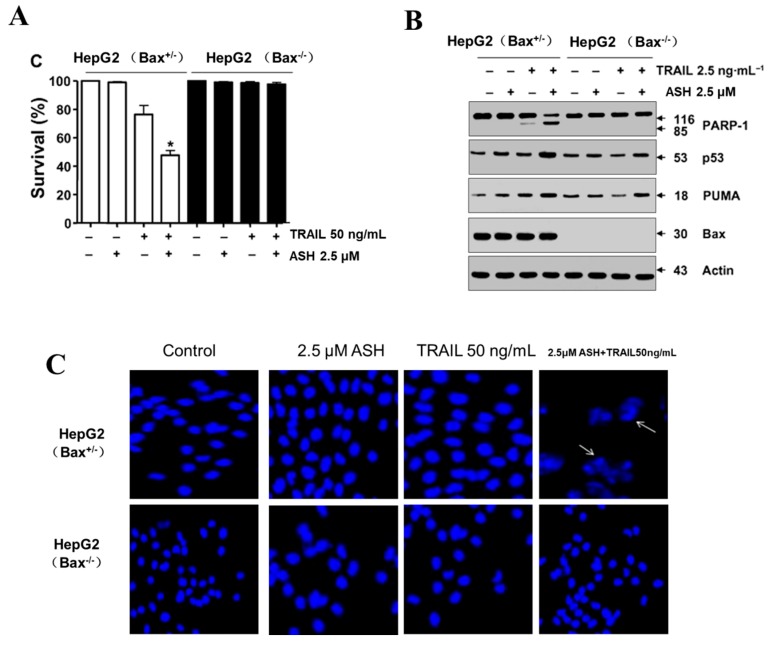
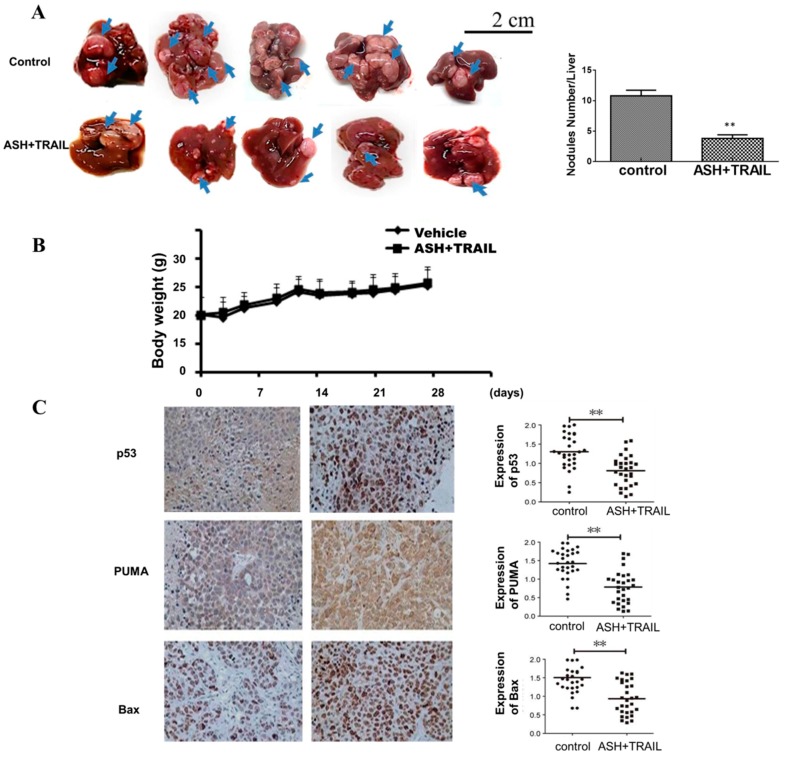
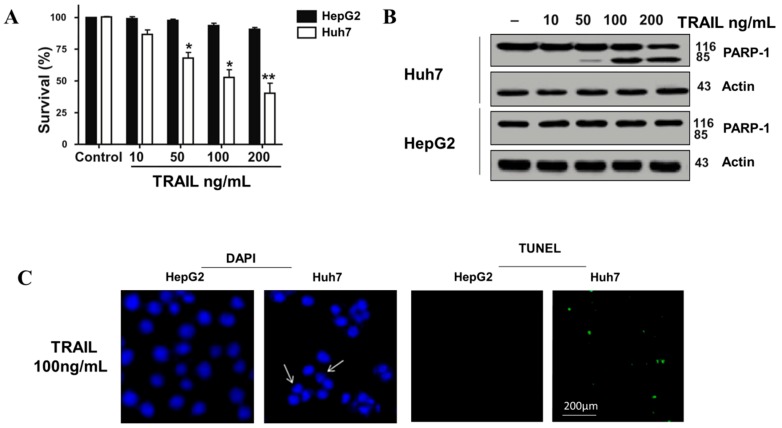
The tumor necrosis factor-related apoptosis-inducing ligand (TRAIL) has shown strong and explicit cancer cell-selectivity, which results in little toxicity toward normal tissues, and has been recognized as a potential, relatively safe anticancer agent. However, several cancers are resistant to the apoptosis induced by TRAIL. A recent study found that shikonin b (alkannin, 5,8-dihydroxy-2-[(1)-1-hydroxy-4-methylpent-3-en-1-yl]naphthalene-1,4-dione) might induce apoptosis in TRAIL-resistant cholangiocarcinoma cells through reactive oxygen species (ROS)-mediated caspases activation. However, the strong cytotoxic activity has limited its potential as an anticancer drug. Thus, the current study intends to discover novel shikonin derivatives which can sensitize the liver cancer cell to TRAIL-induced apoptosis while exhibiting little toxicity toward the normal hepatic cell. The trypan blue exclusion assay, western blot assay, 4',6-diamidino-2-phenylindole (DAPI) staining and the terminal deoxynucleotidyl transferase dUTP nick end labeling (TUNEL) assay as well as the 'comet' assay, were used to study the underlying mechanisms of cell death and to search for any mechanisms of an enhancement of TRAIL-mediated apoptosis in the presence of ASH. Herein, we demonstrated that non-cytotoxic doses of acetylshikonin (ASH), one of the shikonin derivatives, in combination with TRAIL, could promote apoptosis in HepG2 cells. Further studies showed that application of ASH in a non-cytotoxic dose (2.5 μM) could increase intracellular ROS production and induce DNA damage, which might trigger a cell intrinsic apoptosis pathway in the TRAIL-resistant HepG2 cell. Combination treatment with a non-cytotoxic dose of ASH and TRAIL activated caspase and increased the cleavage of PARP-1 in the HepG2 cell. However, when intracellular ROS production was suppressed by N-acetyl-l-cysteine (NAC), the synergistic effects of ASH and TRAIL on hepatocellular carcinoma (HCC) cell apoptosis was abolished. Furthermore, NAC could alleviate p53 and the p53 upregulated modulator of apoptosis (PUMA) expression induced by TRAIL and ASH. Small (or short) interfering RNA (siRNA) targeting PUMA or p53 significantly reversed ASH-mediated sensitization to TRAIL-induced apoptosis. In addition, Bax gene deficiency also abolished ASH-induced TRAIL sensitization. An orthotopical HCC implantation mice model further confirmed that co-treated ASH overcomes TRAIL resistance in HCC cells without exhibiting potent toxicity in vivo. In conclusion, the above data suggested that ROS could induce DNA damage and activating p53/PUMA/Bax signaling, and thus, this resulted in the permeabilization of mitochondrial outer membrane and activating caspases as well as sensitizing the HCC cell to apoptosis induced by TRAIL and ASH treatment.
肿瘤坏死因子相关凋亡诱导配体(TRAIL)显示出强烈而明确的癌细胞选择性,对正常组织的毒性很小,因此被认为是一种有潜力的、相对安全的抗癌药物。然而,一些癌症对 TRAIL 诱导的细胞凋亡具有抗性。最近的一项研究发现,紫草素 b(紫草宁,5,8-二羟基-2-[(1)-1-羟基-4-甲基戊-3-烯-1-基]萘-1,4-二酮)可能通过活性氧(ROS)介导的半胱天冬酶激活诱导 TRAIL 耐药胆管癌细胞凋亡。然而,其强烈的细胞毒性活性限制了其作为抗癌药物的潜力。因此,目前的研究旨在发现新型紫草素衍生物,这些衍生物能够使肝癌细胞对 TRAIL 诱导的凋亡敏感,同时对正常肝细胞表现出很小的毒性。台盼蓝排除试验、western blot 试验、4',6-二脒基-2-苯基吲哚(DAPI)染色和末端脱氧核苷酸转移酶 dUTP 缺口末端标记(TUNEL)试验以及“彗星”试验用于研究细胞死亡的潜在机制,并寻找 ASH 存在时增强 TRAIL 介导的细胞凋亡的任何机制。在此,我们证明了紫草素衍生物之一乙酰紫草素(ASH)的非细胞毒性剂量与 TRAIL 联合使用可促进 HepG2 细胞凋亡。进一步的研究表明,ASH 的非细胞毒性剂量(2.5 μM)的应用可增加细胞内 ROS 的产生并诱导 DNA 损伤,这可能触发 TRAIL 耐药 HepG2 细胞中的细胞内在凋亡途径。用非细胞毒性剂量的 ASH 和 TRAIL 联合处理可激活半胱天冬酶并增加 HepG2 细胞中 PARP-1 的裂解。然而,当用 N-乙酰-L-半胱氨酸(NAC)抑制细胞内 ROS 产生时,ASH 和 TRAIL 对肝癌细胞凋亡的协同作用被消除。此外,NAC 可以减轻 TRAIL 和 ASH 诱导的 p53 和 p53 上调凋亡调节剂(PUMA)的表达。针对 PUMA 或 p53 的小干扰 RNA(siRNA)靶向显著逆转了 ASH 介导的对 TRAIL 诱导的细胞凋亡的敏感性。此外,Bax 基因缺失也消除了 ASH 诱导的 TRAIL 敏感性。原位 HCC 植入小鼠模型进一步证实,联合使用 ASH 可克服 HCC 细胞对 TRAIL 的耐药性,而在体内无明显毒性。总之,上述数据表明 ROS 可诱导 DNA 损伤并激活 p53/PUMA/Bax 信号通路,从而导致线粒体外膜的通透性增加,半胱天冬酶的激活以及对 TRAIL 和 ASH 处理诱导的 HCC 细胞凋亡的敏感性增加。