Department of Periodontics and Community Dentistry, College of Dentistry, King Saud University, Riyadh, Saudi Arabia.
Department of Oral Health Policy and Epidemiology, School of Dental Medicine, Harvard University, Boston, MA, USA.
BMC Oral Health. 2019 Nov 21;19(1):254. doi: 10.1186/s12903-019-0925-z.
Although several studies assessed the prevalence of alveolar bone loss, the association with several risk factors has not been fully investigated. The aim of this article is to measure the prevalence of periodontitis by calculating the mean alveolar bone loss/level of posterior teeth using bitewing radiographs among the patients enrolled in the clinics at Harvard School of Dental Medicine and address risk factors associated with the disease.
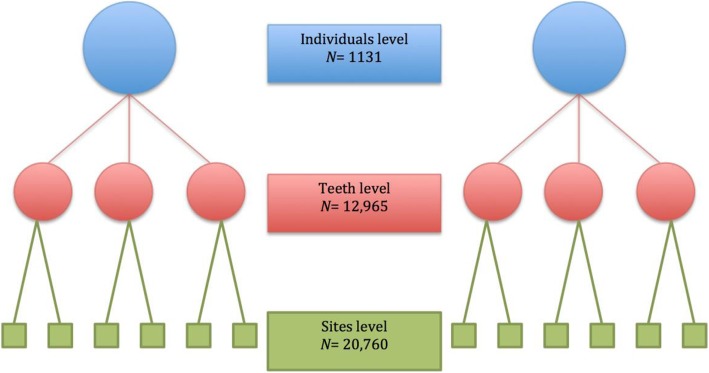
One thousand one hundred thirty-one patients were selected for radiographic analysis to calculate the mean alveolar bone loss/level by measuring the distance between the cementoenamel junction and the alveolar bone crest on the mesial and distal surfaces of posterior teeth. Linear regression with Multi-level mixed-effect model was used for statistical analysis adjusting for age, sex, race, median household income, and other variables.
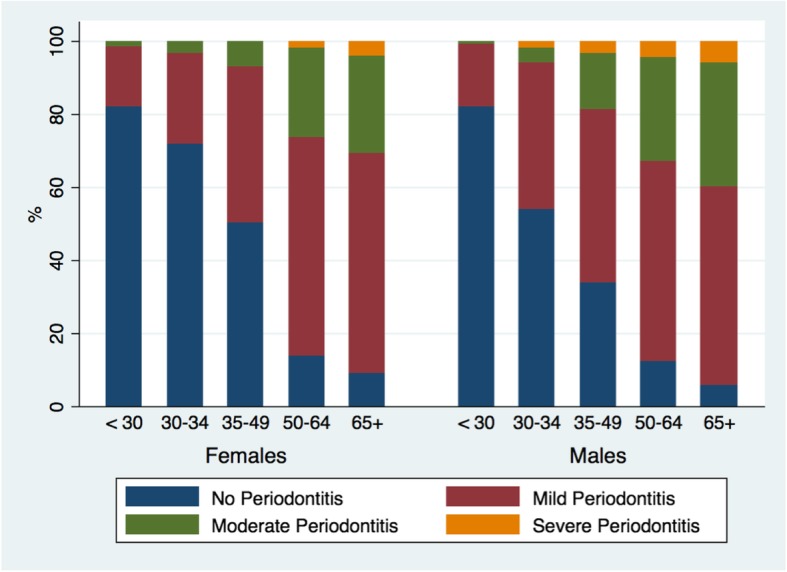
Mean alveolar bone level of the whole sample was 1.30 mm (±0.006). Overall periodontitis prevalence for the sample was 55.5% (±1.4%). Moderate periodontitis prevalence was 20.7% (±1.2%), while 2.8% (±0.5%) of the whole sample had severe periodontitis. Adjusted mean alveolar bone loss was higher in older age groups, males, Asian race group, ever smokers, and patients with low median household income.
The effect of high household income on the amount of bone loss can be powerful to the degree that high household income can influence outcomes even for individuals who had higher risks of developing the disease. Public health professionals and clinicians need to collaborate with policy makers to achieve and sustain high quality of healthcare for everyone.
尽管有几项研究评估了牙槽骨丧失的流行率,但与几个危险因素的关联尚未得到充分研究。本文的目的是通过计算哈佛牙医学院诊所患者的磨牙后牙的咬片放射影像的平均牙槽骨丧失/水平来评估牙周炎的患病率,并探讨与该疾病相关的危险因素。
选择 1131 名患者进行放射影像分析,通过测量磨牙近远中面的牙骨质釉质界与牙槽嵴顶之间的距离来计算平均牙槽骨丧失/水平。使用多水平混合效应模型的线性回归进行统计分析,调整年龄、性别、种族、家庭中位数收入等变量。
全样本的平均牙槽骨水平为 1.30 毫米(±0.006)。全样本的总体牙周炎患病率为 55.5%(±1.4%)。中度牙周炎患病率为 20.7%(±1.2%),而重度牙周炎患病率为 2.8%(±0.5%)。调整后的平均牙槽骨丧失在年龄较大的组、男性、亚洲种族组、曾经吸烟者和家庭中位数收入较低的患者中更高。
高家庭收入对骨丧失量的影响可能非常大,以至于高家庭收入可以影响疾病风险较高的个体的结果。公共卫生专业人员和临床医生需要与政策制定者合作,为每个人实现和维持高质量的医疗保健。