Khatri Arti, Arora Rashmi, Mallappa Sumanashree
Pathology, Chacha Nehru Bal Chikitsalaya, Delhi, IND.
Pathology, Vardhman Mahavir Medical College and Safdarjung Hospital, Delhi, IND.
Cureus. 2019 Oct 7;11(10):e5851. doi: 10.7759/cureus.5851.
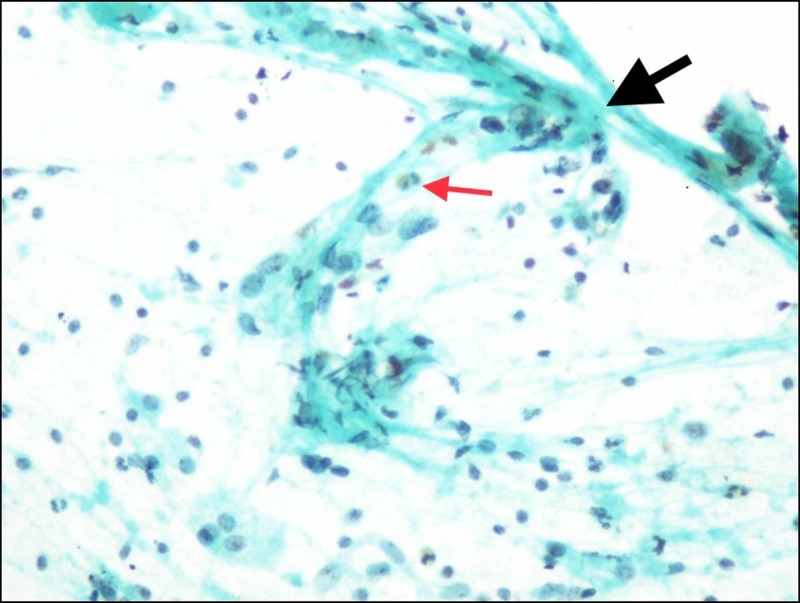
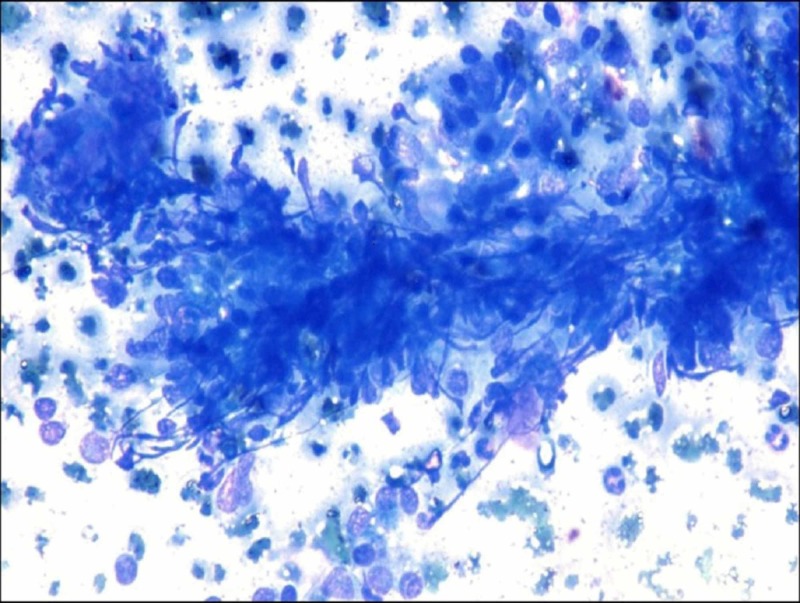
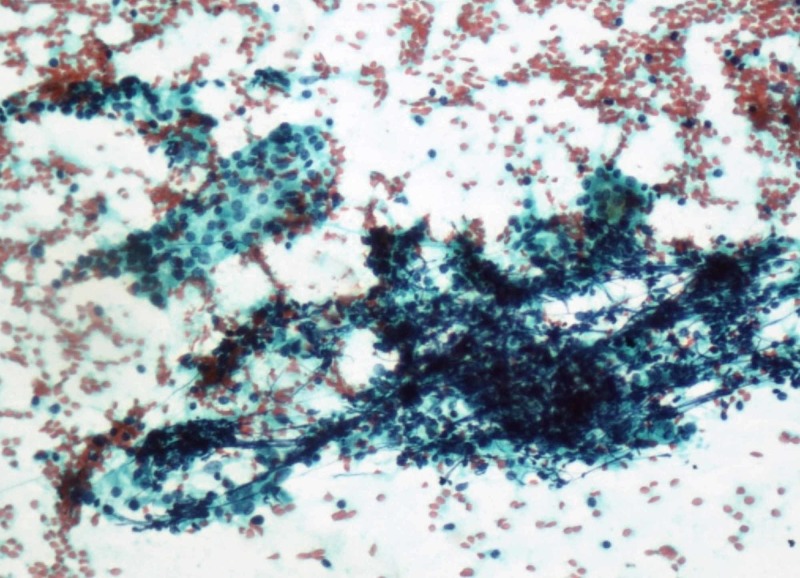
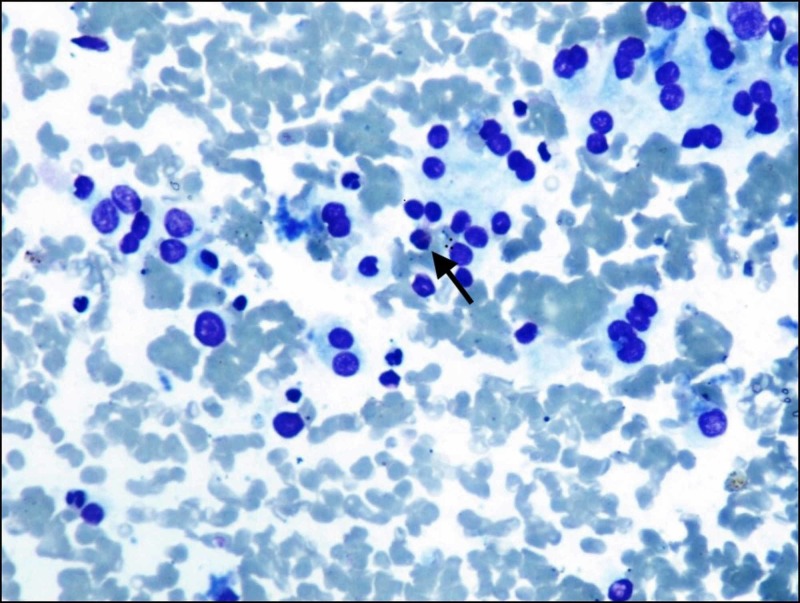
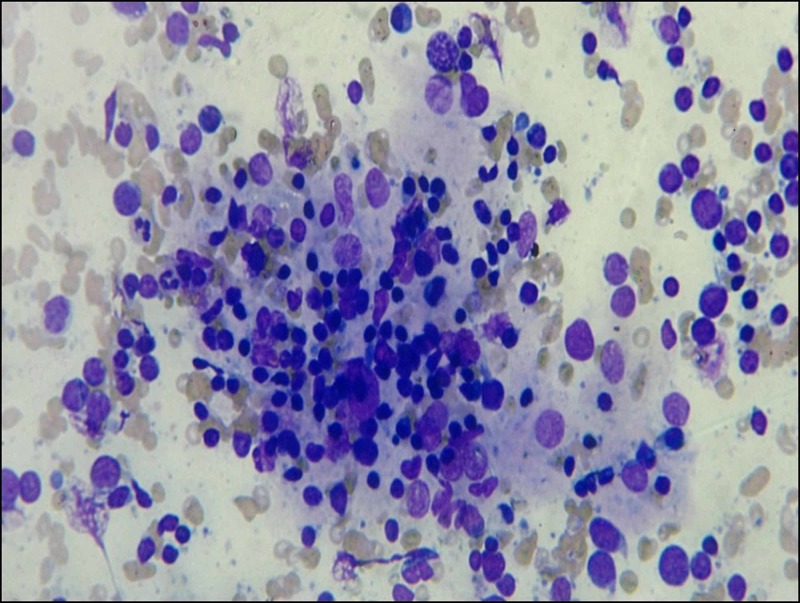
Introduction Hashimoto's thyroiditis (HT) is a chronic autoimmune inflammatory disorder of the thyroid gland with a prevalence of 1%-4%. The incidence of HT seems to be increasing in recent times. If serological parameters are used as sole criteria for diagnosis, cases of HT get missed or over-diagnosed. There are established cytological features of HT but that could, at times, be seen in other thyroid disorders, making cytological diagnosis difficult. The present study was undertaken to find out the significance of crushed fragments and eosinophils along with the well-known cytological features in the diagnosis of HT. Methods This study was carried out over a period of two years and a total of 114 patients were registered for the study; 48 patients were HT cases. The control group comprised of 66 non-thyroiditis patients. Fine-needle aspiration cytology (FNAC) was performed on all patients with palpable thyroid swelling to compare cytological features of thyroiditis (study group) with aspirates of non-thyroiditis lesions (controls). Results The background lymphocytes were found to be present in all cases of the study group but in variable numbers. The lymphocytes infiltrating the follicular epithelial cells were seen in most (93.75%) of the study cases. The presence of Hurthle cells was significantly higher (83%) in the study group as compared to the control group (4.5%). The presence of crushed cells morphology (crushed fragments) were seen in 40 (83.33%) of these 48 HT cases while none in the control group showed this feature. The presence of eosinophilic infiltration shows a statistically significant association with FNA diagnosis of HT patients (P<0.05). Conclusion The crushed fragments, if visible at low power, gives a diagnostic clue for looking up for other features of HT. Also, the crushed fragments and eosinophils could avoid the false negative and misdiagnosis of neoplasm in paucicellular and highly cellular smear respectively.
引言
桥本甲状腺炎(HT)是一种慢性自身免疫性甲状腺炎症性疾病,患病率为1%-4%。近年来,HT的发病率似乎在上升。如果仅将血清学参数作为诊断的唯一标准,HT病例可能会被漏诊或误诊。HT有既定的细胞学特征,但有时在其他甲状腺疾病中也可见到,这使得细胞学诊断困难。本研究旨在探讨破碎碎片和嗜酸性粒细胞以及众所周知的细胞学特征在HT诊断中的意义。
方法
本研究历时两年,共有114例患者登记参与;其中48例为HT病例。对照组由66例非甲状腺炎患者组成。对所有可触及甲状腺肿大的患者进行细针穿刺细胞学检查(FNAC),以比较甲状腺炎患者(研究组)与非甲状腺炎病变患者(对照组)穿刺物的细胞学特征。
结果
研究组所有病例均发现背景淋巴细胞,但数量不一。在大多数(93.75%)研究病例中可见淋巴细胞浸润滤泡上皮细胞。与对照组(4.5%)相比,研究组中许特耳细胞的存在显著更高(83%)。在这48例HT病例中的40例(占83.33%)可见破碎细胞形态(破碎碎片),而对照组中无此特征。嗜酸性粒细胞浸润的存在与HT患者的FNA诊断具有统计学显著相关性(P<0.05)。
结论
破碎碎片如果在低倍镜下可见,可为查找HT的其他特征提供诊断线索。此外,破碎碎片和嗜酸性粒细胞可分别避免在少细胞涂片和高细胞涂片中肿瘤的假阴性和误诊。