Wada-Isoe Kenji, Kikuchi Takashi, Umeda-Kameyama Yumi, Mori Takahiro, Akishita Masahiro, Nakamura Yu
Department of Dementia Research, Kawasaki Medical School, Kita-ku, Okayama, Japan.
Translational Research Informatics Center for Medical Innovation, Foundation for Biomedical Research and Innovation at Kobe, Chuo-ku Kobe, Hyogo, Japan.
J Alzheimers Dis Rep. 2019 Sep 10;3(1):233-239. doi: 10.3233/ADR-190126.
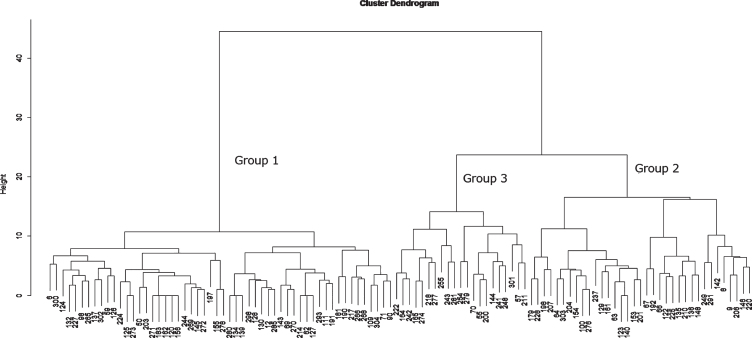
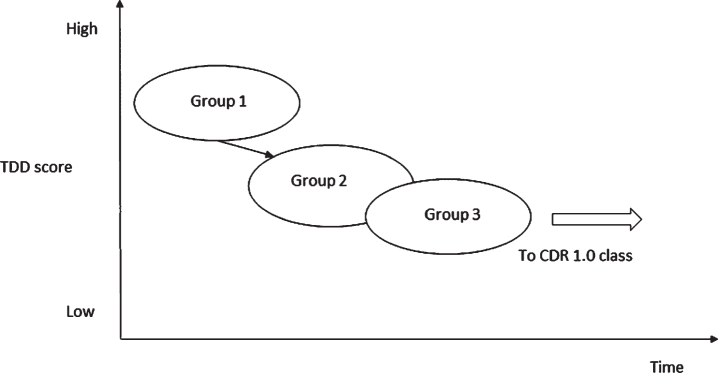
Many studies use the global clinical dementia rating (CDR) of 0.5 as a criterion for mild cognitive impairment, but past studies have not fully discussed its validity. The authors developed the ABC Dementia Scale (ABC-DS) to accurately monitor the changes in activities for daily living, behavioral and psychological symptoms of dementia, and cognitive function. When we carried out a cluster analysis of ABC-DS scores of 110 individuals for whom global CDR was 0.5, there were three groups with different levels of activities for daily living and cognitive function. O'Bryant et al. proposed a new guideline to stage dementia using the CDR sum of boxes scores (CDR-SOB). We used their proposal and ABC-DS scores to evaluate the validity of CDR 0.5 as a definition of mild cognitive impairment (MCI). We concluded that the CDR-SOB scores and ABC-DS score are more accurate than global CDR of 0.5 for specifying individuals with MCI.
许多研究将全球临床痴呆评定量表(CDR)评分为0.5作为轻度认知障碍的标准,但以往的研究尚未充分讨论其有效性。作者开发了ABC痴呆量表(ABC-DS),以准确监测日常生活活动、痴呆的行为和心理症状以及认知功能的变化。当我们对110名全球CDR评分为0.5的个体的ABC-DS评分进行聚类分析时,发现有三组个体的日常生活活动水平和认知功能不同。奥布莱恩特等人提出了一项使用CDR框和评分(CDR-SOB)对痴呆进行分期的新指南。我们采用他们的建议和ABC-DS评分来评估将CDR 0.5作为轻度认知障碍(MCI)定义的有效性。我们得出结论,对于确定患有MCI的个体,CDR-SOB评分和ABC-DS评分比全球CDR评分0.5更准确。