Ijaz Naila, Jamil Yasser, Brown Charles H, Krishnaswami Ashok, Orkaby Ariela, Stimmel Marnina B, Gerstenblith Gary, Nanna Michael G, Damluji Abdulla A
Thomas Jefferson University Hospital Philadelphia PA USA.
Yale University School of Medicine New Haven CT USA.
J Am Heart Assoc. 2024 Feb 20;13(4):e033594. doi: 10.1161/JAHA.123.033594. Epub 2024 Feb 14.
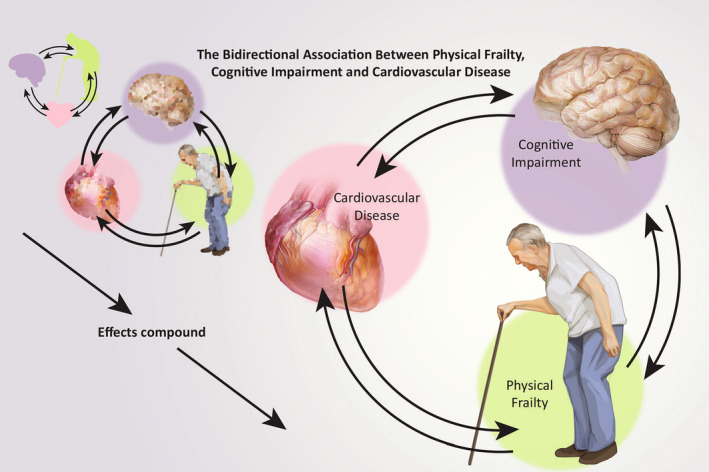
As the older adult population expands, an increasing number of patients affected by geriatric syndromes are seen by cardiovascular clinicians. One such syndrome that has been associated with poor outcomes is cognitive frailty: the simultaneous presence of cognitive impairment, without evidence of dementia, and physical frailty, which results in decreased cognitive reserve. Driven by common pathophysiologic underpinnings (eg, inflammation and neurohormonal dysregulation), cardiovascular disease, cognitive impairment, and frailty also share the following risk factors: hypertension, diabetes, obesity, sedentary behavior, and tobacco use. Cardiovascular disease has been associated with the onset and progression of cognitive frailty, which may be reversible in early stages, making it essential for clinicians to diagnose the condition in a timely manner and prescribe appropriate interventions. Additional research is required to elucidate the mechanisms underlying the development of cognitive frailty, establish preventive and therapeutic strategies to address the needs of older patients with cardiovascular disease at risk for cognitive frailty, and ultimately facilitate targeted intervention studies.
随着老年人口的增加,心血管临床医生会接触到越来越多受老年综合征影响的患者。认知衰弱就是这样一种与不良预后相关的综合征:同时存在认知障碍(无痴呆证据)和身体衰弱,这会导致认知储备下降。受常见病理生理基础(如炎症和神经激素失调)的驱动,心血管疾病、认知障碍和衰弱还具有以下共同危险因素:高血压、糖尿病、肥胖、久坐不动的生活方式和吸烟。心血管疾病与认知衰弱的发生和进展有关,认知衰弱在早期阶段可能是可逆的,因此临床医生及时诊断病情并开出适当的干预措施至关重要。需要进一步的研究来阐明认知衰弱发展的潜在机制,制定预防和治疗策略以满足有认知衰弱风险的老年心血管疾病患者的需求,并最终促进有针对性的干预研究。