Department of Chemistry and Biochemistry, University of Oklahoma, 101 Stephenson Parkway, Room 2210, Norman, OK, 73019-5251, USA.
School of Informatics and Computing, Indiana University-Purdue University Indianapolis, Indianapolis, IN, 46202, USA.
J Am Soc Mass Spectrom. 2019 Dec;30(12):2502-2513. doi: 10.1007/s13361-019-02315-2. Epub 2019 Nov 21.
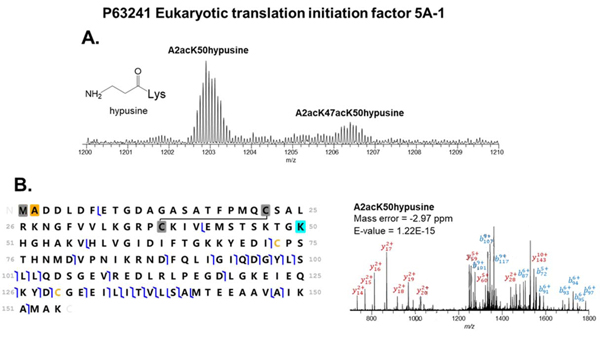
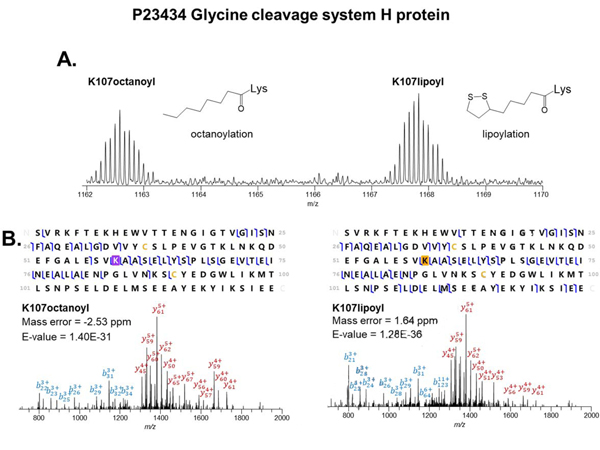
Post-translational modifications (PTMs) play critical roles in biological processes and have significant effects on the structures and dynamics of proteins. Top-down proteomics methods were developed for and applied to the study of intact proteins and their PTMs in human samples. However, the large dynamic range and complexity of human samples makes the study of human proteins challenging. To address these challenges, we developed a 2D pH RP/RPLC-MS/MS technique that fuses high-resolution separation and intact protein characterization to study the human proteins in HeLa cell lysate. Our results provide a deep coverage of soluble proteins in human cancer cells. Compared to 225 proteoforms from 124 proteins identified when 1D separation was used, 2778 proteoforms from 628 proteins were detected and characterized using our 2D separation method. Many proteoforms with critically functional PTMs including phosphorylation were characterized. Additionally, we present the first detection of intact human GcvH proteoforms with rare modifications such as octanoylation and lipoylation. Overall, the increase in the number of proteoforms identified using 2DLC separation is largely due to the reduction in sample complexity through improved separation resolution, which enables the detection of low-abundance PTM-modified proteoforms. We demonstrate here that 2D pH RP/RPLC is an effective technique to analyze complex protein samples using top-down proteomics.
翻译后修饰(PTMs)在生物过程中发挥着关键作用,并且对蛋白质的结构和动力学具有显著影响。自上而下的蛋白质组学方法被开发出来并应用于人类样本中完整蛋白质及其翻译后修饰的研究。然而,人类样本的大动态范围和复杂性使得对人类蛋白质的研究具有挑战性。为了应对这些挑战,我们开发了一种二维pH反相/反相液相色谱-串联质谱(2D pH RP/RPLC-MS/MS)技术,该技术融合了高分辨率分离和完整蛋白质表征,以研究HeLa细胞裂解物中的人类蛋白质。我们的结果提供了人类癌细胞中可溶性蛋白质的深度覆盖。与使用一维分离时鉴定出的124种蛋白质的225种蛋白质异构体相比,使用我们的二维分离方法检测并表征了628种蛋白质的2778种蛋白质异构体。许多具有关键功能翻译后修饰(包括磷酸化)的蛋白质异构体得到了表征。此外,我们首次检测到具有罕见修饰(如辛酰化和硫辛酸化)的完整人类GcvH蛋白质异构体。总体而言,使用二维液相色谱分离鉴定出的蛋白质异构体数量的增加主要归因于通过提高分离分辨率降低了样品复杂性,这使得能够检测到低丰度的翻译后修饰蛋白质异构体。我们在此证明二维pH反相/反相液相色谱是一种使用自上而下蛋白质组学分析复杂蛋白质样品的有效技术。