Mauriello Angela, Zeuli Roberta, Cavalluzzo Beatrice, Petrizzo Annacarmen, Tornesello Maria Lina, Buonaguro Franco M, Ceccarelli Michele, Tagliamonte Maria, Buonaguro Luigi
Laboratory of Cancer Immunoregulation, Istituto Nazionale per lo Studio e la Cura dei Tumori IRCCS, "Fondazione Pascale", 80131 Naples, Italy.
Science and Technology Dept, University del Sannio, 82100 Benevento, Italy.
Cancers (Basel). 2019 Nov 20;11(12):1824. doi: 10.3390/cancers11121824.
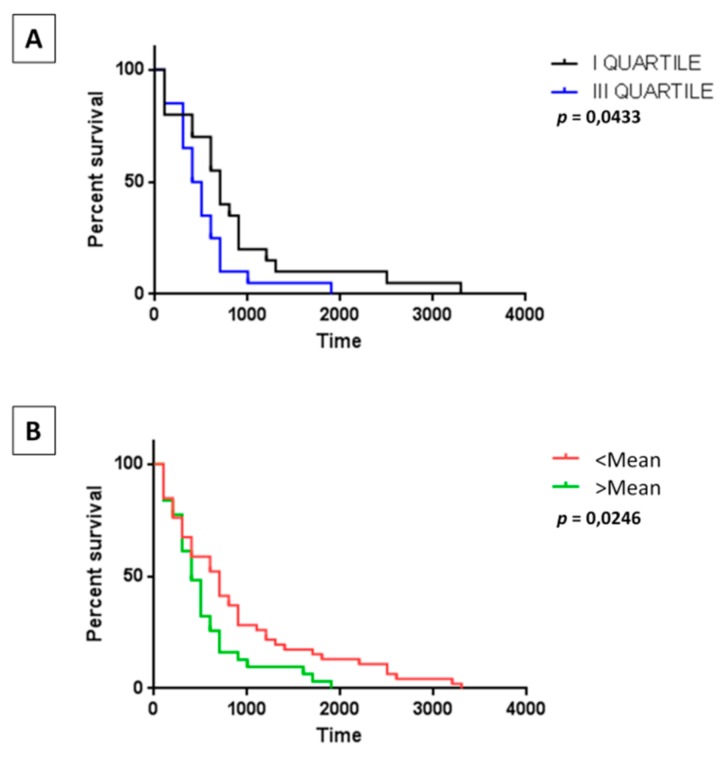
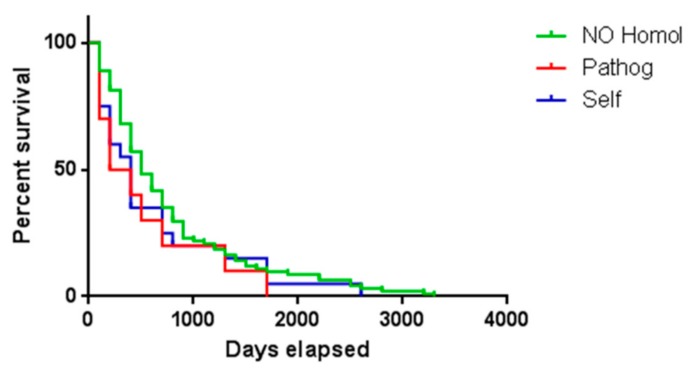
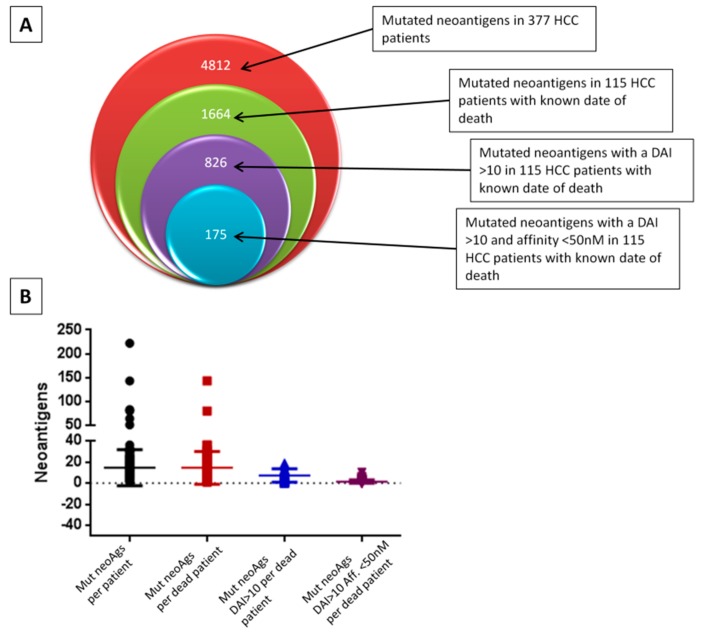
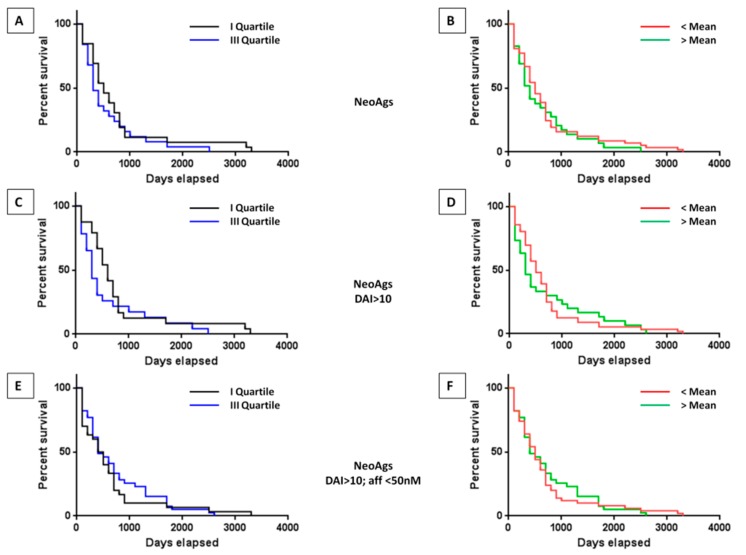
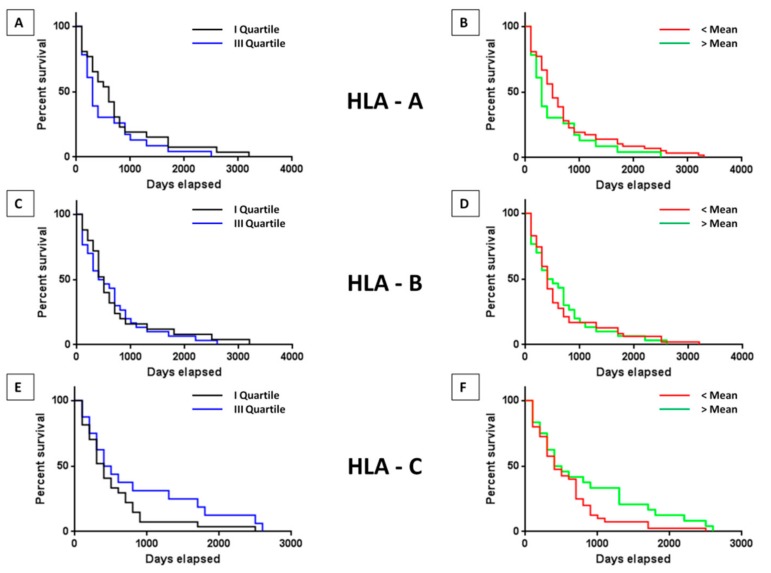
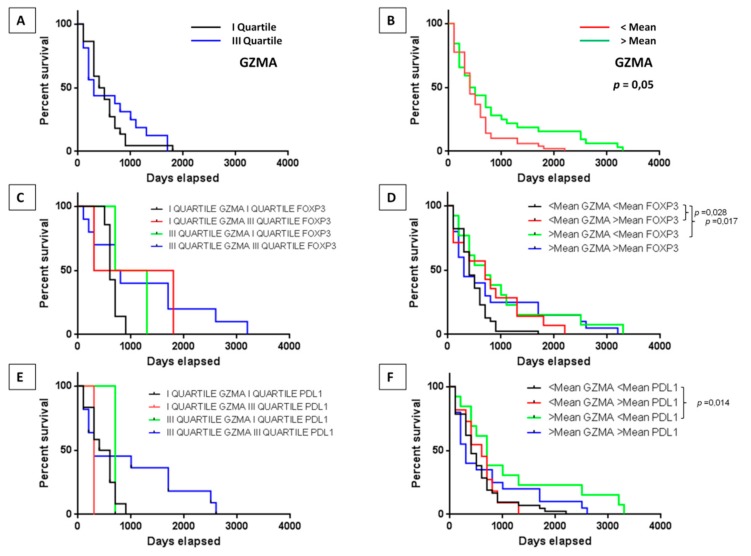
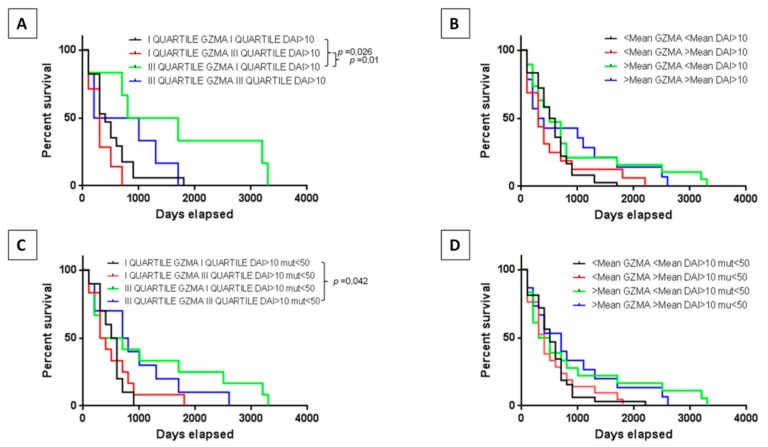
Cancer genome instability leads to accumulation of mutations which may result into tumor-specific mutated "neoantigens", not be affected by central T-cell tolerance. Such neoantigens are considered the optimal target for the patient's anti-tumor T cell immunity as well as for personalized cancer immunotherapy strategies. However, only a minor fraction of predicted neoantigens are relevant to the clinical outcome. In the present study, a prediction algorithm was applied using datasets of RNA sequencing from all 377 Hepatocellular carcinoma (HCC) patients available at The Cancer Genome Atlas (TCGA), to predict neoantigens to be presented by each patient's autologous HLA molecules. Correlation with patients' survival was performed on the 115 samples for whom the exact date of death was known. A total of 30 samples were used for the training set, and 85 samples were used for the validation sets. Neither the somatic mutations nor the number nor the quality of the predicted neoantigens correlate as single parameter with survival of HCC patients who do not undergo immunotherapy treatment. Furthermore, the preferential presentation of such neoantigens in the context of one of the major histocompatibility complex MHC class I molecules does not have an impact on the survival. On the contrary, the expression of Granzyme A (GZMA) is significantly correlated with survival and, in the context of high GZMA, a direct correlation between number and quality of neoantigens with survival is observed. This is in striking contrast to results described in cancer patients undergoing immunotherapy, in which a strong correlation between Tumor Mutational Burden (TMB), number of predicted neoantigens and survival has been reported.
癌症基因组不稳定性会导致突变积累,这些突变可能产生肿瘤特异性的突变“新抗原”,而不受中枢T细胞耐受性的影响。此类新抗原被认为是患者抗肿瘤T细胞免疫以及个性化癌症免疫治疗策略的最佳靶点。然而,只有一小部分预测的新抗原与临床结果相关。在本研究中,使用来自癌症基因组图谱(TCGA)的所有377例肝细胞癌(HCC)患者的RNA测序数据集应用了一种预测算法,以预测每位患者自体HLA分子所呈递的新抗原。对已知确切死亡日期的115份样本进行了与患者生存的相关性分析。总共30份样本用于训练集,85份样本用于验证集。对于未接受免疫治疗的HCC患者,体细胞突变、预测新抗原的数量或质量均不作为单一参数与生存相关。此外,此类新抗原在主要组织相容性复合体I类分子之一的背景下的优先呈递对生存没有影响。相反,颗粒酶A(GZMA)的表达与生存显著相关,并且在GZMA水平较高的情况下,观察到新抗原的数量和质量与生存之间存在直接相关性。这与接受免疫治疗的癌症患者所描述的结果形成鲜明对比,在这些患者中,已报道肿瘤突变负荷(TMB)、预测新抗原的数量与生存之间存在强相关性。