Ren Yingxue, Cherukuri Yesesri, Wickland Daniel P, Sarangi Vivekananda, Tian Shulan, Carter Jodi M, Mansfield Aaron S, Block Matthew S, Sherman Mark E, Knutson Keith L, Lin Yi, Asmann Yan W
Department of Health Sciences Research, Mayo Clinic, Jacksonville, FL, USA.
Department of Health Sciences Research, Mayo Clinic, Rochester, MN, USA.
Oncoimmunology. 2020 Apr 1;9(1):1744947. doi: 10.1080/2162402X.2020.1744947. eCollection 2020.
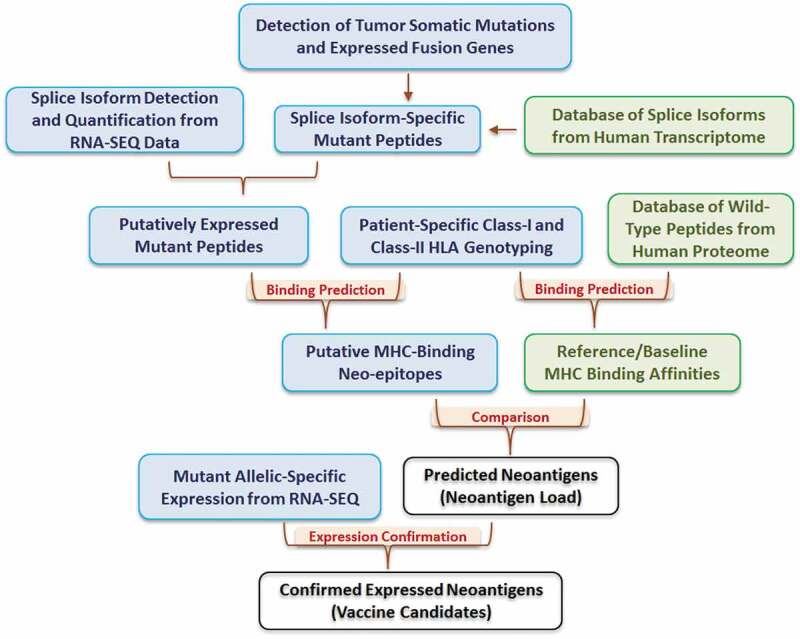
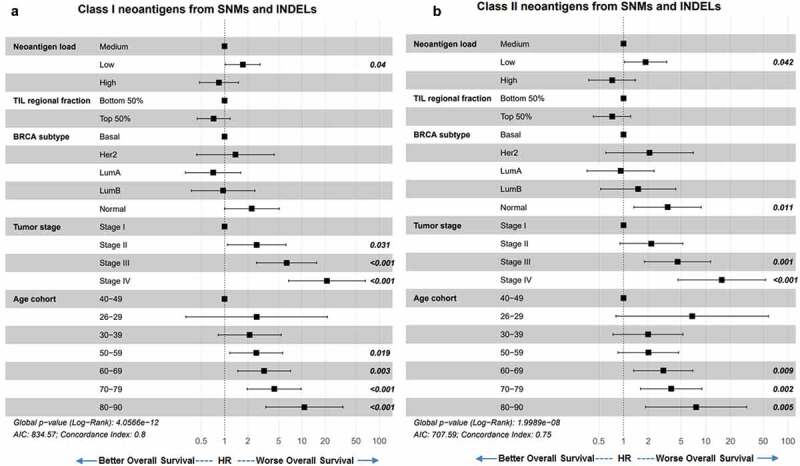
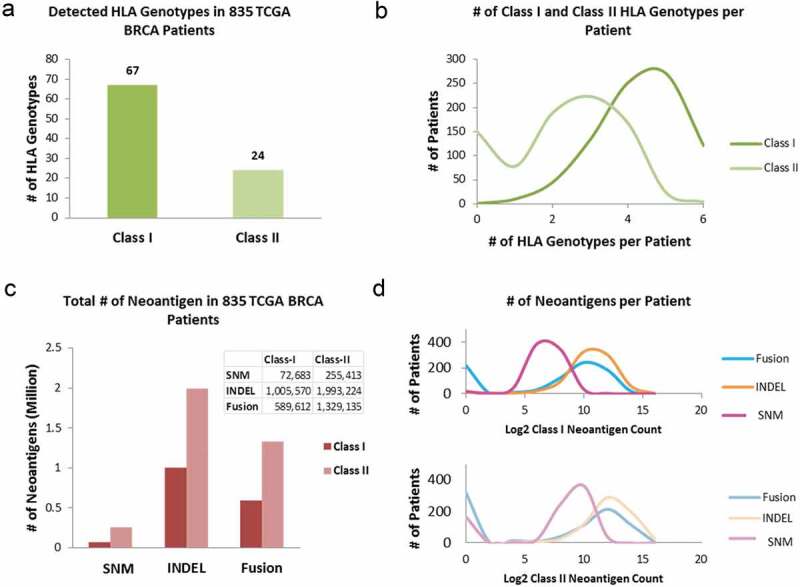
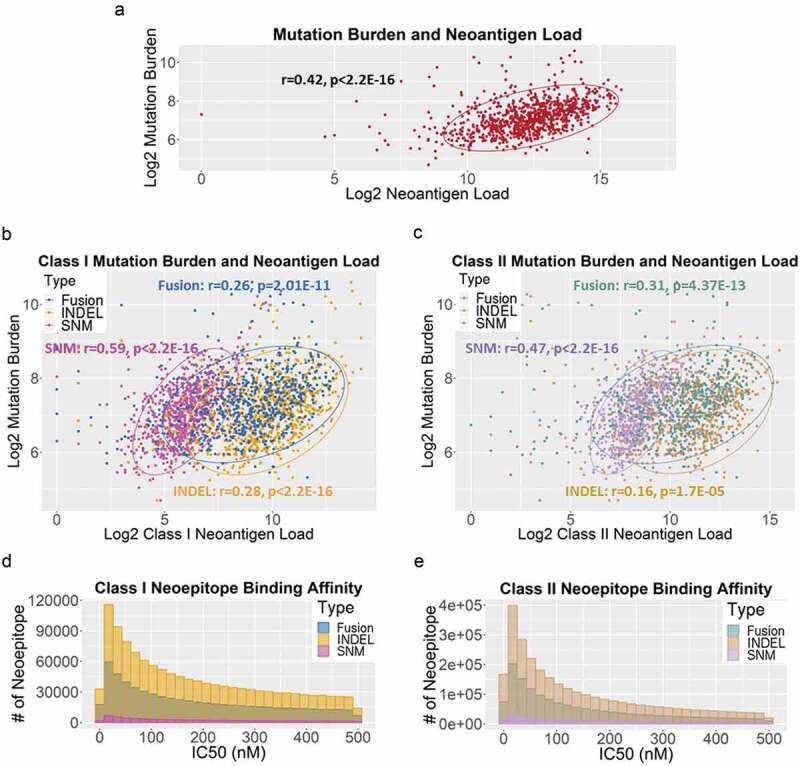
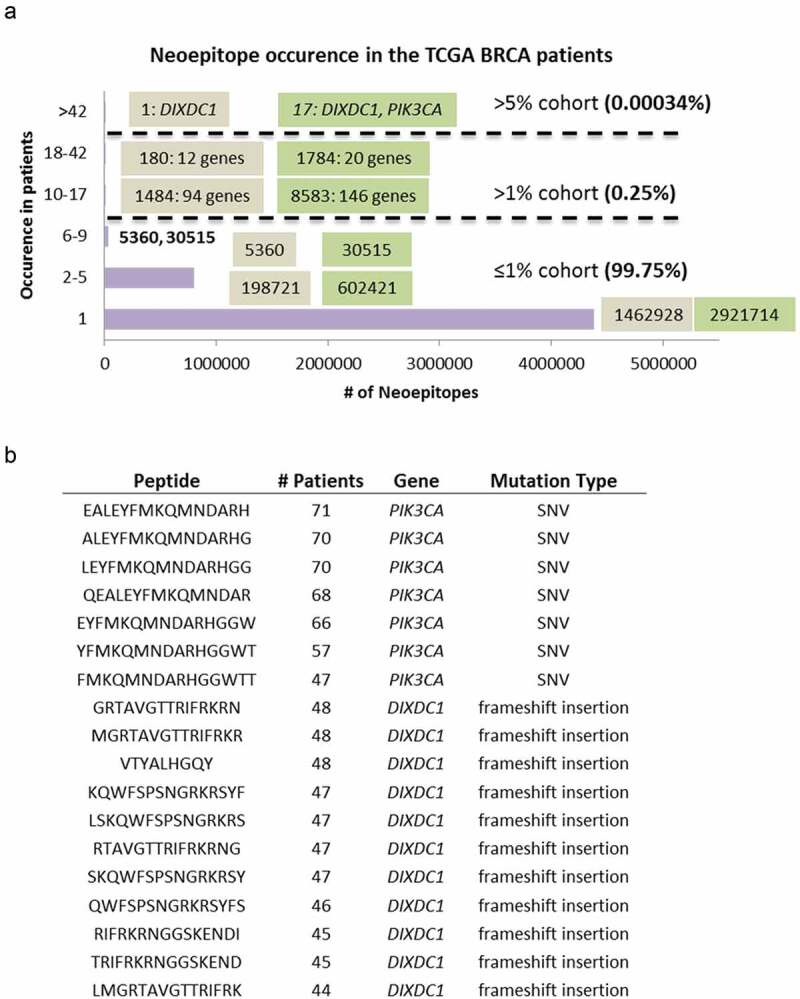
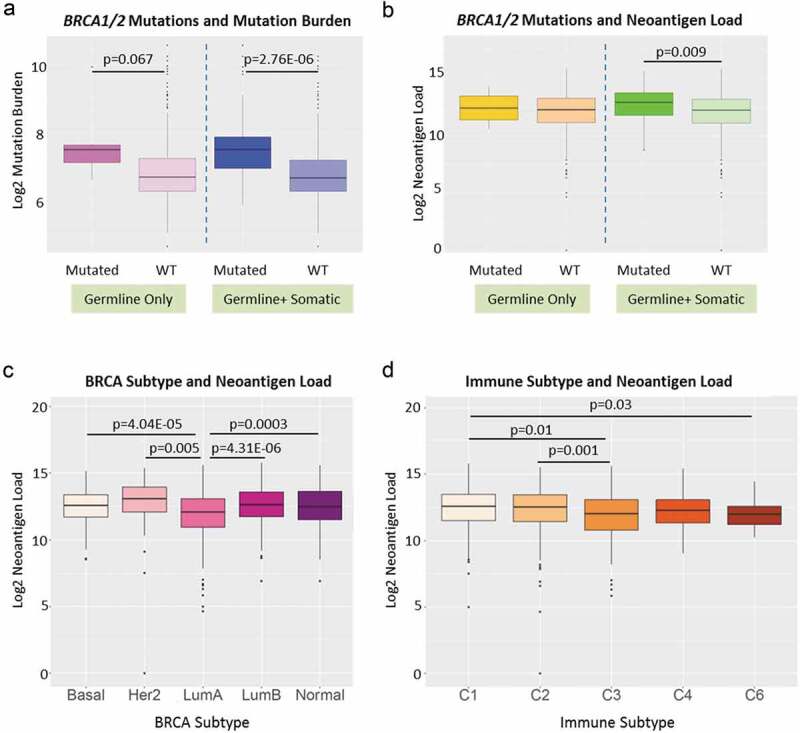
Tumors acquire numerous mutations during development and progression. When translated into proteins, these mutations give rise to neoantigens that can be recognized by T cells and generate antibodies, representing an exciting direction of cancer immunotherapy. While neoantigens have been reported in many cancer types, the profiling of neoantigens often focused on the class-I subtype that are presented to CD8 + T cells, and the relationship between neoantigen load and clinical outcomes was often inconsistent among cancer types. In this study, we described an informatics workflow, REAL-neo, for identification, quality control (QC), and prioritization of both class-I and class-II human leukocyte antigen (HLA) bound neoantigens that arise from somatic single nucleotide mutations (SNM), small insertions and deletions (INDEL), and gene fusions. We applied REAL-neo to 835 primary breast tumors in the Cancer Genome Atlas (TCGA) and performed comprehensive profiling and characterization of the detected neoantigens. We found recurrent HLA class-I and class-II restricted neoantigens across breast cancer cases, and uncovered associations between neoantigen load and clinical traits. Both class-I and class-II neoantigen loads from SNM and INDEL were found to predict overall survival independent of tumor mutational burden (TMB), breast cancer subtypes, tumor-infiltrating lymphocyte (TIL) levels, tumor stage, and age at diagnosis. Our study highlighted the importance of accurate and comprehensive neoantigen profiling and QC, and is the first to report the predictive value of neoantigen load for overall survival in breast cancer.
肿瘤在发生发展过程中会获得大量突变。这些突变翻译成蛋白质后会产生新抗原,新抗原可被T细胞识别并产生抗体,这代表了癌症免疫治疗中一个令人兴奋的方向。虽然在许多癌症类型中都有新抗原的报道,但新抗原分析通常集中在呈递给CD8 + T细胞的I类亚型上,而且新抗原负荷与临床结果之间的关系在不同癌症类型中往往不一致。在本研究中,我们描述了一种信息学工作流程REAL-neo,用于识别、质量控制(QC)以及对由体细胞单核苷酸突变(SNM)、小插入和缺失(INDEL)以及基因融合产生的I类和II类人类白细胞抗原(HLA)结合新抗原进行优先级排序。我们将REAL-neo应用于癌症基因组图谱(TCGA)中的835例原发性乳腺肿瘤,并对检测到的新抗原进行了全面分析和表征。我们在乳腺癌病例中发现了复发的HLA I类和II类限制性新抗原,并揭示了新抗原负荷与临床特征之间的关联。发现来自SNM和INDEL的I类和II类新抗原负荷均能独立于肿瘤突变负担(TMB)、乳腺癌亚型、肿瘤浸润淋巴细胞(TIL)水平、肿瘤分期和诊断年龄来预测总生存期。我们的研究强调了准确和全面的新抗原分析及QC的重要性,并且首次报道了新抗原负荷对乳腺癌总生存期的预测价值。