Darling Chad Eric, Dovancescu Silviu, Saczynski Jane S, Riistama Jarno, Sert Kuniyoshi Fatima, Rock Joseph, Meyer Theo E, McManus David D
UMass Memorial Health Care, Department of Emergency Medicine, University of Massachusetts Medical School, Worcester, MA, United States.
Philips Research, Eindhoven, Netherlands.
JMIR Cardio. 2017 Mar 13;1(1):e1. doi: 10.2196/cardio.6057.
Recurrent heart failure (HF) events are common in patients discharged after acute decompensated heart failure (ADHF). New patient-centered technologies are needed to aid in detecting HF decompensation. Transthoracic bioimpedance noninvasively measures pulmonary fluid retention.
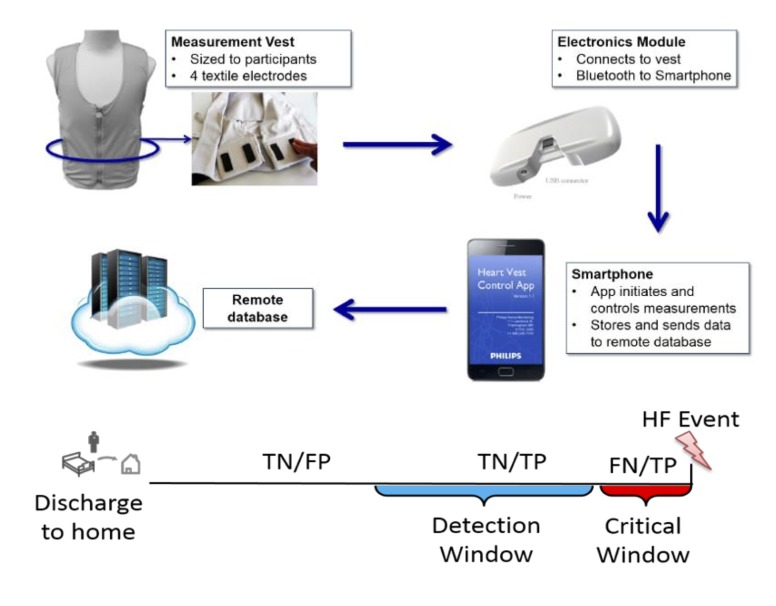
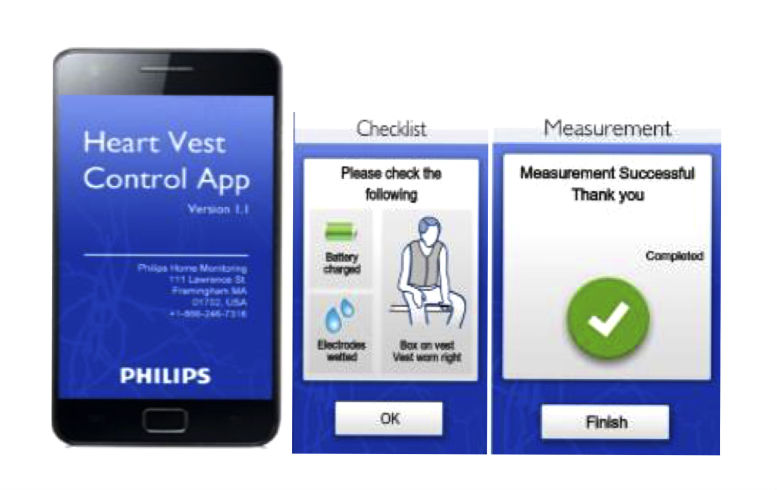
The objectives of our study were to (1) determine whether transthoracic bioimpedance can be measured daily with a novel, noninvasive, wearable fluid accumulation vest (FAV) and transmitted using a mobile phone and (2) establish whether an automated algorithm analyzing daily thoracic bioimpedance values would predict recurrent HF events.
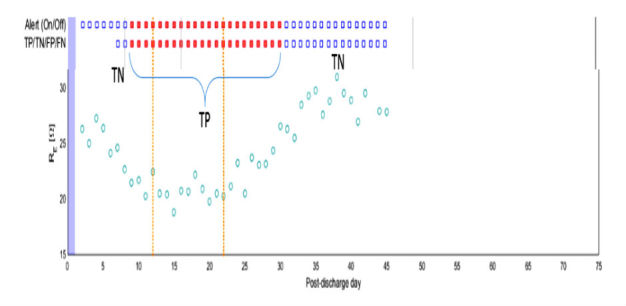
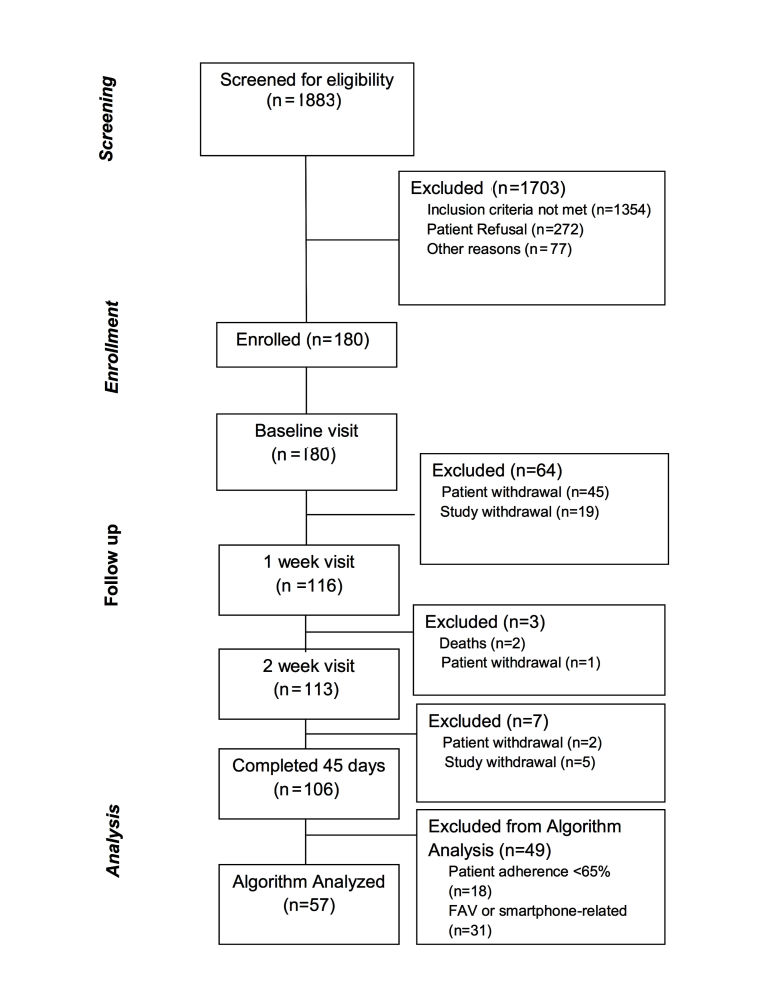
We prospectively enrolled patients admitted for ADHF. Participants were trained to use a FAV-mobile phone dyad and asked to transmit bioimpedance measurements for 45 consecutive days. We examined the performance of an algorithm analyzing changes in transthoracic bioimpedance as a predictor of HF events (HF readmission, diuretic uptitration) over a 75-day follow-up.
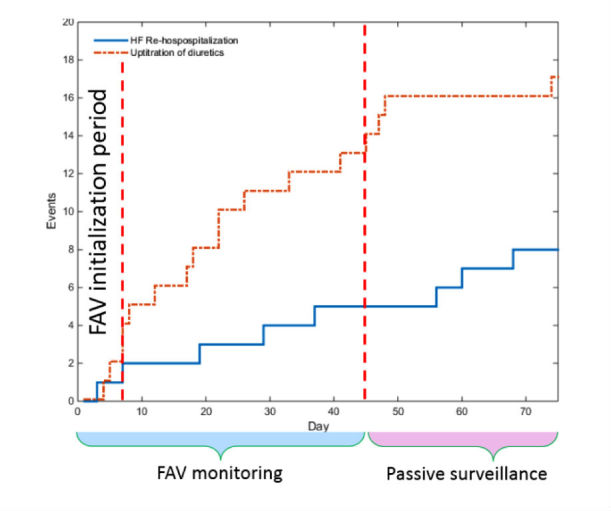
We observed 64 HF events (18 HF readmissions and 46 diuretic uptitrations) in the 106 participants (67 years; 63.2%, 67/106, male; 48.1%, 51/106, with prior HF) who completed follow-up. History of HF was the only clinical or laboratory factor related to recurrent HF events (P=.04). Among study participants with sufficient FAV data (n=57), an algorithm analyzing thoracic bioimpedance showed 87% sensitivity (95% CI 82-92), 70% specificity (95% CI 68-72), and 72% accuracy (95% CI 70-74) for identifying recurrent HF events.
Patients discharged after ADHF can measure and transmit daily transthoracic bioimpedance using a FAV-mobile phone dyad. Algorithms analyzing thoracic bioimpedance may help identify patients at risk for recurrent HF events after hospital discharge.
急性失代偿性心力衰竭(ADHF)后出院的患者中,复发性心力衰竭(HF)事件很常见。需要新的以患者为中心的技术来帮助检测HF失代偿。经胸生物阻抗可无创测量肺液体潴留情况。
我们研究的目的是:(1)确定是否可以使用新型无创可穿戴液体蓄积背心(FAV)每日测量经胸生物阻抗,并通过手机传输;(2)确定分析每日胸段生物阻抗值的自动化算法是否能预测复发性HF事件。
我们前瞻性纳入因ADHF入院的患者。参与者接受使用FAV-手机组合的培训,并被要求连续45天传输生物阻抗测量值。我们在75天的随访中检查了一种分析经胸生物阻抗变化的算法作为HF事件(HF再入院、利尿剂滴定)预测指标的性能。
在完成随访的106名参与者(67岁;63.2%,67/106,男性;48.1%,51/106,有既往HF病史)中,我们观察到64次HF事件(18次HF再入院和46次利尿剂滴定)。HF病史是与复发性HF事件相关的唯一临床或实验室因素(P = 0.04)。在有足够FAV数据的研究参与者(n = 57)中,一种分析胸段生物阻抗的算法在识别复发性HF事件时显示出87%的敏感性(95%CI 82 - 92)、70%的特异性(95%CI 68 - 72)和72%的准确性(95%CI 70 - 74)。
ADHF后出院的患者可以使用FAV-手机组合每日测量并传输经胸生物阻抗。分析胸段生物阻抗的算法可能有助于识别出院后有复发性HF事件风险的患者。