Department of Pharmacology and Biochemistry, Fudan University School of Pharmacy, 826 Zhangheng Road, Pu Dong, Shanghai 201203, China.
School of Biomedical Sciences and Gerald Choa Neuroscience Centre, Faculty of Medicine, The Chinese University of Hong Kong, Shatin, NT, Hong Kong.
EBioMedicine. 2019 Dec;50:144-155. doi: 10.1016/j.ebiom.2019.11.019. Epub 2019 Nov 21.
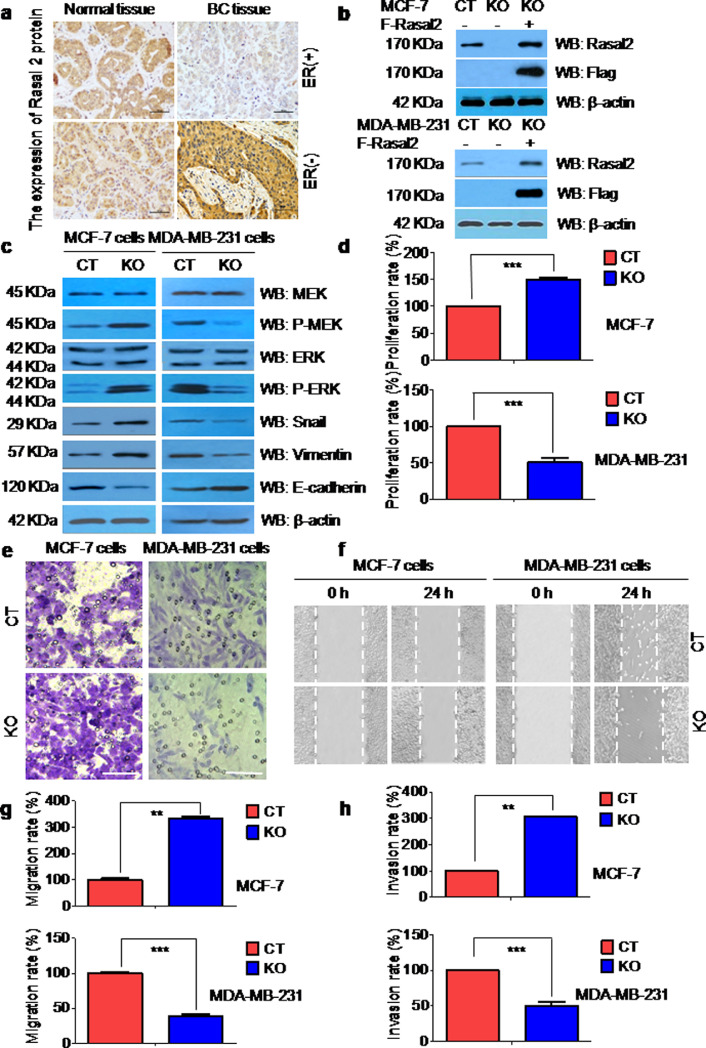
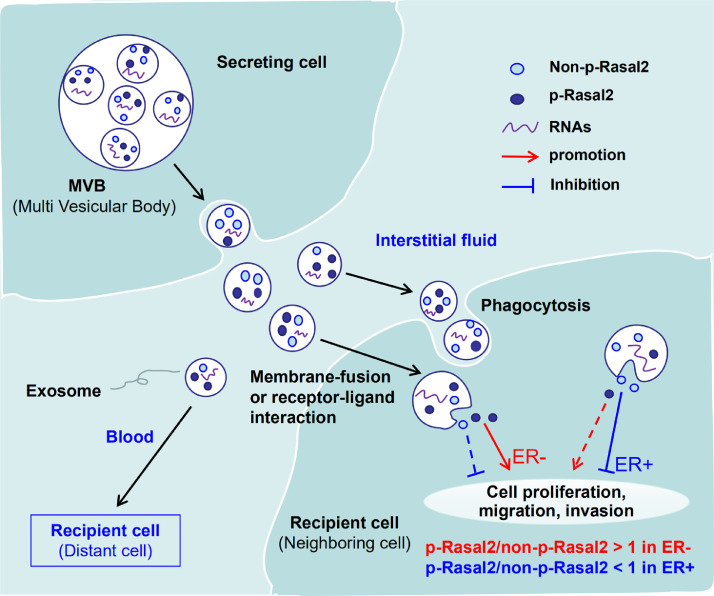
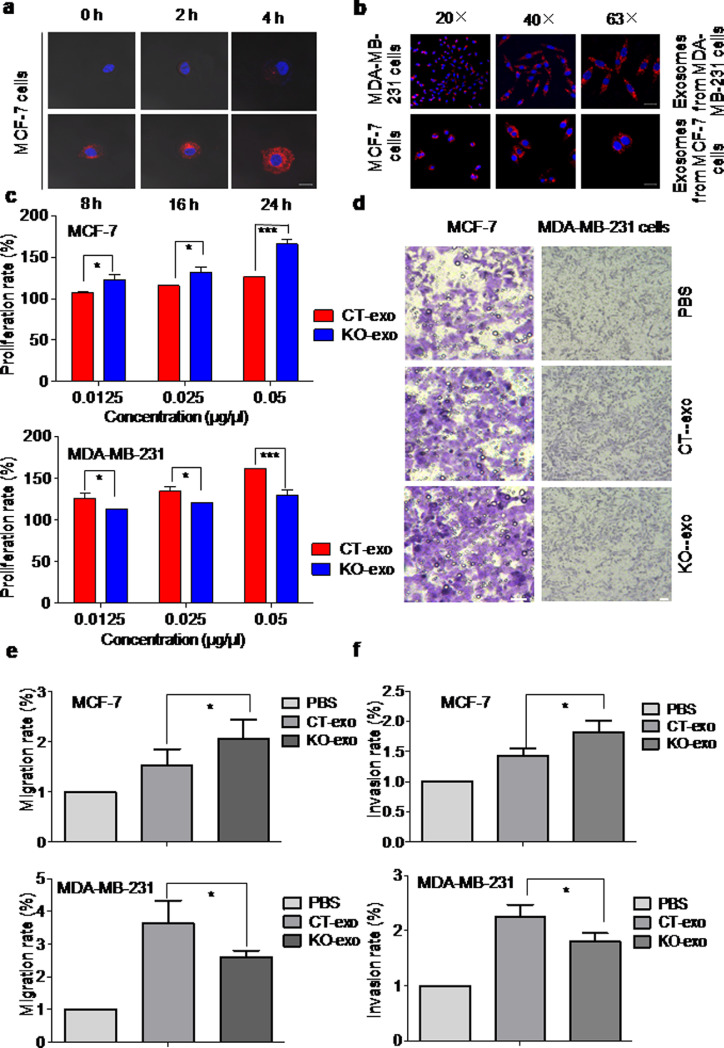
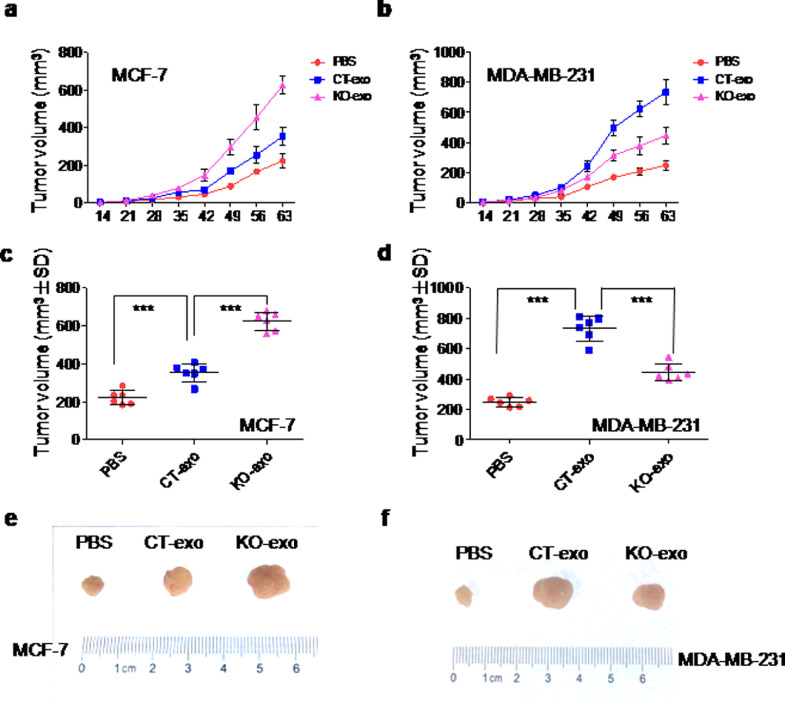
Rasal2 has diametric effects on progression of oestrogen receptor-positive (ER+) and -negative (ER-) breast cancers. The relevant causes are unknown. It is also unknown whether the effects of Rasal2 are mediated by an exosome-transport process.
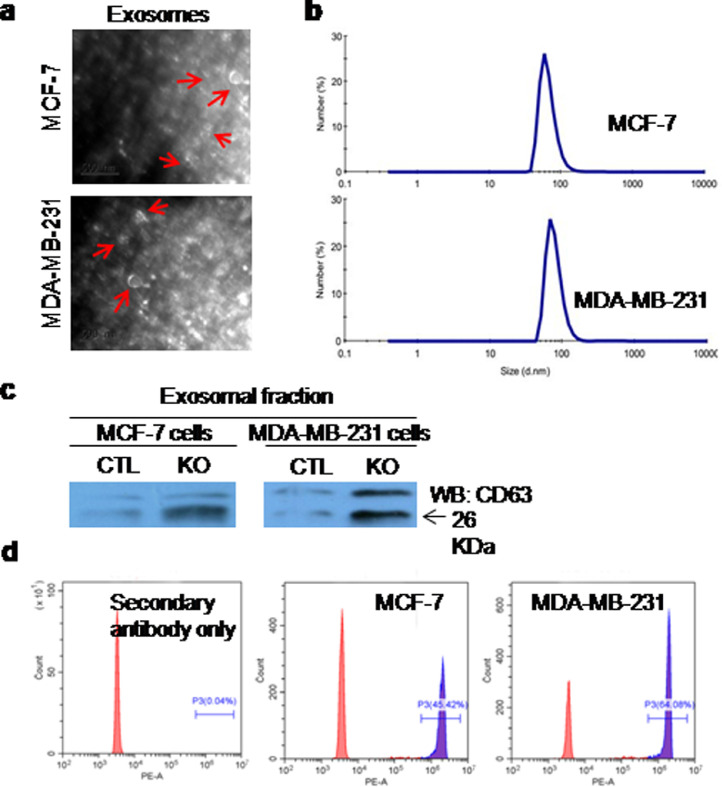
Exosomes were purified from breast cancer cells and identified by transmission electron microscopy and flow cytometry analysis. In vivo and in vitro experiments were conducted to investigate the role of Rasal2 in exosome-mediated breast cancer progression. Western blot analysis was performed to detect Rasal2 and p-Rasal2 (phosphorylated Rasal2) expression in ER+/ER- breast cancer cells and in exosomes, cancer tissues and blood of patients with ER+ or ER- breast cancer.
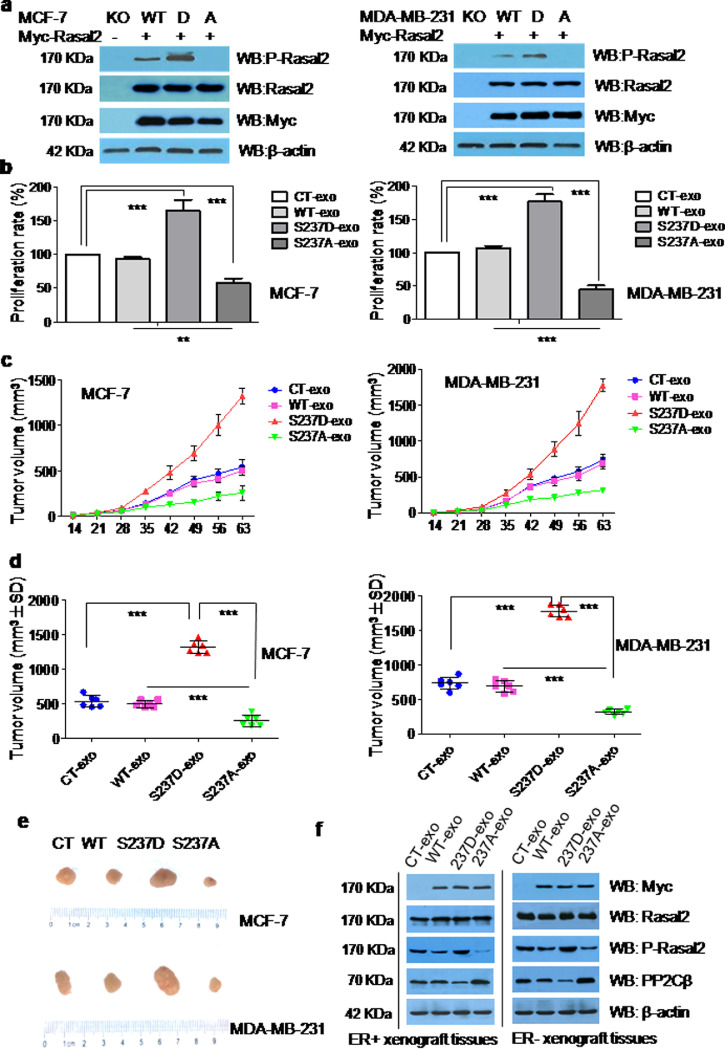
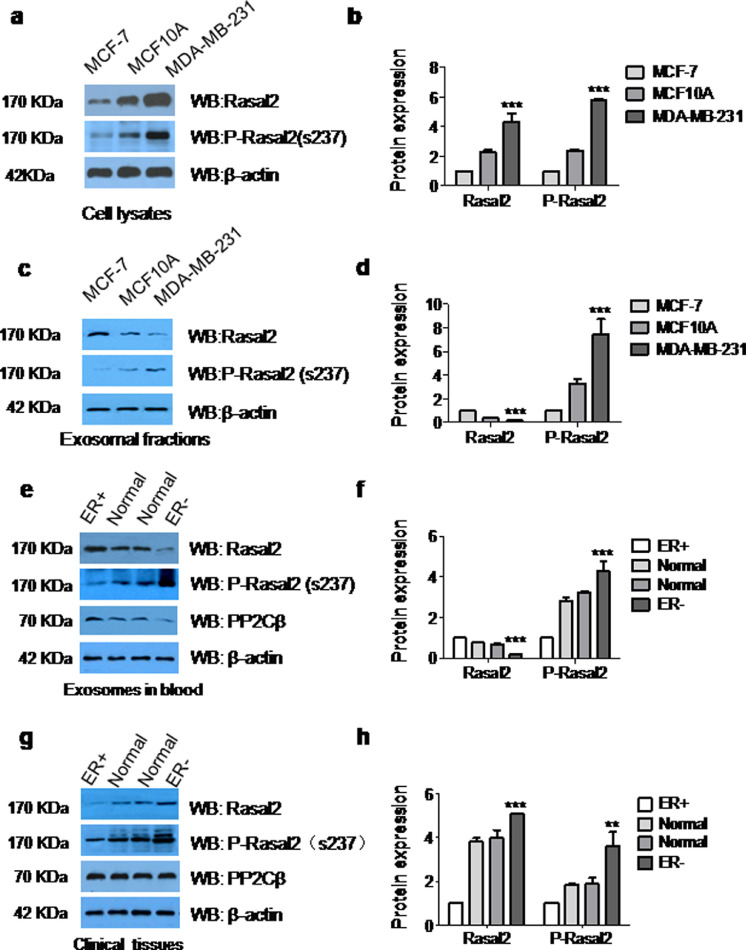
Phosphorylation of Rasal2 at Serine 237 promoted tumour growth in both ER+ and ER- tumour cells and tissues. The functions of both p-Rasal2 and non-p-Rasal2 (non-phosphorylated-Rasal2) in the modulation of breast cancer progression are exosome-mediated. p-Rasal2 expression in ER+ breast cancer cells and exosomes, cancer tissues and blood was significantly lower than in ER- tumour cells and patients.
p-Rasal2 facilitates tumour progression in both ER+ and ER- breast cancers. The ratio of p-Rasal2/non-p-Rasal2 in ER+ and ER- breast cancers is one of the factors deciding the role of Rasal2 (or total Rasal2) as a suppressor in ER+ breast cancers or as a promoter in ER- breast cancers. Targeting the phosphorylation of Rasal2 machinery may therefore be useful as a therapy to restrain breast cancer progression by reducing p-Rasal2/non-p-Rasal2 ratio, especially in ER- breast cancers. FUND: NSFC and Hong Kong Research Grants Council.
Rasal2 对雌激素受体阳性(ER+)和阴性(ER-)乳腺癌的进展有截然相反的影响。其相关原因尚不清楚。也不知道 Rasal2 的作用是否通过外体运输过程来介导。
从乳腺癌细胞中纯化外体,并通过透射电子显微镜和流式细胞术分析进行鉴定。进行体内和体外实验以研究 Rasal2 在外体介导的乳腺癌进展中的作用。Western blot 分析用于检测 ER+/ER-乳腺癌细胞和外体、癌症组织以及 ER+或 ER-乳腺癌患者血液中的 Rasal2 和磷酸化 Rasal2(磷酸化 Rasal2)表达。
Rasal2 丝氨酸 237 的磷酸化促进了 ER+和 ER-肿瘤细胞和组织的肿瘤生长。p-Rasal2 和非 p-Rasal2(非磷酸化 Rasal2)在调节乳腺癌进展中的功能均通过外体介导。ER+乳腺癌细胞和外体、癌症组织以及血液中的 p-Rasal2 表达明显低于 ER-肿瘤细胞和患者。
p-Rasal2 促进 ER+和 ER-乳腺癌的肿瘤进展。p-Rasal2/非 p-Rasal2(ER+和 ER-乳腺癌中的比值)是 Rasal2(或总 Rasal2)作为 ER+乳腺癌中的抑制因子或作为 ER-乳腺癌中的促进因子的作用决定因素之一。因此,通过降低 p-Rasal2/非 p-Rasal2 比值来靶向 Rasal2 磷酸化机制可能是一种有用的治疗方法,通过减少 p-Rasal2/非 p-Rasal2 比值,特别是在 ER-乳腺癌中,来抑制乳腺癌的进展。
国家自然科学基金委员会和香港研究资助局。