Division of Cardiology, Yonsei University College of Medicine, Seoul, Republic of Korea.
Brain Korea 21 PLUS Project for Medical Science, Yonsei University, Seoul, Republic of Korea.
PLoS One. 2019 Jul 22;14(7):e0220036. doi: 10.1371/journal.pone.0220036. eCollection 2019.
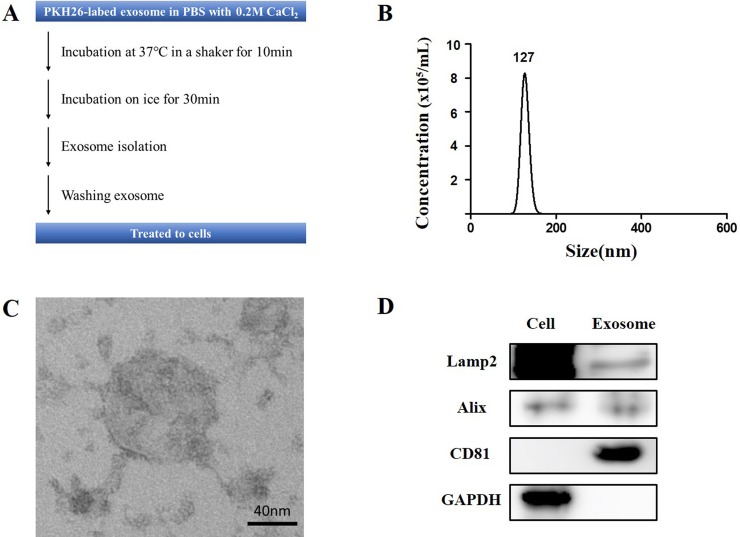
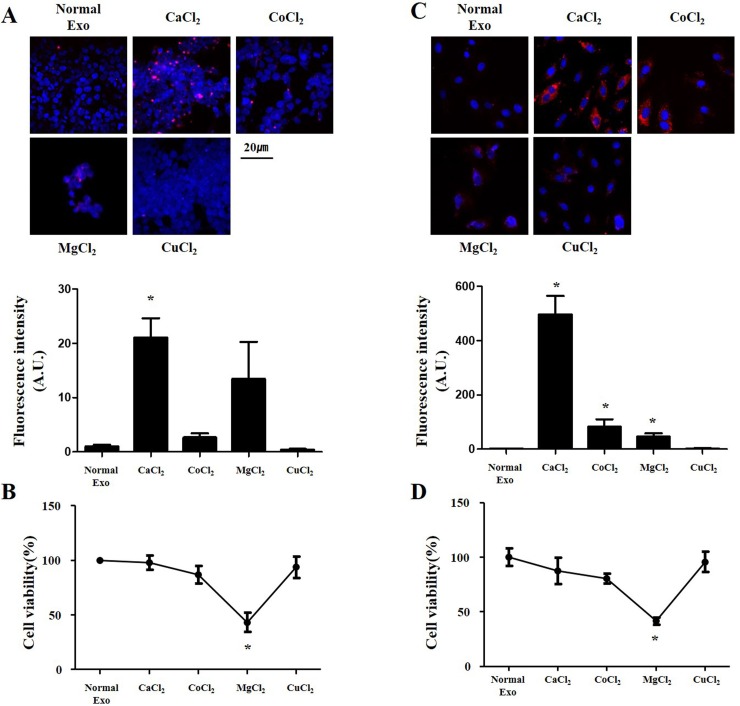
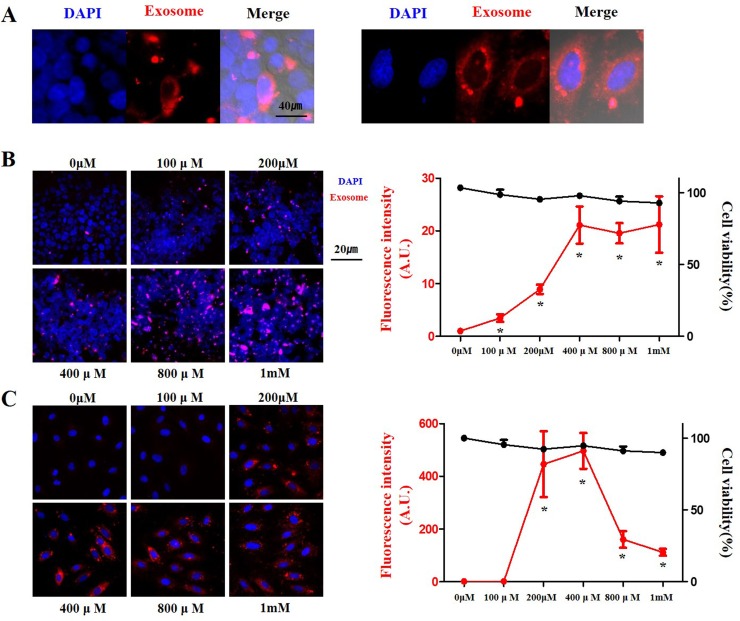
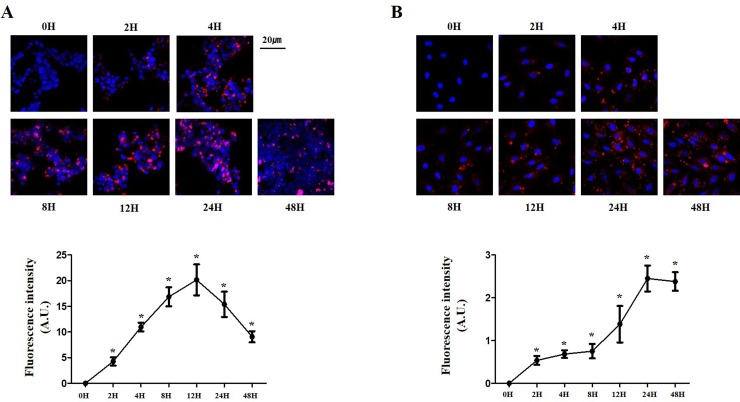
Exosomes might have an unimproved potential to serve as effective delivery vehicles. However, when exosomes are developed for therapeutic applications, a method to enhance their delivery is important. This study aimed to evaluate wheather calcium chloride (CaCl2) or other chloride compounds could enhance exosome delivery to various cells without causing toxicity. Exosomes were purified from human serum by using the ExoQuick exosome precipitation kit. Isolated exosomes were mixed with CaCl2 at concentrations ranging from 100 μM to 1 mM, and then washed using Amicon filter for treating the cells. The delivery efficiency of exosomes and the viability of the cells [HEK 293 (human kidney cells) and H9C2 (rat cardiomyocytes)] were evaluated. Cellular uptake of exosomes was observed using a confocal microscope based on PKH26 labeling of exosomes. CaCl2 increased the delivery of exosomes in a dose- and treatment time-dependent manner. In HEK 293 cells, a CaCl2 concentration of 400 μM and exposure time of 12 h increased the delivery of exosomes by >20 times compared with controls. In H9C2 cells, a CaCl2 concentration of 400 μM and exposure time of >24 h increased the delivery of exosomes by >400 times compared with controls. The viability of both cell lines was maintained up to a CaCl2 concentration of 1 mM. However, cobalt chloride, cupric chloride, and magnesium chloride did not change the delivery of exosomes in both cell lines. These results suggest that the use of CaCl2 treatment might be a useful method for enhancing the delivery of exosomes.
外泌体作为有效的递药载体可能具有改进的潜力。然而,当外泌体被开发用于治疗应用时,增强其递药效率的方法是很重要的。本研究旨在评估氯化钙(CaCl2)或其他氯化物化合物是否可以在不引起毒性的情况下增强外泌体向各种细胞的递药效率。通过使用 ExoQuick 外泌体沉淀试剂盒从人血清中纯化外泌体。将分离的外泌体与 CaCl2 混合,浓度范围为 100 μM 至 1 mM,然后用 Amicon 过滤器洗涤以处理细胞。评估外泌体的递药效率和细胞(HEK 293(人肾细胞)和 H9C2(大鼠心肌细胞))的活力。通过基于 PKH26 标记的外泌体的共聚焦显微镜观察外泌体的细胞摄取。CaCl2 以剂量和处理时间依赖的方式增加外泌体的递药效率。在 HEK 293 细胞中,与对照组相比,400 μM CaCl2 浓度和 12 小时暴露时间使外泌体的递药效率增加了>20 倍。在 H9C2 细胞中,与对照组相比,400 μM CaCl2 浓度和>24 小时暴露时间使外泌体的递药效率增加了>400 倍。两种细胞系的活力在 CaCl2 浓度高达 1 mM 时仍保持不变。然而,氯化钴、氯化铜和氯化镁在两种细胞系中均未改变外泌体的递药效率。这些结果表明,使用 CaCl2 处理可能是增强外泌体递药效率的一种有用方法。