CORE Group Polio Project/Kenya and Somalia, Nairobi, Kenya.
CORE Group Polio Project, Washington, District of Columbia.
Am J Trop Med Hyg. 2019 Oct;101(4_Suppl):100-106. doi: 10.4269/ajtmh.19-0040.
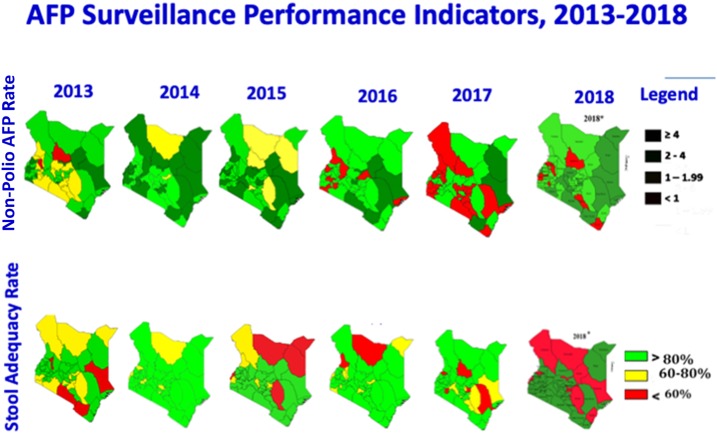
In 2013, the outbreak of wild poliovirus (WPV) in the Horn of Africa (HOA) triggered an aggressive, coordinated national and regional response to interrupt continued transmission. Kenya, Somalia, Ethiopia, South Sudan, and other HOA countries share a range of complex factors that enabled the outbreak: porous and sparsely populated borders, insecurity due to armed conflicts, and weak health systems with persistently under-resourced health facilities resulting in low-quality care and low levels of immunization coverage in mobile populations. Consequently, the continued risk of WPV importation demanded cross-border and intersectoral collaboration. Assessing and addressing persistent communication gaps at the subnational levels were necessary to gain traction for improved immunization coverage and surveillance activities. This article describes a systematic approach to institutionalizing processes of dialogue and facilitation that can provide for a sustainable and effective joint cross-border health platform between Kenya and Somalia. It examines an operational model called the Cross-Border Health Initiative (CBHI) to support joint intercountry collaboration and coordination efforts. To evaluate progress of the CBHI, the authors used data from population coverage surveys for routine immunization and supplemental immunization activities (for polio), from acute flaccid paralysis (AFP) surveillance, and from plans developed by border districts and border health facilities. The project-trained community health volunteers have been a critical link between the hard-to-reach communities and the health facilities as well as an excellent resource to support understaffed health facilities. The authors conclude that the CBHI has been effective in bolstering immunization coverage, disease surveillance, and rapid outbreak response in border areas. The CBHI has the potential to address other public health threats that transcend borders.
2013 年,非洲之角(HOA)野生脊髓灰质炎病毒(WPV)的爆发引发了一场积极的、协调一致的国家和地区性反应,以中断持续的传播。肯尼亚、索马里、埃塞俄比亚、南苏丹和其他 HOA 国家都存在一系列复杂的因素,使疫情得以爆发:边界漏洞百出且人口稀少、武装冲突导致的不安全局势,以及卫生系统薄弱,卫生设施长期资源不足,导致流动人口的护理质量低,免疫接种覆盖率低。因此,WPV 输入的持续风险要求跨境和跨部门合作。评估和解决国家以下各级持续存在的沟通差距,对于提高免疫接种覆盖率和监测活动至关重要。本文描述了一种将对话和促进制度化的系统方法,为肯尼亚和索马里之间建立一个可持续和有效的跨境联合卫生平台提供了条件。它研究了一种名为跨境卫生倡议(CBHI)的运作模式,以支持国家间的合作与协调努力。为了评估 CBHI 的进展,作者使用了常规免疫和补充免疫活动(用于脊髓灰质炎)的人口覆盖调查数据、急性弛缓性麻痹(AFP)监测数据,以及边境地区和边境卫生设施制定的计划数据。该项目培训的社区卫生志愿者是难以到达的社区与卫生设施之间的重要联系,也是支持人员不足的卫生设施的宝贵资源。作者得出结论,CBHI 在加强边境地区的免疫接种覆盖率、疾病监测和快速疫情应对方面是有效的。CBHI 有可能解决其他跨越国界的公共卫生威胁。