Department of Interface Science , Fritz-Haber Institute of the Max-Planck Society , 14195 Berlin , Germany.
Department of Physics , Ruhr-University Bochum , 44780 Bochum , Germany.
J Am Chem Soc. 2019 Dec 18;141(50):19879-19887. doi: 10.1021/jacs.9b10709. Epub 2019 Dec 9.
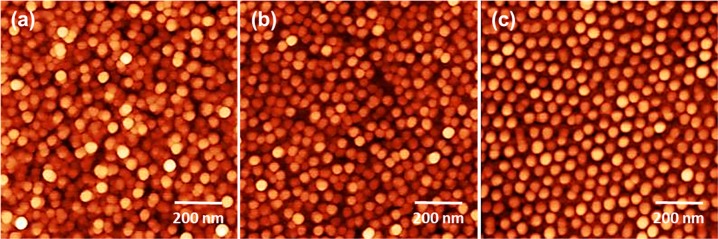
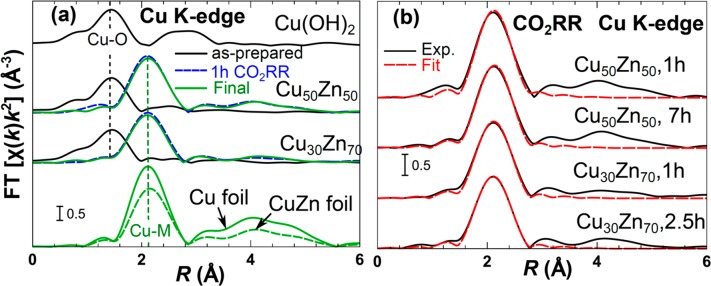
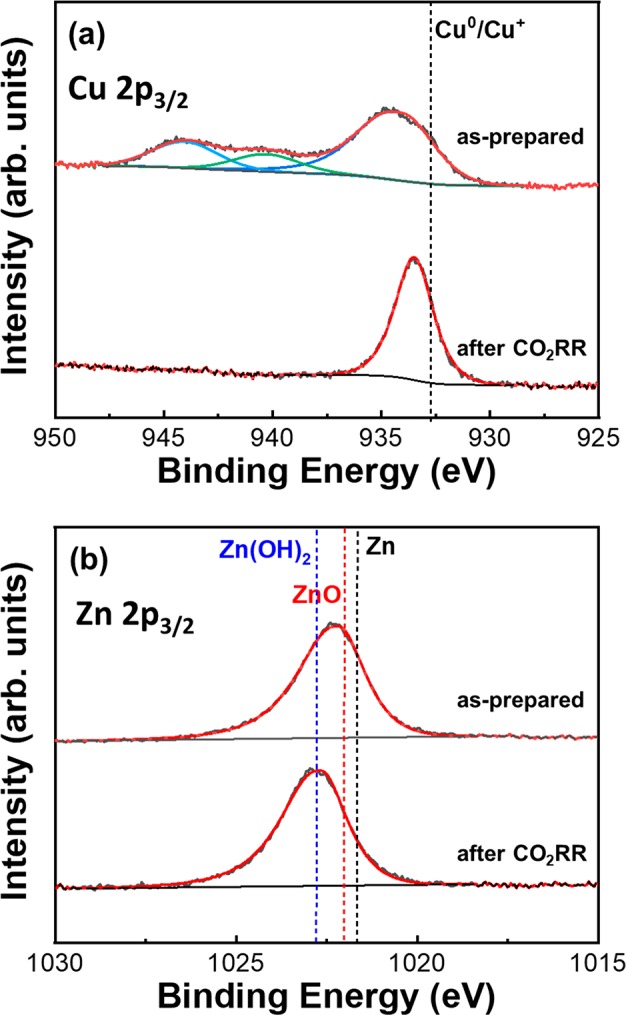
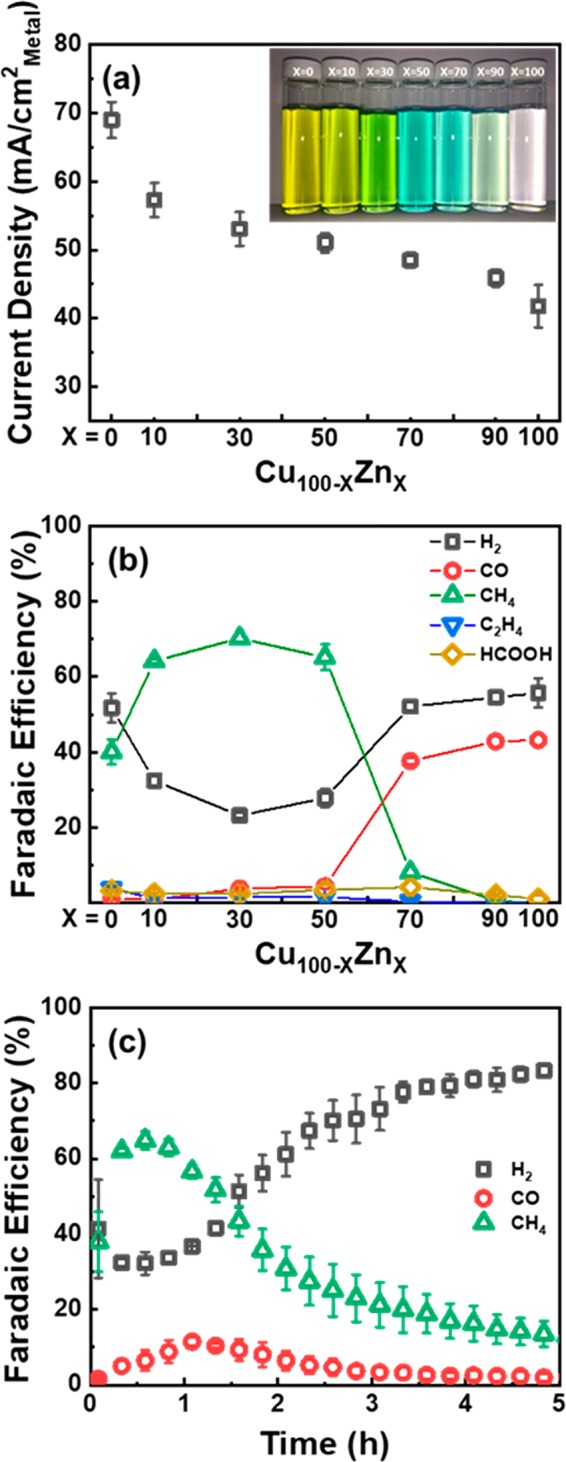
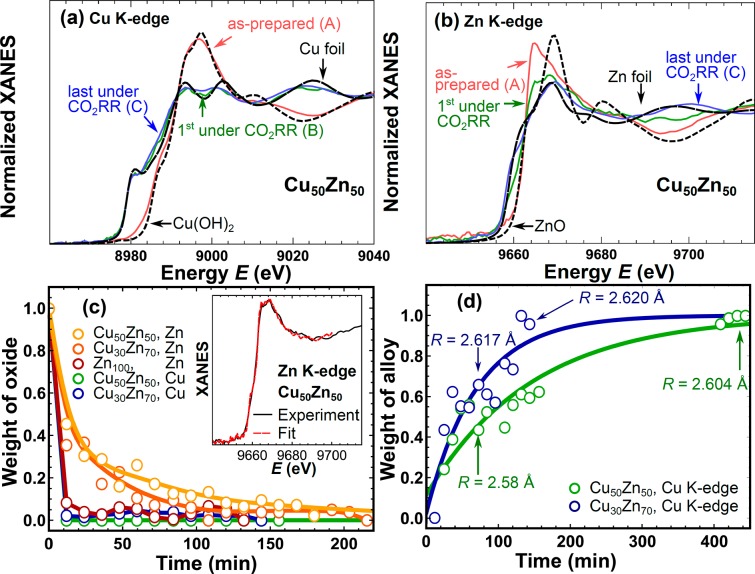
Bimetallic CuZn catalysts have been recently proposed as alternatives in order to achieve selectivity control during the electrochemical reduction of CO (CORR). However, fundamental understanding of the underlying reaction mechanism and parameters determining the CORR performance is still missing. In this study, we have employed size-controlled (∼5 nm) CuZn nanoparticles (NPs) supported on carbon to investigate the correlation between their structure and composition and catalytic performance. By tuning the concentration of Zn, a drastic increase in CH selectivity [∼70% Faradaic efficiency (F.E.)] could be achieved for Zn contents from 10 to 50, which was accompanied by a suppression of the H production. Samples containing a higher Zn concentration displayed significantly lower CH production and an abrupt switch in the selectivity to CO. Lack of metal leaching was observed based on quasi in situ X-ray photoelectron spectroscopy (XPS). X-ray absorption fine structure (XAFS) spectroscopy measurements revealed that the alloying of Cu atoms with Zn atoms takes place under reaction conditions and plays a determining role in the product selectivity. Time-dependent XAFS analysis showed that the local structure and chemical environment around the Cu atoms continuously evolve during CORR for several hours. In particular, cationic Zn species initially present were found to get reduced as the reaction proceeded, leading to the formation of a CuZn alloy (brass). The evolution of the Cu-Zn interaction with time during CORR was found to be responsible for the change in the selectivity from CH over Cu-ZnO NPs to CO over CuZn alloy NPs. This study highlights the importance of having access to in depth information on the interplay between the different atomic species in bimetallic NP electrocatalysts under reaction conditions in order to understand and ultimately tune their reactivity.
双金属 CuZn 催化剂最近被提出作为替代物,以在电化学还原 CO(CORR)过程中实现选择性控制。然而,对于决定 CORR 性能的基本反应机制和参数,仍缺乏深入了解。在这项研究中,我们采用尺寸可控(∼5nm)的负载在碳上的 CuZn 纳米颗粒(NPs)来研究其结构和组成与催化性能之间的相关性。通过调整 Zn 的浓度,可以在 Zn 含量为 10 到 50 之间实现 CH 选择性的大幅提高[∼70%法拉第效率(F.E.)],同时抑制 H 的生成。含有较高 Zn 浓度的样品显示出明显较低的 CH 生成量和对 CO 的选择性的急剧转变。根据准原位 X 射线光电子能谱(XPS)观察到没有金属浸出。X 射线吸收精细结构(XAFS)光谱测量表明,Cu 原子与 Zn 原子在反应条件下发生合金化,在产物选择性中起决定作用。时间相关的 XAFS 分析表明,在 CORR 过程中,Cu 原子周围的局部结构和化学环境在几个小时内不断演变。特别是,随着反应的进行,最初存在的阳离子 Zn 物种被还原,导致形成 CuZn 合金(黄铜)。在 CORR 过程中,Cu-Zn 相互作用随时间的演变被发现是导致从 Cu-ZnO NPs 上的 CH 选择性转变为 CuZn 合金 NPs 上的 CO 选择性的原因。这项研究强调了在反应条件下深入了解双金属 NP 电催化剂中不同原子物种之间相互作用的重要性,以便理解并最终调整其反应性。