Batool Shumaila, Iqbal Atia
Department of Microbiology and Molecular Genetics, The Women University Multan, 66000, Pakistan.
Saudi J Biol Sci. 2019 Nov;26(7):1400-1410. doi: 10.1016/j.sjbs.2018.05.024. Epub 2018 May 24.
The presence of Phosphorus as a macronutrient in soil is necessary for plant growth and its deficiency restricts crop yield. Therefore, the aim of current study is to isolate promising rhizospheric phosphate solubilizing bacteria presenting with plant growth promoting (PGP) traits and their utilization as biofertilizers to improve growth and nutrition.
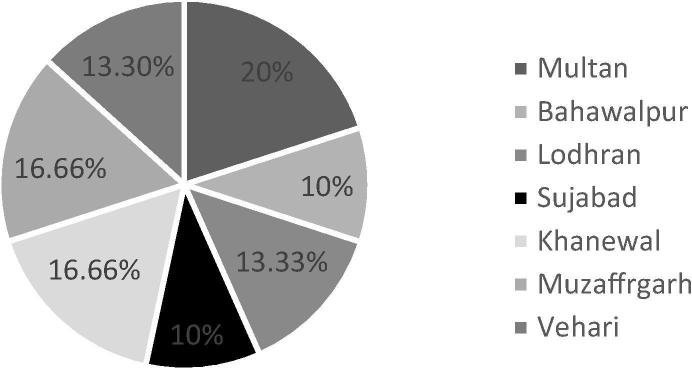
Out of 30 isolates obtained from rhizosphere of various plants of different regions, 10 best PSRB strains (WumS-3, WumS-4, WumS-5, WumS-11, WumS-12, WumS-21, WumS-24, WumS-25, WumS-26 and WumS-28) were selected based on their high P solubilization and good PGP (auxin, psiderphore, HCN, Nitrogen fixation) activities. (Var. Galaxy 2013) was used as an experimental crop under laboratory and field conditions.
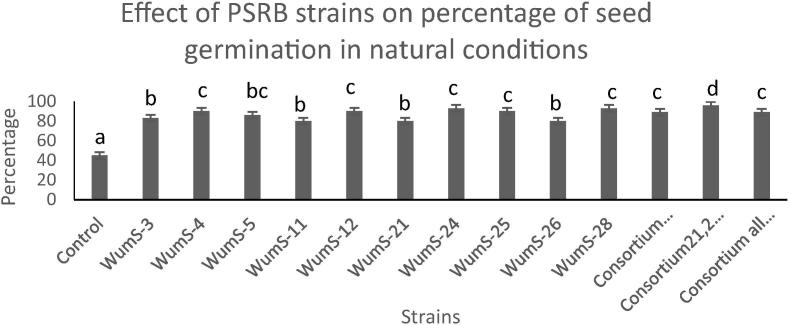
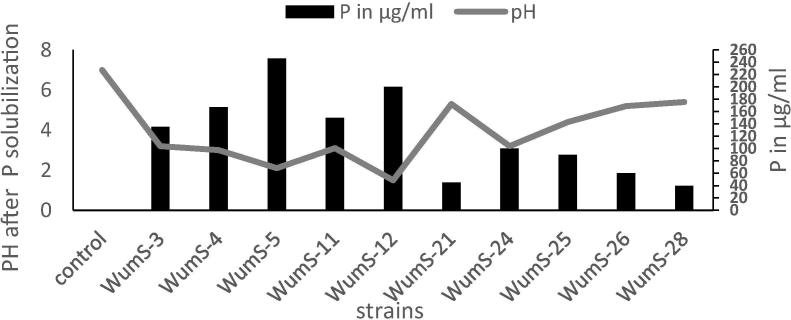
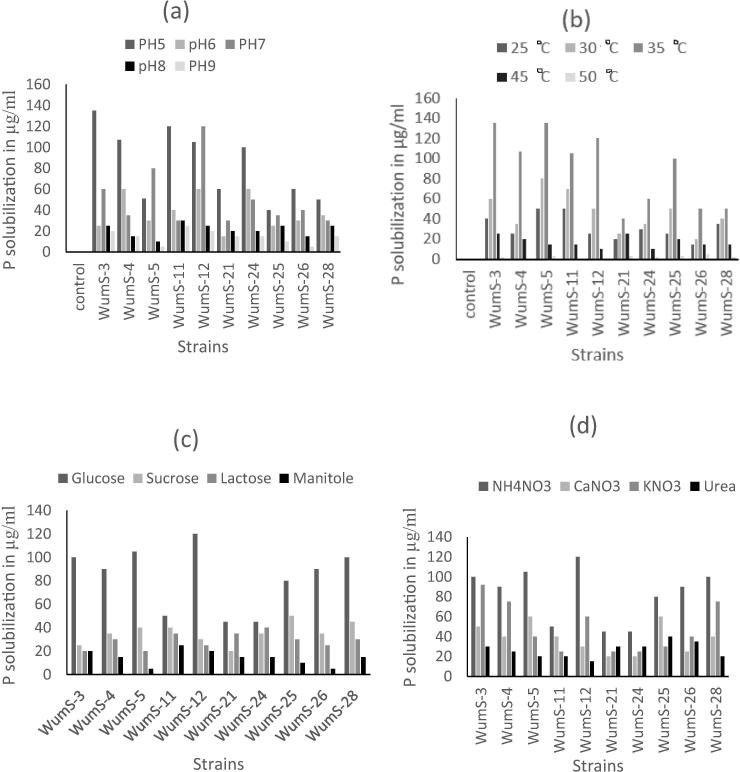
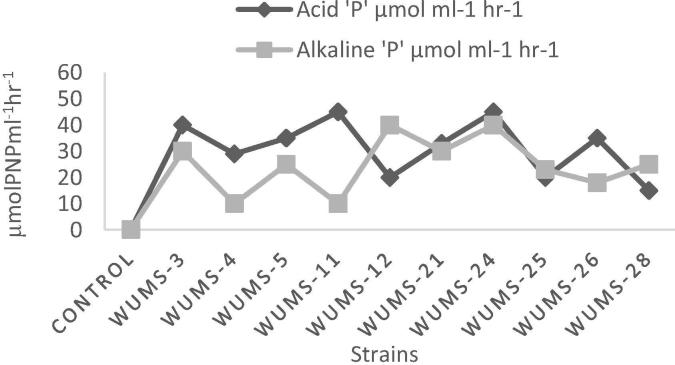
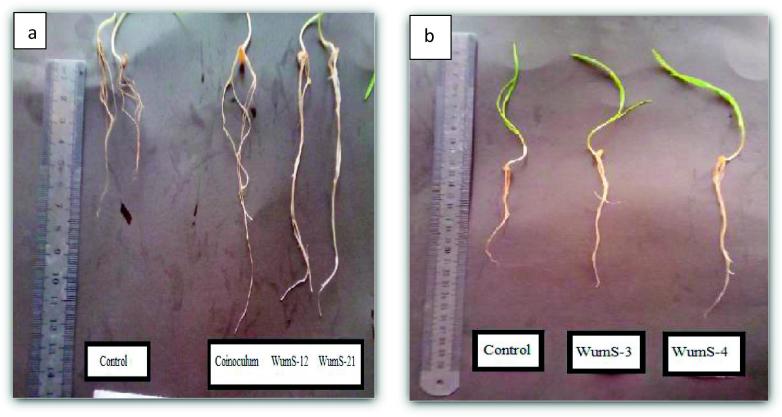
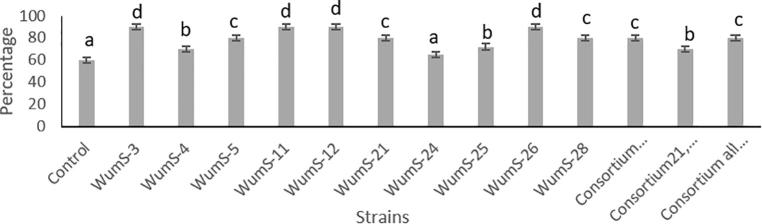
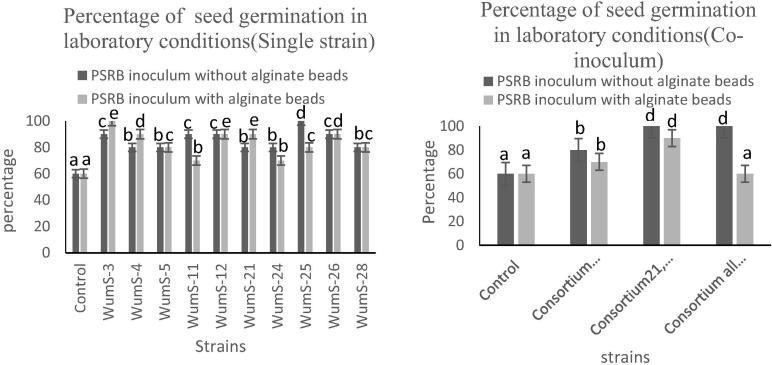
In this study, P solubilization capacity of selected strains were found 4-7 solubilization index on agar plate and 30-246 µg/ml in liquid broth respectively. The optimum conditions for phosphate solubilization under condition were found 35 °C at pH 7, glucose as good carbon source and ammonium nitrate as a good nitrogen source. Furthermore, the selected strains had the ability to produces phytohormones (indole acetic acid), siderophore, ammonia and Hydrogen Cyanide. Finally, PSRB inoculum showed significant (p < 0.05) increase (50%-80%) in seed germination while 10-90% increase in root length and shoot length was found as compared to control in laboratory condition. Under natural conditions, 40-80% increase in seed germination while 5-34.8% increase in shoot length and 5-96% increase in seed weight was also observed.
Isolated strains are promising PSRB that enhance plant growth and this research is a base for recommending the use of these bacterial strains for biofertilizer, as an alternative of chemical fertilizer, for L. production.
土壤中作为大量营养素的磷对植物生长是必需的,其缺乏会限制作物产量。因此,本研究的目的是分离具有植物生长促进(PGP)特性的有前景的根际解磷细菌,并将其用作生物肥料以促进生长和营养。
从不同地区的各种植物根际获得的30株分离物中,基于其高解磷能力和良好的PGP(生长素、铁载体、HCN、固氮)活性,选择了10株最佳解磷根际细菌菌株(WumS - 3、WumS - 4、WumS - 5、WumS - 11、WumS - 12、WumS - 21、WumS - 24、WumS - 25、WumS - 26和WumS - 28)。(品种Galaxy 2013)在实验室和田间条件下用作实验作物。
在本研究中,所选菌株在琼脂平板上的解磷能力为4 - 7解磷指数,在液体培养基中为30 - 246μg/ml。在该条件下,发现解磷的最佳条件是35°C、pH值为7、葡萄糖作为良好的碳源和硝酸铵作为良好的氮源。此外,所选菌株具有产生植物激素(吲哚乙酸)、铁载体、氨和氰化氢的能力。最后,在实验室条件下,与对照相比,解磷根际细菌接种物使种子发芽率显著(p < 0.05)提高(50% - 80%),根长和茎长增加10% - 90%。在自然条件下,种子发芽率提高40% - 80%,茎长增加5% - 34.8%,种子重量增加5% - 96%。
分离出的菌株是有前景的解磷根际细菌,可促进植物生长,本研究为推荐使用这些细菌菌株作为生物肥料(替代化学肥料)用于L.生产奠定了基础。