Narimiya Tsuyoshi, Kanzaki Hiroyuki, Yamaguchi Yuki, Wada Satoshi, Katsumata Yuta, Tanaka Ken, Tomonari Hiroshi
Department of Orthodontics, School of Dental Medicine, Tsurumi University, 2-1-3 Tsurumi, Tsurumi-ku, Yokohama, Kanagawa pref., 230-8501, Japan.
Bone Rep. 2019 Nov 1;11:100228. doi: 10.1016/j.bonr.2019.100228. eCollection 2019 Dec.
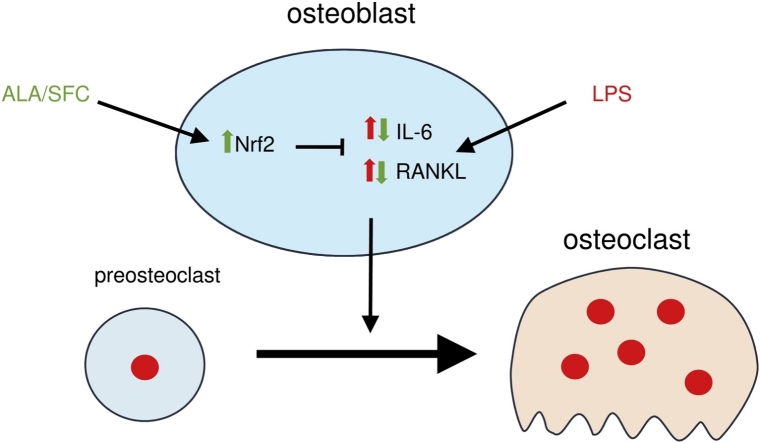
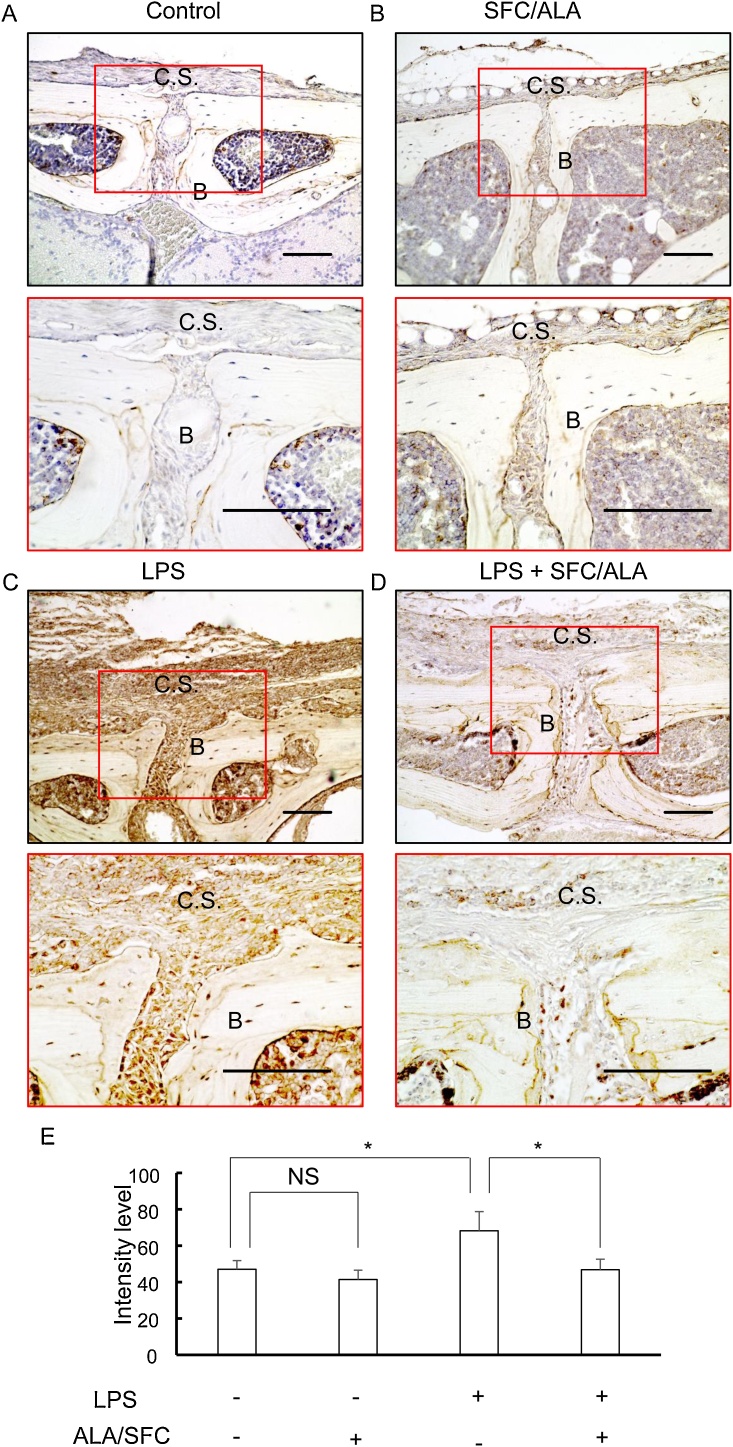
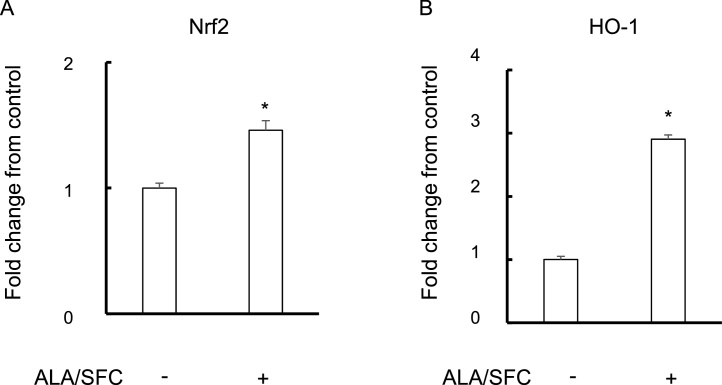
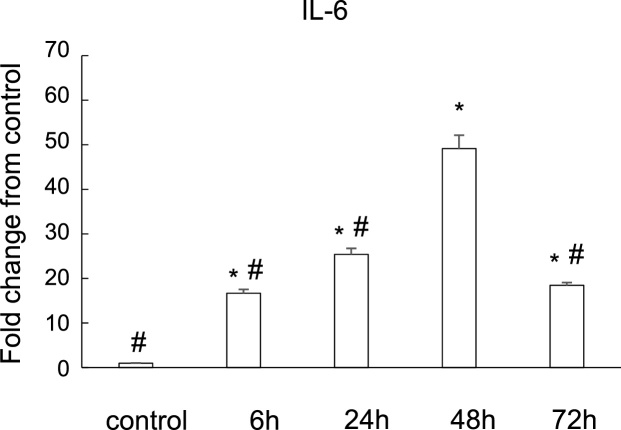
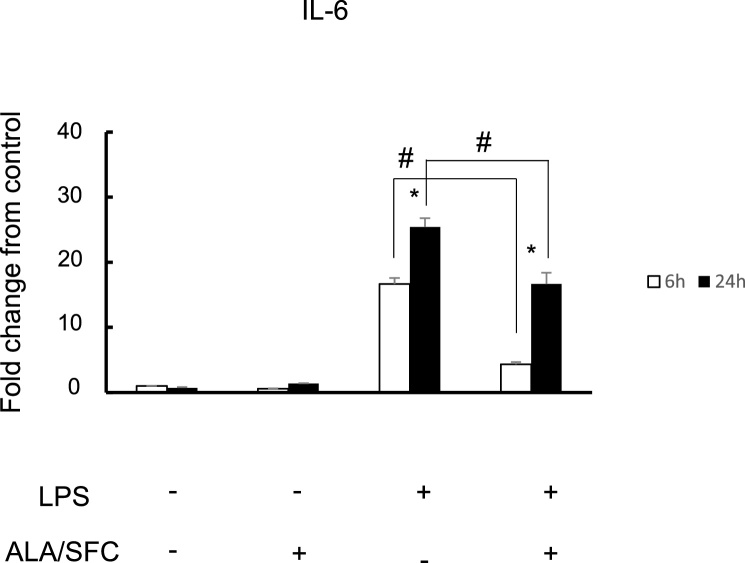
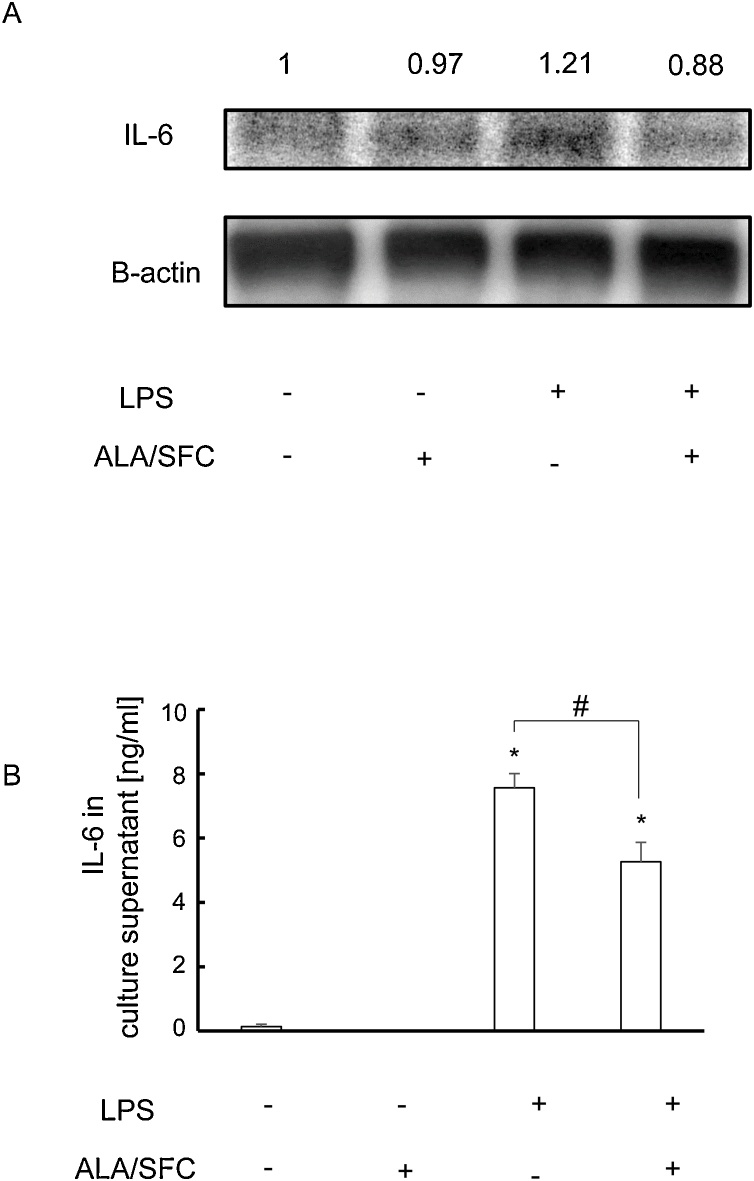
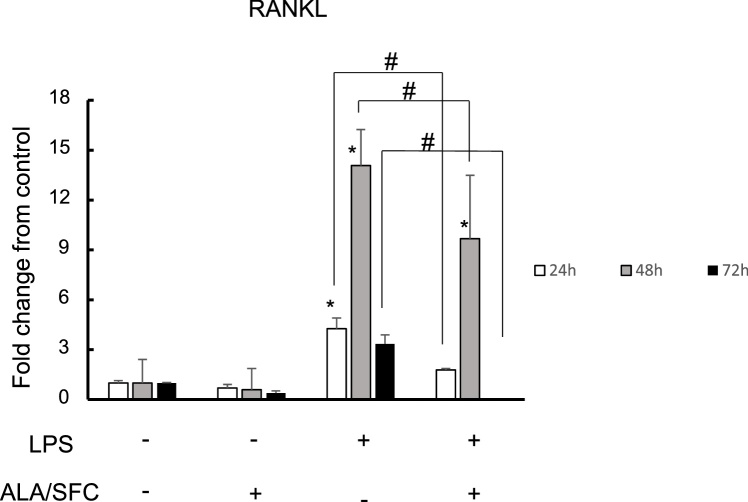
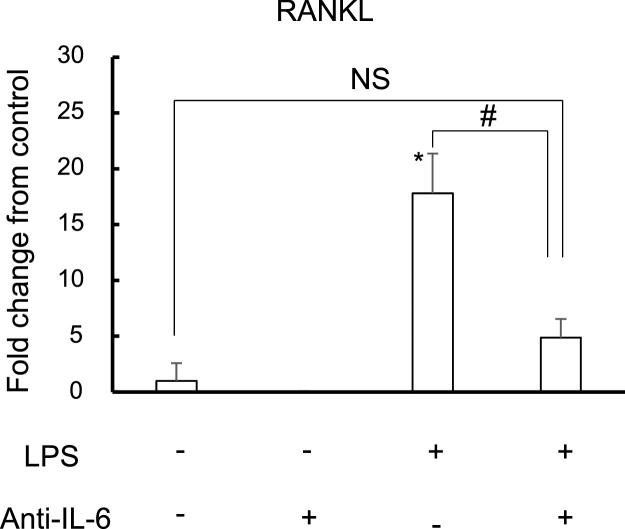
Bone destructive diseases such as periodontitis and rheumatoid arthritis are caused by excessive activation of osteoclasts. Osteoclastogenesis is regulated by Receptor activator of nuclear factor kappa-β ligand (RANKL) produced by osteoclastogenesis supporting cells such as osteoblast and osteocyte. Previously, we reported that NF-E2-related factor-2 (Nrf2) activation in osteoclast precursors inhibited osteoclastogenesis and bone destruction via induction of anti-oxidation and thereby attenuated intracellular ROS signaling. However, it still remains unknown whether Nrf2 activation in cells other than osteoclasts give any negative influence on supporting property for osteoclastogenesis. Here we discovered that Nrf2 activation in osteoblasts suppresses indirectly osteoclastogenesis via inhibiting the expression of interleukin-6 (IL-6) which promotes osteoclastogenesis. In this study, 5-aminolevulinic acid hydrochloride (ALA) and sodium ferrous citrate (SFC) was used as the Nrf2 activator. experiments, using osteoblast cell line, MC3T3-E1, revealed that the expression of IL-6 was increased by LPS stimulation, but decreased after ALA/SFC treatment in mRNA and protein levels. Furthermore, RANKL expression was augmented by LPS, which was blocked by ALA/SFC treatment. Neutralizing antibody against IL-6 confirmed that LPS-mediated RANKL augmentation was dependent on IL-6 induction. experiments with LPS-mediated bone destruction in mice, confirmed that augmented IL-6 expression in osteoblasts by immunochemical analysis. ALA/SFC treatment attenuated LPS-mediated IL-6 upregulation. These results suggest that Nrf2 activation in osteoblasts suppress IL-6 and inflammatory bone destruction. The Nrf2 activator acts not only on osteoclasts but also on osteoblasts, in other word, Nrf2 activation indirectly suppresses osteoclastogenesis. In conclusion, the Nrf2 activator exhibits dual inhibitory effects via direct action on osteoclast and indirect action on osteoclast supporting cells.
诸如牙周炎和类风湿性关节炎等骨破坏性疾病是由破骨细胞过度活化所引起的。破骨细胞生成受破骨细胞生成支持细胞(如成骨细胞和骨细胞)产生的核因子κ-β受体活化因子配体(RANKL)调控。此前,我们报道破骨细胞前体中的核因子E2相关因子2(Nrf2)活化通过诱导抗氧化作用抑制破骨细胞生成和骨破坏,从而减弱细胞内活性氧信号传导。然而,破骨细胞以外的细胞中Nrf2活化是否会对破骨细胞生成的支持特性产生负面影响仍不清楚。在此,我们发现成骨细胞中的Nrf2活化通过抑制促进破骨细胞生成的白细胞介素-6(IL-6)的表达间接抑制破骨细胞生成。在本研究中,盐酸5-氨基酮戊酸(ALA)和柠檬酸亚铁钠(SFC)被用作Nrf2活化剂。使用成骨细胞系MC3T3-E1进行的实验表明,LPS刺激可使IL-6的表达增加,但在ALA/SFC处理后,mRNA和蛋白质水平均降低。此外,LPS可增强RANKL的表达,而ALA/SFC处理可阻断这种增强作用。抗IL-6中和抗体证实LPS介导的RANKL增强依赖于IL-6的诱导。在小鼠中进行的LPS介导的骨破坏实验,通过免疫化学分析证实成骨细胞中IL-6表达增加。ALA/SFC处理减弱了LPS介导的IL-6上调。这些结果表明成骨细胞中的Nrf2活化可抑制IL-6和炎性骨破坏。Nrf2活化剂不仅作用于破骨细胞,还作用于成骨细胞,换句话说,Nrf2活化间接抑制破骨细胞生成。总之,Nrf2活化剂通过对破骨细胞的直接作用和对破骨细胞支持细胞的间接作用表现出双重抑制作用。