Ohyama Yoko, Ito Junta, Kitano Victor J, Shimada Jun, Hakeda Yoshiyuki
Division of Oral Anatomy, Meikai University School of Dentistry, Sakado, Saitama, Japan.
Division of Oral and Maxillofacial Surgery, Meikai University School of Dentistry, Sakado, Saitama, Japan.
PLoS One. 2018 Jan 17;13(1):e0191192. doi: 10.1371/journal.pone.0191192. eCollection 2018.
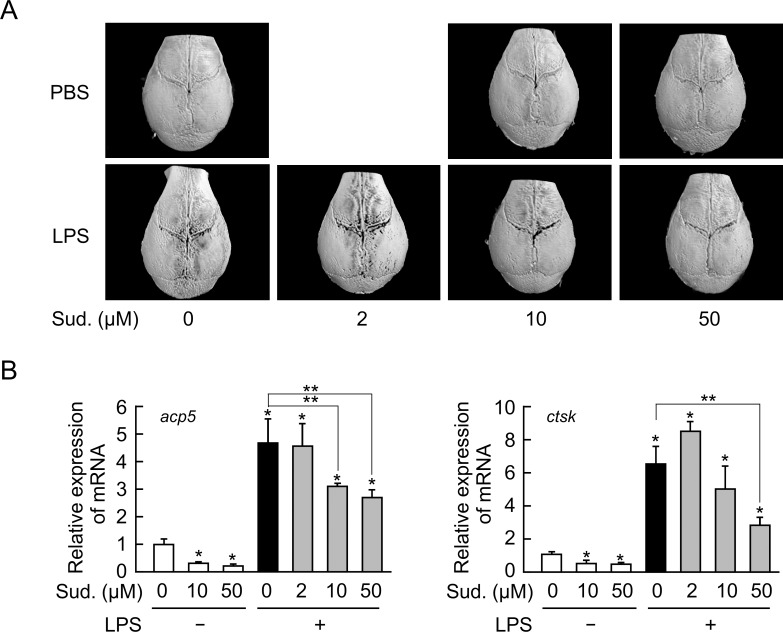
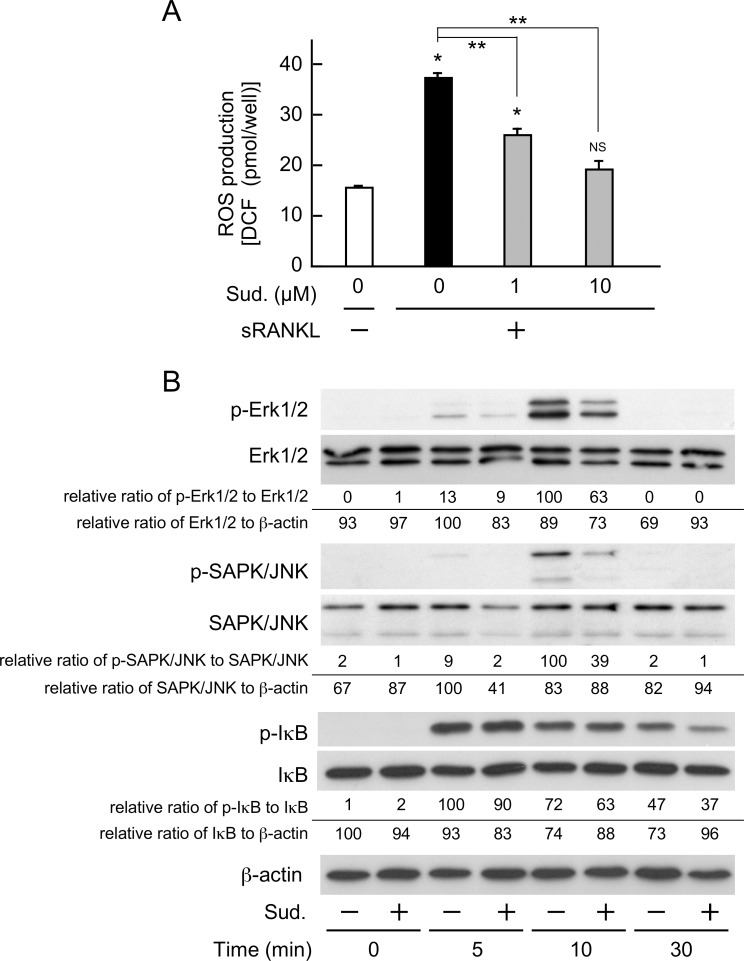
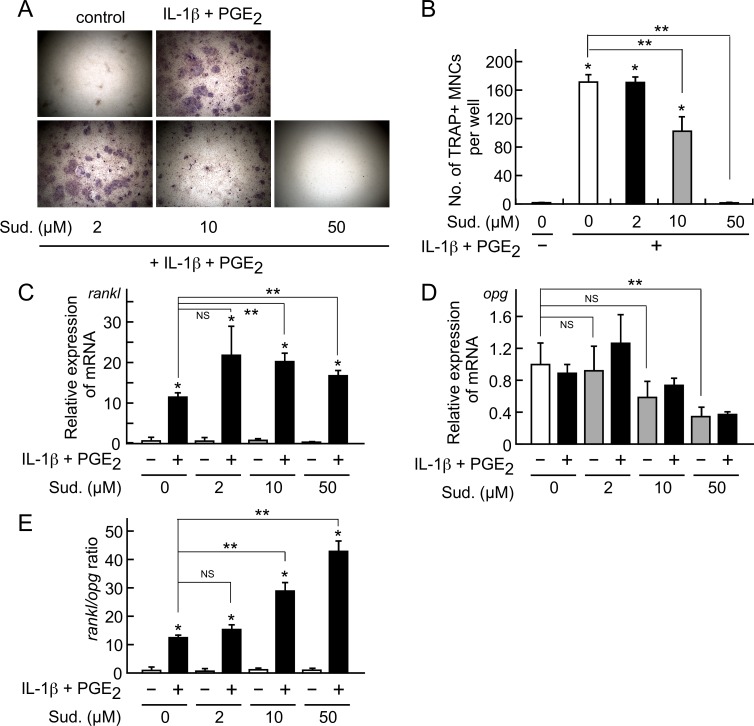
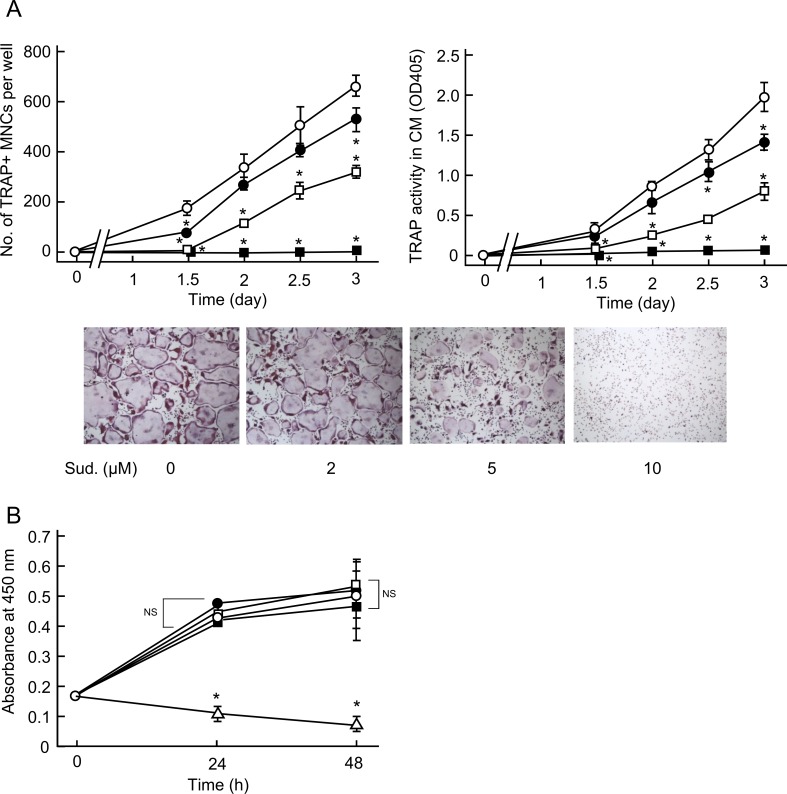
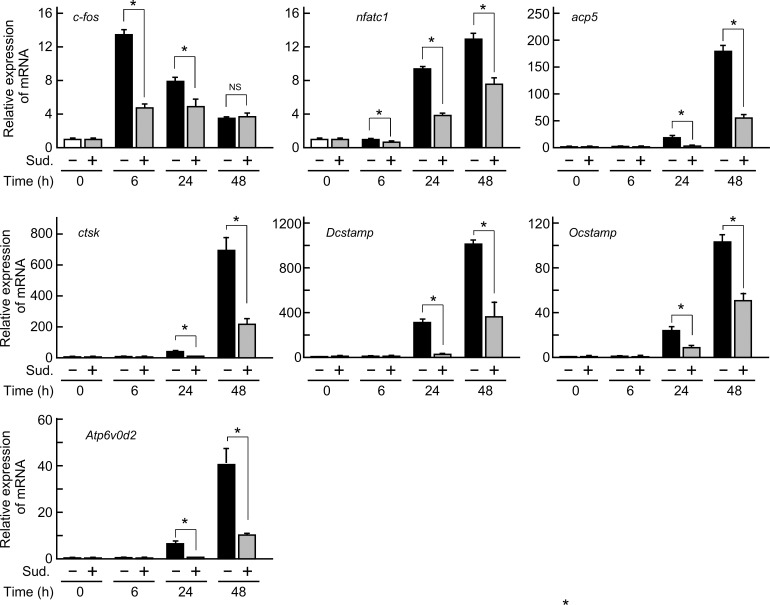
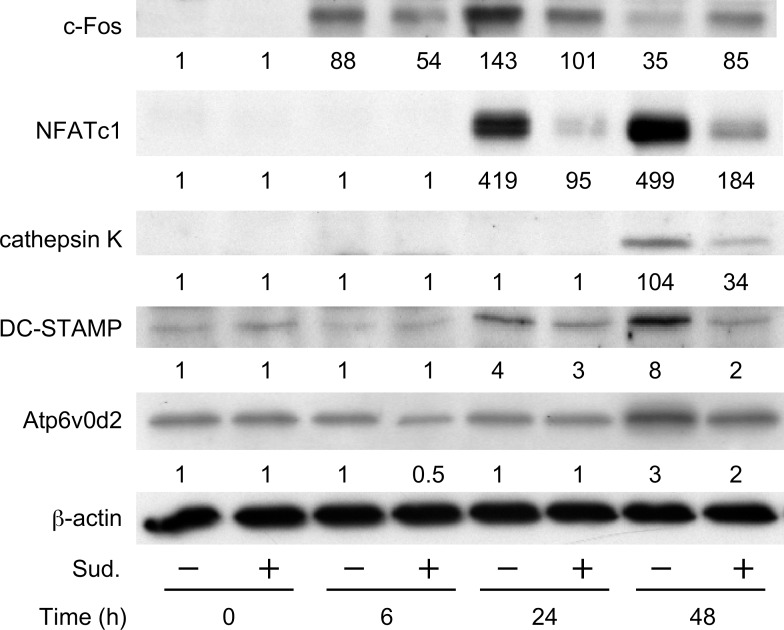
Inflammatory bone diseases, including rheumatoid arthritis, periodontitis and peri-implantitis, are associated not only with the production of inflammatory cytokines but also with local oxidative status, which is defined by intracellular reactive oxygen species (ROS). Osteoclast differentiation has been reported to be related to increased intracellular ROS levels in osteoclast lineage cells. Sudachitin, which is a polymethoxyflavone derived from Citrus sudachi, possesses antioxidant properties and regulates various functions in mammalian cells. However, the effects of sudachitin on inflammatory bone destruction and osteoclastogenesis remain unknown. In calvaria inflamed by a local lipopolysaccharide (LPS) injection, inflammation-induced bone destruction and the accompanying elevated expression of osteoclastogenesis-related genes were reduced by the co-administration of sudachitin and LPS. Moreover, sudachitin inhibited osteoclast formation in cultures of isolated osteoblasts and osteoclast precursors. However, sudachitin rather increased the expression of receptor activator of NF-κB ligand (RANKL), which is an important molecule triggering osteoclast differentiation, and the mRNA ratio of RANKL/osteoprotegerin that is a decoy receptor for RANKL, in the isolated osteoblasts, suggesting the presence of additional target cells. When osteoclast formation was induced from osteoclast precursors derived from bone marrow cells in the presence of soluble RANKL and macrophage colony-stimulating factor, sudachitin inhibited osteoclastogenesis without influencing cell viability. Consistently, the expression of osteoclast differentiation-related molecules including c-fos, NFATc1, cathepsin K and osteoclast fusion proteins such as DC-STAMP and Atp6v0d2 was reduced by sudachitin. In addition, sudachitin decreased activation of MAPKs such as Erk and JNK and the ROS production evoked by RANKL in osteoclast lineage cells. Our findings suggest that sudachitin is a useful agent for the treatment of anti-inflammatory bone destruction.
炎症性骨病,包括类风湿性关节炎、牙周炎和种植体周围炎,不仅与炎性细胞因子的产生有关,还与局部氧化状态相关,局部氧化状态由细胞内活性氧(ROS)定义。据报道,破骨细胞分化与破骨细胞谱系细胞内ROS水平升高有关。紫苏素是一种从酸橘中提取的多甲氧基黄酮,具有抗氧化特性,并调节哺乳动物细胞中的各种功能。然而,紫苏素对炎症性骨破坏和破骨细胞生成的影响仍不清楚。在通过局部注射脂多糖(LPS)引发炎症的颅骨中,紫苏素与LPS共同给药可减少炎症诱导的骨破坏以及破骨细胞生成相关基因的伴随性表达升高。此外,紫苏素在分离的成骨细胞和破骨细胞前体细胞培养物中抑制破骨细胞形成。然而,紫苏素反而增加了分离的成骨细胞中核因子κB受体活化因子配体(RANKL)的表达,RANKL是触发破骨细胞分化的重要分子,以及RANKL/骨保护素的mRNA比值,骨保护素是RANKL的诱饵受体,这表明存在其他靶细胞。当在可溶性RANKL和巨噬细胞集落刺激因子存在的情况下,从骨髓细胞衍生的破骨细胞前体诱导破骨细胞形成时,紫苏素抑制破骨细胞生成而不影响细胞活力。同样,紫苏素降低了破骨细胞谱系细胞中包括c-fos、NFATc1、组织蛋白酶K等破骨细胞分化相关分子以及破骨细胞融合蛋白如DC-STAMP和Atp6vOd2的表达。此外,紫苏素降低了破骨细胞谱系细胞中丝裂原活化蛋白激酶(MAPK)如Erk和JNK的激活以及RANKL诱导的ROS产生。我们的研究结果表明,紫苏素是治疗抗炎性骨破坏的有用药物。