Instituto Butantan, São Paulo, Brasil.
Departamento de Bioquímica, Instituto de Química, Universidade de São Paulo, São Paulo, Brasil.
PLoS One. 2019 Nov 25;14(11):e0225425. doi: 10.1371/journal.pone.0225425. eCollection 2019.
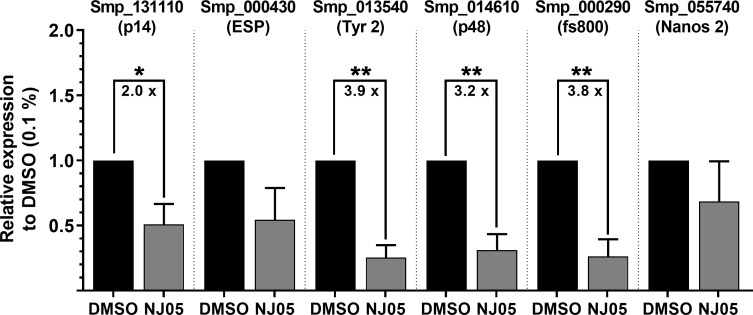
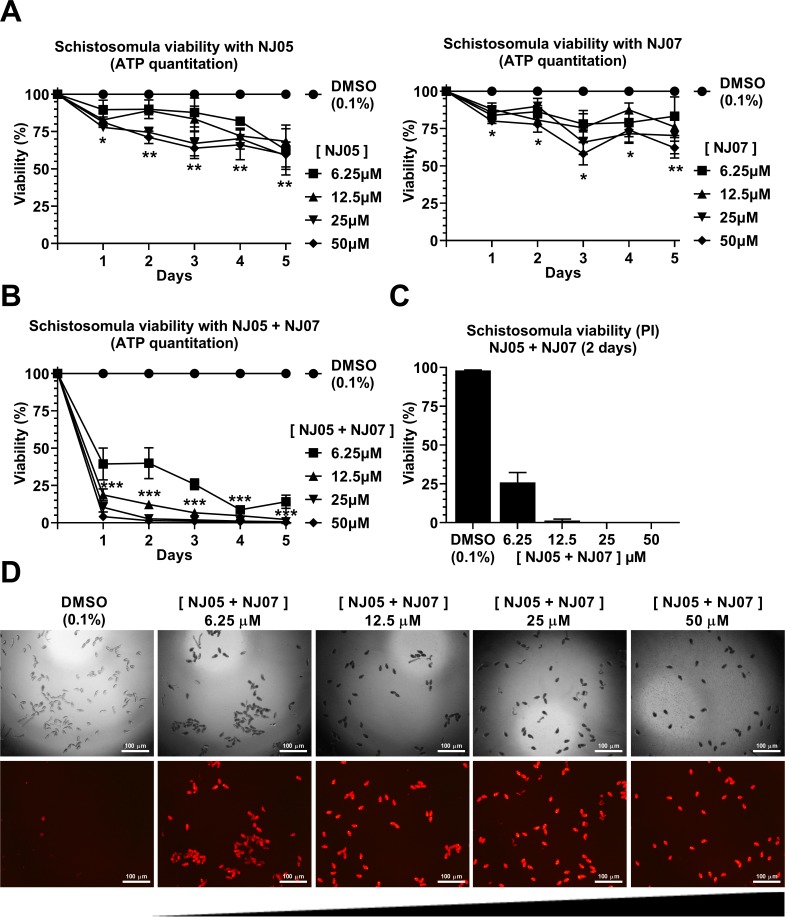
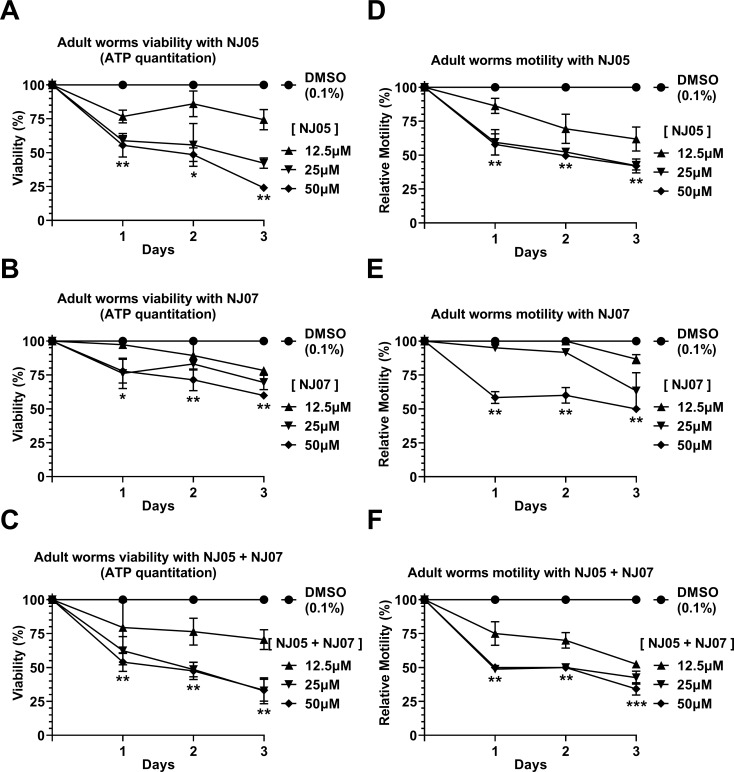
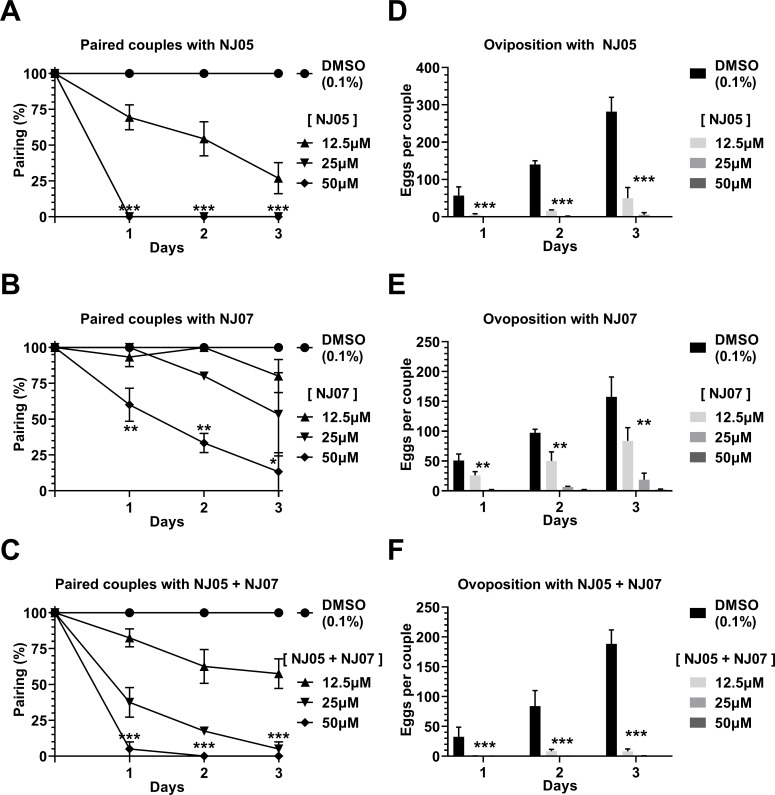
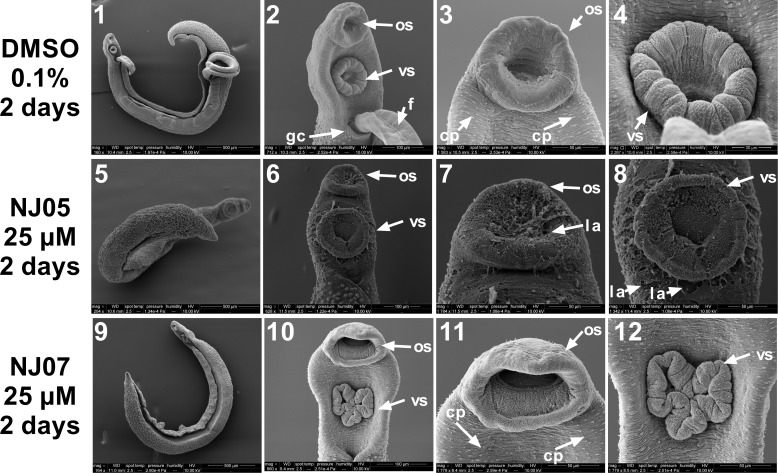
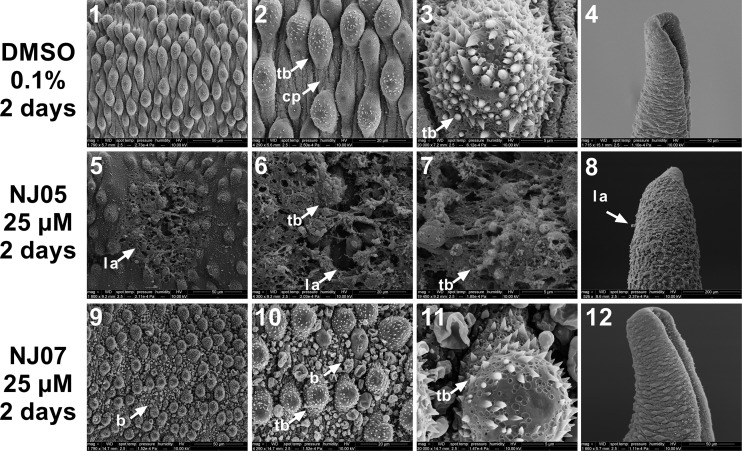
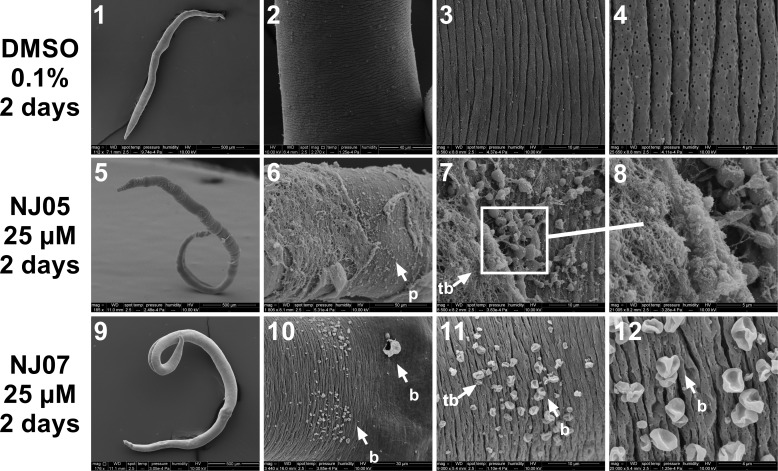
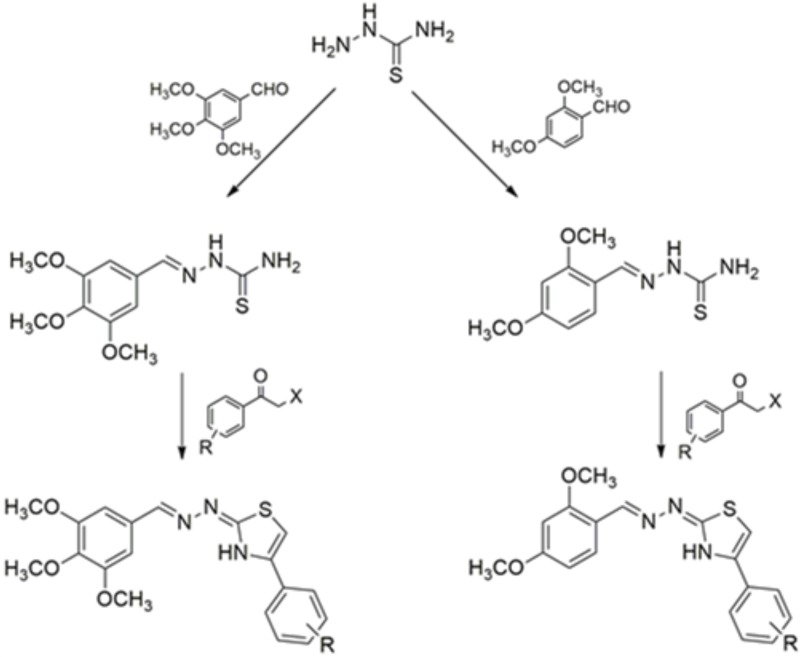
Schistosomiasis is caused by a trematode of the genus Schistosoma and affects over 200 million people worldwide. The only drug recommended by the World Health Organization for treatment and control of schistosomiasis is praziquantel. Development of new drugs is therefore of great importance. Thiazoles are regarded as privileged structures with a broad spectrum of activities and are potential sources of new drug prototypes, since they can act through interactions with DNA and inhibition of DNA synthesis. In this context, we report the synthesis of a series of thiazole derivatives and their in vitro schistosomicidal activity by testing eight molecules (NJ03-08; NJ11-12) containing thiazole structures. Parameters such as motility and mortality, egg laying, pairing and parasite viability by ATP quantification, which were influenced by these compounds, were evaluated during the assays. Scanning electron microscopy (SEM) was utilized for evaluation of morphological changes in the tegument. Schistosomula and adult worms were treated in vitro with different concentrations (6.25 to 50 μM) of the thiazoles for up to 5 and 3 days, respectively. After in vitro treatment for five days with 6.25 μM NJ05 or NJ07 separately, we observed a decrease of 30% in schistosomula viability, whilst treatment with NJ05+NJ07 lead to a reduction of 75% in viability measured by ATP quantitation and propidium iodide labeling. Adult worms' treatment with 50 μM NJ05, NJ07 or NJ05 + NJ07 showed decreased motility to 30-50% compared with controls. Compound NJ05 was more effective than NJ07, and adult worm viability after three days was reduced to 25% in parasites treated with 50 μM NJ05, compared with a viability reduction to 40% with 50 μM NJ07. SEM analysis showed severe alterations in adult worms with formation of bulges and blisters throughout the dorsal region of parasites treated with NJ05 or NJ07. Oviposition was extremely affected by treatment with the NJ series compounds; at concentrations of 25 μM and 50 μM, oviposition reached almost zero with NJ05, NJ07 or NJ05 + NJ07 already at day one. Tested genes involved in egg biosynthesis were all confirmed by qPCR as downregulated in females treated with 25 μM NJ05 for 2 days, with a significant reduction in expression of p14, Tyrosinase 2, p48 and fs800. NJ05, NJ07 or NJ05+NJ07 treatment of HEK293 (human embryonic cell line) and HES (human epithelial cell line) showed EC50 in the range of 18.42 to 145.20 μM. Overall, our results demonstrate that those molecules are suitable targets for further development into new drugs for schistosomiasis treatment, although progress is needed to lessen the cytotoxic effects on human cells. According to the present study, thiazole derivatives have schistosomicidal activities and may be part of a possible new arsenal of compounds against schistosomiasis.
血吸虫病是由血吸虫属的吸虫引起的,影响全球超过 2 亿人。世界卫生组织唯一推荐用于治疗和控制血吸虫病的药物是吡喹酮。因此,开发新的药物非常重要。噻唑类化合物被认为是具有广谱活性的特权结构,是新型药物原型的潜在来源,因为它们可以通过与 DNA 的相互作用和抑制 DNA 合成来发挥作用。在这方面,我们报告了一系列噻唑衍生物的合成及其通过测试含有噻唑结构的 8 种分子(NJ03-08;NJ11-12)的体外杀血吸虫活性。在试验中评估了这些化合物影响的运动和死亡率、产卵、配对和寄生虫活力等参数。扫描电子显微镜(SEM)用于评估表皮的形态变化。用不同浓度(6.25 至 50 μM)的噻唑类化合物处理体外的血吸虫幼体和成虫,分别处理长达 5 天和 3 天。用 6.25 μM 的 NJ05 或 NJ07 单独处理 5 天后,我们观察到血吸虫幼体活力下降了 30%,而用 NJ05+NJ07 处理时,用 ATP 定量和碘化丙啶标记测量的活力下降了 75%。用 50 μM 的 NJ05、NJ07 或 NJ05+NJ07 处理成虫,与对照组相比,运动性降低了 30-50%。化合物 NJ05 比 NJ07 更有效,用 50 μM 的 NJ05 处理 3 天后,成虫活力降低至 25%,而用 50 μM 的 NJ07 处理时,成虫活力降低至 40%。SEM 分析显示,用 NJ05 或 NJ07 处理的成虫严重变形,虫体背部出现肿块和水疱。用 NJ 系列化合物处理后,产卵受到严重影响,用 NJ05、NJ07 或 NJ05+NJ07 处理时,在第 1 天,产卵几乎降至零。用 25 μM 的 NJ05 处理 2 天后,qPCR 证实参与卵生物合成的测试基因均下调,p14、酪氨酸酶 2、p48 和 fs800 的表达显著减少。HEK293(人胚胎细胞系)和 HES(人上皮细胞系)的 NJ05、NJ07 或 NJ05+NJ07 处理显示 EC50 在 18.42 至 145.20 μM 范围内。总的来说,我们的结果表明,这些分子是进一步开发治疗血吸虫病新药的合适靶点,但需要进一步研究减轻对人类细胞的细胞毒性作用。根据本研究,噻唑衍生物具有杀血吸虫活性,可能成为抗血吸虫病化合物的新武器库的一部分。