Laboratório de Parasitologia, Instituto Butantan, São Paulo, Brazil.
Departamento de Bioquímica, Instituto de Química, Universidade de São Paulo, São Paulo, Brazil.
Sci Rep. 2020 Dec 9;10(1):21565. doi: 10.1038/s41598-020-78669-5.
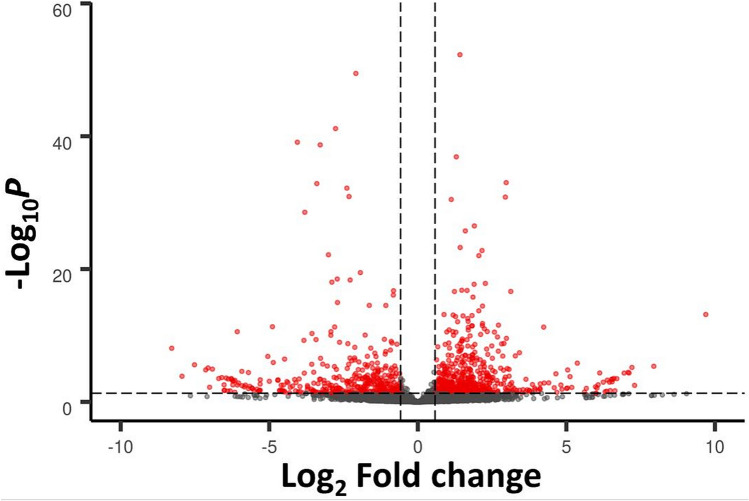
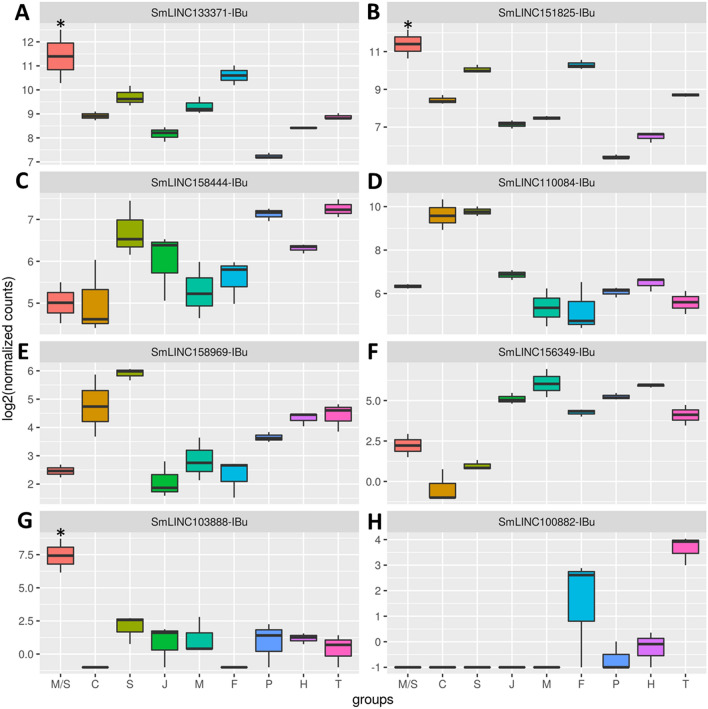
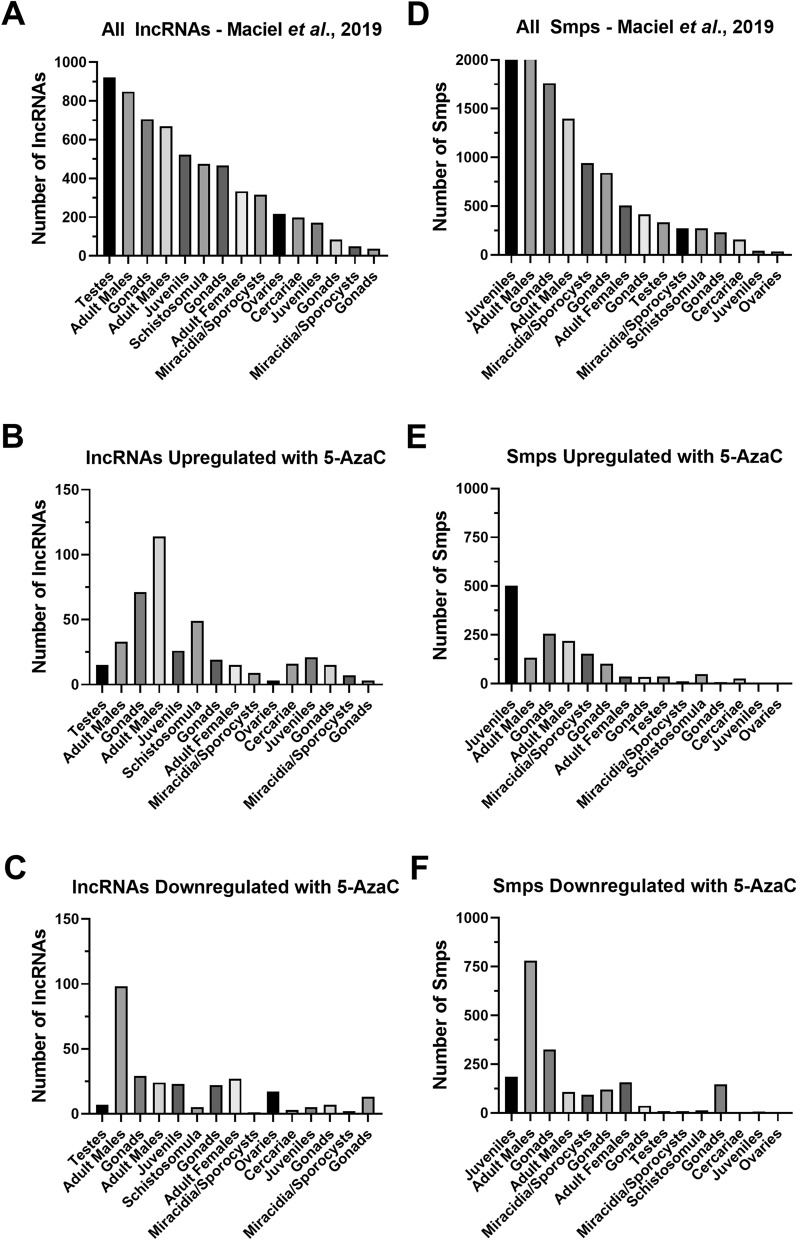
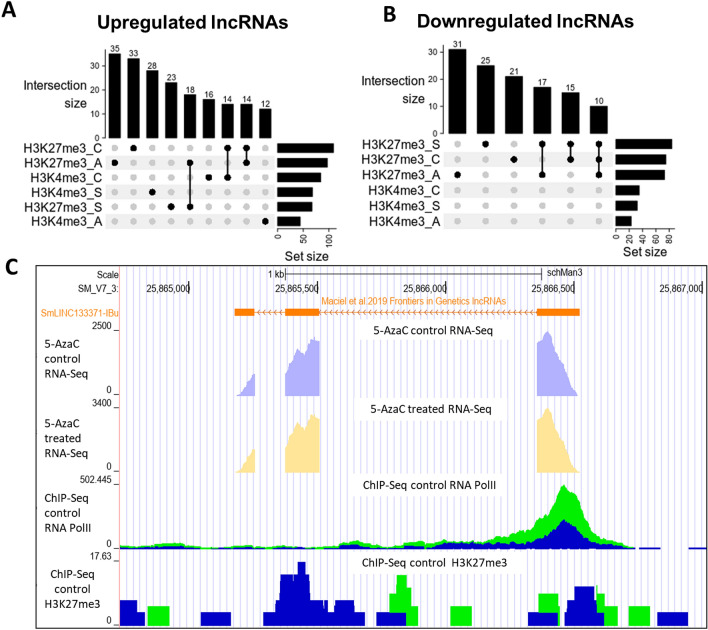
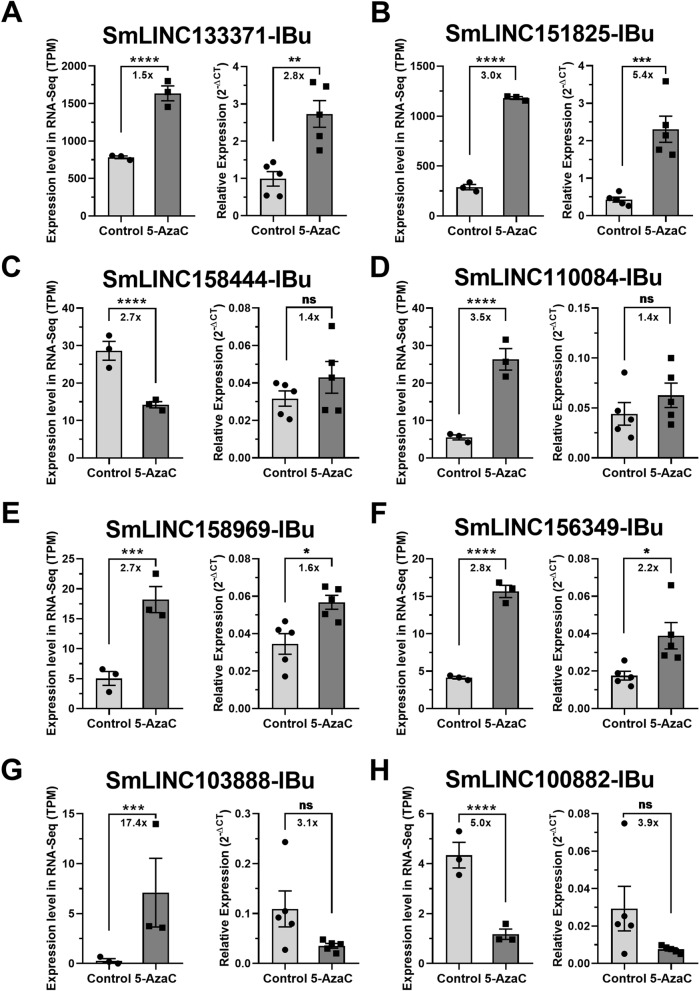
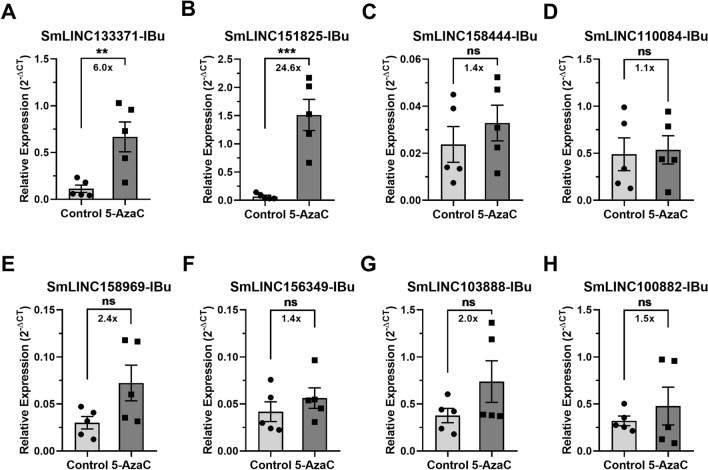
Schistosoma mansoni is a flatworm that causes schistosomiasis, a neglected tropical disease that affects more than 200 million people worldwide. There is only one drug indicated for treatment, praziquantel, which may lead to parasite resistance emergence. The ribonucleoside analogue 5-azacytidine (5-AzaC) is an epigenetic drug that inhibits S. mansoni oviposition and ovarian development through interference with parasite transcription, translation and stem cell activities. Therefore, studying the downstream pathways affected by 5-AzaC in S. mansoni may contribute to the discovery of new drug targets. Long non-coding RNAs (lncRNAs) are transcripts longer than 200 nucleotides with low or no protein coding potential that have been involved in reproduction, stem cell maintenance and drug resistance. We have recently published a catalog of lncRNAs expressed in S. mansoni life-cycle stages, tissues and single cells. However, it remains largely unknown if lncRNAs are responsive to epigenetic drugs in parasites. Here, we show by RNA-Seq re-analyses that hundreds of lncRNAs are differentially expressed after in vitro 5-AzaC treatment of S. mansoni females, including intergenic, antisense and sense lncRNAs. Many of these lncRNAs belong to co-expression network modules related to male metabolism and are also differentially expressed in unpaired compared with paired females and ovaries. Half of these lncRNAs possess histone marks at their genomic loci, indicating regulation by histone modification. Among a selected set of 8 lncRNAs, half of them were validated by RT-qPCR as differentially expressed in females, and some of them also in males. Interestingly, these lncRNAs are also expressed in other life-cycle stages. This study demonstrates that many lncRNAs potentially involved with S. mansoni reproductive biology are modulated by 5-AzaC and sheds light on the relevance of exploring lncRNAs in response to drug treatments in parasites.
曼氏血吸虫是一种扁形动物,会导致血吸虫病,这是一种被忽视的热带病,影响着全球 2 亿多人。目前仅有一种药物被批准用于治疗,即吡喹酮,但这可能会导致寄生虫产生耐药性。核苷类似物 5-氮杂胞苷(5-AzaC)是一种表观遗传药物,通过干扰寄生虫的转录、翻译和干细胞活性来抑制曼氏血吸虫产卵和卵巢发育。因此,研究 5-AzaC 对曼氏血吸虫影响的下游途径可能有助于发现新的药物靶点。长非编码 RNA(lncRNA)是长度大于 200 个核苷酸、蛋白编码潜力低或无的转录本,它们参与了生殖、干细胞维持和耐药性等过程。我们最近发表了一份曼氏血吸虫生命周期各阶段、组织和单细胞中表达的 lncRNA 目录。然而,lncRNA 是否对寄生虫中的表观遗传药物有反应在很大程度上仍不清楚。在这里,我们通过 RNA-Seq 重新分析表明,数百个 lncRNA 在曼氏血吸虫雌性体外 5-AzaC 处理后表达差异,包括基因间、反义及正义 lncRNA。这些 lncRNA 中的许多属于与雄性代谢相关的共表达网络模块,并且在未配对与配对雌性和卵巢中也有差异表达。这些 lncRNA 中的一半在其基因组位置具有组蛋白标记,表明受组蛋白修饰的调节。在一组选定的 8 个 lncRNA 中,有一半通过 RT-qPCR 验证在雌性中差异表达,其中一些也在雄性中差异表达。有趣的是,这些 lncRNA 也在其他生命周期阶段表达。这项研究表明,许多可能与曼氏血吸虫生殖生物学相关的 lncRNA 受到 5-AzaC 的调节,并揭示了在寄生虫中探索药物治疗反应时 lncRNA 的相关性。