Department of Cancer Systems Imaging, The University of Texas MD Anderson Cancer Center, Houston, TX 77030, USA.
Translational Research to Advance Therapeutics and Innovation in Oncology, The University of Texas MD Anderson Cancer Center, Houston, TX 77030, USA.
Cells. 2019 Nov 21;8(12):1487. doi: 10.3390/cells8121487.
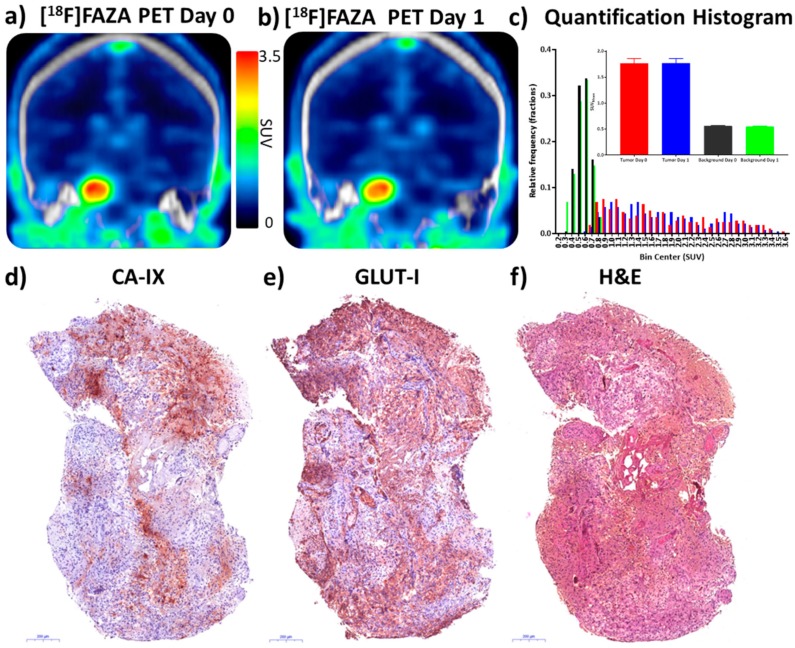
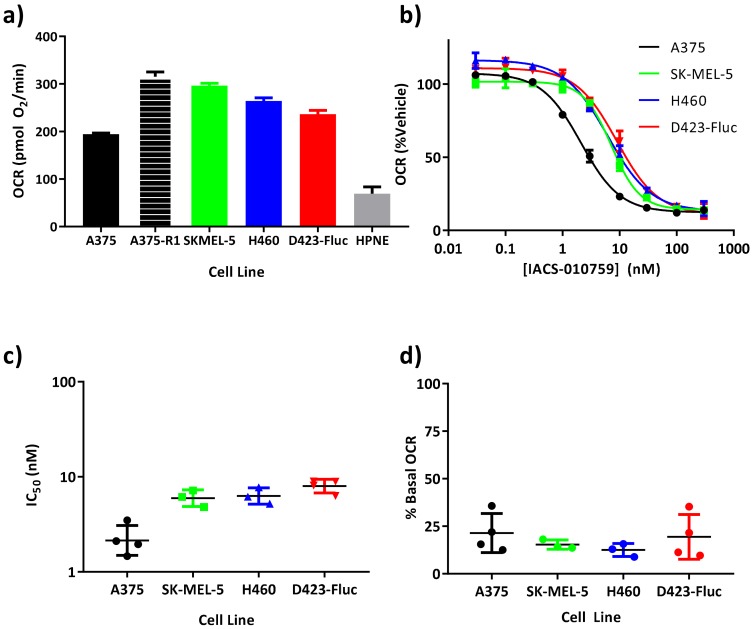
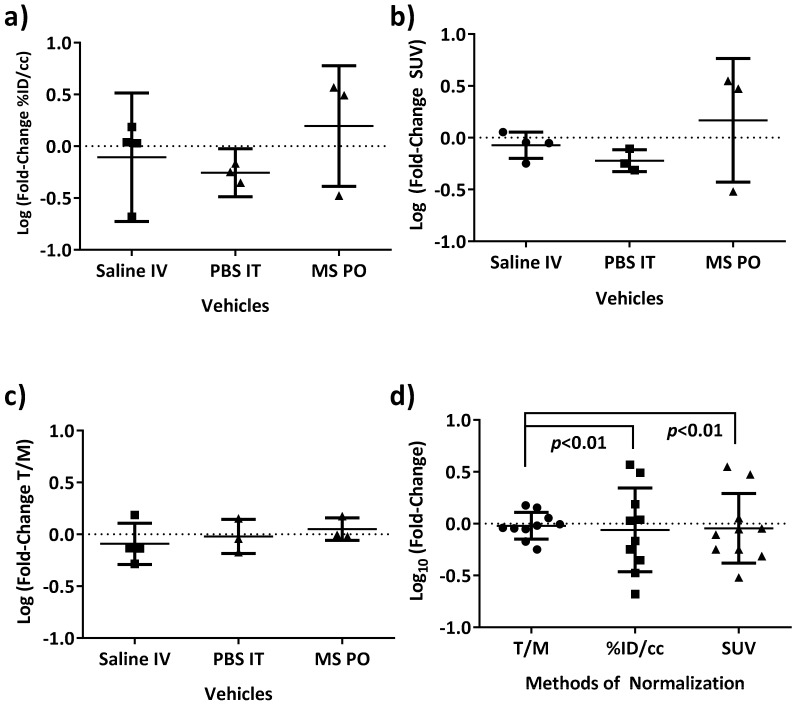
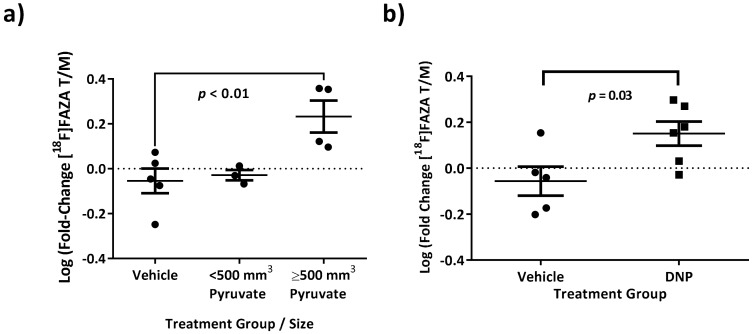
Tumors lack a well-regulated vascular supply of O and often fail to balance O supply and demand. Net O tension within many tumors may not only depend on O delivery but also depend strongly on O demand. Thus, tumor O consumption rates may influence tumor hypoxia up to true anoxia. Recent reports have shown that many human tumors in vivo depend primarily on oxidative phosphorylation (OxPhos), not glycolysis, for energy generation, providing a driver for consumptive hypoxia and an exploitable vulnerability. In this regard, IACS-010759 is a novel high affinity inhibitor of OxPhos targeting mitochondrial complex-I that has recently completed a Phase-I clinical trial in leukemia. However, in solid tumors, the effective translation of OxPhos inhibitors requires methods to monitor pharmacodynamics in vivo. Herein, F-fluoroazomycin arabinoside ([F]FAZA), a 2-nitroimidazole-based hypoxia PET imaging agent, was combined with a rigorous test-retest imaging method for non-invasive quantification of the reversal of consumptive hypoxia in vivo as a mechanism-specific pharmacodynamic (PD) biomarker of target engagement for IACS-010759. Neither cell death nor loss of perfusion could account for the IACS-010759-induced decrease in [F]FAZA retention. Notably, in an OxPhos-reliant melanoma tumor, a titration curve using [F]FAZA PET retention in vivo yielded an IC for IACS-010759 (1.4 mg/kg) equivalent to analysis ex vivo. Pilot [F]FAZA PET scans of a patient with grade IV glioblastoma yielded highly reproducible, high-contrast images of hypoxia in vivo as validated by CA-IX and GLUT-1 IHC ex vivo. Thus, [F]FAZA PET imaging provided direct evidence for the presence of consumptive hypoxia in vivo, the capacity for targeted reversal of consumptive hypoxia through the inhibition of OxPhos, and a highly-coupled mechanism-specific PD biomarker ready for translation.
肿瘤缺乏良好调节的氧血管供应,往往无法平衡氧供应和需求。许多肿瘤内的净氧张力不仅取决于氧输送,而且还强烈取决于氧需求。因此,肿瘤氧消耗率可能会影响肿瘤缺氧直至真正的缺氧。最近的报告表明,许多体内人类肿瘤主要依赖氧化磷酸化(OxPhos)而不是糖酵解来产生能量,这为消耗性缺氧提供了驱动力,并为可利用的脆弱性提供了驱动力。在这方面,IACS-010759 是一种新型的高亲和力线粒体复合物-I 的 OxPhos 抑制剂,最近在白血病的 I 期临床试验中完成。然而,在实体瘤中,OxPhos 抑制剂的有效转化需要方法来监测体内药效动力学。在此,F-氟代阿霉素阿拉伯糖苷([F]FAZA),一种基于 2-硝基咪唑的缺氧 PET 成像剂,与一种严格的测试-重测成像方法相结合,用于非侵入性定量体内消耗性缺氧的逆转,作为 IACS-010759 靶标结合的机制特异性药效动力学(PD)生物标志物。细胞死亡或灌注损失都不能解释 IACS-010759 诱导的 [F]FAZA 保留减少。值得注意的是,在依赖 OxPhos 的黑色素瘤肿瘤中,使用体内 [F]FAZA PET 保留的滴定曲线得出 IACS-010759 的 IC(1.4mg/kg)与体外分析相当。对一名 IV 级胶质母细胞瘤患者进行的初步 [F]FAZA PET 扫描产生了高度可重复的、高对比度的体内缺氧图像,通过 CA-IX 和 GLUT-1 IHC 体外验证了这一点。因此,[F]FAZA PET 成像提供了直接证据,证明了体内存在消耗性缺氧,通过抑制 OxPhos 靶向逆转消耗性缺氧的能力,以及一种高度耦合的机制特异性 PD 生物标志物,准备好进行转化。