Department of Cell and Developmental Biology, Vanderbilt University School of Medicine, Nashville, TN 37232.
Department of Cancer Biology, Thomas Jefferson University, Philadelphia, PA 19107.
Proc Natl Acad Sci U S A. 2019 Dec 10;116(50):25260-25268. doi: 10.1073/pnas.1910391116. Epub 2019 Nov 25.
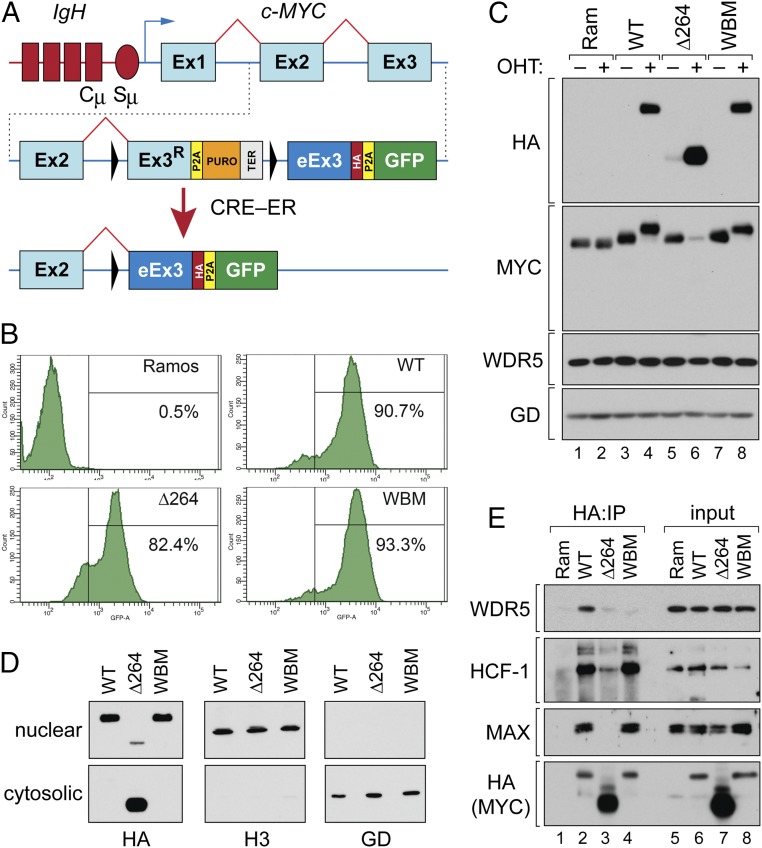
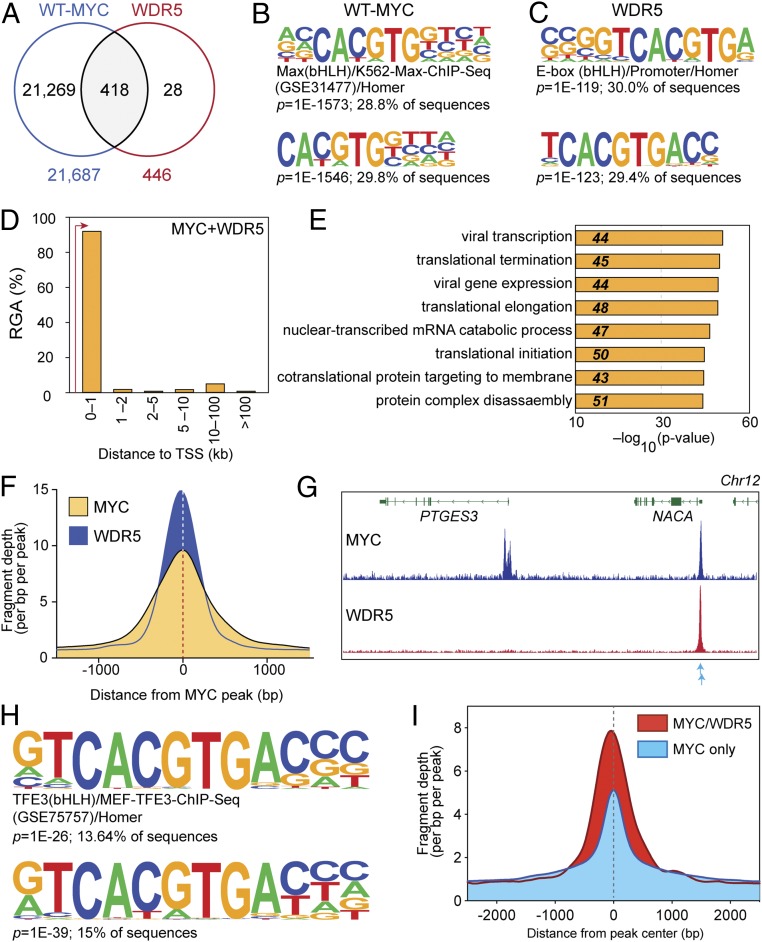
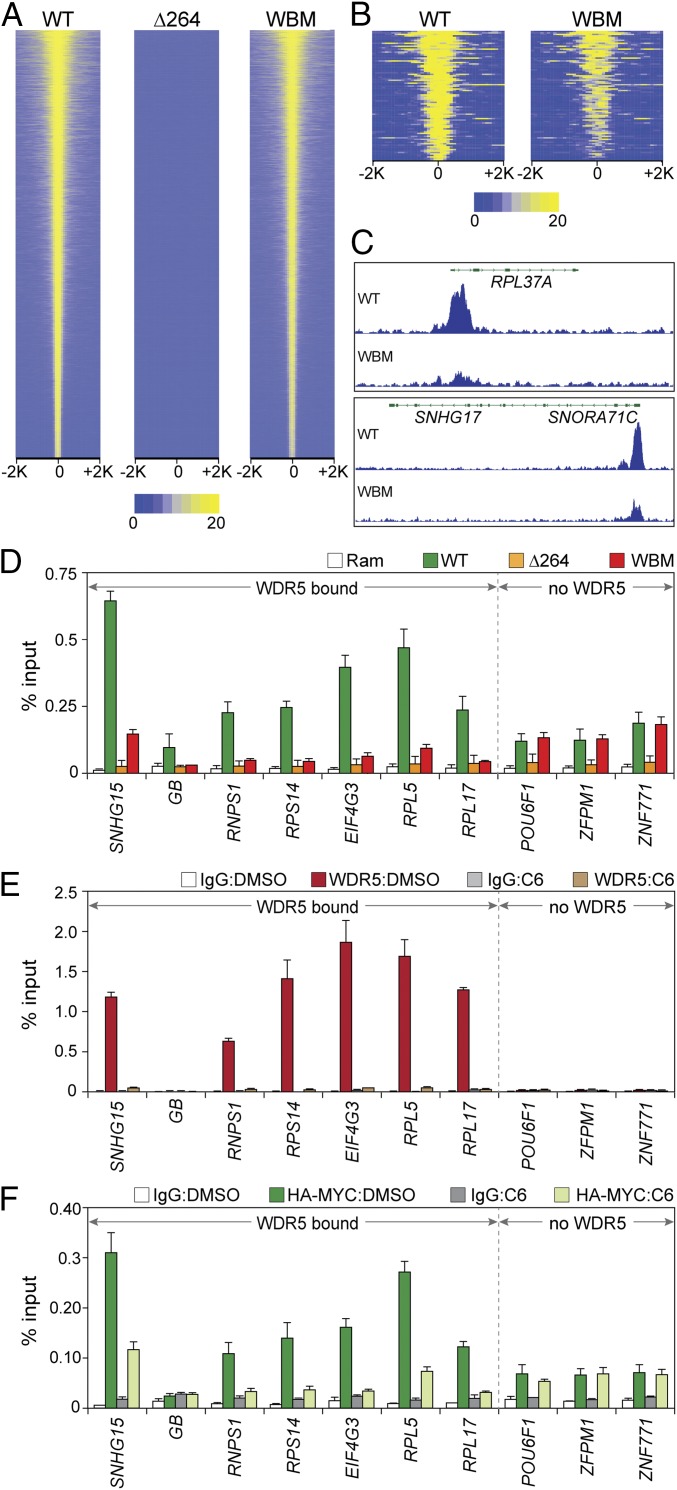
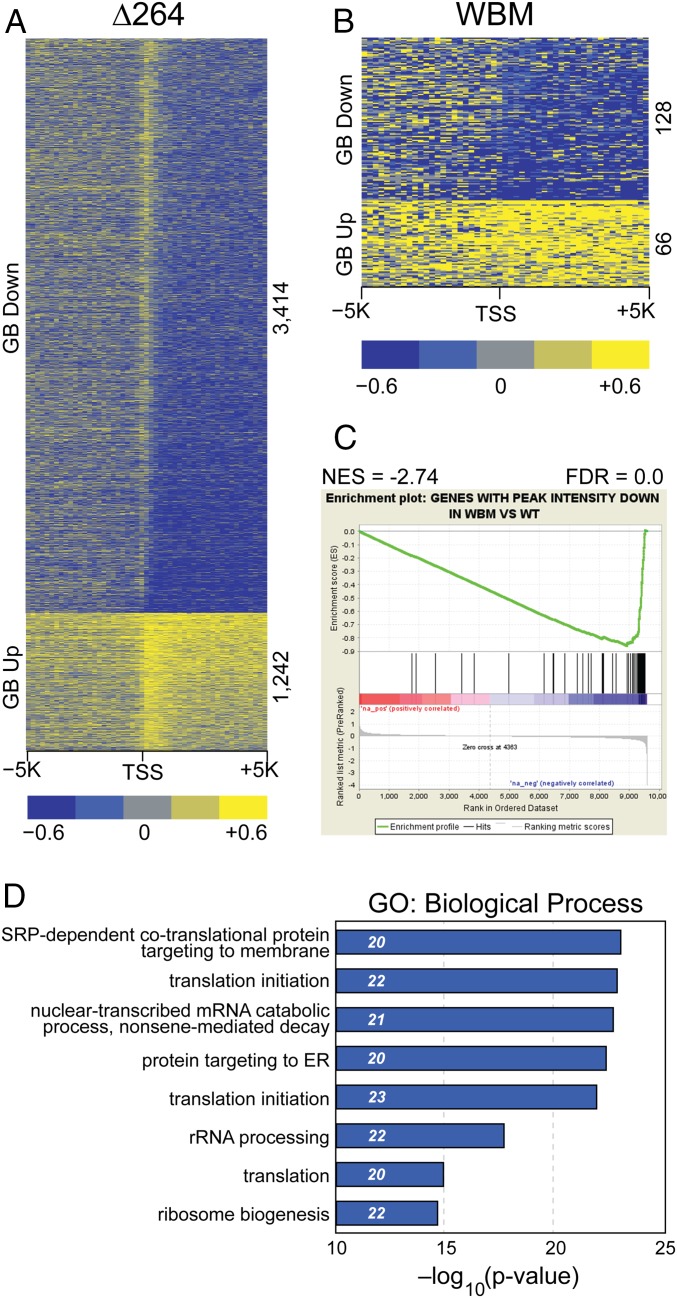
The oncoprotein transcription factor MYC is overexpressed in the majority of cancers. Key to its oncogenic activity is the ability of MYC to regulate gene expression patterns that drive and maintain the malignant state. MYC is also considered a validated anticancer target, but efforts to pharmacologically inhibit MYC have failed. The dependence of MYC on cofactors creates opportunities for therapeutic intervention, but for any cofactor this requires structural understanding of how the cofactor interacts with MYC, knowledge of the role it plays in MYC function, and demonstration that disrupting the cofactor interaction will cause existing cancers to regress. One cofactor for which structural information is available is WDR5, which interacts with MYC to facilitate its recruitment to chromatin. To explore whether disruption of the MYC-WDR5 interaction could potentially become a viable anticancer strategy, we developed a Burkitt's lymphoma system that allows replacement of wild-type MYC for mutants that are defective for WDR5 binding or all known nuclear MYC functions. Using this system, we show that WDR5 recruits MYC to chromatin to control the expression of genes linked to biomass accumulation. We further show that disrupting the MYC-WDR5 interaction within the context of an existing cancer promotes rapid and comprehensive tumor regression in vivo. These observations connect WDR5 to a core tumorigenic function of MYC and establish that, if a therapeutic window can be established, MYC-WDR5 inhibitors could be developed as anticancer agents.
癌蛋白转录因子 MYC 在大多数癌症中过度表达。其致癌活性的关键是 MYC 调节基因表达模式的能力,这些模式驱动并维持恶性状态。MYC 也被认为是一个经过验证的抗癌靶点,但抑制 MYC 的药物开发努力失败了。MYC 对辅助因子的依赖为治疗干预创造了机会,但对于任何辅助因子,这都需要结构上理解辅助因子与 MYC 的相互作用,了解其在 MYC 功能中的作用,并证明破坏辅助因子相互作用将导致现有癌症消退。一个具有结构信息的辅助因子是 WDR5,它与 MYC 相互作用,促进其募集到染色质上。为了探索破坏 MYC-WDR5 相互作用是否可能成为一种可行的抗癌策略,我们开发了一种 Burkitt 淋巴瘤系统,允许用不能结合 WDR5 或丧失所有已知核 MYC 功能的突变体替代野生型 MYC。使用该系统,我们表明 WDR5 将 MYC 募集到染色质上,以控制与生物量积累相关的基因表达。我们进一步表明,在现有癌症的背景下破坏 MYC-WDR5 相互作用会促进体内肿瘤的快速和全面消退。这些观察结果将 WDR5 与 MYC 的核心致癌功能联系起来,并确立了如果能够建立治疗窗口,MYC-WDR5 抑制剂可以作为抗癌药物开发。