• 文献检索
  • 文档翻译
  • 深度研究
  • 学术资讯
  • Suppr Zotero 插件Zotero 插件
  • 邀请有礼
  • 套餐&价格
  • 历史记录
应用&插件
Suppr Zotero 插件Zotero 插件浏览器插件Mac 客户端Windows 客户端微信小程序
定价
高级版会员购买积分包购买API积分包
服务
文献检索文档翻译深度研究API 文档MCP 服务
关于我们
关于 Suppr公司介绍联系我们用户协议隐私条款
关注我们

Suppr 超能文献

核心技术专利:CN118964589B侵权必究
粤ICP备2023148730 号-1Suppr @ 2026

文献检索

告别复杂PubMed语法,用中文像聊天一样搜索,搜遍4000万医学文献。AI智能推荐,让科研检索更轻松。

立即免费搜索

文件翻译

保留排版,准确专业,支持PDF/Word/PPT等文件格式,支持 12+语言互译。

免费翻译文档

深度研究

AI帮你快速写综述,25分钟生成高质量综述,智能提取关键信息,辅助科研写作。

立即免费体验

NLR 免疫受体中的 N 端基序在亲缘关系较远的植物物种中具有功能保守性。

An N-terminal motif in NLR immune receptors is functionally conserved across distantly related plant species.

机构信息

The Sainsbury Laboratory, University of East Anglia, Norwich Research Park, Norwich, United Kingdom.

Department of Life Sciences, Imperial College London, London, United Kingdom.

出版信息

Elife. 2019 Nov 27;8:e49956. doi: 10.7554/eLife.49956.

DOI:10.7554/eLife.49956
PMID:31774397
原文链接:https://pmc.ncbi.nlm.nih.gov/articles/PMC6944444/
Abstract

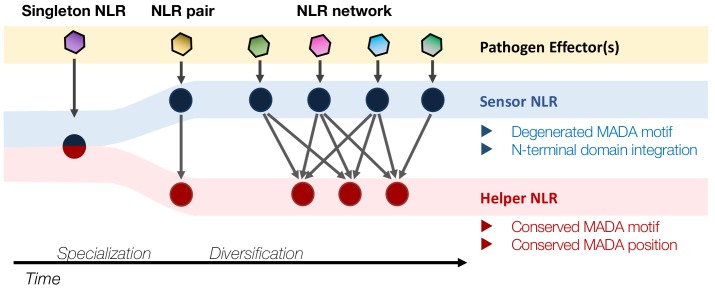
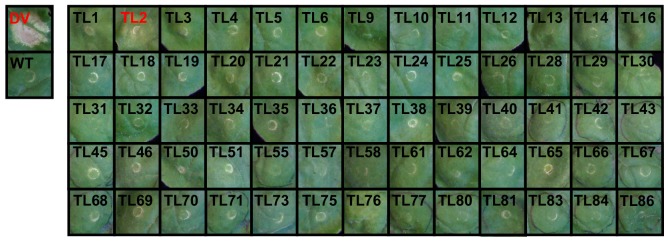
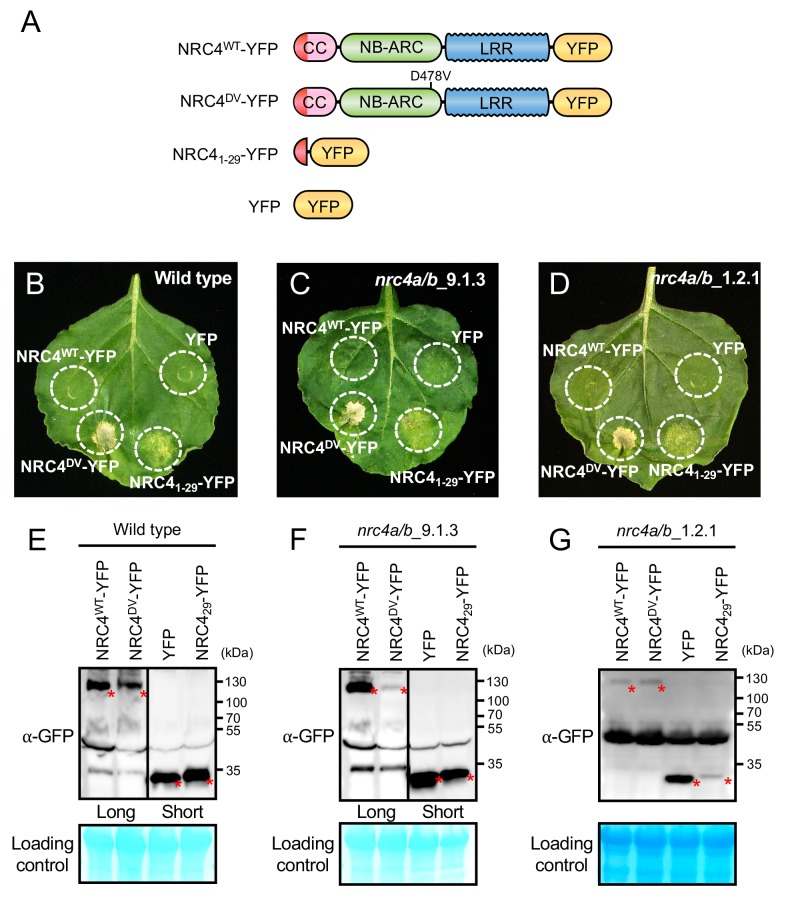
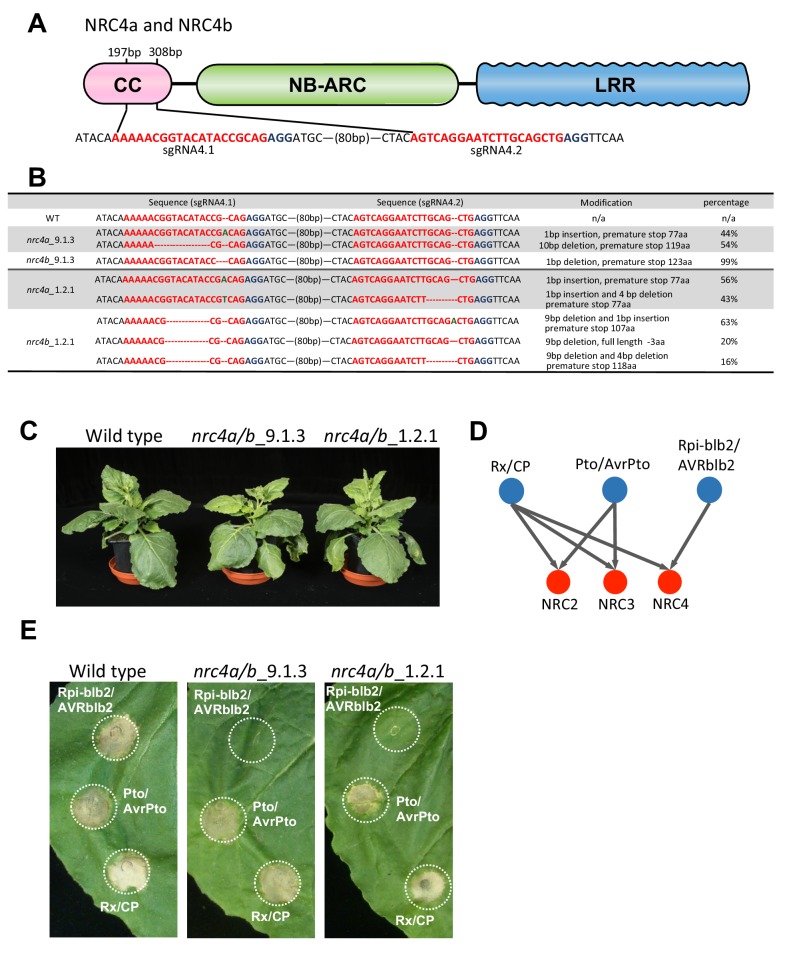
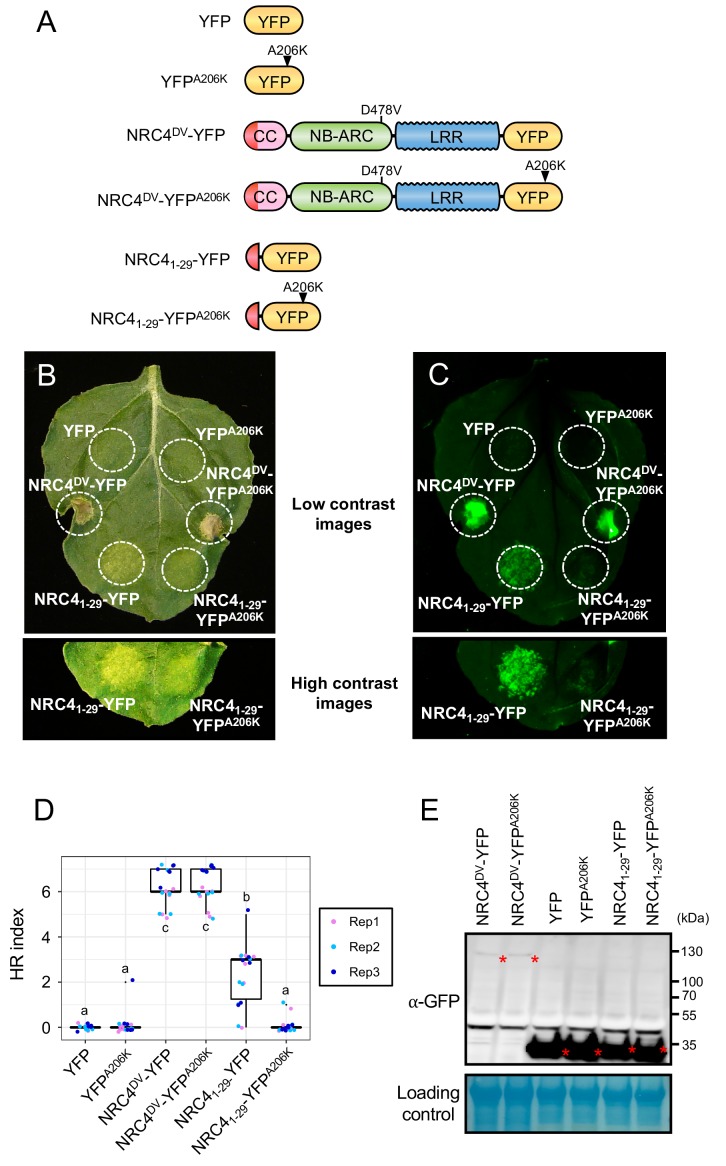
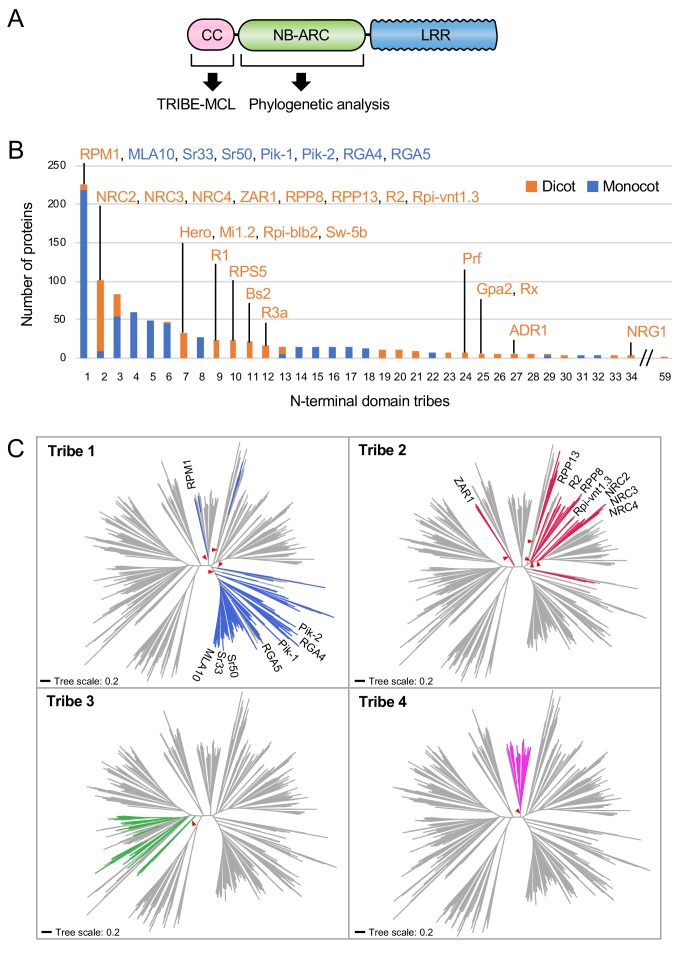
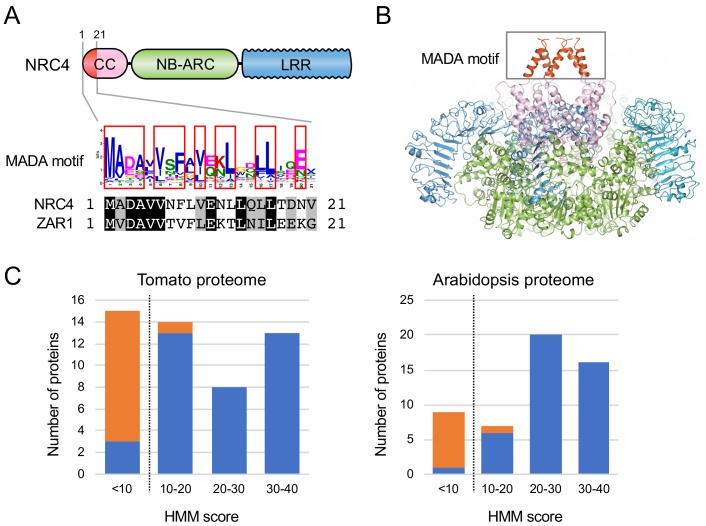
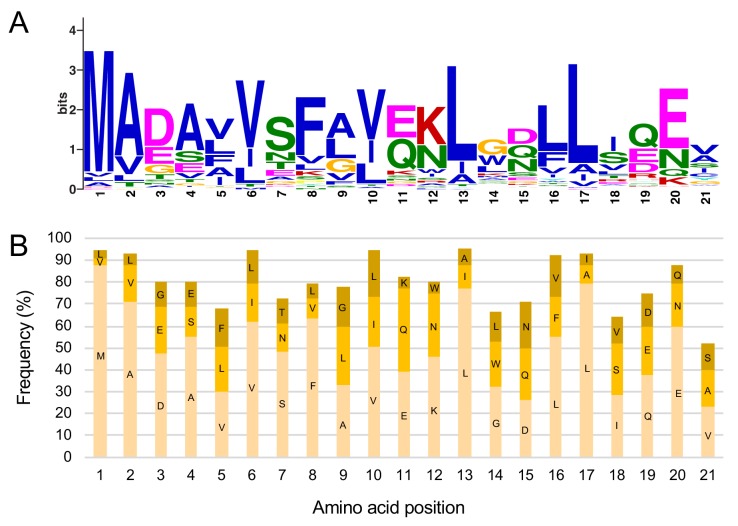
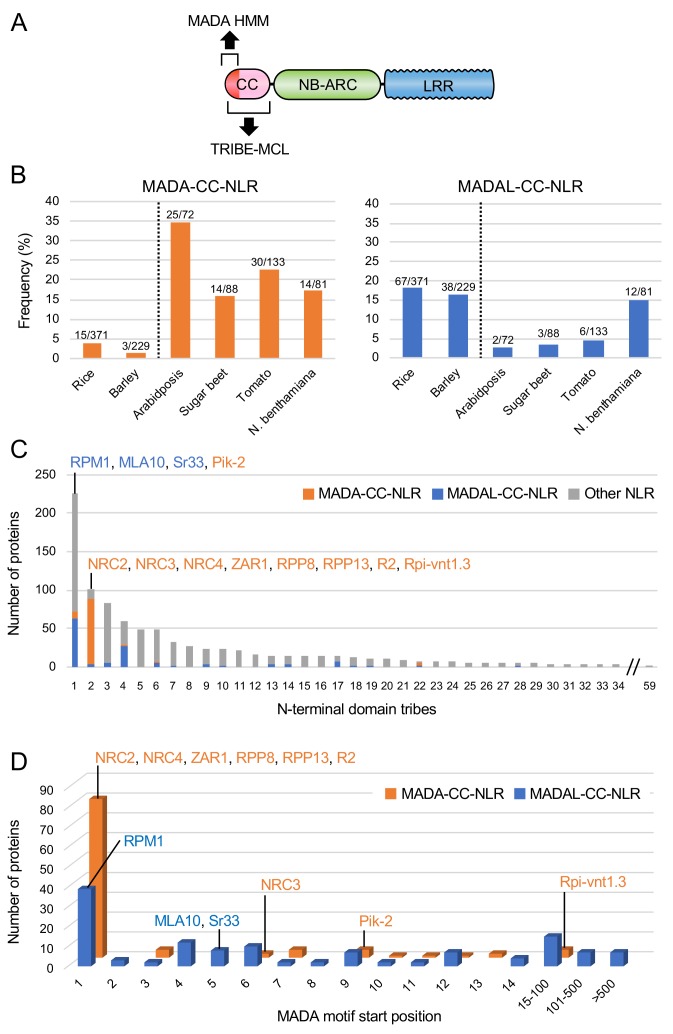
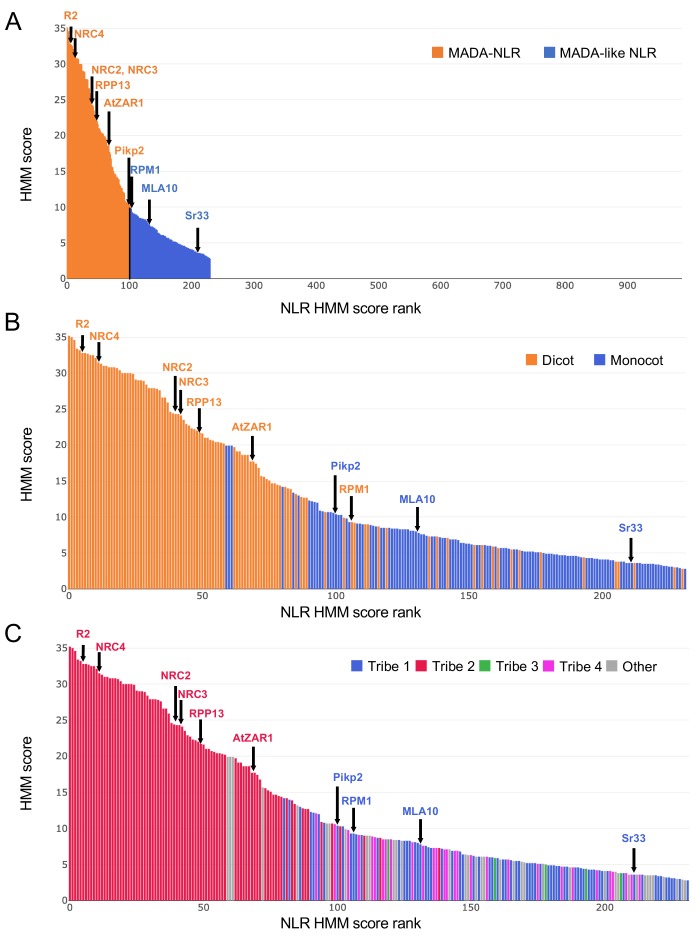
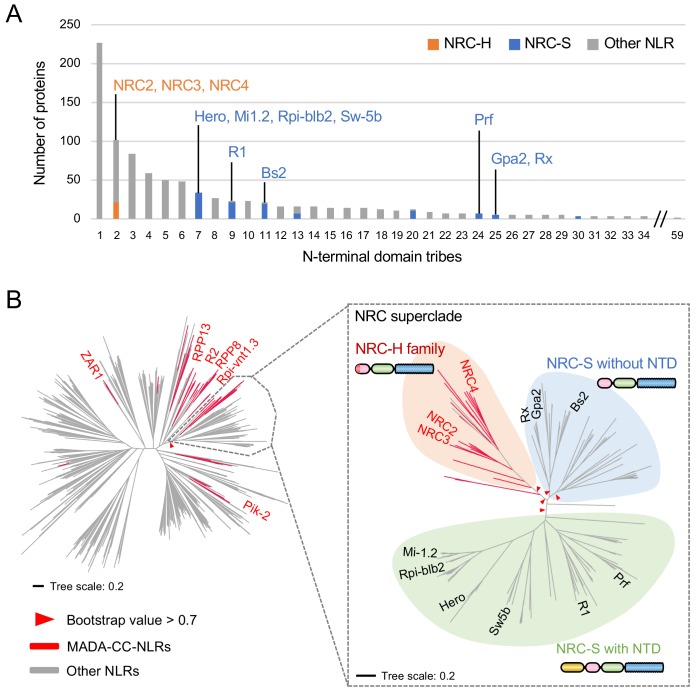
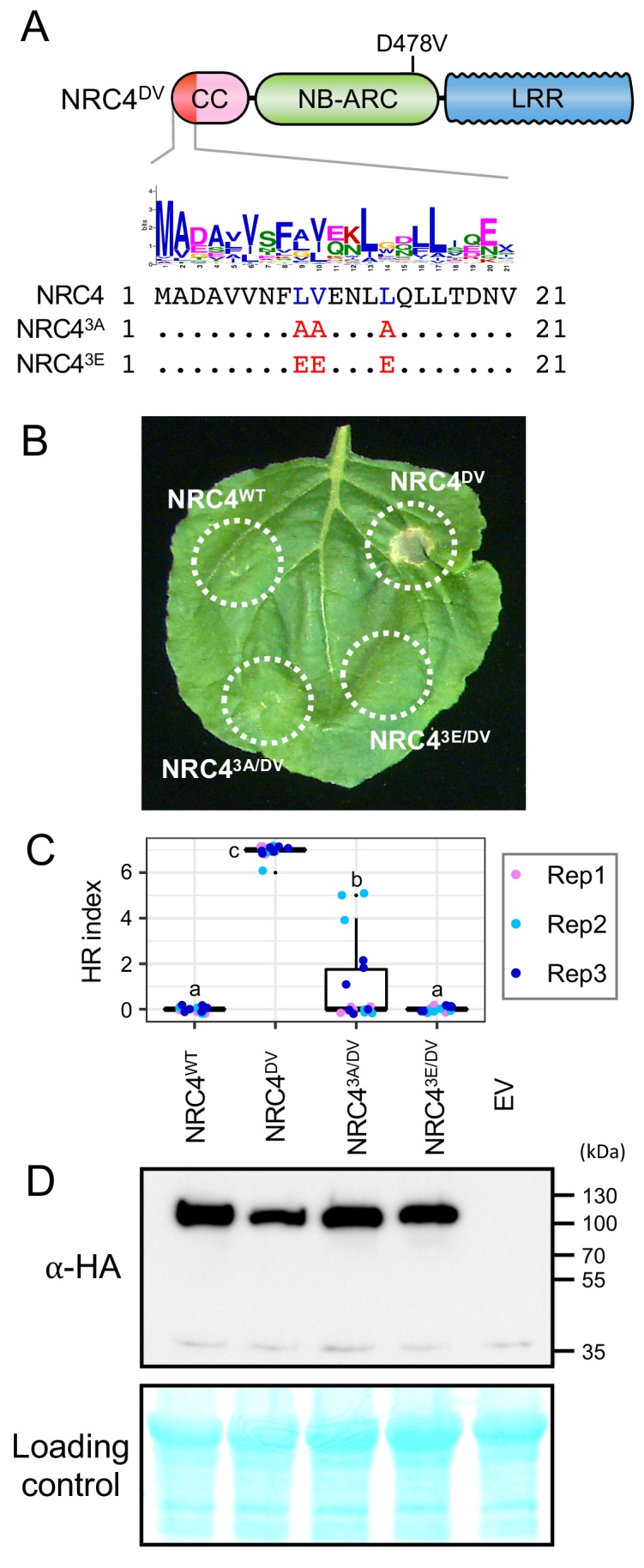
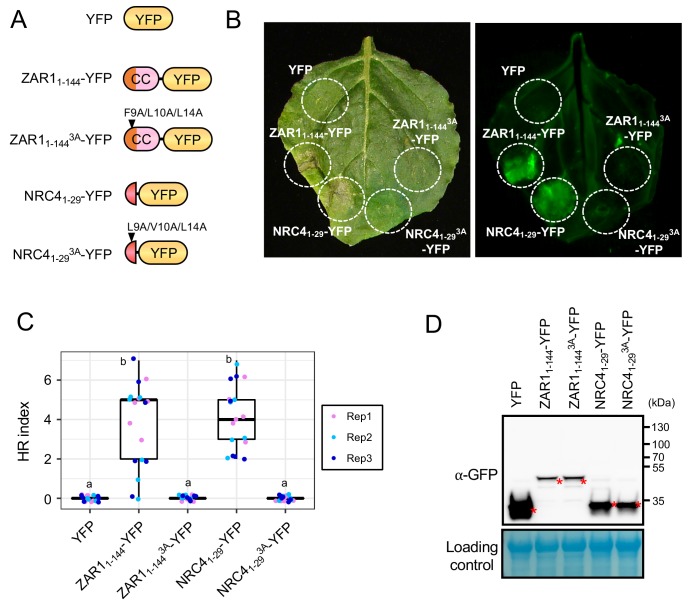
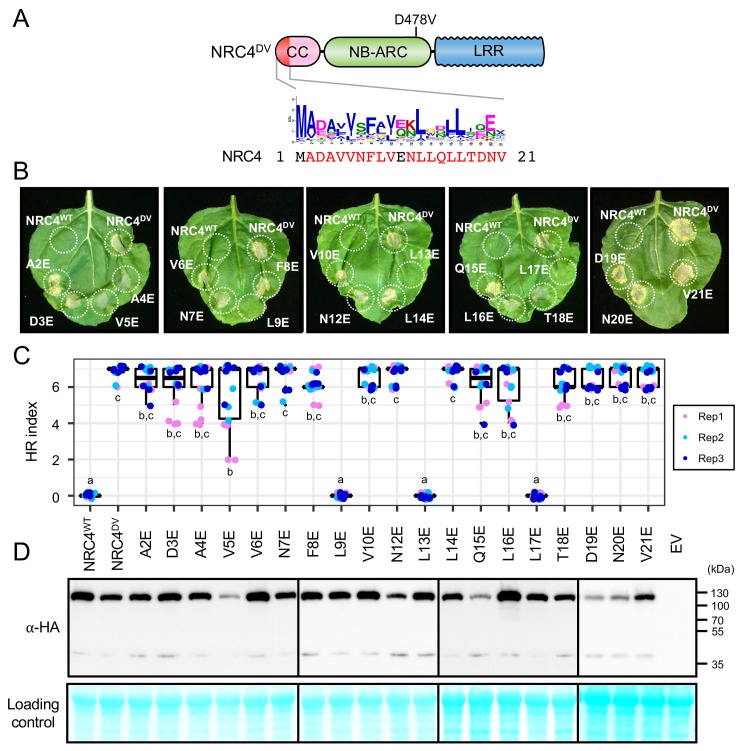
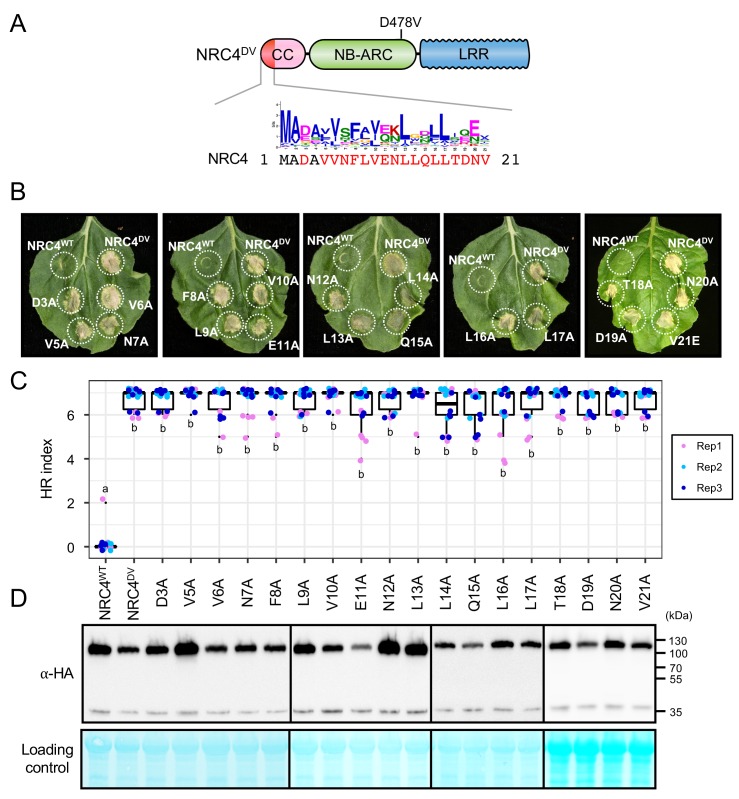
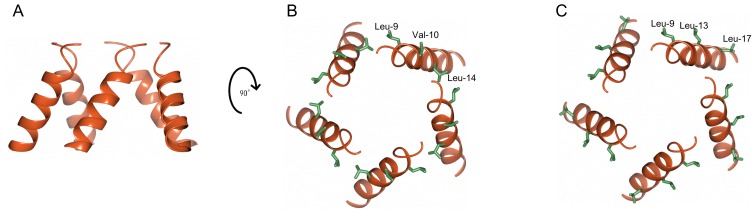
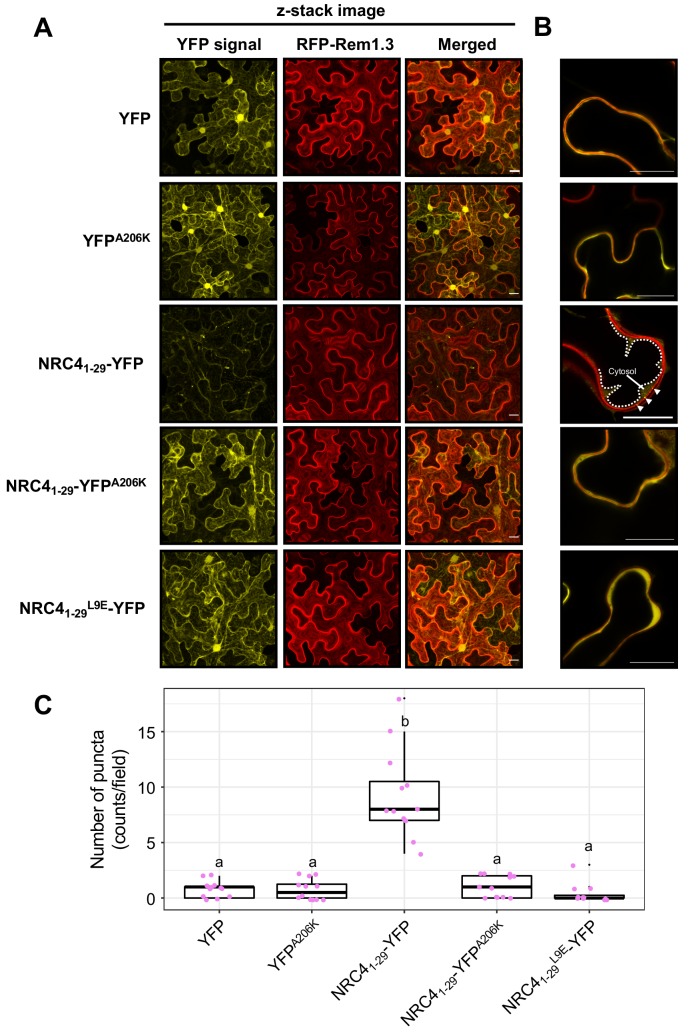
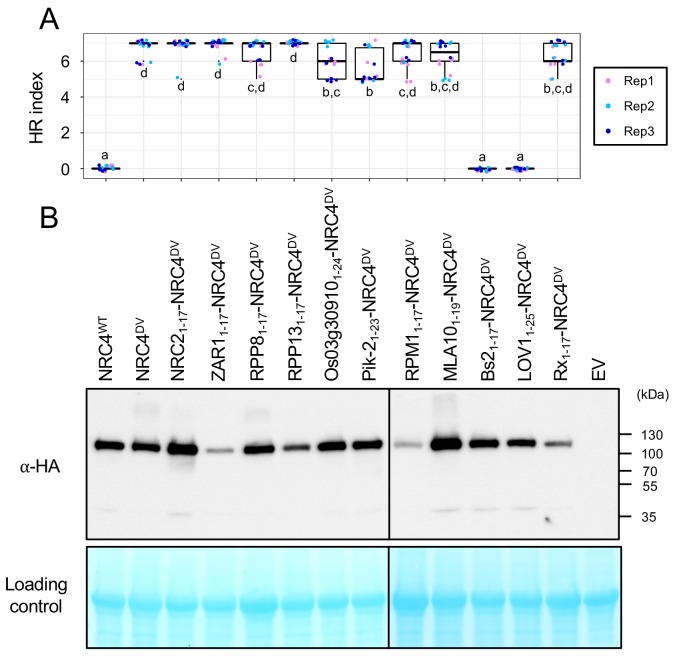
The molecular codes underpinning the functions of plant NLR immune receptors are poorly understood. We used in vitro Mu transposition to generate a random truncation library and identify the minimal functional region of NLRs. We applied this method to NRC4-a helper NLR that functions with multiple sensor NLRs within a Solanaceae receptor network. This revealed that the NRC4 N-terminal 29 amino acids are sufficient to induce hypersensitive cell death. This region is defined by the consensus MADAxVSFxVxKLxxLLxxEx (MADA motif) that is conserved at the N-termini of NRC family proteins and ~20% of coiled-coil (CC)-type plant NLRs. The MADA motif matches the N-terminal α1 helix of Arabidopsis NLR protein ZAR1, which undergoes a conformational switch during resistosome activation. Immunoassays revealed that the MADA motif is functionally conserved across NLRs from distantly related plant species. NRC-dependent sensor NLRs lack MADA sequences indicating that this motif has degenerated in sensor NLRs over evolutionary time.

摘要

植物 NLR 免疫受体功能的分子密码知之甚少。我们使用体外 Mu 转座生成随机截断文库,并鉴定 NLR 的最小功能区域。我们将这种方法应用于 NRC4——一种与茄科受体网络中的多个传感器 NLR 一起发挥作用的辅助 NLR。这表明 NRC4 的 N 端 29 个氨基酸足以诱导过敏细胞死亡。该区域由保守的 NRC 家族蛋白和~20%的卷曲螺旋 (CC)-型植物 NLR 的 N 末端的共有 MADAxVSFxVxKLxxLLxxEx (MADA 基序) 定义。MADA 基序与拟南芥 NLR 蛋白 ZAR1 的 N 端α1 螺旋匹配,该螺旋在抵抗体激活过程中发生构象转变。免疫测定显示,MADA 基序在来自不同植物物种的 NLR 中具有功能保守性。依赖 NRC 的传感器 NLR 缺乏 MADA 序列,表明该基序在进化过程中已经在传感器 NLR 中退化。

https://cdn.ncbi.nlm.nih.gov/pmc/blobs/0934/6944444/7ad054d2de3c/elife-49956-fig12.jpg
https://cdn.ncbi.nlm.nih.gov/pmc/blobs/0934/6944444/d94b28b12b87/elife-49956-fig1.jpg
https://cdn.ncbi.nlm.nih.gov/pmc/blobs/0934/6944444/3f3c5bb7de13/elife-49956-fig1-figsupp1.jpg
https://cdn.ncbi.nlm.nih.gov/pmc/blobs/0934/6944444/a8eb1309cf50/elife-49956-fig2.jpg
https://cdn.ncbi.nlm.nih.gov/pmc/blobs/0934/6944444/ae1de31fc243/elife-49956-fig2-figsupp1.jpg
https://cdn.ncbi.nlm.nih.gov/pmc/blobs/0934/6944444/243c583589b4/elife-49956-fig2-figsupp2.jpg
https://cdn.ncbi.nlm.nih.gov/pmc/blobs/0934/6944444/ce0259727077/elife-49956-fig3.jpg
https://cdn.ncbi.nlm.nih.gov/pmc/blobs/0934/6944444/c76b9fd0785a/elife-49956-fig3-figsupp1.jpg
https://cdn.ncbi.nlm.nih.gov/pmc/blobs/0934/6944444/be56eeda1cf6/elife-49956-fig3-figsupp2.jpg
https://cdn.ncbi.nlm.nih.gov/pmc/blobs/0934/6944444/f667369b46b3/elife-49956-fig4.jpg
https://cdn.ncbi.nlm.nih.gov/pmc/blobs/0934/6944444/a0e039f1d9fc/elife-49956-fig4-figsupp1.jpg
https://cdn.ncbi.nlm.nih.gov/pmc/blobs/0934/6944444/eb6e64a55479/elife-49956-fig4-figsupp2.jpg
https://cdn.ncbi.nlm.nih.gov/pmc/blobs/0934/6944444/c52aed7d17e9/elife-49956-fig5.jpg
https://cdn.ncbi.nlm.nih.gov/pmc/blobs/0934/6944444/bcdd7308be4f/elife-49956-fig5-figsupp1.jpg
https://cdn.ncbi.nlm.nih.gov/pmc/blobs/0934/6944444/f7b95f607bd7/elife-49956-fig6.jpg
https://cdn.ncbi.nlm.nih.gov/pmc/blobs/0934/6944444/c1ef995d7282/elife-49956-fig7.jpg
https://cdn.ncbi.nlm.nih.gov/pmc/blobs/0934/6944444/80fa4e08a694/elife-49956-fig7-figsupp1.jpg
https://cdn.ncbi.nlm.nih.gov/pmc/blobs/0934/6944444/e4d69db2f212/elife-49956-fig8.jpg
https://cdn.ncbi.nlm.nih.gov/pmc/blobs/0934/6944444/40e67ac5f679/elife-49956-fig8-figsupp1.jpg
https://cdn.ncbi.nlm.nih.gov/pmc/blobs/0934/6944444/f6710620554b/elife-49956-fig8-figsupp2.jpg
https://cdn.ncbi.nlm.nih.gov/pmc/blobs/0934/6944444/36aaea1480a7/elife-49956-fig9.jpg
https://cdn.ncbi.nlm.nih.gov/pmc/blobs/0934/6944444/3ba258e1b852/elife-49956-fig10.jpg
https://cdn.ncbi.nlm.nih.gov/pmc/blobs/0934/6944444/79104be38715/elife-49956-fig10-figsupp1.jpg
https://cdn.ncbi.nlm.nih.gov/pmc/blobs/0934/6944444/6760314cee12/elife-49956-fig11.jpg
https://cdn.ncbi.nlm.nih.gov/pmc/blobs/0934/6944444/7ad054d2de3c/elife-49956-fig12.jpg
https://cdn.ncbi.nlm.nih.gov/pmc/blobs/0934/6944444/d94b28b12b87/elife-49956-fig1.jpg
https://cdn.ncbi.nlm.nih.gov/pmc/blobs/0934/6944444/3f3c5bb7de13/elife-49956-fig1-figsupp1.jpg
https://cdn.ncbi.nlm.nih.gov/pmc/blobs/0934/6944444/a8eb1309cf50/elife-49956-fig2.jpg
https://cdn.ncbi.nlm.nih.gov/pmc/blobs/0934/6944444/ae1de31fc243/elife-49956-fig2-figsupp1.jpg
https://cdn.ncbi.nlm.nih.gov/pmc/blobs/0934/6944444/243c583589b4/elife-49956-fig2-figsupp2.jpg
https://cdn.ncbi.nlm.nih.gov/pmc/blobs/0934/6944444/ce0259727077/elife-49956-fig3.jpg
https://cdn.ncbi.nlm.nih.gov/pmc/blobs/0934/6944444/c76b9fd0785a/elife-49956-fig3-figsupp1.jpg
https://cdn.ncbi.nlm.nih.gov/pmc/blobs/0934/6944444/be56eeda1cf6/elife-49956-fig3-figsupp2.jpg
https://cdn.ncbi.nlm.nih.gov/pmc/blobs/0934/6944444/f667369b46b3/elife-49956-fig4.jpg
https://cdn.ncbi.nlm.nih.gov/pmc/blobs/0934/6944444/a0e039f1d9fc/elife-49956-fig4-figsupp1.jpg
https://cdn.ncbi.nlm.nih.gov/pmc/blobs/0934/6944444/eb6e64a55479/elife-49956-fig4-figsupp2.jpg
https://cdn.ncbi.nlm.nih.gov/pmc/blobs/0934/6944444/c52aed7d17e9/elife-49956-fig5.jpg
https://cdn.ncbi.nlm.nih.gov/pmc/blobs/0934/6944444/bcdd7308be4f/elife-49956-fig5-figsupp1.jpg
https://cdn.ncbi.nlm.nih.gov/pmc/blobs/0934/6944444/f7b95f607bd7/elife-49956-fig6.jpg
https://cdn.ncbi.nlm.nih.gov/pmc/blobs/0934/6944444/c1ef995d7282/elife-49956-fig7.jpg
https://cdn.ncbi.nlm.nih.gov/pmc/blobs/0934/6944444/80fa4e08a694/elife-49956-fig7-figsupp1.jpg
https://cdn.ncbi.nlm.nih.gov/pmc/blobs/0934/6944444/e4d69db2f212/elife-49956-fig8.jpg
https://cdn.ncbi.nlm.nih.gov/pmc/blobs/0934/6944444/40e67ac5f679/elife-49956-fig8-figsupp1.jpg
https://cdn.ncbi.nlm.nih.gov/pmc/blobs/0934/6944444/f6710620554b/elife-49956-fig8-figsupp2.jpg
https://cdn.ncbi.nlm.nih.gov/pmc/blobs/0934/6944444/36aaea1480a7/elife-49956-fig9.jpg
https://cdn.ncbi.nlm.nih.gov/pmc/blobs/0934/6944444/3ba258e1b852/elife-49956-fig10.jpg
https://cdn.ncbi.nlm.nih.gov/pmc/blobs/0934/6944444/79104be38715/elife-49956-fig10-figsupp1.jpg
https://cdn.ncbi.nlm.nih.gov/pmc/blobs/0934/6944444/6760314cee12/elife-49956-fig11.jpg
https://cdn.ncbi.nlm.nih.gov/pmc/blobs/0934/6944444/7ad054d2de3c/elife-49956-fig12.jpg

相似文献

1
An N-terminal motif in NLR immune receptors is functionally conserved across distantly related plant species.NLR 免疫受体中的 N 端基序在亲缘关系较远的植物物种中具有功能保守性。
Elife. 2019 Nov 27;8:e49956. doi: 10.7554/eLife.49956.
2
Dynamic localization of a helper NLR at the plant-pathogen interface underpins pathogen recognition.一种辅助性NLR在植物-病原体界面的动态定位是病原体识别的基础。
Proc Natl Acad Sci U S A. 2021 Aug 24;118(34). doi: 10.1073/pnas.2104997118.
3
The nucleotide-binding domain of NRC-dependent disease resistance proteins is sufficient to activate downstream helper NLR oligomerization and immune signaling.NRC 依赖性疾病抗性蛋白的核苷酸结合域足以激活下游辅助 NLR 寡聚化和免疫信号。
New Phytol. 2024 Jul;243(1):345-361. doi: 10.1111/nph.19818. Epub 2024 May 17.
4
The helper NLR immune protein NRC3 mediates the hypersensitive cell death caused by the cell-surface receptor Cf-4.辅助 NLR 免疫蛋白 NRC3 介导由细胞表面受体 Cf-4 引起的超敏细胞死亡。
PLoS Genet. 2022 Sep 22;18(9):e1010414. doi: 10.1371/journal.pgen.1010414. eCollection 2022 Sep.
5
The N-terminal domains of NLR immune receptors exhibit structural and functional similarities across divergent plant lineages.NLR 免疫受体的 N 端结构域在不同的植物谱系中表现出结构和功能的相似性。
Plant Cell. 2024 Jul 2;36(7):2491-2511. doi: 10.1093/plcell/koae113.
6
A vector system for fast-forward studies of the HOPZ-ACTIVATED RESISTANCE1 (ZAR1) resistosome in the model plant Nicotiana benthamiana.一种用于在模式植物本氏烟中快速研究 HOPZ-ACTIVATED RESISTANCE1(ZAR1)抗性体的载体系统。
Plant Physiol. 2022 Jan 20;188(1):70-80. doi: 10.1093/plphys/kiab471.
7
Genome-wide functional analysis of hot pepper immune receptors reveals an autonomous NLR clade in seed plants.基因组范围内对辣椒免疫受体的功能分析揭示了种子植物中一个自主的 NLR 分支。
New Phytol. 2021 Jan;229(1):532-547. doi: 10.1111/nph.16878. Epub 2020 Nov 16.
8
The Plant "Resistosome": Structural Insights into Immune Signaling.植物“抵抗体”:免疫信号转导的结构见解。
Cell Host Microbe. 2019 Aug 14;26(2):193-201. doi: 10.1016/j.chom.2019.07.020.
9
A wheat resistosome defines common principles of immune receptor channels.小麦抗病体定义了免疫受体通道的共同原则。
Nature. 2022 Oct;610(7932):532-539. doi: 10.1038/s41586-022-05231-w. Epub 2022 Sep 26.
10
Substrate-induced condensation activates plant TIR domain proteins.底物诱导的凝聚激活植物的 TIR 结构域蛋白。
Nature. 2024 Mar;627(8005):847-853. doi: 10.1038/s41586-024-07183-9. Epub 2024 Mar 13.

引用本文的文献

1
Can AI modeling of protein structures distinguish between sensor and helper NLR immune receptors?蛋白质结构的人工智能建模能否区分传感和辅助NLR免疫受体?
New Phytol. 2025 Oct;248(1):17-23. doi: 10.1111/nph.70391. Epub 2025 Jul 15.
2
Characterization of an amyloid-based antiphage defence system in Escherichia coli.大肠杆菌中基于淀粉样蛋白的抗噬菌体防御系统的表征
Nat Microbiol. 2025 Aug 14. doi: 10.1038/s41564-025-02074-9.
3
Remodelling autoactive NLRs for broad-spectrum immunity in plants.改造植物中用于广谱免疫的自身激活NLRs

本文引用的文献

1
Discovery of a Family of Mixed Lineage Kinase Domain-like Proteins in Plants and Their Role in Innate Immune Signaling.植物中混合谱系激酶结构域样蛋白家族的发现及其在先天免疫信号转导中的作用。
Cell Host Microbe. 2020 Dec 9;28(6):813-824.e6. doi: 10.1016/j.chom.2020.08.012. Epub 2020 Oct 13.
2
Atypical Resistance Protein RPW8/HR Triggers Oligomerization of the NLR Immune Receptor RPP7 and Autoimmunity.非典型抗性蛋白 RPW8/HR 触发 NLR 免疫受体 RPP7 的寡聚化和自身免疫。
Cell Host Microbe. 2020 Mar 11;27(3):405-417.e6. doi: 10.1016/j.chom.2020.01.012. Epub 2020 Feb 25.
3
RPW8/HR repeats control NLR activation in Arabidopsis thaliana.
Nature. 2025 Jul 16. doi: 10.1038/s41586-025-09252-z.
4
Aphid effectors suppress plant immunity via recruiting defense proteins to processing bodies.蚜虫效应子通过将防御蛋白招募到加工小体来抑制植物免疫。
Sci Adv. 2025 Jul 18;11(29):eadv1447. doi: 10.1126/sciadv.adv1447. Epub 2025 Jul 16.
5
A root-specific NLR network mediates immune signaling of resistance genes against plant parasitic nematodes.一个根特异性NLR网络介导抗性基因针对植物寄生线虫的免疫信号传导。
Plant Cell. 2025 Jul 1;37(7). doi: 10.1093/plcell/koaf145.
6
Solanum bulbocastanum nucleotide-binding leucine-rich repeat receptor evolution reveals functional variants and critical residues in Rpi-blb1/RB.马铃薯核苷酸结合富含亮氨酸重复序列受体的进化揭示了Rpi-blb1/RB中的功能变体和关键残基。
J Integr Plant Biol. 2025 Sep;67(9):2491-2509. doi: 10.1111/jipb.13950. Epub 2025 Jun 17.
7
Biochemical and transcriptomic profiling analysis of drought tolerant related genes in ML 82-2 and ML 125-2 rice mutant lines.ML 82-2和ML 125-2水稻突变系中耐旱相关基因的生化和转录组分析
BioTechnologia (Pozn). 2025 Mar 31;106(1):13-30. doi: 10.5114/bta/200704. eCollection 2025.
8
Helper NLR immune protein NRC3 evolved to evade inhibition by a cyst nematode virulence effector.辅助性NLR免疫蛋白NRC3进化出逃避胞囊线虫毒力效应因子抑制的能力。
PLoS Genet. 2025 Apr 9;21(4):e1011653. doi: 10.1371/journal.pgen.1011653. eCollection 2025 Apr.
9
Gpa2 detects the potato cyst nematode effector GpRBP-1 in the cytoplasm but requires a balanced nucleocytoplasmic distribution to trigger cell death.Gpa2在细胞质中检测马铃薯胞囊线虫效应蛋白GpRBP-1,但需要平衡的核质分布来触发细胞死亡。
J Exp Bot. 2025 Aug 21;76(12):3560-3576. doi: 10.1093/jxb/eraf143.
10
Resistify: A Novel NLR Classifier That Reveals Helitron-Associated NLR Expansion in Solanaceae.Resistify:一种揭示茄科中与转座子相关的NLR基因家族扩张的新型NLR分类器。
Bioinform Biol Insights. 2025 Jan 22;19:11779322241308944. doi: 10.1177/11779322241308944. eCollection 2025.
RPW8/HR 重复序列控制拟南芥中 NLR 的激活。
PLoS Genet. 2019 Jul 25;15(7):e1008313. doi: 10.1371/journal.pgen.1008313. eCollection 2019 Jul.
4
Subsets of NLR genes show differential signatures of adaptation during colonization of new habitats.NLR 基因的亚组在新栖息地的殖民过程中表现出不同的适应特征。
New Phytol. 2019 Oct;224(1):367-379. doi: 10.1111/nph.16017. Epub 2019 Aug 8.
5
NLR singletons, pairs, and networks: evolution, assembly, and regulation of the intracellular immunoreceptor circuitry of plants. NLR 单体、对和网络:植物细胞内免疫受体电路的进化、组装和调控。
Curr Opin Plant Biol. 2019 Aug;50:121-131. doi: 10.1016/j.pbi.2019.04.007. Epub 2019 May 30.
6
Help wanted: helper NLRs and plant immune responses.招聘:帮助 NLRs 和植物免疫反应。
Curr Opin Plant Biol. 2019 Aug;50:82-94. doi: 10.1016/j.pbi.2019.03.013. Epub 2019 May 4.
7
A resistosome-activated 'death switch'.一种抵抗体激活的“死亡开关”。
Nat Plants. 2019 May;5(5):457-458. doi: 10.1038/s41477-019-0425-9.
8
Reconstitution and structure of a plant NLR resistosome conferring immunity.植物 NLR 抗病体的重建与结构赋予免疫性。
Science. 2019 Apr 5;364(6435). doi: 10.1126/science.aav5870.
9
Ligand-triggered allosteric ADP release primes a plant NLR complex.配体触发的别构 ADP 释放使植物 NLR 复合物处于预备状态。
Science. 2019 Apr 5;364(6435). doi: 10.1126/science.aav5868.
10
A Plant Immune Receptor Adopts a Two-Step Recognition Mechanism to Enhance Viral Effector Perception.一种植物免疫受体采用两步识别机制增强病毒效应子的感知。
Mol Plant. 2019 Feb 4;12(2):248-262. doi: 10.1016/j.molp.2019.01.005. Epub 2019 Jan 11.