Department of Children and Adolescents, Pediatric Surgery and Orthopedics, Oulu University Hospital, Medical Research Centre Oulu and PEDEGO Research Group, Oulu University, PoB 23, 90029 OYS, Oulu, Finland.
BMC Musculoskelet Disord. 2019 Nov 27;20(1):571. doi: 10.1186/s12891-019-2948-7.
Proximal humerus fractures comprise approximately 2% of all pediatric fractures. In general, upper extremity fractures have increased in children. However, recent trends of proximal humerus fractures are not analyzed yet. The aim was to study the incidence and treatment trends of proximal humerus fractures in children.
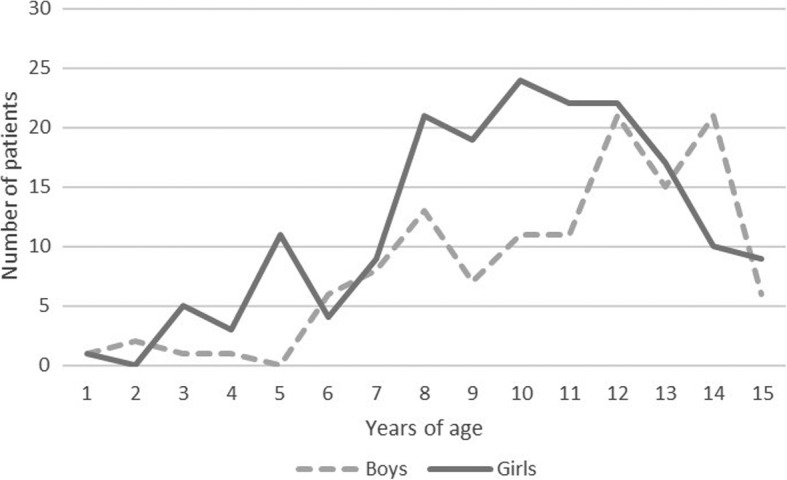
All 300 children, aged < 16 years, who suffered from a proximal humerus fracture in the catchment area of Oulu University Hospital, Finland, between 2005 and 2015, were included. Radiographs were reviewed, and patients, injuries, treatments, and outcomes were comprehensively studied. Annual incidence was based on the child population at risk, which changed between 84.500 and 88.100 in the study time.
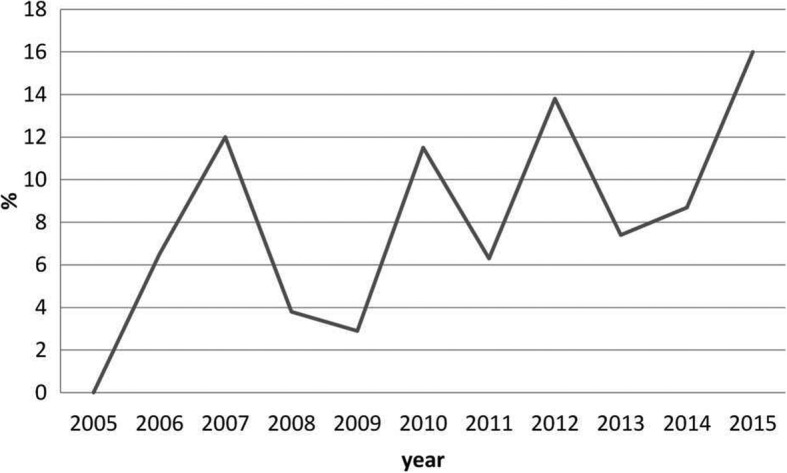
The annual incidence of childhood proximal humerus fractures was mean 31.4/100,000 and no variation trend was found. The majority (92%) was treated nonoperatively, however, there was an increase of operative fixation from 0 to 16% during the study time (Difference 16, 95% CI 0.3 to 34.9%, P = 0.045). Bayonet displacement increased the risk of surgical fixation up to 16-fold (95% CI 4.8-51.4, P < 0.001) in a multivariate analysis when adjusted with other potential risk factors. Higher age was also associated with operative treatment (P = 0.002). The most usual recreational activities were horse riding, downhill skiing, snowboarding, and trampolining.
Contrary to most upper extremity fractures in children, proximal humerus fractures did not increase during the long study period. However, their operative treatment increased compared to nonoperative treatment, but the evidence supporting that trend remains unclear.
肱骨近端骨折约占所有儿童骨折的 2%。一般来说,儿童上肢骨折的发生率有所增加。然而,目前尚未对肱骨近端骨折的趋势进行分析。本研究旨在探讨儿童肱骨近端骨折的发病率和治疗趋势。
纳入了芬兰奥卢大学医院收治的 2005 年至 2015 年间,年龄<16 岁的 300 例肱骨近端骨折患儿。对其进行 X 线检查,并对患儿、损伤、治疗和结局进行了全面研究。发病率是基于研究期间风险儿童人口(84500 至 88100 人)计算得出的。
儿童肱骨近端骨折的年发病率为 31.4/100000,未发现趋势变化。92%的患儿采用非手术治疗,但在研究期间,手术固定的比例从 0 增加到 16%(差异 16,95%CI 0.3 至 34.9%,P=0.045)。多变量分析显示,当调整其他潜在危险因素后,刺刀样移位使手术固定的风险增加了 16 倍(95%CI 4.8 至 51.4,P<0.001)。较高的年龄也与手术治疗相关(P=0.002)。最常见的娱乐活动是骑马、下坡滑雪、单板滑雪和蹦床。
与大多数儿童上肢骨折不同,肱骨近端骨折在长时间的研究期间并未增加。然而,与非手术治疗相比,手术治疗的比例有所增加,但支持这一趋势的证据尚不清楚。