Amsterdam UMC, Vrije Universiteit Amsterdam, Department of Molecular Cell Biology and Immunology, MS Center Amsterdam, Amsterdam Neuroscience, Amsterdam, the Netherlands.
Center for Experimental Therapeutics and Reperfusion Injury, Department of Anesthesiology, Perioperative and Pain Medicine, Brigham and Women's Hospital and Harvard Medical School, Boston, MA, USA.
Haematologica. 2020 Aug;105(8):2056-2070. doi: 10.3324/haematol.2019.219519. Epub 2019 Nov 28.
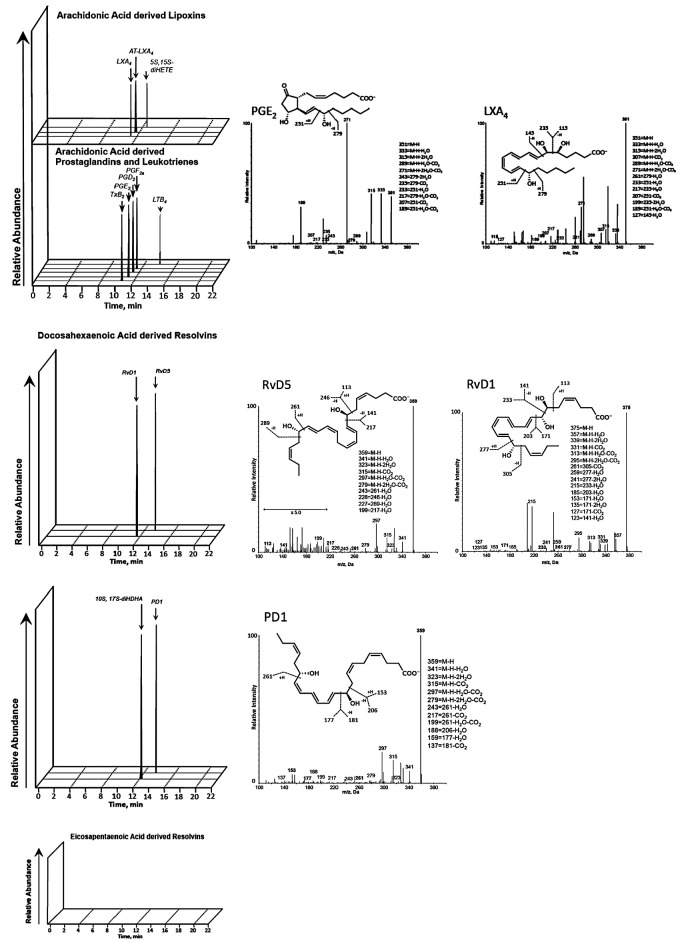
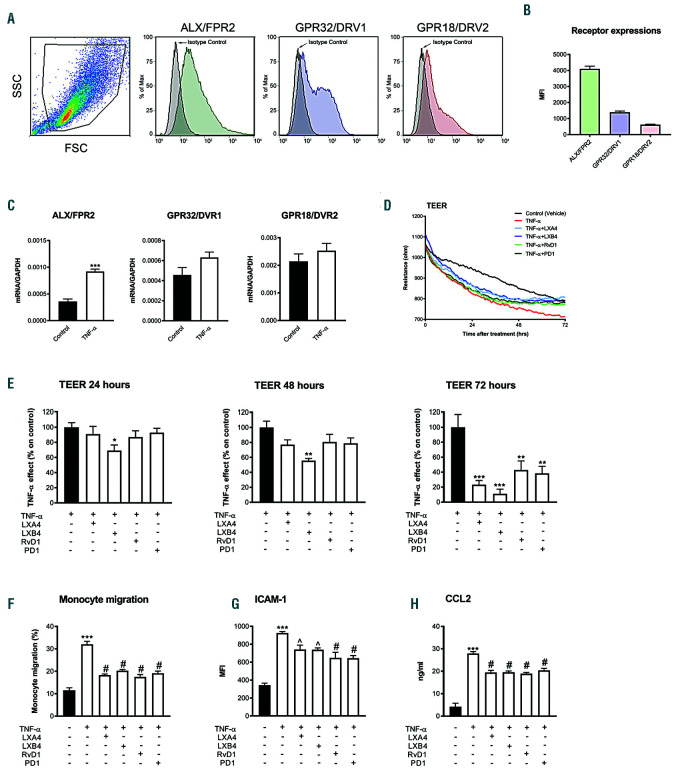
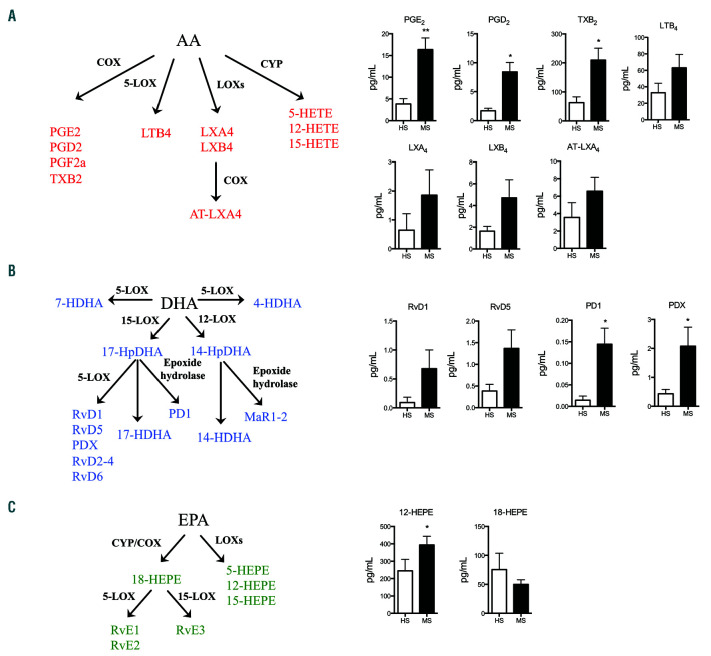
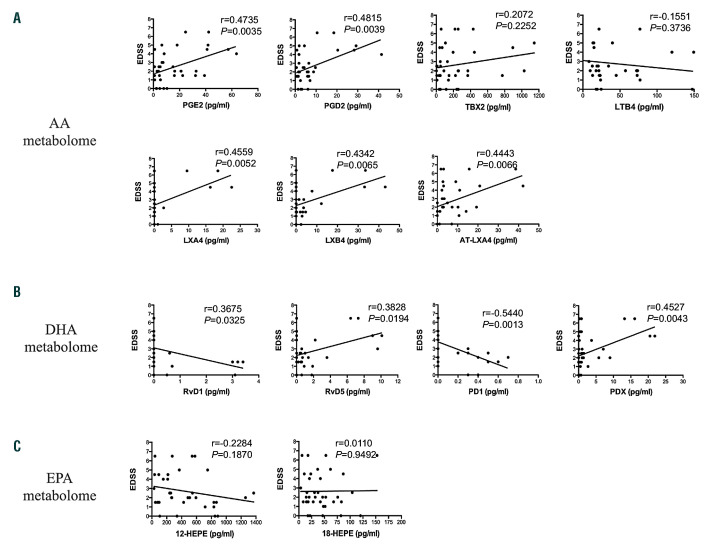
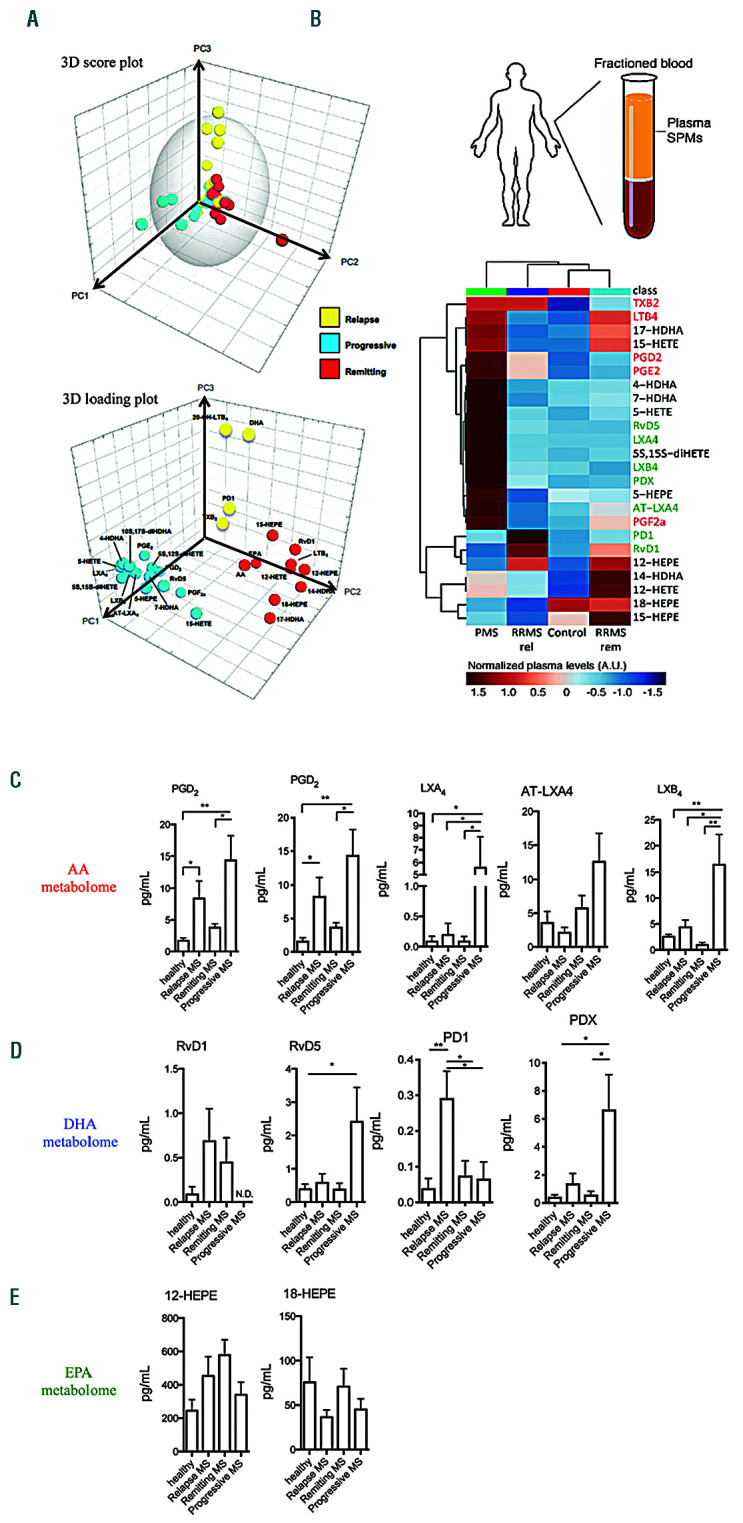
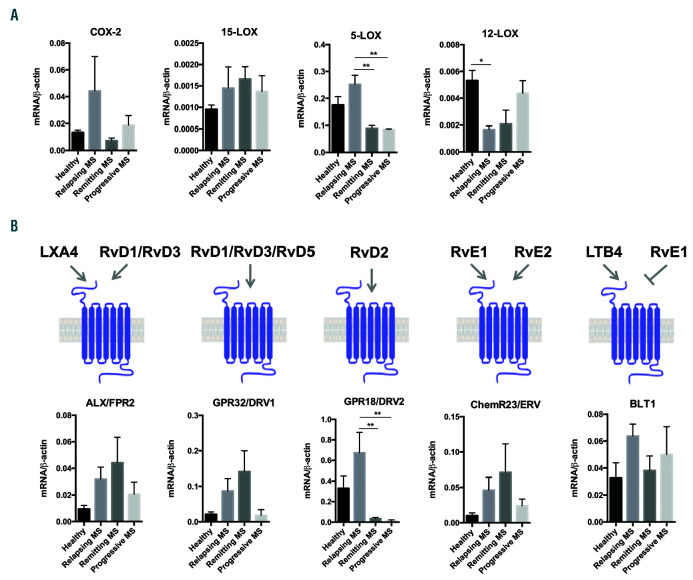
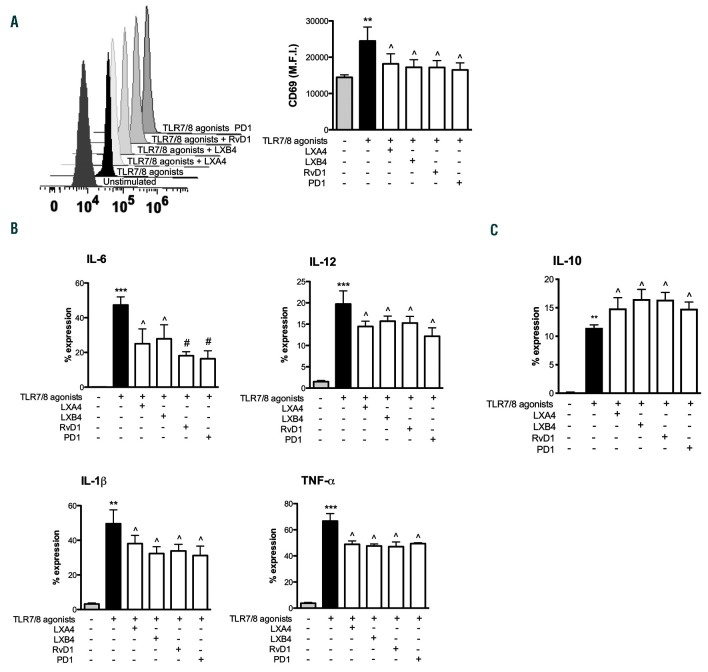
Chronic inflammation is a key pathological hallmark of multiple sclerosis (MS) and suggests that resolution of inflammation, orchestrated by specialized pro-resolving lipid mediators (LM), is impaired. Here, through targeted-metabololipidomics in peripheral blood of patients with MS, we revealed that each disease form was associated with distinct LM profiles that significantly correlated with disease severity. In particular, relapsing and progressive MS patients were associated with high eicosanoids levels, whereas the majority of pro-resolving LM were significantly reduced or below limits of detection and correlated with disease progression. Furthermore, we found impaired expression of several pro-resolving LM biosynthetic enzymes and receptors in blood-derived leukocytes of MS patients. Mechanistically, differentially expressed mediators like LXA, LXB, RvD1 and PD1 reduced MS-derived monocyte activation and cytokine production, and inhibited inflammation-induced blood-brain barrier dysfunction and monocyte transendothelial migration. Altogether, these findings reveal peripheral defects in the resolution pathway in MS, suggesting pro-resolving LM as novel diagnostic biomarkers and potentially safe therapeutics.
慢性炎症是多发性硬化症(MS)的一个关键病理标志,表明炎症的消退,由专门的促解决脂质介质(LM)协调,受损。在这里,通过对 MS 患者外周血中的靶向代谢脂质组学分析,我们揭示了每种疾病形式都与独特的 LM 谱相关,这些谱与疾病严重程度显著相关。特别是复发缓解型和进展型 MS 患者与高花生四烯酸水平相关,而大多数促解决 LM 则显著降低或低于检测限,并与疾病进展相关。此外,我们发现 MS 患者血液衍生白细胞中几种促解决 LM 生物合成酶和受体的表达受损。从机制上讲,差异表达的介质,如 LXA、LXB、RvD1 和 PD1,可降低 MS 来源的单核细胞的激活和细胞因子的产生,并抑制炎症诱导的血脑屏障功能障碍和单核细胞跨内皮迁移。总的来说,这些发现揭示了 MS 中解决途径的外周缺陷,表明促解决 LM 是新型诊断生物标志物和潜在的安全治疗药物。