Yoest Katie E, Cummings Jennifer A, Becker Jill B
Department of Psychology, College of Literature, Science, and the Arts, University of Michigan, Ann Arbor, MI, United States.
Department of Psychology, Michigan State University, East Lansing, MI, United States.
Front Behav Neurosci. 2019 Nov 12;13:250. doi: 10.3389/fnbeh.2019.00250. eCollection 2019.
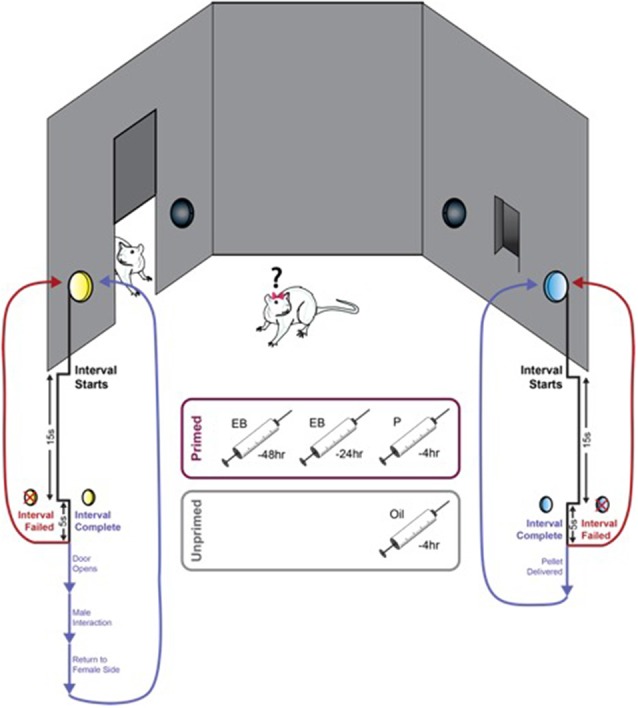
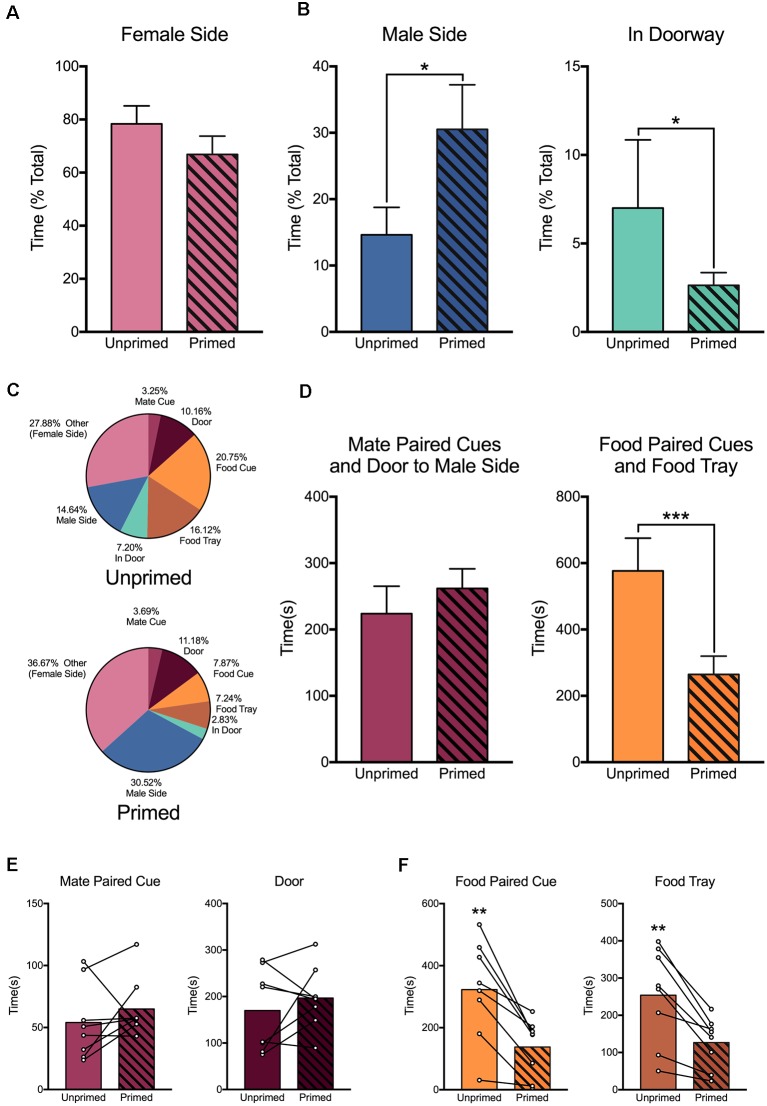
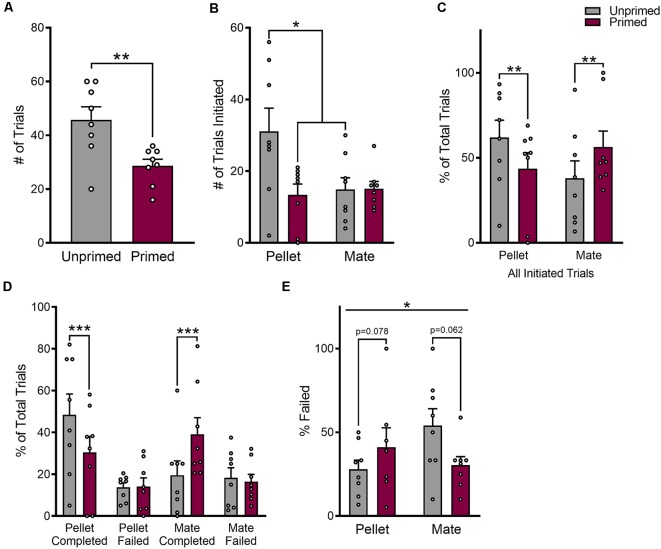
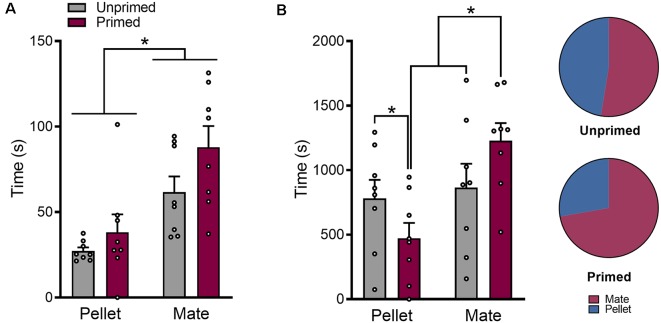
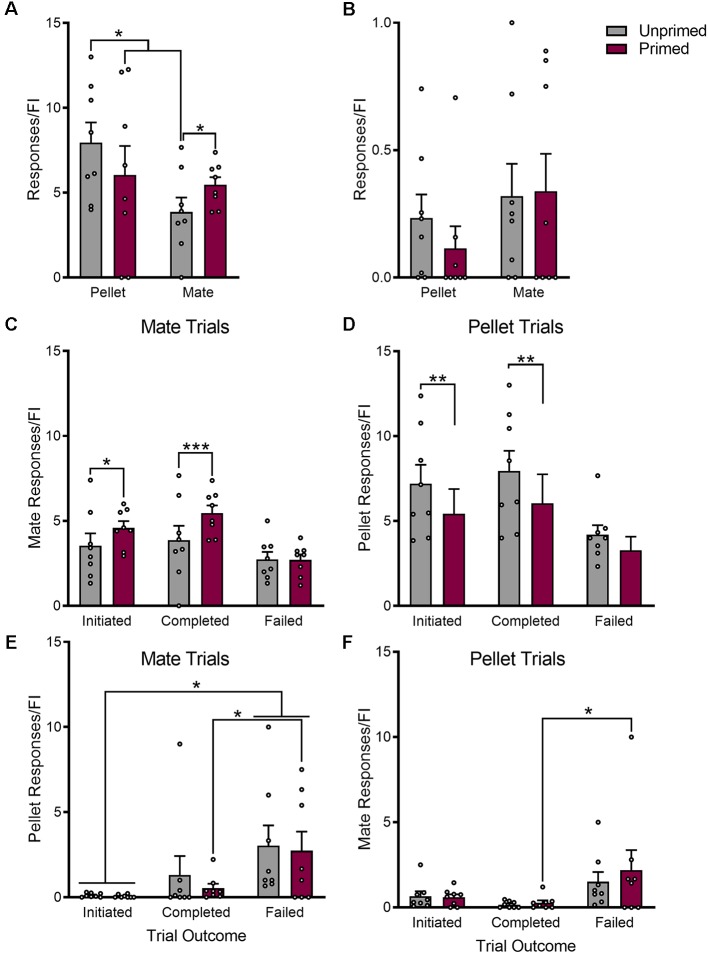
In female rodents, sexual receptivity is coordinated with cyclic changes in the release of gonadal hormones. Increases in estradiol (E) and progesterone (P) during proestrus and estrus not only induce ovulation but also modulate behaviors that increase the likelihood that the female will find a mate and reproduce. This includes changes in receptive behaviors, such as lordosis, as well as changes in appetitive or proceptive behaviors, including motivation. Interestingly, the direction of these changes in motivation is dependent on the type of reward that is being pursued. While induction of sexual receptivity by E and P increases motivation for access to a male, motivation for a palatable food reward is decreased. These concurrent changes may facilitate adaptive choice across the estrous cycle; females bias their choice for sex when fertilization is most likely to occur, but for food when copulation is unlikely to result in impregnation. In order to test this hypothesis, we developed a novel paradigm to measure the motivated choice between a palatable food reward and access to a male conspecific. Ovariectomized, hormone primed females were trained to operantly respond for both food and sex on a fixed interval (FI) schedule. After training, unprimed and primed females were tested in a chamber that allows them to choose between food and sex while still requiring responding on the FI schedule for reach reward. From this we can not only determine the impact of hormone priming on female choice for food or sex, but also how this is reflected by changes in motivation for each specific reward, as measured by the average number of responses made during each fixed interval. Induction of sexual receptivity by hormone priming biases choice toward sex over food and this change is accompanied by an increase in motivation for sex but a decrease in motivation for food. This work provides evidence in support of a novel framework for understanding how the release of ovarian hormones over the course of the estrous cycle modulates adaptive behavioral choice in females by directly assessing motivation operant responding when multiple rewards are available.
在雌性啮齿动物中,性接受能力与性腺激素释放的周期性变化相协调。发情前期和发情期雌二醇(E)和孕酮(P)的增加不仅会诱导排卵,还会调节行为,增加雌性找到配偶并繁殖的可能性。这包括接受行为的变化,如脊柱前凸,以及求偶或接受行为的变化,包括动机。有趣的是,这些动机变化的方向取决于所追求的奖励类型。虽然E和P诱导性接受能力会增加接近雄性的动机,但对美味食物奖励的动机却会降低。这些同时发生的变化可能有助于在发情周期中进行适应性选择;雌性在最有可能受精时偏向于选择性行为,但在交配不太可能导致受孕时则偏向于选择食物。为了验证这一假设,我们开发了一种新的范式来测量在美味食物奖励和接近同种雄性之间的动机选择。对卵巢切除、激素预处理的雌性进行训练,使其按照固定间隔(FI)时间表对食物和性行为进行操作性反应。训练后,对未预处理和预处理的雌性在一个实验箱中进行测试,该实验箱允许它们在食物和性行为之间进行选择,同时仍需要按照FI时间表对每种奖励做出反应。由此我们不仅可以确定激素预处理对雌性食物或性行为选择的影响,还可以确定这种影响如何通过对每种特定奖励的动机变化来体现,这种动机变化通过每个固定间隔内的平均反应次数来衡量。激素预处理诱导性接受能力会使选择偏向性行为而非食物,这种变化伴随着对性行为动机的增加和对食物动机的降低。这项工作提供了证据,支持了一个新的框架,该框架用于理解发情周期中卵巢激素的释放如何通过在有多种奖励时直接评估动机操作性反应来调节雌性的适应性行为选择。