Lallukka Tea, Hiilamo Aapo, Oakman Jodi, Mänty Minna, Pietiläinen Olli, Rahkonen Ossi, Kouvonen Anne, Halonen Jaana I
Finnish Institute of Occupational Health, Helsinki, Finland.
Department of Public Health, University of Helsinki, Helsinki, Finland.
Int Arch Occup Environ Health. 2020 May;93(4):421-432. doi: 10.1007/s00420-019-01494-5. Epub 2019 Nov 28.
We examined the associations between recurrent single- and multisite pain and incident sickness absence (SA) of different lengths and the risk of disability pension (DP).
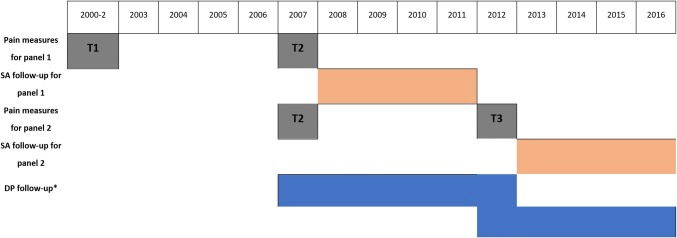
The data were derived from the Finnish Helsinki Health Study. Pain measures were recorded for panel 1 in 2000/2 and 2007, and for panel 2 in 2007 and 2012 (altogether 3191 employees). SA data were obtained from the employer's personnel register and DP events from the Finnish Centre for Pensions. Negative binomial regression models with generalized estimation equations were used to model the incidence of self-certified short- (1-3 days), and medically certified medium- (4-14 days) and long-term (more than 14 days) SA episodes. Cox regression models were fitted for the associations between pain and all-cause DP and competing risk models for DP by diagnostic groups. Social and health-related covariates were adjusted for.
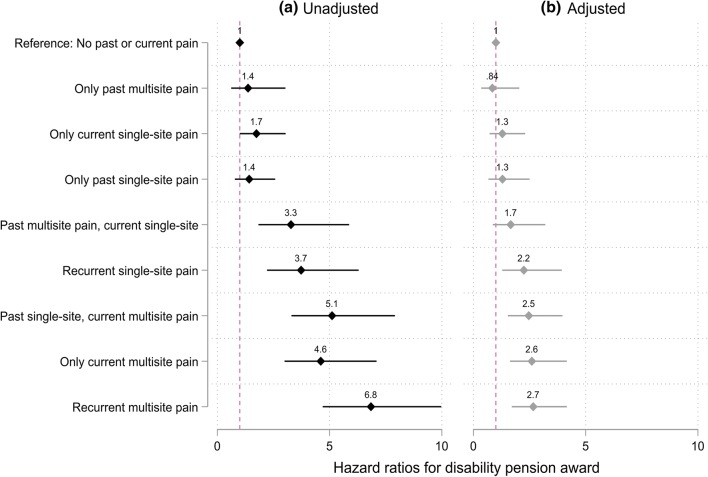
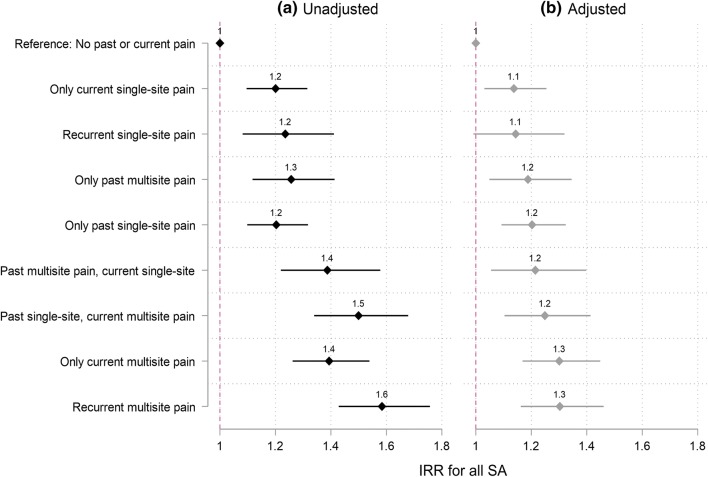
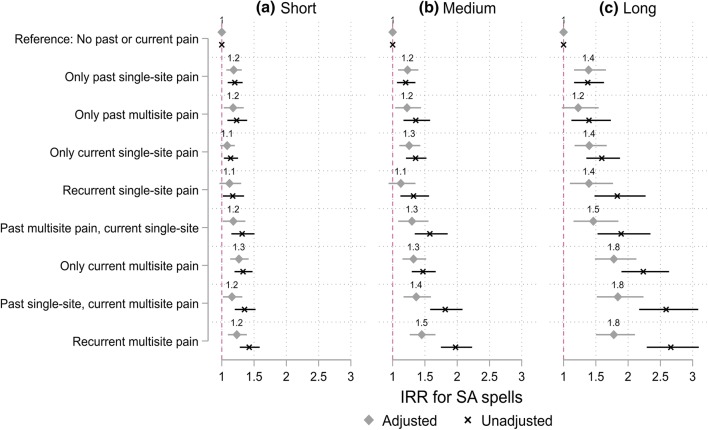
Recurrent pain was associated with short-, medium- and long-term SA. Additionally, recurrent single- and multisite pain increased the risk of long-term SA. Recurrent single or multisite pain was further associated with an increased risk of DP, while a single instance of pain did not increase the risk.
These results suggest that recurrent pain is a robust determinant of subsequent SA and DP risk. Improved understanding of determinants of recurrent pain is needed to inform the development of targeted measures to reduce SA and premature exit from employment.
我们研究了复发性单部位和多部位疼痛与不同时长的病假缺勤(SA)以及残疾抚恤金(DP)风险之间的关联。
数据来源于芬兰赫尔辛基健康研究。2000/2年和2007年对第1组进行疼痛测量,2007年和2012年对第2组进行疼痛测量(共3191名员工)。SA数据从雇主的人事登记册中获取,DP事件从芬兰养老金中心获取。使用带有广义估计方程的负二项回归模型对自我认证的短期(1 - 3天)、医学认证的中期(4 - 14天)和长期(超过14天)SA发作的发生率进行建模。通过Cox回归模型研究疼痛与全因DP之间的关联,并通过诊断组的竞争风险模型研究DP情况。对社会和健康相关协变量进行了调整。
复发性疼痛与短期、中期和长期SA相关。此外,复发性单部位和多部位疼痛增加了长期SA的风险。复发性单部位或多部位疼痛还与DP风险增加相关,而单次疼痛发作并未增加风险。
这些结果表明,复发性疼痛是后续SA和DP风险的有力决定因素。需要更好地理解复发性疼痛的决定因素,以便为制定减少SA和过早离职的针对性措施提供依据。