Department of Microbiology, Oregon State University, Corvallis, OR 97331, USA; Linus Pauling Institute, Oregon State University, Corvallis, OR 97331, USA.
Linus Pauling Institute, Oregon State University, Corvallis, OR 97331, USA; Department of Biochemistry and Biophysics, Oregon State University, Corvallis, OR 97331, USA.
J Steroid Biochem Mol Biol. 2020 Apr;198:105552. doi: 10.1016/j.jsbmb.2019.105552. Epub 2019 Nov 26.
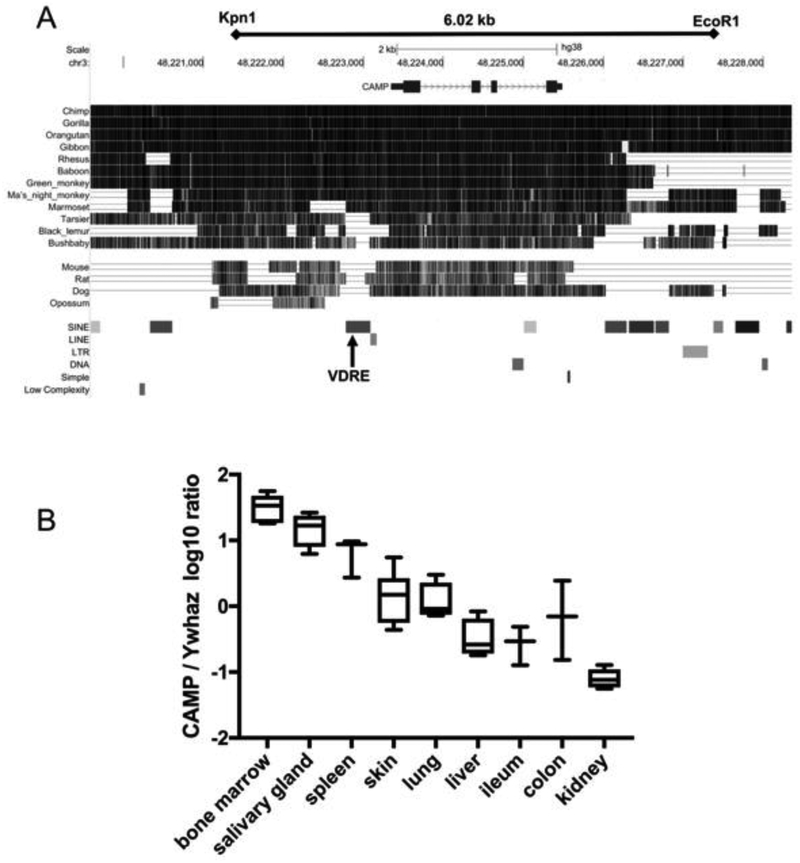
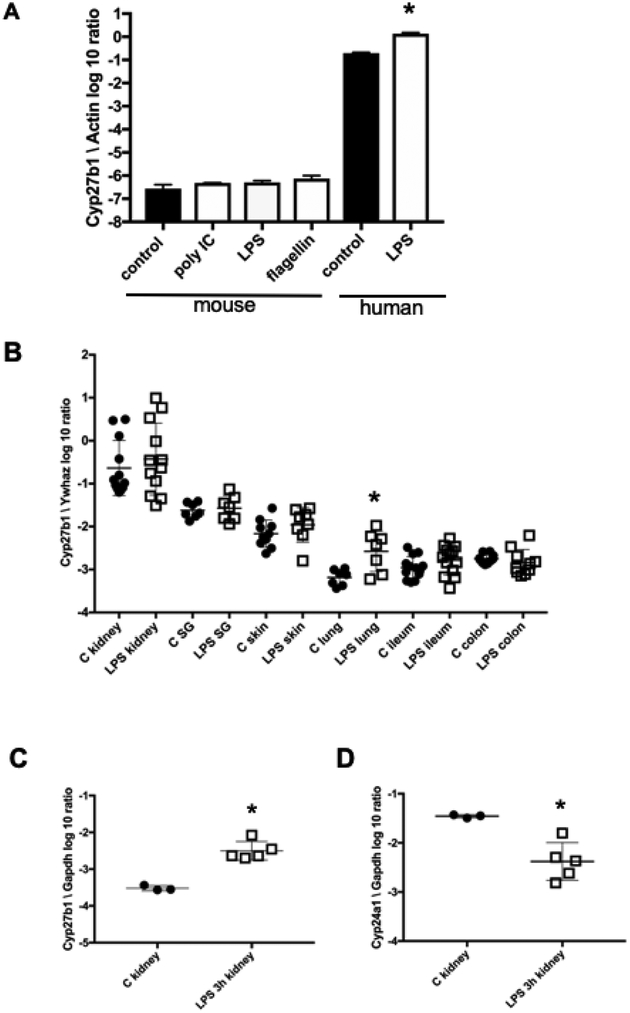
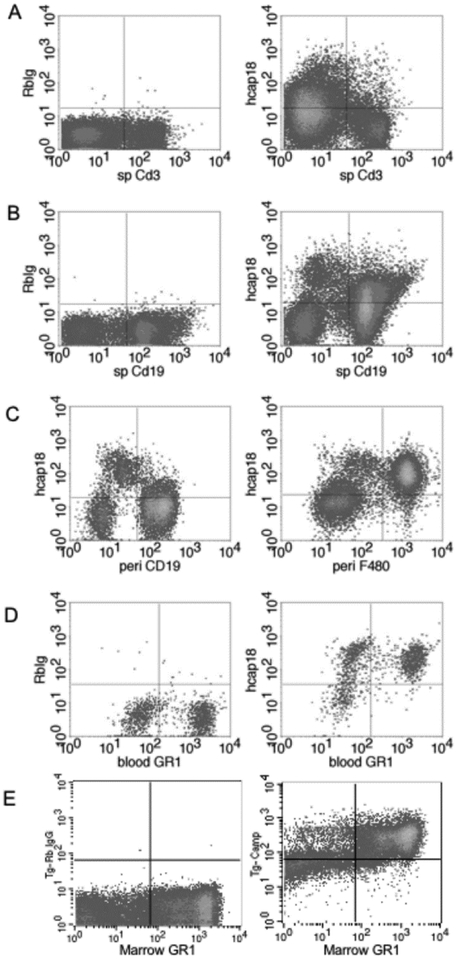
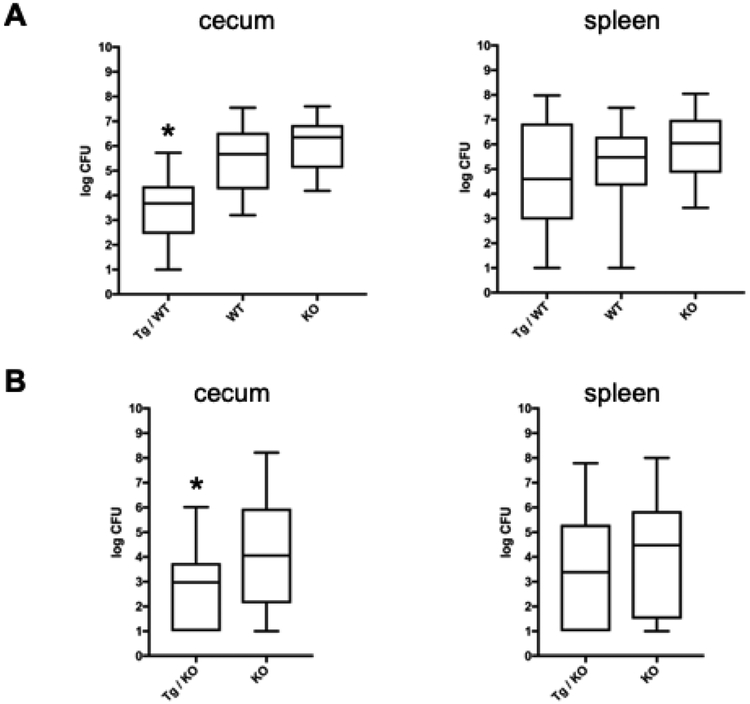
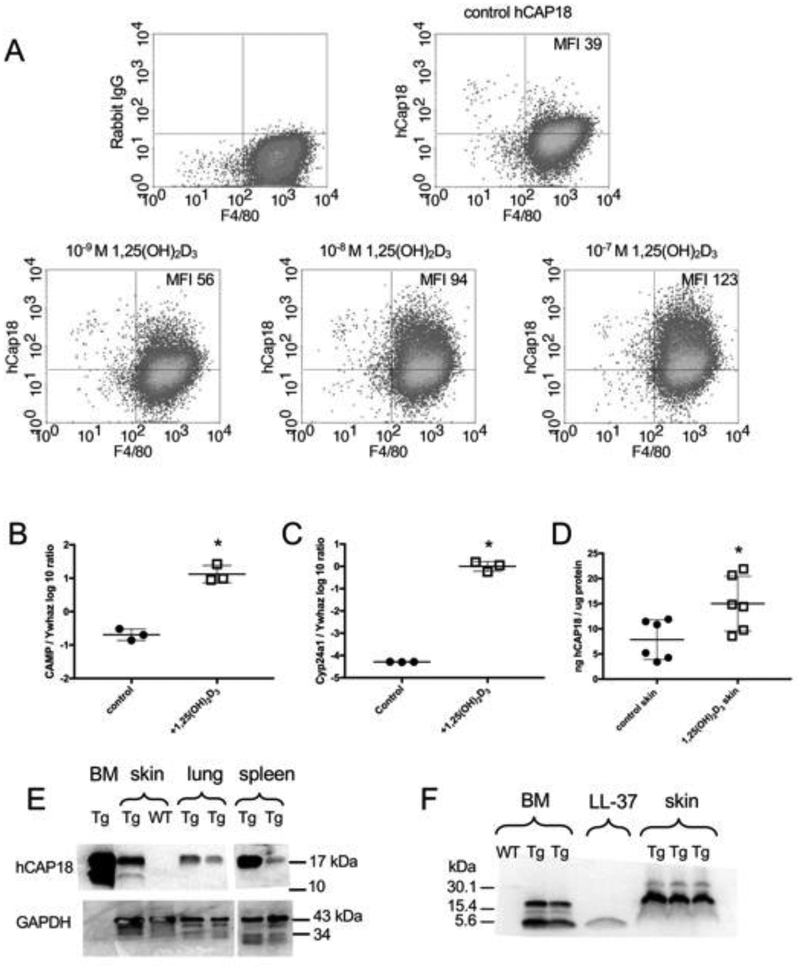
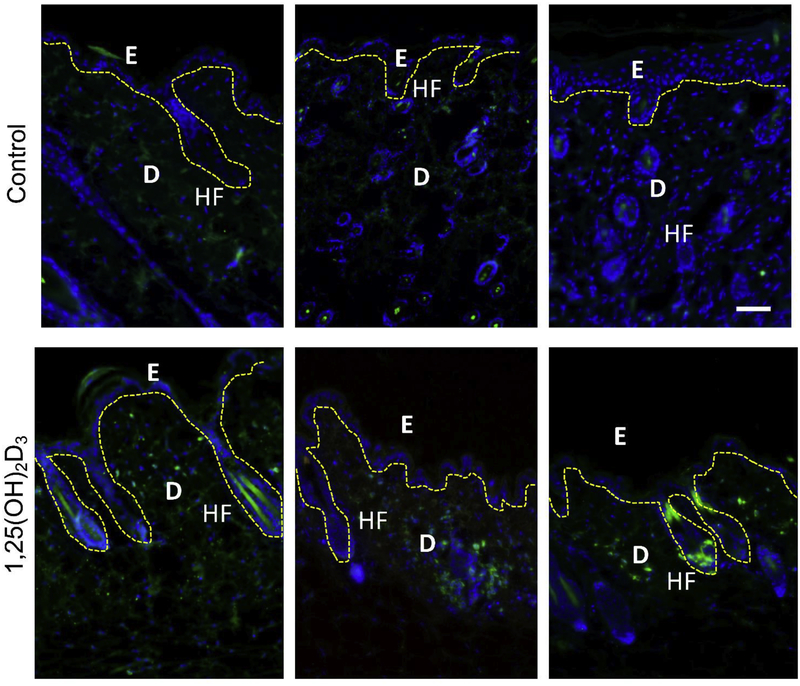
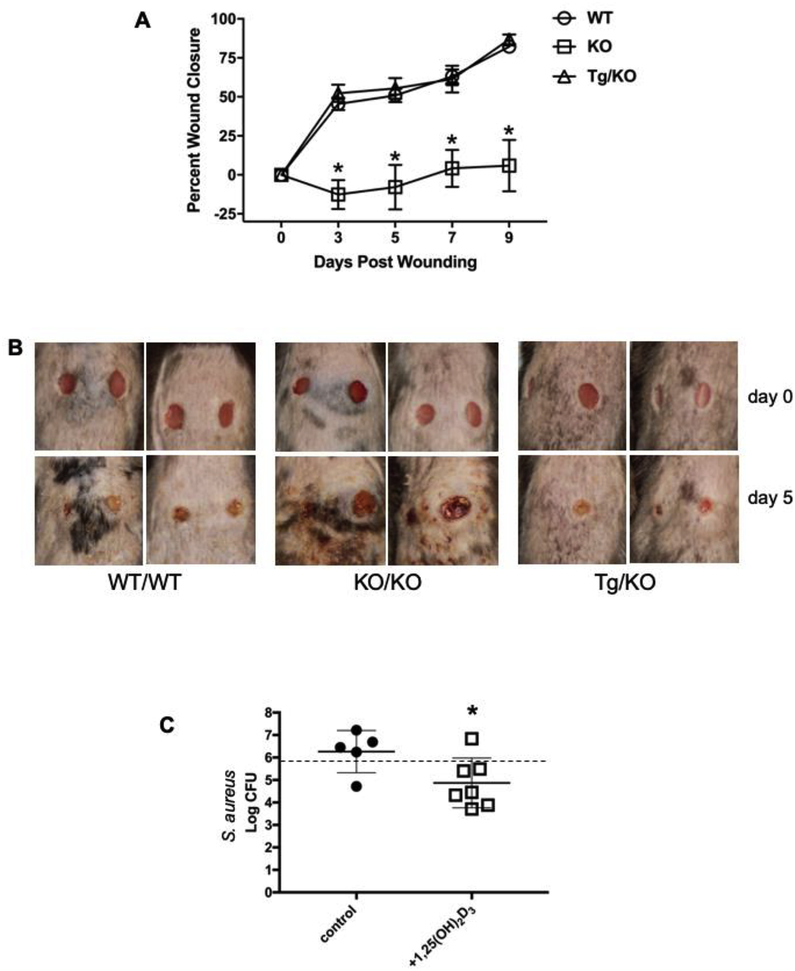
In humans and other primates, 1,25(OH)vitamin D regulates the expression of the cathelicidin antimicrobial peptide (CAMP) gene via toll-like receptor (TLR) signaling that activates the vitamin D pathway. Mice and other mammals lack the vitamin D response element (VDRE) in their CAMP promoters. To elucidate the biological importance of this pathway, we generated transgenic mice that carry a genomic DNA fragment encompassing the entire human CAMP gene and crossed them with Camp knockout (KO) mice. We observed expression of the human transgene in various tissues and innate immune cells. However, in mouse CAMP transgenic macrophages, TLR activation in the presence of 25(OH)D did not induce expression of either CAMP or CYP27B1 as would normally occur in human macrophages, reinforcing important species differences in the actions of vitamin D. Transgenic mice did show increased resistance to colonization by Salmonella typhimurium in the gut. Furthermore, the human CAMP gene restored wound healing in the skin of Camp KO mice. Topical application of 1,25(OH)vitamin D to the skin of CAMP transgenic mice induced CAMP expression and increased killing of Staphylococcus aureus in a wound infection model. Our model can help elucidate the biological importance of the vitamin D-cathelicidin pathway in both pathogenic and non-pathogenic states.
在人类和其他灵长类动物中,1,25(OH)维生素 D 通过 Toll 样受体 (TLR) 信号调节抗菌肽 (CAMP) 基因的表达,该信号激活维生素 D 途径。小鼠和其他哺乳动物在其 CAMP 启动子中缺乏维生素 D 反应元件 (VDRE)。为了阐明该途径的生物学重要性,我们生成了携带包含人 CAMP 基因全长的基因组 DNA 片段的转基因小鼠,并将它们与 Camp 敲除 (KO) 小鼠杂交。我们观察到人类转基因在各种组织和天然免疫细胞中的表达。然而,在携带人 CAMP 基因的小鼠巨噬细胞中,TLR 激活在 25(OH)D 存在的情况下不会诱导 CAMP 或 CYP27B1 的表达,这与人类巨噬细胞中通常发生的情况不同,这强调了维生素 D 作用在不同物种之间的重要差异。转基因小鼠确实显示出对肠道中鼠伤寒沙门氏菌定植的抵抗力增加。此外,人 CAMP 基因恢复了 Camp KO 小鼠皮肤的伤口愈合。1,25(OH)维生素 D 局部应用于 CAMP 转基因小鼠的皮肤可诱导 CAMP 表达,并增加伤口感染模型中金黄色葡萄球菌的杀伤。我们的模型可以帮助阐明维生素 D-抗菌肽途径在致病和非致病状态下的生物学重要性。