Department of Pharmacy Administration and Clinical Pharmacy, School of Pharmaceutical Sciences, Peking University, Beijing, China.
Department of Population Medicine, Harvard Medical School and Harvard Pilgrim Health Care Institute, Boston, Massachusetts, USA.
BMJ Open. 2019 Nov 28;9(11):e031658. doi: 10.1136/bmjopen-2019-031658.
In October 2012, the Chinese government established maximum retail prices for specific products, including 30 antineoplastic medications. Three years later, in June 2015, the government abolished price regulation for most medications, including all antineoplastic medications. This study examined the impacts of regulation and subsequent deregulation of prices of antineoplastic medications in China.
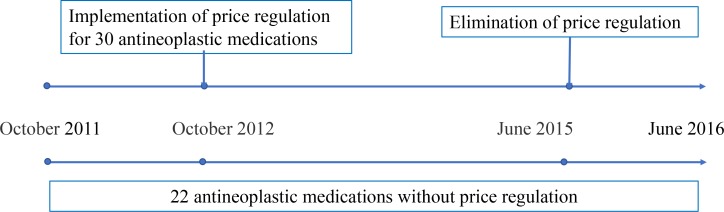
Using hospital procurement data and an interrupted time series with comparison series design, we examined the impacts of the policy changes on relative purchase prices (Laspeyres price index) and volumes of and spending on 52 antineoplastic medications in 699 hospitals. We identified three policy periods: prior to the initial price regulation (October 2011 to September 2012); during price regulation (October 2012 to June 2015); and after price deregulation (July 2015 to June 2016).
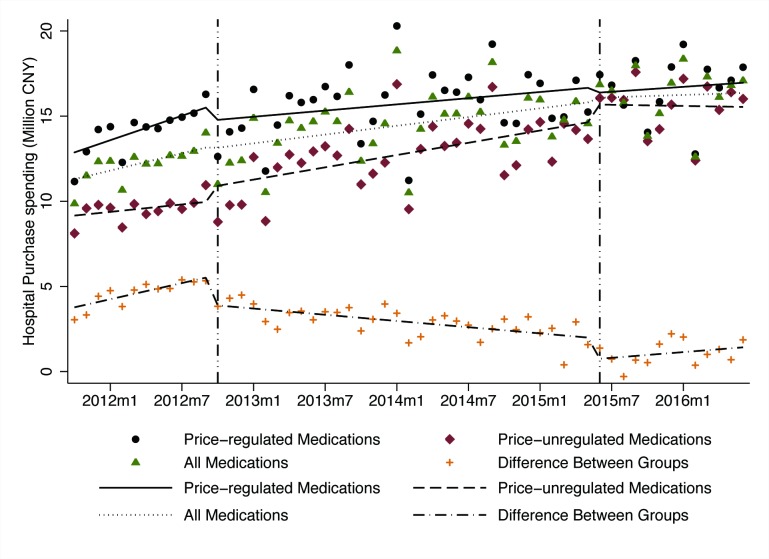
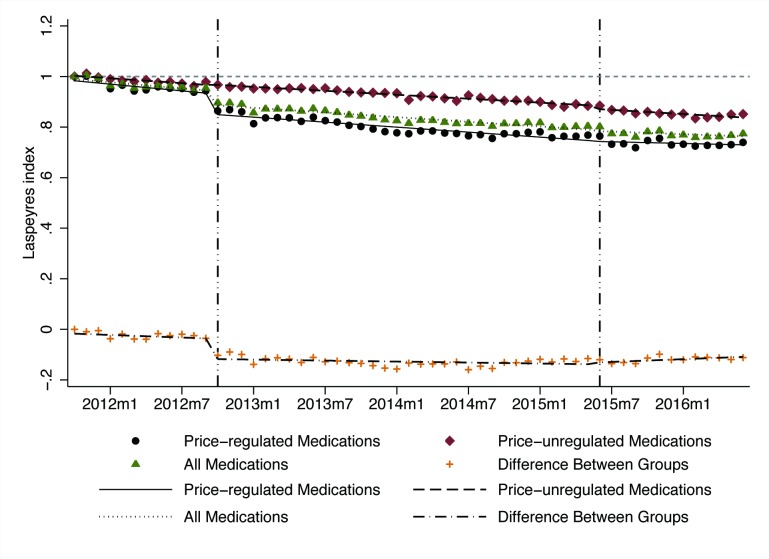
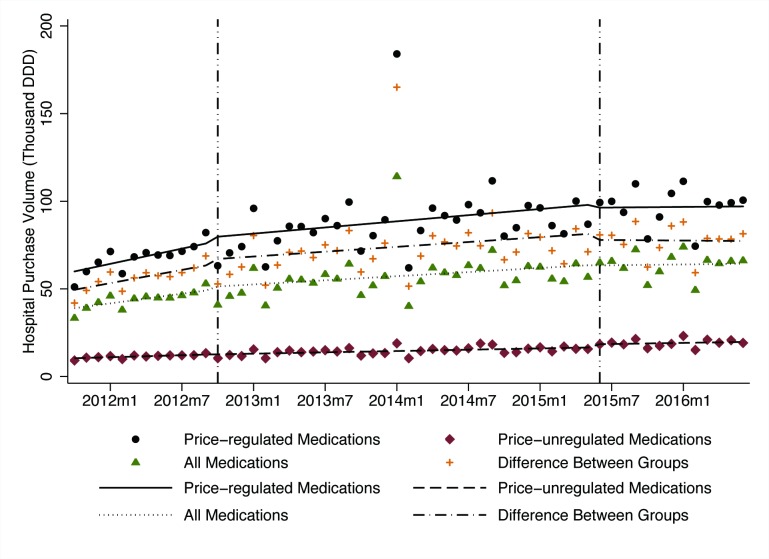
During government price regulation, compared with price-unregulated cancer medications (n=22, mostly newer targeted products), the relative price of price-regulated medications (n=30, mostly chemotherapeutic products) decreased significantly (β=-0.081, p<0.001). After the government price deregulation, no significant price change occurred. Neither government price regulation nor deregulation had a significant impact on average volumes of or average spending on all antineoplastic medications immediately after the policy changes or in the longer term (p>0.05).
Compared with unregulated antineoplastics, the prices of regulated antineoplastic medications decreased after setting price caps and did not increase after deregulation. To control the rapid growth of oncology medication expenditures, more effective measures than price regulation through price caps for traditional chemotherapy are needed.
2012 年 10 月,中国政府对包括 30 种抗肿瘤药物在内的特定产品设定了最高零售价格。三年后的 2015 年 6 月,政府取消了大部分药物(包括所有抗肿瘤药物)的价格管制。本研究考察了中国抗肿瘤药物价格管制和随后取消管制的影响。
我们使用医院采购数据和具有比较系列设计的中断时间序列,考察了政策变化对 52 种抗肿瘤药物(699 家医院)相对采购价格(拉斯贝尔价格指数)以及数量和支出的影响。我们确定了三个政策时期:初始价格管制之前(2011 年 10 月至 2012 年 9 月);价格管制期间(2012 年 10 月至 2015 年 6 月);以及价格放开之后(2015 年 7 月至 2016 年 6 月)。
在政府价格管制期间,与不受管制的癌症药物(n=22,大多为新型靶向药物)相比,受管制的药物(n=30,大多为化疗药物)的相对价格显著下降(β=-0.081,p<0.001)。政府取消价格管制后,价格没有明显变化。政策变化后,无论是政府价格管制还是取消管制,对所有抗肿瘤药物的平均数量或平均支出都没有立即产生显著影响,也没有在长期内产生显著影响(p>0.05)。
与不受管制的抗肿瘤药物相比,设定价格上限后,受管制的抗肿瘤药物价格下降,取消管制后价格并未上涨。为了控制肿瘤药物支出的快速增长,需要采取比传统化疗药物价格上限管制更有效的措施。