Peng Jun, Chen Xin-Long, Cheng Hong-Zhong, Xu Zhe-Yuan, Wang Han, Shi Zhi-Zhou, Liu Jun, Ning Xian-Gu, Peng Hao
Department of Thoracic Surgery, The First People's Hospital of Yunnan Province, Kunming, Yunnan 650032, P.R. China.
Faculty of Medicine, Kunming University of Science and Technology, Kunming, Yunnan 650500, P.R. China.
Oncol Lett. 2019 Dec;18(6):5968-5976. doi: 10.3892/ol.2019.10944. Epub 2019 Oct 2.
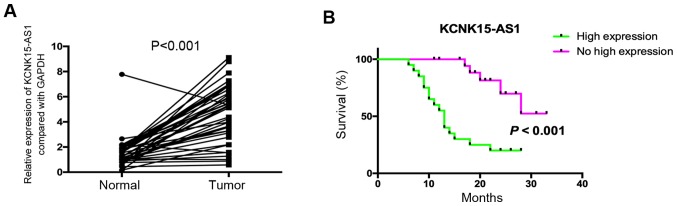
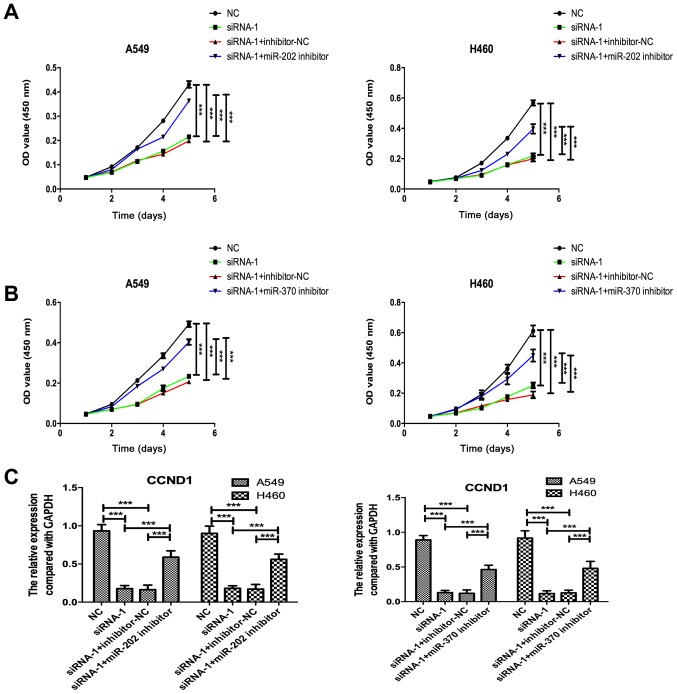
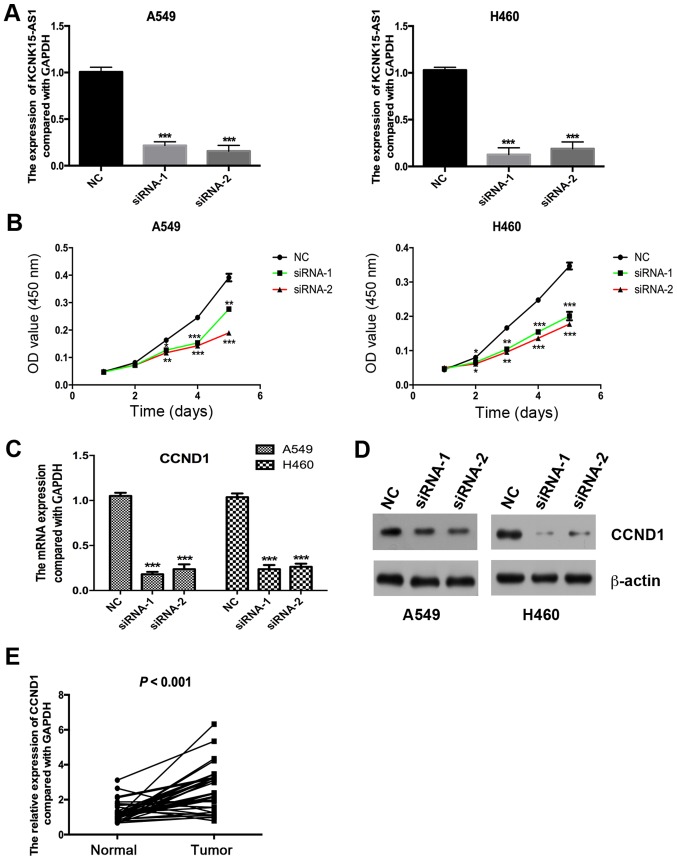
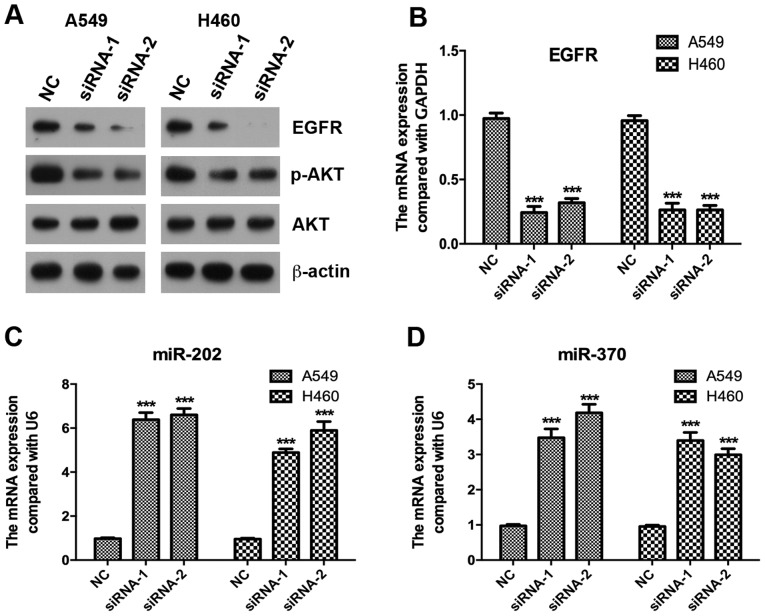
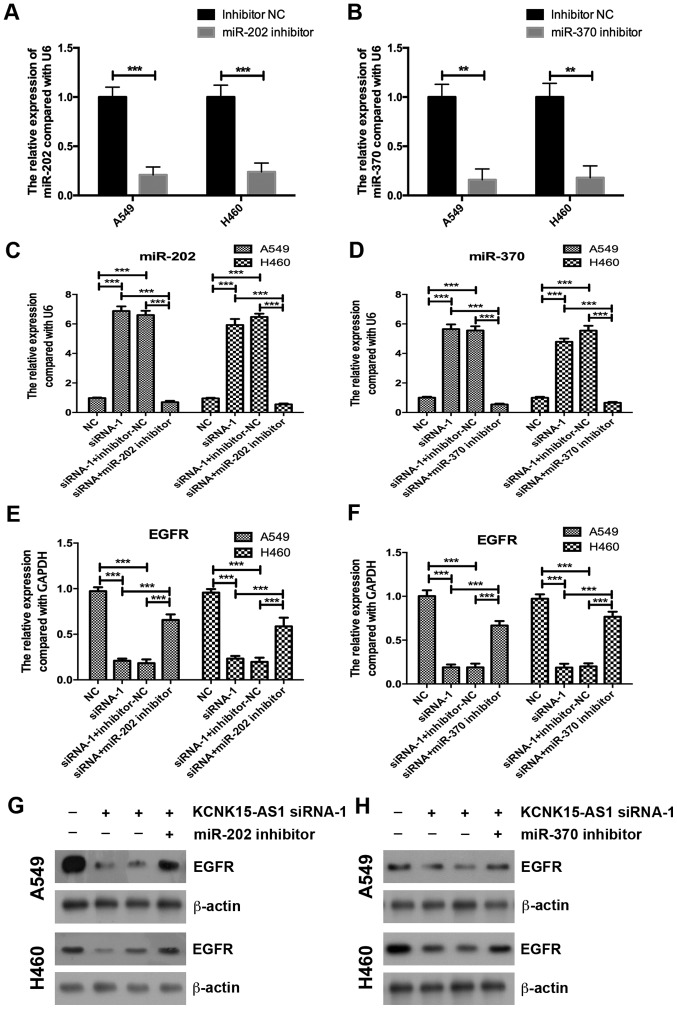
Lung cancer is the most common cause of cancer-associated mortality globally. Long non-coding RNAs (lncRNAs) are transcripts with a length of >200 nucleotides, which are not translated into proteins. Growing evidence has indicated that certain lncRNAs are associated with various biological processes in cancer. However, the functions of KCNK15 and WISP2 antisense RNA 1 (KCNK15-AS1) in lung cancer carcinogenesis and progression have remained elusive. The present study indicated that KCNK15-AS1 was overexpressed in lung adenocarcinoma tissues compared with paracancerous normal tissues, and the high expression of KCNK15-AS1 was significantly associated with poor prognosis compared with the patients with low expression (P<0.001). Furthermore, the knockdown of KCNK15-AS1 was performed in A549 and H460 lung cancer cells with small interfering RNA, resulting in a significant inhibition of the proliferation, a decrease in the mRNA and protein expression of cyclin D1 (CCND1) and epidermal growth factor receptor (EGFR), in addition to the phosphorylation of protein kinase B, with a concomitant increase in the expression of microRNA (miR)-202 and miR-370 compared with negative control group. Rescue experiments demonstrated that the inhibition of miR-202 or miR-370 partially recovered the EGFR and CCND1 expression and the proliferation rates, which were reduced by KCNK15-AS1 silencing. In conclusion, these results suggested that KCNK15-AS1 functions as an oncogene via regulating the miR-202/miR-370/EGFR axis in lung cancer and may provide a potential target for lung cancer treatment.
肺癌是全球癌症相关死亡的最常见原因。长链非编码RNA(lncRNAs)是长度大于200个核苷酸的转录本,不翻译成蛋白质。越来越多的证据表明,某些lncRNAs与癌症中的各种生物学过程相关。然而,KCNK15和WISP2反义RNA 1(KCNK15-AS1)在肺癌发生和发展中的功能仍不清楚。本研究表明,与癌旁正常组织相比,KCNK15-AS1在肺腺癌组织中过表达,与低表达患者相比,KCNK15-AS1的高表达与不良预后显著相关(P<0.001)。此外,用小干扰RNA在A549和H460肺癌细胞中敲低KCNK15-AS1,导致增殖显著抑制,细胞周期蛋白D1(CCND1)和表皮生长因子受体(EGFR)的mRNA和蛋白表达降低,此外蛋白激酶B的磷酸化也降低,与阴性对照组相比,微小RNA(miR)-202和miR-370的表达同时增加。挽救实验表明,抑制miR-202或miR-370部分恢复了EGFR和CCND1的表达以及增殖率,这些因KCNK15-AS1沉默而降低。总之,这些结果表明KCNK15-AS1在肺癌中通过调节miR-202/miR-370/EGFR轴发挥癌基因作用,可能为肺癌治疗提供潜在靶点。