Santos-Barriopedro Irene, Li Yixuan, Bahl Sonali, Seto Edward
George Washington Cancer Center, Department of Biochemistry & Molecular Medicine, George Washington University School of Medicine & Health Sciences, Washington, DC, USA.
Genes Cancer. 2019;10(5-6):119-133. doi: 10.18632/genesandcancer.197.
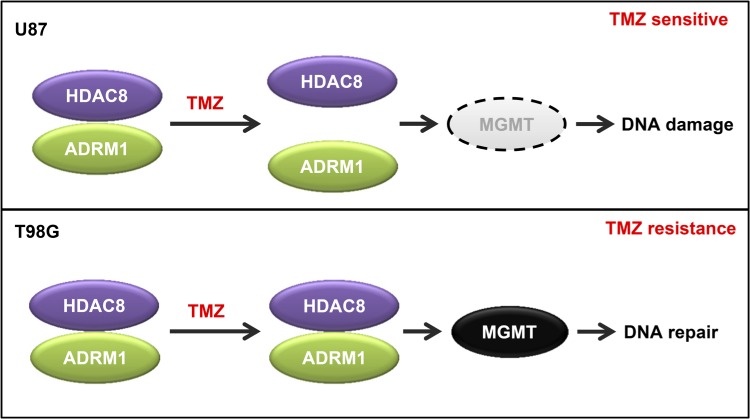
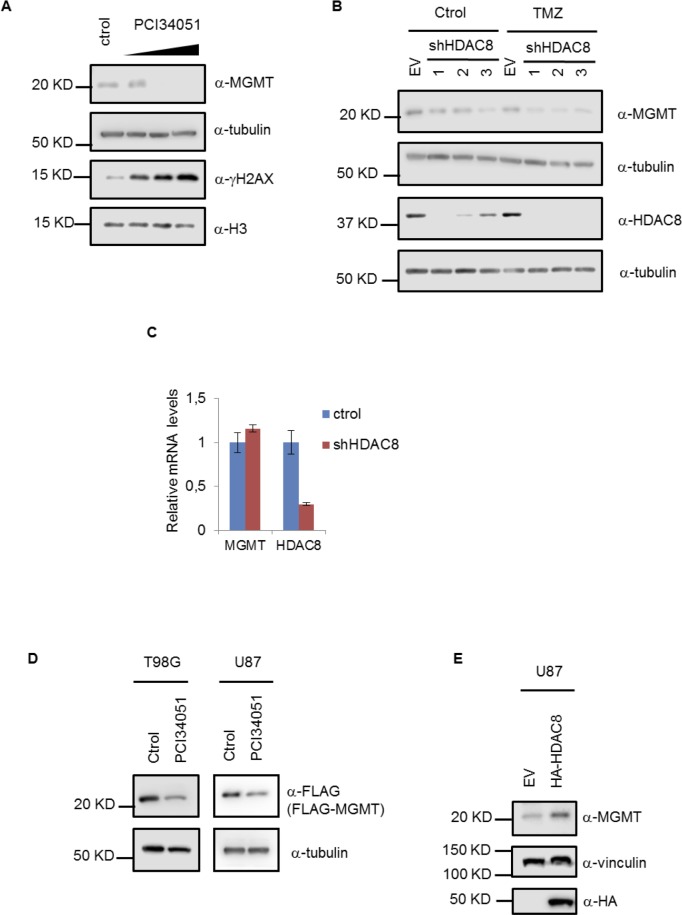
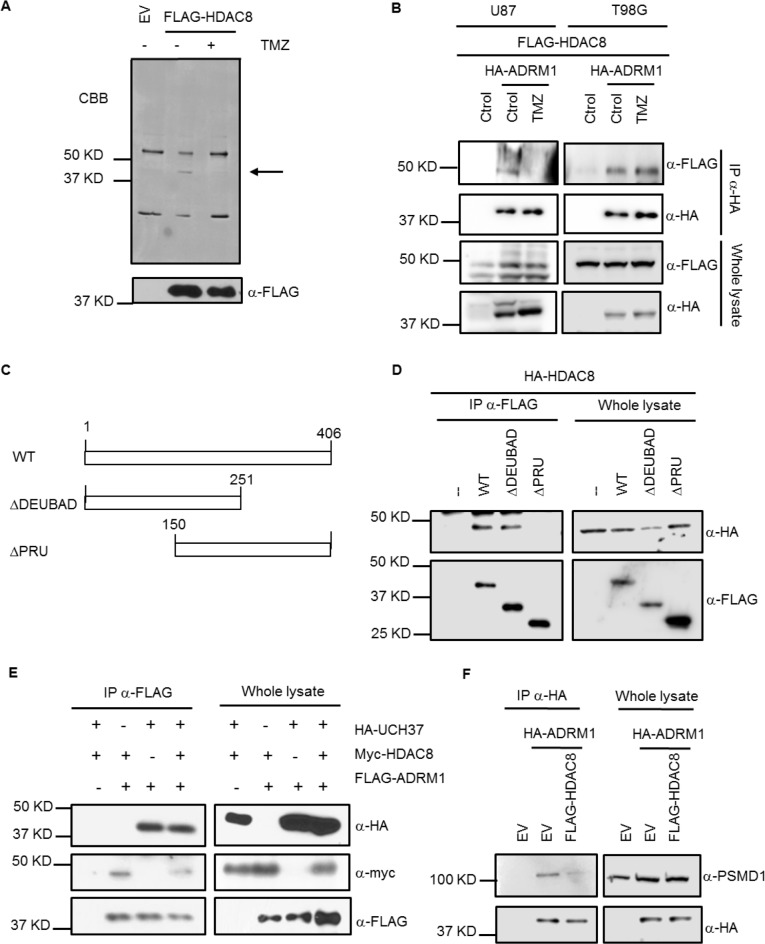
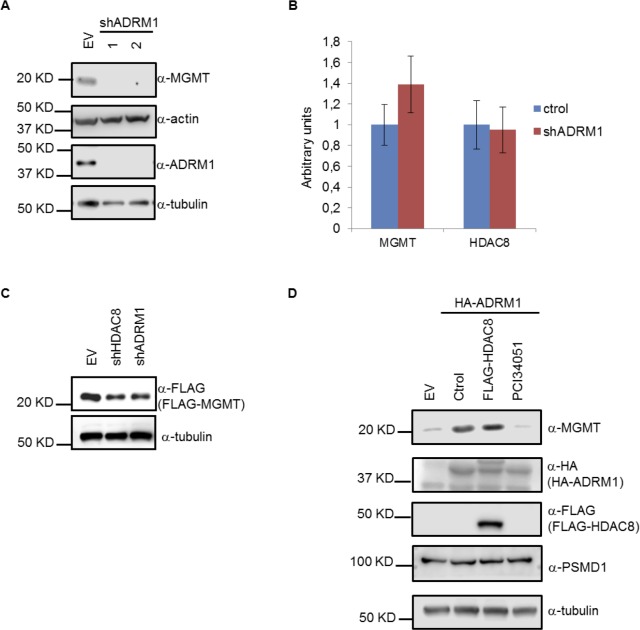
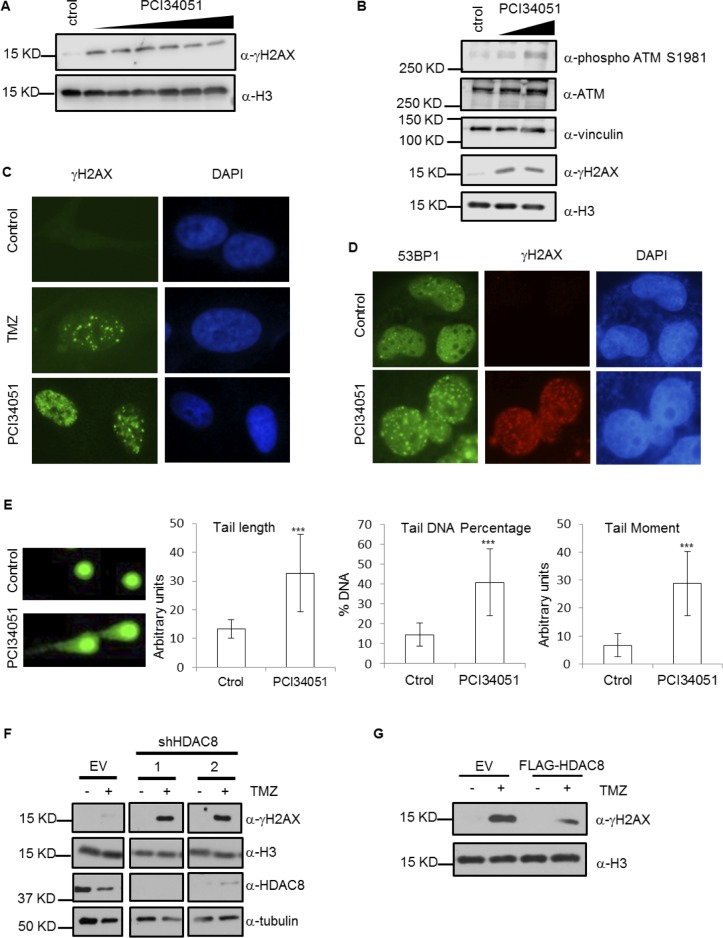
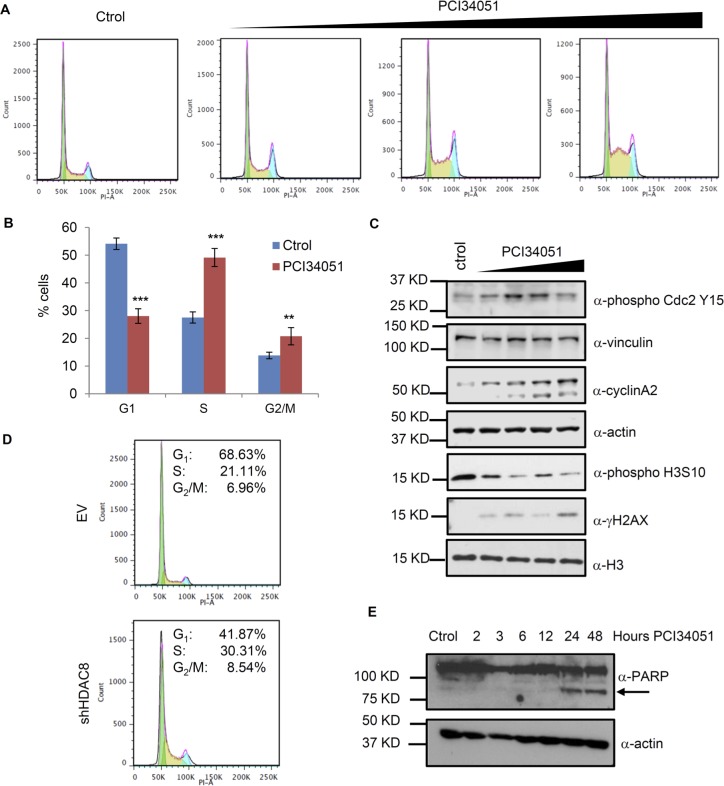
Temozolomide (TMZ) is an alkylating agent chemotherapy drug used as a first-line treatment for glioblastoma multiforme (GBM). O-methyl-guanine DNA methyltransferase (MGMT) repairs DNA damage induced by TMZ; hence, elevated MGMT levels usually correlate with TMZ resistance. MGMT promoter methylation is a key regulatory mechanism for MGMT expression and is important in overcoming TMZ therapy resistance. To date, little is known about how MGMT expression is regulated beyond promoter methylation. In this work, we show an alternative mechanism by which MGMT levels are regulated independent of its promoter methylation status. We found that inhibition of the histone deacetylase HDAC8 by either HDAC8-specific inhibitor PCI34051 or HDAC8 shRNA decreases MGMT levels in GBM cell lines. Furthermore, the proteasome receptor ADRM1 participates in this MGMT regulation by interacting with HDAC8. Interestingly, this interaction is disrupted by TMZ exclusively in TMZ sensitive cells, suggesting that this MGMT regulatory pathway might be inactivated in TMZ resistant cells. Consequently, HDAC8 inhibition in GBM cell lines increases DNA damage and cell cycle arrest and, eventually, decreases cell viability, likely due to the decrease in MGMT protein levels.
替莫唑胺(TMZ)是一种烷化剂化疗药物,用作多形性胶质母细胞瘤(GBM)的一线治疗药物。O-甲基鸟嘌呤DNA甲基转移酶(MGMT)可修复TMZ诱导的DNA损伤;因此,MGMT水平升高通常与TMZ耐药相关。MGMT启动子甲基化是MGMT表达的关键调控机制,在克服TMZ治疗耐药性方面很重要。迄今为止,除启动子甲基化外,关于MGMT表达如何调控知之甚少。在这项研究中,我们展示了一种独立于其启动子甲基化状态调控MGMT水平的替代机制。我们发现,HDAC8特异性抑制剂PCI34051或HDAC8短发夹RNA(shRNA)对组蛋白脱乙酰酶HDAC8的抑制作用可降低GBM细胞系中的MGMT水平。此外,蛋白酶体受体ADRM1通过与HDAC8相互作用参与这种MGMT调控。有趣的是,这种相互作用仅在TMZ敏感细胞中被TMZ破坏,这表明这种MGMT调控途径可能在TMZ耐药细胞中失活。因此,GBM细胞系中HDAC8的抑制增加了DNA损伤和细胞周期停滞,并最终降低了细胞活力,这可能是由于MGMT蛋白水平的降低所致。